
Tom Phillips (10)
Author of Humans: A Brief History of How We F*cked It All Up
For other authors named Tom Phillips, see the disambiguation page.
About the Author
Tom Phillips is a journalist and humor writer based in London. He was the editorial director of BuzzFeed UK and studied Archaeology, Anthropology and the History and Philosophy of Science at Cambridge University.
Works by Tom Phillips
Tagged
Common Knowledge
- Gender
- male
Members
Reviews
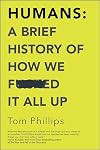
Entertaining and packed full of fun facts. Basically it's 280 pages making the point that when straight old white men with too much money trust straight young white men with too much confidence and not enough skill, terrible things happen to the world. And also, that we've shown no capacity from learning from thousands of years of similar mistakes.
(Not all of the men in the book are white, so neo-nazis can chill the fuck out; but it is largely a book about men fucking up because, as the show more author says, for most of history they're the only ones who have been given a chance to fail.) show less
(Not all of the men in the book are white, so neo-nazis can chill the fuck out; but it is largely a book about men fucking up because, as the show more author says, for most of history they're the only ones who have been given a chance to fail.) show less
Written with a distinctly British blend of historical accuracy, well-written prose with a good vocabulary, and more than a healthy side of snark, it feels like John Cleese could have written it.
The chapters have names like “Why Your Brain Is an Idiot,” “Super Happy Fun Colonialism Party,” and “A Dummies and/or Current President’s Guide to Diplomacy.” I’ve never before read a book where I could literally (and that’s actually literally) laugh out loud, and then facepalm show more while I lament the state of human intelligence (such as it is), oftentimes within the space of a single page.
So if you’d like to learn some interesting history and your Homo Sapiens ego isn’t too fragile to take a little constructive criticism, I’d recommend it. show less
The chapters have names like “Why Your Brain Is an Idiot,” “Super Happy Fun Colonialism Party,” and “A Dummies and/or Current President’s Guide to Diplomacy.” I’ve never before read a book where I could literally (and that’s actually literally) laugh out loud, and then facepalm show more while I lament the state of human intelligence (such as it is), oftentimes within the space of a single page.
So if you’d like to learn some interesting history and your Homo Sapiens ego isn’t too fragile to take a little constructive criticism, I’d recommend it. show less
Okay, the title grabbed me and Smith’s writing kept me.
He says, "There are lots of books about humanity’s finest achievements— the great leaders, the genius inventors, the indomitable human spirit. There are also lots of books about mistakes we’ve made: both individual screw-ups and society-wide errors. But there aren’t quite so many about how we manage to get things profoundly, catastrophically wrong over and over again." Yep.
First chapter nails it with the root of all the show more upf*cking...our brains. From availability heuristics to pareidolia to confirmations biases, Smith condenses a host of our problems into an informative and sardonic yet still funny package.
He’ll probably be dismissed by many for his cavalier relation of the topics, but the source material is there under, around and over his wonderful sense of humor. On pareidolia, he says he used to think confirmation bias was the real culprit, and everything he'd read, uh ... confirmed that. (See where he's going with that?)
In his chapter on people in power, he had these things to say about someone. Omitting identifying words, see if you can guess who...
Who? Trick question... The first two were about Abdalá Bucaram, Ecuador’s President in 1996. The rest were about Hitler. Phillips doesn’t say anything about T in that chapter, but it's pretty obvious he was alluding. (So the last page has a picture of he-who-shall-not-be-named...more than allusion.) And from the chapter on leaders...
So there is a lot more. And Phillips is funny. My confirmation bias likes him. show less
He says, "There are lots of books about humanity’s finest achievements— the great leaders, the genius inventors, the indomitable human spirit. There are also lots of books about mistakes we’ve made: both individual screw-ups and society-wide errors. But there aren’t quite so many about how we manage to get things profoundly, catastrophically wrong over and over again." Yep.
First chapter nails it with the root of all the show more upf*cking...our brains. From availability heuristics to pareidolia to confirmations biases, Smith condenses a host of our problems into an informative and sardonic yet still funny package.
He’ll probably be dismissed by many for his cavalier relation of the topics, but the source material is there under, around and over his wonderful sense of humor. On pareidolia, he says he used to think confirmation bias was the real culprit, and everything he'd read, uh ... confirmed that. (See where he's going with that?)
Which is exactly the problem: our brains hate finding out that they’re wrong. Confirmation bias is our annoying habit of zeroing in like a laser-guided missile on any scrap of evidence that supports what we already believe, and blithely ignoring the possibly much, much larger piles of evidence that suggest we might have been completely misguided.The "choice supportive bias" tells us
There’s even some evidence that, in certain circumstances, the very act of telling people they’re wrong— even if you patiently show them the evidence that clearly demonstrates why this is the case— can actually make them believe the wrong thing more.The T-msters are masters of that, but not alone. And of course, there's the Dunning-Kruger effect (detailed in their paper, “Unskilled and Unaware of It: How Difficulties in Recognizing One’s Own Incompetence Lead to Inflated Self-Assessments”). Fits someone to T.
In his chapter on people in power, he had these things to say about someone. Omitting identifying words, see if you can guess who...
“Things that might have proved career-ending for other politicians [...] didn’t seem to be much of a barrier to his success.”
“Once he was in power, the country’s poor who had voted for him were somewhat surprised at the economic plan he unveiled a few months into his term [...]. Oh, and he tried to remove the term limits on the presidency. And went off-script in his speech announcing the economic policy to mount a lengthy attack on a newspaper that had been critical of him.”
“Even after elections had made the [...] the largest party [...], the people kept thinking that [...] was an easy mark, a blustering idiot who could easily be controlled by smart people.”
“As it would turn out, [...] was really bad at running a government. As his own press chief [...] wrote [...], ‘In the [...] years of his rule [...he] produced the biggest confusion in government that had ever existed I. A civilized state.”
“His government was constantly in chaos, with officials having no idea what he wanted them to do, and nobody was entirely clear who was actually in charge of what.”
“[...] was incredibly lazy. According to his aide [...], even when he was in [...] he wouldn’t get out of bed until after 11:00 a.m., and wouldn’t do much before lunch other than read what the newspapers had to say about him [...] He was obsessed with the media and celebrity, and often seems to have viewed himself through that lens.”
“...he’d take any opportunity to leave to seat of government and go to his private country retreat [...] where he’d do even less .”
“He was deeply insecure about his own lack of knowledge, preferring to either ignore information that contradicted his preconceptions, or to lash out at the expertise of others - he was said to ‘rage like a tiger’ if anybody corrected him.”
“He hated being laughed at, but enjoyed it when other people were the butt of the joke (he would perform mocking impressions of people he disliked).”
Who? Trick question... The first two were about Abdalá Bucaram, Ecuador’s President in 1996. The rest were about Hitler. Phillips doesn’t say anything about T in that chapter, but it's pretty obvious he was alluding. (So the last page has a picture of he-who-shall-not-be-named...more than allusion.) And from the chapter on leaders...
...if you want a helpful guide on why it’s best not to put someone with the temperament of a spoiled child in charge of a country, then the Zhengde Emperor (born Zhu Houzhao) is probably a pretty good place to start. His distaste for actually doing any of the work of ruling, when he’d much rather be off hunting tigers or sleeping with absurd numbers of women, was one thing. Not ideal, but, eh, you work with what you’ve got.and
Germany’s Wilhelm II believed himself to be a master negotiator with a diplomatic golden touch. In fact, his only gift was insulting just about every other country he came into contact with, which may help explain how World War I happened.How far off is WW3, with T? On technology and the scientific method:
The way it’s supposed to work is this: you have an idea about how the world might work, and in order to see if there’s a chance it might be right, you try very hard to prove yourself wrong. If you fail to prove yourself wrong, you try to prove yourself wrong again, or prove yourself wrong another way. After a while you decide to tell the world that you’ve failed to prove yourself wrong, at which point everybody else tries to prove you wrong, as well. If they all fail to prove you wrong, then slowly people begin to accept that you might possibly be right, or at least less wrong than the alternatives. Of course, that’s not how it actually works. Scientists are no less susceptible than any other humans to the perils of just assuming that their view of the world is right, and ignoring anything to the contrary.Spot on.
So there is a lot more. And Phillips is funny. My confirmation bias likes him. show less
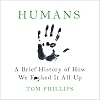
I loved this book! What could have been a depressing overview of how badly we humans have screwed up instead made me laugh out loud most of the way through.
Tom Phillips writes with a combination of humor, sarcasm, and academic honesty. He's clearly an incredibly smart guy, but he doesn't take himself too seriously, and so we readers get to sit back and enjoy ourselves. Along the way we learn a few things and should probably be horrified by some of it, and yet the tone keeps us from sinking show more into hopeless misery.
In a weird way, this book made me feel better about our situation in the world. It's not that we're better off now than I previously thought; it's that we have a long history of making a mess of things, which makes current events seem less perilous.
I highly recommend this book to every human out there.
*I received a review copy from the publisher, via Amazon Vine.* show less
Tom Phillips writes with a combination of humor, sarcasm, and academic honesty. He's clearly an incredibly smart guy, but he doesn't take himself too seriously, and so we readers get to sit back and enjoy ourselves. Along the way we learn a few things and should probably be horrified by some of it, and yet the tone keeps us from sinking show more into hopeless misery.
In a weird way, this book made me feel better about our situation in the world. It's not that we're better off now than I previously thought; it's that we have a long history of making a mess of things, which makes current events seem less perilous.
I highly recommend this book to every human out there.
*I received a review copy from the publisher, via Amazon Vine.* show less
Lists
Spirituality (1)
Unhinged History (1)
Awards

You May Also Like


Statistics
- Works
- 4
- Members
- 644
- Popularity
- #39,180
- Rating
- 3.7
- Reviews
- 15
- ISBNs
- 151
- Languages
- 15