

Kamo no Chōmei (1155–1216)
Author of Hōjōki
About the Author
Image credit: Kamo no Chomei. Drawing by Kikuchi Yosai. Wikimedia Commons.
Works by Kamo no Chōmei
Associated Works
Oogst Der Tijden. keur uit de werken van schrijvers en dichters aller volken en eeuwen (1940) — Contributor — 12 copies
Tagged
Common Knowledge
- Canonical name
- Kamo no Chōmei
- Legal name
- Kamo Chomei
Kamo no Chomei - Other names
- Kamo no Nagaakira
Ren-in - Birthdate
- 1155
- Date of death
- 1216-07-25
- Gender
- male
- Occupations
- poet
critic
monk - Relationships
- 俊恵 (teacher)
- Nationality
- Japan
- Birthplace
- Kyoto, Japan
- Places of residence
- Kyoto, Japan (death)
- Associated Place (for map)
- Kyoto, Japan
Members
Reviews
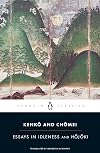
This book is difficult to understand. Nary a paragraph goes by without encountering a word or phrase that means nothing to me without consulting the explanatory note, which are many and lengthy. Lots of credit must be given to the translator, not only for rendering a text written almost a millennia ago into modern English, but also for the copious research that must have been done to explicate the myriad of references that make up a huge portion of both the texts included in this volume. I show more must admit that my eyes sometimes glazed over, particularly when the writers recounted stories of emperors, various aristocrats, or monks, all of whom of course can mean nothing to me. This is obviously no fault of the authors or the translators, and simply a function of passing time and cultural differences. These moments were however worth it for the descriptive and philosophical passages interspersed within. Reading classic Buddhist texts as someone not well versed in the subject always surprise me in their piercing observations on psychology. The religious content here is in turns extremely practical (down to how one should arrange their house or what pets one should keep) and playfully contradictory. One passage in the Tsurezuregusa stood out to me in this regard. The writer starts off the section in a diatribe against drinking alcohol, describing the debauchery it leads to, the depression it invokes, the wasted day recovering from a hangover, and the punishment waiting for drinkers in their next life. However he immediate follows with this:
“Yet, loathsome though one finds it, there are situations when a cup of sake is hard to resist. On a moonlit night, a snowy morning, or beneath the flowering cherry trees, it increases all the pleasures of the moment to bring out the sake cups and settle down to talk serenely together over a drink. ”
The book is rife with ascetic recommendations that are contradicted in the next paragraph. Far from a flaw, it is this recognition of the duality of life that makes this stuff relevant hundreds of years later. The need to control hedonistic tendencies and stay focused on valuing your health and your time is balanced with the knowledge that there are occasions to break even strict tenets. To me, this kind of capacious understand of human psychology is needed to make any sense of what it is to lead a meaningful life.
It’s said that these two texts are classics of Japanese literature, and who am I to argue? I will say that in my opinion, the best sections take their place in the great Japanese genre of Iyashikei, slice of life works of art that encourage the very Buddhist practice of quiet contemplation and intense focus on the beauty of daily life. These impressions can be lost if one doesn’t slow down and pay attention. The great tragedy of our times is that this practice, difficult even in 13th century Japan, has become exponentially more difficult. One of the most haunting parts of this book was the repeated descriptions of wasted life and unpredictability of death. Without conscious practice, the precious, short existence we have on earth will zip by us with terrifying speed, and we will meet death bitter and regretful. show less
“Yet, loathsome though one finds it, there are situations when a cup of sake is hard to resist. On a moonlit night, a snowy morning, or beneath the flowering cherry trees, it increases all the pleasures of the moment to bring out the sake cups and settle down to talk serenely together over a drink. ”
The book is rife with ascetic recommendations that are contradicted in the next paragraph. Far from a flaw, it is this recognition of the duality of life that makes this stuff relevant hundreds of years later. The need to control hedonistic tendencies and stay focused on valuing your health and your time is balanced with the knowledge that there are occasions to break even strict tenets. To me, this kind of capacious understand of human psychology is needed to make any sense of what it is to lead a meaningful life.
It’s said that these two texts are classics of Japanese literature, and who am I to argue? I will say that in my opinion, the best sections take their place in the great Japanese genre of Iyashikei, slice of life works of art that encourage the very Buddhist practice of quiet contemplation and intense focus on the beauty of daily life. These impressions can be lost if one doesn’t slow down and pay attention. The great tragedy of our times is that this practice, difficult even in 13th century Japan, has become exponentially more difficult. One of the most haunting parts of this book was the repeated descriptions of wasted life and unpredictability of death. Without conscious practice, the precious, short existence we have on earth will zip by us with terrifying speed, and we will meet death bitter and regretful. show less
I haven't read all that much east Asian prose, but I'm starting to suspect that I might over-identify with the overlooked-sensitive-and-ironic-scholar who is unable to find a position in the bureaucracy or hierarchy. Chomei's 'Hojoki' is a charming little piece about living the simple life and so on, but rather undermined by the fact that, in order to live the simple life, you have to be independently wealthy. Kenko's 'Essays,' on the other hand, are an absolute delight. There's nothing I show more like quite so much as people who are willing to hold their own most deeply held beliefs to the standards of their beliefs--here, that leads to 'kill the buddha' kind of things. I also like people who:
* like autumn rather than spring.
* pay attention to language.
* say things like "the testament to our birth in the human realm should be a strong urge to escape from this world. Surely there can be nothing to distinguish us from the beasts if we simply devote ourselves to greed."
* or "things that are not unpleasant in large amounts are books on a book cart, and rubbish on a rubbish heap."
* or "the best things are those that have a somewhat antique air, are unpretentious and are inexpensive but well made."
* or "if you run about the streets pretending to be a madman, then a madman is what you are."
* or "it is cruel to make people suffer and drive them to break the law, then treat the poor creatures as criminals."
* or "Phenomena and their essence are intrinsically one."
* list all the terrible consequences of drinking for a few pages... then say there's nothing quite so pleasant as drinking with a friend.
* being very intelligent, are aware of their own limitations, but do not therefore consider themselves to be as bad as everyone else.
If the world were rather more full of Kenkos, I'd be much happier in it. show less
* like autumn rather than spring.
* pay attention to language.
* say things like "the testament to our birth in the human realm should be a strong urge to escape from this world. Surely there can be nothing to distinguish us from the beasts if we simply devote ourselves to greed."
* or "things that are not unpleasant in large amounts are books on a book cart, and rubbish on a rubbish heap."
* or "the best things are those that have a somewhat antique air, are unpretentious and are inexpensive but well made."
* or "if you run about the streets pretending to be a madman, then a madman is what you are."
* or "it is cruel to make people suffer and drive them to break the law, then treat the poor creatures as criminals."
* or "Phenomena and their essence are intrinsically one."
* list all the terrible consequences of drinking for a few pages... then say there's nothing quite so pleasant as drinking with a friend.
* being very intelligent, are aware of their own limitations, but do not therefore consider themselves to be as bad as everyone else.
If the world were rather more full of Kenkos, I'd be much happier in it. show less

Chōmei was a 12th century court poet whose artistic sense of life morphed a radical path during old age, retreating from the striving of ego which he experienced and observed in court. He saw impermanence and asked what is a good life. Not money, power or status, rather peace and nature. That's the story. In fact he retreated after he lost political backing, was passed over for promotion within the Shinto shrine. He decided to turn his back on society only after he lost the game. A true show more recluse might gain worldly desires, then give it all up for free. Nevertheless, the power of his words can not be denied reaching across a chasm of time. show less
Ten Foot Square Hut and Tales of the Heike : Being two thirteenth century Japanese classics, the "Hojoki" and selections from the "Heike Monogatari" by Kamo no Chōmei

The Ten Foot Square Hut offers the memorable reflections of a recluse who has retired in disgust from a world too full of violent contrasts and cataclysms. Written some 700 years ago, it has an astonishing timeliness today. Professor Sadler's translation presents vivid selections from the story of the Heike clan from the days of its splendor down to its tragic end, when its leaders, utterly defeated by them Minamoto clan and scorning to surrender, throw themselves into the sea and perish.
Lists
Awards


You May Also Like


Associated Authors
Statistics
- Works
- 13
- Also by
- 1
- Members
- 775
- Popularity
- #32,828
- Rating
- 3.9
- Reviews
- 16
- ISBNs
- 45
- Languages
- 9
- Favorited
- 2
