

Richard Norton Smith
Author of Patriarch: George Washington and the New American Nation
About the Author
Richard Norton Smith is the director of the Robert J. Dole Institute of Politics at the University of Kansas
Image credit: U.S. White House Biographical Photo
Works by Richard Norton Smith
An Ordinary Man: The Surprising Life and Historic Presidency of Gerald R. Ford (2023) 108 copies, 2 reviews
Associated Works
Booknotes: America's Finest Authors on Reading, Writing, and the Power of Ideas (1997) — Contributor — 457 copies, 5 reviews
Presidential Leadership: Rating the Best and the Worst in the White House (2004) — Contributor — 158 copies, 3 reviews
Tagged
Common Knowledge
- Legal name
- Smith, Richard Norton
- Birthdate
- 1953
- Gender
- male
- Education
- Harvard University
- Nationality
- USA
- Birthplace
- Leominster, Massachusetts, USA
- Places of residence
- Leominister, Massachusetts, USA (birth)
- Associated Place (for map)
- USA
Members
Discussions
"Who Else But Nelse?" ("Hiya Fella!"...) in Pro and Con (March 2015)
Reviews
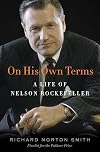
There is no doubt, Nelson Rockefeller, is a “most interesting man.” Now, largely forgotten (and reviled) by the Republican Party, he served as a special envoy to South America under Franklin Roosevelt, a presidential assistant in the Eisenhower administration, governor of New York for almost 14 years, and appointed vice president under Gerald Ford in the post-Watergate era. Oh, he was also heir to one of the biggest fortunes in the world. He ran for president several times (never very show more well) and was almost driven off the stage by angry Goldwater supporters at the 1964 Republican National Convention. This biography goes into fascinating detail on all of this (and more) for over 800 pages. So reading this book is not for the faint at heart—but you will be rewarded. For those that lived during the “Rockefeller Republican” era it provides context to the current state of Republican Party politics; for those who may have heard of the name Rockefeller only through “30 Rock” or the annual Christmas tree lighting in the plaza that bears the Rockefeller name, this is great history. Rockefeller, for the most part, was never conscious of his wealth. His years as governor of New York were, for the most part, progressive. Attica remains a stain on his reputation—somewhat justified—but here was a typical problem in public policy: no good options, only bad choices and he made one that was deadly. He was kicked off the Republican ticket in 1976 and he appears to have lost his zest for politics. He died three years later of a massive coronary in the arms of a woman less than half his age. Richard Norton Smith does justice to this complex man and it is worth the long read. show less
 This review was written for LibraryThing Early Reviewers.
Richard Norton Smith's extensive biography of Nelson Rockefeller titled "On His Own Terms: A Life of Nelson Rockfeller" is a tour de force from start to finish. While dense in detail and comprehensive in its narration of the life of Nelson Rockefeller, it is at the same time extremely well written and eminently readable. Nelson Rockefeller was the epitomy of the twentieth century progressive technocrat politician, in the vein of Wilson and FDR. All problems had a solution, a government show more solution mind you, If enough elite minds and plenty of money could be brought to bear. Rockefeller could afford to be such a progressive because of the resources he inherited; the elite status he enjoyed in society and politics; the fact that he (or later, the public coffers) could pay the price for his "scientific: approach to fulfilling every dream he desired; and the fact that he could always say that he meant well in all that he did "for the good of the people of New York.". His profligacy with his own resources was one thing, but his profligacy with other people's money was quite another.
After four terms as the governor of New York, he left a legacy for his successors and "the people of New York" that included the most burdensome tax load in the nation; a state and the largest city in the nation facing the possibility of default on the outsized debt he had incurred, the implementation of "innovative" public financing that was designed to circumvent reasonable checks and balances, and establishing programs that were not sustainable without continued increases in support. Only in the final years of his final term did he come to realize what he had wrought and began to pull back from the bleeding edge of liberal activism. It is highly instructive to read the criticism of Rockefeller by Jackie Robinson, just before Robinson died. A staunch supporter of Rockefeller as the visionary progressive, but now disappointed in the realist Rockefeller, he wrote: "I cannot fight any longer, Governor, for I believe you have lost the sensitivity and understanding I felt was yours when I worked for you." Spoken like a true liberal: no consideration for the tax burdens placed on the middle class by the South Mall, the thousands of miles of road, the financing of the arts, the burgeoning welfare rolls, and so may other of Rockefeller's "projects", all of which took him from his original pledge of "pay as you go" governance. Instead of bedrock realism informing governance, poor Jackie was looking for sensitivity and understanding - and an endlessly open public checkbook drawing on the resources of the citizenry.
And yet, this remarkable biography makes clear that Nelson Rockefeller was a true study in the contradictions found in the make up of historically important individuals. Yes, so many accomplishments, so much culture and refinement, so much devotion to good things. But also a failed marriage, family estrangement, the constant background noise of infidelity and betrayal of those closest to him, and constant seeking of power and influence.
This book also makes clear, if it needed to made any clearer, that politics is a messy business and those who engage in it with all their hearts and souls often find they have sold their souls for a mess of pottage. That should be a cautionary tale for the citizens of this nation in this political season when the possible choice is not good, better or best, but rather the least ugly, the least damaging, the least corrupt.
The author also provides a detailed look into the Rockefeller family organization, some of their pet projects (MoMA and Rockefeller Center, for example), and the financial empire they controlled. The lifestyle they enjoyed might appear at first glance to be enviable, but in reality it could be, and in fact was for many of the family, a burden.
Thank you, Mr. Richard Norton Smith, for the good read. show less
After four terms as the governor of New York, he left a legacy for his successors and "the people of New York" that included the most burdensome tax load in the nation; a state and the largest city in the nation facing the possibility of default on the outsized debt he had incurred, the implementation of "innovative" public financing that was designed to circumvent reasonable checks and balances, and establishing programs that were not sustainable without continued increases in support. Only in the final years of his final term did he come to realize what he had wrought and began to pull back from the bleeding edge of liberal activism. It is highly instructive to read the criticism of Rockefeller by Jackie Robinson, just before Robinson died. A staunch supporter of Rockefeller as the visionary progressive, but now disappointed in the realist Rockefeller, he wrote: "I cannot fight any longer, Governor, for I believe you have lost the sensitivity and understanding I felt was yours when I worked for you." Spoken like a true liberal: no consideration for the tax burdens placed on the middle class by the South Mall, the thousands of miles of road, the financing of the arts, the burgeoning welfare rolls, and so may other of Rockefeller's "projects", all of which took him from his original pledge of "pay as you go" governance. Instead of bedrock realism informing governance, poor Jackie was looking for sensitivity and understanding - and an endlessly open public checkbook drawing on the resources of the citizenry.
And yet, this remarkable biography makes clear that Nelson Rockefeller was a true study in the contradictions found in the make up of historically important individuals. Yes, so many accomplishments, so much culture and refinement, so much devotion to good things. But also a failed marriage, family estrangement, the constant background noise of infidelity and betrayal of those closest to him, and constant seeking of power and influence.
This book also makes clear, if it needed to made any clearer, that politics is a messy business and those who engage in it with all their hearts and souls often find they have sold their souls for a mess of pottage. That should be a cautionary tale for the citizens of this nation in this political season when the possible choice is not good, better or best, but rather the least ugly, the least damaging, the least corrupt.
The author also provides a detailed look into the Rockefeller family organization, some of their pet projects (MoMA and Rockefeller Center, for example), and the financial empire they controlled. The lifestyle they enjoyed might appear at first glance to be enviable, but in reality it could be, and in fact was for many of the family, a burden.
Thank you, Mr. Richard Norton Smith, for the good read. show less
This review was written for LibraryThing Early Reviewers.While this may be a great big doorstop of a biography, if you're at all interested in the American political world of the third quarter of the twentieth century this is a book you ought to read. Smith has researched diligently, and the result is an elegant and balanced life of an extremely complicated individual. Rockefeller's personal and political lives are well chronicled (sometimes, I dare say, to slight excess), and one certainly gets a good sense of the man and his vision.
Highly show more recommended to fans of Robert Caro, American politics, &c. show less
Highly show more recommended to fans of Robert Caro, American politics, &c. show less
This review was written for LibraryThing Early Reviewers.
This is a good biography of a difficult man to engage with emotionally. Herbert Hoover, 31st president of the United States, is perhaps somewhat unfairly blamed for the massive depression that befell his country on his watch, and he is certainly unfairly forgotten as one of the foremost forces for good in the amelioration of hunger in war-torn nations. But as a man and as a public figure, he is rather rightly thought of as being not a warm person, a determinedly practical man capable of show more advocating sometimes harsh policies and avoiding the human qualities that made his successor (and bitter rival) Franklin D. Roosevelt such a popular figure. Hoover's haughtiness hid a humanitarian spirit, but politically, he was averse to anything he did not define as pragmatic and advantageous for the conservative elements he served. Of course, in Hoover's day, conservatism had a strong progressive element woven throughout its American tapestry, and much of Hoover's inclinations would seem anathema to his party today. Yet, at heart, he was a true Republican, vigorously opposed to social programs that took the public welfare even partly out of the hands of the individual, and vehemently opposed to communism and anyone who did not oppose it as reactively as did he. Smith's biography is well-written, but on some occasions gets so wrapped up in intricacies of phrasing and the use of nicknames and presumably well-known (and thus undefined) facts that it becomes difficult to follow. What is most surprising about the book is that Hoover's presidency is over before the book reaches the end of its first third, so much of his life work post-dated his term in office. Of greatest interest, aside from detailing the wonderful work Hoover did saving Belgium from starvation during the first world war and doing the same for several other nations after the second, is probably the virulent rivalry and opposition between himself and FDR. Of equal interest is the surprising friendship that grew between Hoover and Roosevelt's successor, the Democrat Harry Truman. While not a remarkable book, this is a worthy and informative one. show less
Lists
Awards


You May Also Like


Associated Authors
Statistics
- Works
- 12
- Also by
- 3
- Members
- 905
- Popularity
- #28,348
- Rating
- 4.0
- Reviews
- 28
- ISBNs
- 28
- Favorited
- 2
