
Millen Brand (1906–1980)
Author of The Outward Room
About the Author
Image credit: from wikipedia
Works by Millen Brand
Associated Works
Rediscoveries: Informal Essays in Which Well-Known Novelists Rediscover Neglected Works of Fiction by One of Their Favorite Authors (1971) — Contributor — 27 copies
Tagged
Common Knowledge
- Birthdate
- 1906
- Date of death
- 1980
- Gender
- male
- Education
- Columbia University (BA, BLitt) (1929)
- Occupations
- psychiatric aide
copywriter (New York Telephone Company)
editor (Crown Publishers)
poet - Organizations
- League of American Writers
- Relationships
- Leader, Pauline (first wife)
- Nationality
- USA
- Birthplace
- Jersey City, New Jersey, USA
- Places of residence
- Jersey City, New Jersey, USA
Bucks County, Pennsylvania, USA
Greenwich Village, New York, USA - Place of death
- New York, New York, USA
- Burial location
- Concord, Massachusetts, USA
- Map Location
- USA
Members
Reviews
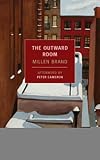
"[I]t seemed flat, gray, without color." This phrase, over a hundred pages in, is the first & only time this book raised any interest in me. It seemed such a self-aware admission of the book's myriad faults. But, alas, no. The narrator is describing a building rather than the narrative itself. And so my interest waned & I slogged thru the remaining 120 pages only because I received this book as an Early Reviewer.
Much of my work centers around, to describe them overly broadly, asylum novels. show more Here are some brilliant ones: "The Snake Pit," by Mary Jane Ward . . . "The Bell Jar" by Sylvia Plath . . . "Under Observation" by Amelie Skram . . . "Bird-Eyes" by Madelyn Arnold . . . "The Treatment" and "The Cure" by Peter Kocan . . . "Beyond the Glass" by Antonia White. This is just off the top of my head; there are, of course, lots more. Where these novels succeed is in capturing the mixture of tension, fear, confusion, boredom that you can find on a psych ward. Brand's novel tells us that there is a lot of the first three but demonstrates only the last and that only by prose that is itself so boring that I, as a reader, have to believe in the boringness of the hospital, because certainly anything with the least bit of interest should perk up the flat narration.
The books I've listed also succeed in showing the powerless anger patients can feel, even if only fleetingly. In The Outward Room, on the other hand Harriet, our heroine, has a nauseatingly complete belief in her psychiatrist, for no clear reason I can see since he sounds like a condescending, manipulative sadist. We get a long, boring (of course, it's boring!) unintentionally comic session of what the author imagines Freudian analysis must sound like. Harriet's "illness" is explained by a vague, misogynistic mishmash of Oedipal ridiculousness. It might make sense if we really knew anything about her loss, but the book never bothers to detail much of anything: characters, places, emotions, everything here is told not shown; is one-dimensional; is "flat, gray and without color."
(Plot spoilers ahead) So she escapes (boringly) to Manhattan. "Now she was asserting her freedom," says the narrative voice. But there's no exhilaration, no charge, no change in Harriet or in the language used to describe her. Besides the word "freedom" itself, nothing else lets us imagine anything like freedom is even under discussion.
What does Harriet do with her freedom? Eventually she goes home with John, a stranger who turns out to have a heart of gold. And finds salvation in . . . housework. Let me pause here to point out that most of the novels I've listed critique the enforced feminine heteronormativity under which female patients suffered until very recently. Generally this meant dresses, make-up, hair-dos, and an acceptance of woman's place in the home. Early on we're told that Harriet is wearing a tailored dress as part of the hospital regimen. The novel doesn't explore this issue. Instead, it adopts the hospital's ideology and shows us how feminine stereotypes save lives. Once back to John's apartment Harriet finds life again by "Washing, cooking -- tasks to do until the hour when he would return. . . . All that she did had meaning." Her presenting him with a successfully washed and ironed shirt is written as a particularly triumphant moment. We know she's really all better by the last paragraph because she's finally ready to become his wife.
John is working class & brings in some talk of labor radicalism that, despite its possibilities, is as boring, one-dimensional, unreal, as anything else in the novel. This book was published in 1937, so Brand couldn't have read Plath. But Amalie Skram, Charlotte Perkins Gilman, Antonia White, Virginia Woolf, and many, many others, had written critiques of psych-ward ideology that Brand is either unaware of or just doesn't care about. But then, after all, this isn't an asylum novel. It's a book about the feminine mystique and how only that can save women, Harriets all. show less
Much of my work centers around, to describe them overly broadly, asylum novels. show more Here are some brilliant ones: "The Snake Pit," by Mary Jane Ward . . . "The Bell Jar" by Sylvia Plath . . . "Under Observation" by Amelie Skram . . . "Bird-Eyes" by Madelyn Arnold . . . "The Treatment" and "The Cure" by Peter Kocan . . . "Beyond the Glass" by Antonia White. This is just off the top of my head; there are, of course, lots more. Where these novels succeed is in capturing the mixture of tension, fear, confusion, boredom that you can find on a psych ward. Brand's novel tells us that there is a lot of the first three but demonstrates only the last and that only by prose that is itself so boring that I, as a reader, have to believe in the boringness of the hospital, because certainly anything with the least bit of interest should perk up the flat narration.
The books I've listed also succeed in showing the powerless anger patients can feel, even if only fleetingly. In The Outward Room, on the other hand Harriet, our heroine, has a nauseatingly complete belief in her psychiatrist, for no clear reason I can see since he sounds like a condescending, manipulative sadist. We get a long, boring (of course, it's boring!) unintentionally comic session of what the author imagines Freudian analysis must sound like. Harriet's "illness" is explained by a vague, misogynistic mishmash of Oedipal ridiculousness. It might make sense if we really knew anything about her loss, but the book never bothers to detail much of anything: characters, places, emotions, everything here is told not shown; is one-dimensional; is "flat, gray and without color."
(Plot spoilers ahead) So she escapes (boringly) to Manhattan. "Now she was asserting her freedom," says the narrative voice. But there's no exhilaration, no charge, no change in Harriet or in the language used to describe her. Besides the word "freedom" itself, nothing else lets us imagine anything like freedom is even under discussion.
What does Harriet do with her freedom? Eventually she goes home with John, a stranger who turns out to have a heart of gold. And finds salvation in . . . housework. Let me pause here to point out that most of the novels I've listed critique the enforced feminine heteronormativity under which female patients suffered until very recently. Generally this meant dresses, make-up, hair-dos, and an acceptance of woman's place in the home. Early on we're told that Harriet is wearing a tailored dress as part of the hospital regimen. The novel doesn't explore this issue. Instead, it adopts the hospital's ideology and shows us how feminine stereotypes save lives. Once back to John's apartment Harriet finds life again by "Washing, cooking -- tasks to do until the hour when he would return. . . . All that she did had meaning." Her presenting him with a successfully washed and ironed shirt is written as a particularly triumphant moment. We know she's really all better by the last paragraph because she's finally ready to become his wife.
John is working class & brings in some talk of labor radicalism that, despite its possibilities, is as boring, one-dimensional, unreal, as anything else in the novel. This book was published in 1937, so Brand couldn't have read Plath. But Amalie Skram, Charlotte Perkins Gilman, Antonia White, Virginia Woolf, and many, many others, had written critiques of psych-ward ideology that Brand is either unaware of or just doesn't care about. But then, after all, this isn't an asylum novel. It's a book about the feminine mystique and how only that can save women, Harriets all. show less
 This review was written for LibraryThing Early Reviewers.
As a fictional record of the awful desperation and crushing poverty that existed during the Great Depression of the 1930s, this is an outstanding example. It also depicts the beginnings of labor unions in this country. I'll admit readily I don't know that much about this aspect of the story, but I'll assume that too is accurate. As a look at the treatment of mental illness and the largely Freudian methods that were in the forefront in the 30s - once again, relevant and probably accurate. I'm show more not so sure, however, of the accuracy of the depiction of what might go on inside the mind of a manic-depressive woman who has been traumatized by a violent death in her family. But then who can know this for sure? The protagonist, whose real name we never learn, escapes from the Islington Hospital for the insane, where she has been incarcerated for several years or more, due to a mental breakdown following the death of her beloved older brother in an automobile accident. Taking the name Harriet Demuth, she rides the rails of a train, then hitchhikes to NYC, where she begins to try to rebuild a life. She knows she's probably still ill, but serendipitously meets a good and decent man, John, a former coal-miner turned machinist, who takes her in and cares for her and, gradually, they fall in love. Can true love cure mental illness? Well, if Brand's story can be believed, perhaps it can. I'm not inclined to disbelieve.
I didn't think I was going to like this story when I began it, but it picked up momentum once Harriet arrived in the city and then was taken in by John. I found myself rooting for this downtrodden couple - the woman tormented by her inner demons and doubts, and the hardworking, enterprising man who tries to do right by her, working long thankless hours at his lathes and drill presses in a machine shop. Harriet too takes a job for a time in a garment factory, a job which finally gave me a descriptive realistic look at what the term "sweat shop" really means. Secondary characters too come alive, in Harriet's shop friend, Anna Tannik, who can't marry her boyfriend because her parents and siblings need her paycheck, miniscule as it may be. Anna's father, let go from his job and beaten down by despair as he searches endlessly for work, pounding the pavements with thousands of other disenfranchised unemployed. And this is a love story too, told in the most simplistic and starkest of terms, but nonetheless, achingly believable.
There is also the symbolism of the "rooms" to consider here: first her room in the asylum, described minutely, then her first three-dollar-a-week room in a New York rooming house, and finally the two-room walkup she shares with John, all examined in detail and described both physically and figuratively. Though not overtly intrusive, there is 'art' in this story, something the critics I suppose loved.
When this book was first published nearly 75 years ago, it sold nearly a half-million copies, an astounding number in those days. It received high praise from the likes of Sinclair Lewis and Theodore Dreiser. And I can see why. Yet Brand never again achieved the recognition or commercial success that he enjoyed with this book, The Outward Room. Before reading this new edition from NYRB Classics, I had never heard of Millen Brand. There's nothing flashy about this novel. But it is a quietly beautiful little book. It didn't deserve to disappear the way it did for over 50 years. I hope it sticks around a while this time. Perhaps it will find a new audience now that our country seems to be on the verge of another Depression. Verge, hell. We're in it, folks. Unfortunately, the kind of anger, fear and desperation depicted in The Outward Room seems relevant once again. For that reason alone it's worth reading. I'm glad I read it. show less
I didn't think I was going to like this story when I began it, but it picked up momentum once Harriet arrived in the city and then was taken in by John. I found myself rooting for this downtrodden couple - the woman tormented by her inner demons and doubts, and the hardworking, enterprising man who tries to do right by her, working long thankless hours at his lathes and drill presses in a machine shop. Harriet too takes a job for a time in a garment factory, a job which finally gave me a descriptive realistic look at what the term "sweat shop" really means. Secondary characters too come alive, in Harriet's shop friend, Anna Tannik, who can't marry her boyfriend because her parents and siblings need her paycheck, miniscule as it may be. Anna's father, let go from his job and beaten down by despair as he searches endlessly for work, pounding the pavements with thousands of other disenfranchised unemployed. And this is a love story too, told in the most simplistic and starkest of terms, but nonetheless, achingly believable.
There is also the symbolism of the "rooms" to consider here: first her room in the asylum, described minutely, then her first three-dollar-a-week room in a New York rooming house, and finally the two-room walkup she shares with John, all examined in detail and described both physically and figuratively. Though not overtly intrusive, there is 'art' in this story, something the critics I suppose loved.
When this book was first published nearly 75 years ago, it sold nearly a half-million copies, an astounding number in those days. It received high praise from the likes of Sinclair Lewis and Theodore Dreiser. And I can see why. Yet Brand never again achieved the recognition or commercial success that he enjoyed with this book, The Outward Room. Before reading this new edition from NYRB Classics, I had never heard of Millen Brand. There's nothing flashy about this novel. But it is a quietly beautiful little book. It didn't deserve to disappear the way it did for over 50 years. I hope it sticks around a while this time. Perhaps it will find a new audience now that our country seems to be on the verge of another Depression. Verge, hell. We're in it, folks. Unfortunately, the kind of anger, fear and desperation depicted in The Outward Room seems relevant once again. For that reason alone it's worth reading. I'm glad I read it. show less
This review was written for LibraryThing Early Reviewers.
New Jersey photographer George Tice is best known as an urban romantic, the title of one of his later books and the subject of an exhibit at the International Center of Photography. But Fields of Peace is an elegiac work, focusing on the Amish and Mennonite peoples of Lancaster County. There are portraits and landscapes and churchscapes and dozens of simple domestic scenes, all beautifully printed. This revised edition is largely early work, mostly shot in the mid-to-late 1960s, supplemented show more by 39 additional photographs, including five shot in 1990; the text by Millen Brand is unaltered from the 1970 edition. A few of the images have become icons, instantly recognizable; many others are less known but no less powerful.
There are no captions, and text does not explain any of the images, which literally need no explanation. Collectively they tell a story, and that story is not ours. So little has changed in those communities that only one photograph, of a young man in sunglasses riding a horse, was identifiable by me as a contemporary image. The text is a sympathetic, candid and enlightening description of the Amish and Mennonite peoples, usually erroneously called "Pennsylvania Dutch."
This is a beautiful book. show less
There are no captions, and text does not explain any of the images, which literally need no explanation. Collectively they tell a story, and that story is not ours. So little has changed in those communities that only one photograph, of a young man in sunglasses riding a horse, was identifiable by me as a contemporary image. The text is a sympathetic, candid and enlightening description of the Amish and Mennonite peoples, usually erroneously called "Pennsylvania Dutch."
This is a beautiful book. show less
Madness. Wholeness. Healing through the tiny details of a life lived among others who care for us, and the terrible fragility we all navigate. This is a classic. So much larger than can be contained within its pages.
THE OUTWARD ROOM is the best kind of philosophical book: one rooted in story, in character, and one in which the word 'philosophical' never appears, and yet it asks all the important questions, and does so brilliantly, in a mere 230 pages.
Reward yourself. Read this book.
THE OUTWARD ROOM is the best kind of philosophical book: one rooted in story, in character, and one in which the word 'philosophical' never appears, and yet it asks all the important questions, and does so brilliantly, in a mere 230 pages.
Reward yourself. Read this book.
Awards

You May Also Like


Associated Authors
Statistics
- Works
- 11
- Also by
- 3
- Members
- 327
- Popularity
- #72,481
- Rating
- 3.7
- Reviews
- 9
- ISBNs
- 10
