
Louis Bayard (1) (1963–)
Author of The Pale Blue Eye
For other authors named Louis Bayard, see the disambiguation page.
About the Author
Image credit: louisbayard.com
Works by Louis Bayard
Associated Works
Maybe Baby: 28 Writers Tell the Truth About Skepticism, Infertility, Baby Lust, Childlessness, Ambivalence, and How They Made the Biggest Decision of Their Lives (2006) — Contributor — 133 copies, 4 reviews
Tagged
Common Knowledge
- Birthdate
- 1963-11-30
- Gender
- male
- Nationality
- USA
- Birthplace
- Albuquerque, New Mexico, USA
- Associated Place (for map)
- New Mexico, USA
Members
Reviews
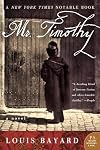
Here's Tiny Tim Cratchit, all grown up, trying to find himself (to put a 20th century term to it) or claim his narrative (if we want to drag him all the way into this century), and getting mixed up in some pretty seamy stuff. Both his parents are dead, and he is somewhat estranged from his surviving siblings. Uncle Ebenezer is still doling out support, but Tim gets room and board in a brothel in exchange for teaching the "matron" to read, and spends many a night trawling the river and canals show more with a retired sea captain, hoping to haul up a dead body with treasure in its pockets. He "sees" his father periodically here and there, and writes letters to Bob trying to sort out his legacy. It's a very Dickensian existence. When Tim stumbles on evidence of a white slavery scheme victimizing very young girls, he finds a purpose. At first he hopes only to save one particular girl who seems to have temporarily escaped the clutches of the villains, but soon he begins to hope he might bring down the whole crooked undertaking. It's 19th century skulduggery, with lots of thrills, suspense and plot twists. I loved it. Grim subject matter, but well handled. show less
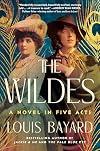
I was all set to begin this review, “an enjoyable read.” Then I stopped to ask myself if one can justly say that about a retelling of Oscar Wilde’s crash and burn, leaving an entire family in desolate ruins. And yet, I did enjoy it. The writing is sparkling, with the Wildean wit spreading like contagion to his wife, Constance, and his sons, Cyril and Vyvyan. While Oscar is at the center of attention, where he liked to be, this isn’t his story as much as that of the others for whom he show more is that center.
The novel is structured as a play in five acts, with two entr’actes. As the fateful events of the summer of 1894 unfold at the Norfolk farm they’ve rented for the holidays, Constance thinks: “Melodrama, breaking into all the comedy of Londoners on holiday. Can it be that they have, all of them, wandered into an Oscar Wilde play?”
One reason I allowed myself to enjoy the tale was the knowledge that it happened and can no longer be changed, But then, in Act Five, Bayard does exactly that. He rewrites the final day of the Norfolk holiday, and Constance conjures up the perfect Wildean play, in which they all, including Lord Alfred Douglas, come off much better than any of them did in real life.
Nice if it could have worked out that way, but I don’t buy it. While other Victorians successfully lived a life of pretense, Oscar (“with his egoism and disdain for consequences,” as Constance muses) would have missed the adventure of his previous life.
And in the end, it paints Constance, through her lack of imagination at the critical moment, as the cause of the tragedy that played out. That’s unsatisfactory, because I’d come to admire Constance as depicted in this book. She has a wit to match Oscar’s but chooses not to always deploy it. And I enjoyed watching her get the best of both Oscar and Lord Alfred in an argument about art and morality.
And yet, isn’t it sad that life isn’t art, and that we can’t return to a crucial event and rewrite the script? Something in us would love to be able to. show less
The novel is structured as a play in five acts, with two entr’actes. As the fateful events of the summer of 1894 unfold at the Norfolk farm they’ve rented for the holidays, Constance thinks: “Melodrama, breaking into all the comedy of Londoners on holiday. Can it be that they have, all of them, wandered into an Oscar Wilde play?”
One reason I allowed myself to enjoy the tale was the knowledge that it happened and can no longer be changed, But then, in Act Five, Bayard does exactly that. He rewrites the final day of the Norfolk holiday, and Constance conjures up the perfect Wildean play, in which they all, including Lord Alfred Douglas, come off much better than any of them did in real life.
Nice if it could have worked out that way, but I don’t buy it. While other Victorians successfully lived a life of pretense, Oscar (“with his egoism and disdain for consequences,” as Constance muses) would have missed the adventure of his previous life.
And in the end, it paints Constance, through her lack of imagination at the critical moment, as the cause of the tragedy that played out. That’s unsatisfactory, because I’d come to admire Constance as depicted in this book. She has a wit to match Oscar’s but chooses not to always deploy it. And I enjoyed watching her get the best of both Oscar and Lord Alfred in an argument about art and morality.
And yet, isn’t it sad that life isn’t art, and that we can’t return to a crucial event and rewrite the script? Something in us would love to be able to. show less
Rating: 4.5* of five
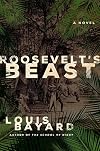
The Publisher Says: 1914. Brazil’s Rio da Dúvida, the River of Doubt. Plagued by hunger and suffering the lingering effects of malaria, Theodore Roosevelt, his son Kermit, and the other members of the now-ravaged Roosevelt-Rondon scientific expedition are traveling deeper and deeper into the jungle. When Kermit and Teddy are kidnapped by a never-before-seen Amazonian tribe, the great hunters are asked one thing in exchange for their freedom: find and kill a beast that show more leaves no tracks and that no member of the tribe has ever seen. But what are the origins of this beast, and how do they escape its brutal wrath?
Roosevelt's Beast is a story of the impossible things that become possible when civilization is miles away, when the mind plays tricks on itself, and when old family secrets refuse to stay buried. With his characteristically rich storytelling and a touch of old-fashioned horror, the bestselling and critically acclaimed Louis Bayard turns the story of the well-known Roosevelt-Rondon expedition on its head and dares to ask: Are the beasts among us more frightening than the beasts within?
I RECEIVED THIS BOOK FROM THE PUBLISHER AS PART OF LIBRARY THING'S EARLY REVIEWERS PROGRAM
My Review: Listen to this:
And we're off, down the River of Doubt with Kermit Roosevelt and his famous father (of whom Kermit's eldest half-sister, Alice, said, "Father wanted to be the bride at every wedding and the corpse at every funeral") and somebody scientific who, frankly, interested me not at all.
Kermit tells us about this factual trip in moderate detail, enough to make the facts of the journey come across as lived, not reported. That's a frequent issue I have with historical fiction, the author's telling of the tale sounds like a highly embellished report and not a novel. Enough is here to make the atmosphere come humidly to life; not so much as to feel ponderous. Here, like this, listen:
It's the precise sort of thing I'd expect the clever son of an overwhelmingly larger-than-life father to say, to focus on distances and travels and quotidian concerns because his giant of a father (Roosevelt was maybe 5'8" in body but 12'12" in spirit) has sucked up the glory-hounding until he's simply got nothing else to think about.
And then on an overnight stop, Kermit and TR are kidnapped by a previously uncontacted native group (I do so loathe the locution "undiscovered tribe"—and who, might one inquire, determined that being contacted was being discovered, like their lives before Europeans showed up weren't real?). Their freedom can only be bought by ridding these people of their monster, a killer of Grendel-ish horrific-ness. Two days the men seek and revoltingly find the Beast's results, and only when they are living out a nightmare of misery and a cleansing, purifying agony of memory and rage do they really encounter the Beast...within, as always.
Both are shattered and neither is ever the same after this trip. (Factual again, after the invented Beast interlude.) Kermit succumbs slowly to the depression and addiction that killed his paternal uncle, and TR himself gives up, defeated for the only time in his life...and by himself, as in the end are we all. TR can't face the even the notion that anyone will ever so much as hear a whisper of his ordeal (oh, and Kermit's, but you know whose rep is foremost on TR's mind):
A novel of fathers and sons, of myths and monsters, and of identity and fate. It's written in Bayard's accustomed voluptuous prose, and it's got the usual peaks and valley in plotting. I myownself wish that the Beast had been nailed down, shown to be either real or a projection of mass psychosis or a deeply experienced malaria dream. Nonetheless, I'm sure many will find this blurring of borders exactly to their taste, and even those among us for whom that's not the draw to the story needn't let it cause us too much pain. Simply decide for yourself what interpretation you want to put on it, and do so. Bayard's story will support it.
And that's about the best compliment I can give a writer, that one there.
This work is licensed under a Creative Commons Attribution-NonCommercial-ShareAlike 3.0 Unported License. show less
The Publisher Says: 1914. Brazil’s Rio da Dúvida, the River of Doubt. Plagued by hunger and suffering the lingering effects of malaria, Theodore Roosevelt, his son Kermit, and the other members of the now-ravaged Roosevelt-Rondon scientific expedition are traveling deeper and deeper into the jungle. When Kermit and Teddy are kidnapped by a never-before-seen Amazonian tribe, the great hunters are asked one thing in exchange for their freedom: find and kill a beast that show more leaves no tracks and that no member of the tribe has ever seen. But what are the origins of this beast, and how do they escape its brutal wrath?
Roosevelt's Beast is a story of the impossible things that become possible when civilization is miles away, when the mind plays tricks on itself, and when old family secrets refuse to stay buried. With his characteristically rich storytelling and a touch of old-fashioned horror, the bestselling and critically acclaimed Louis Bayard turns the story of the well-known Roosevelt-Rondon expedition on its head and dares to ask: Are the beasts among us more frightening than the beasts within?
I RECEIVED THIS BOOK FROM THE PUBLISHER AS PART OF LIBRARY THING'S EARLY REVIEWERS PROGRAM
My Review: Listen to this:
After all these years, his best friend is malaria.
Even on the brink of an Alaska summer, it comes calling: a bone-deep chill one night, a ministry of sweat the next. Calling him back to old battles.
And we're off, down the River of Doubt with Kermit Roosevelt and his famous father (of whom Kermit's eldest half-sister, Alice, said, "Father wanted to be the bride at every wedding and the corpse at every funeral") and somebody scientific who, frankly, interested me not at all.
Kermit tells us about this factual trip in moderate detail, enough to make the facts of the journey come across as lived, not reported. That's a frequent issue I have with historical fiction, the author's telling of the tale sounds like a highly embellished report and not a novel. Enough is here to make the atmosphere come humidly to life; not so much as to feel ponderous. Here, like this, listen:
Here was the thing about traveling down an uncharted river: You could only say how long you'd been traveling; you could never say how long it would be.
It's the precise sort of thing I'd expect the clever son of an overwhelmingly larger-than-life father to say, to focus on distances and travels and quotidian concerns because his giant of a father (Roosevelt was maybe 5'8" in body but 12'12" in spirit) has sucked up the glory-hounding until he's simply got nothing else to think about.
And then on an overnight stop, Kermit and TR are kidnapped by a previously uncontacted native group (I do so loathe the locution "undiscovered tribe"—and who, might one inquire, determined that being contacted was being discovered, like their lives before Europeans showed up weren't real?). Their freedom can only be bought by ridding these people of their monster, a killer of Grendel-ish horrific-ness. Two days the men seek and revoltingly find the Beast's results, and only when they are living out a nightmare of misery and a cleansing, purifying agony of memory and rage do they really encounter the Beast...within, as always.
Both are shattered and neither is ever the same after this trip. (Factual again, after the invented Beast interlude.) Kermit succumbs slowly to the depression and addiction that killed his paternal uncle, and TR himself gives up, defeated for the only time in his life...and by himself, as in the end are we all. TR can't face the even the notion that anyone will ever so much as hear a whisper of his ordeal (oh, and Kermit's, but you know whose rep is foremost on TR's mind):
“You are asking us to lie, Colonel?"
"I am asking you to omit. Surely, amidst the...the infinite gradations of human venality, that particular sin ranks low." The old man kneaded the folds of his throat. "What happened out there belongs out there. The jungle has it; let the jungle keep it...”
A novel of fathers and sons, of myths and monsters, and of identity and fate. It's written in Bayard's accustomed voluptuous prose, and it's got the usual peaks and valley in plotting. I myownself wish that the Beast had been nailed down, shown to be either real or a projection of mass psychosis or a deeply experienced malaria dream. Nonetheless, I'm sure many will find this blurring of borders exactly to their taste, and even those among us for whom that's not the draw to the story needn't let it cause us too much pain. Simply decide for yourself what interpretation you want to put on it, and do so. Bayard's story will support it.
And that's about the best compliment I can give a writer, that one there.
This work is licensed under a Creative Commons Attribution-NonCommercial-ShareAlike 3.0 Unported License. show less
 This review was written for LibraryThing Early Reviewers.
Mr. Timothy - Bayard
4 stars
It is mid-December in 1860. I knew before the end of the first chapter that it wouldn’t be a nice Christmas story. This isn’t Dickens. Mr.Timothy Cratchit is narrating his own story. He is, in a way, an unreliable narrator. It’s his story, but he isn’t really sure who he is in the world. He doesn’t trust his own memories or his current perceptions.
Timothy is a young man. He is having a bit of an identity crisis. He is mourning his losses; brothers and show more sisters, dead or gone; his mother and most recently, his father, deceased. Timothy is tired of being the Victorian equivalent of ‘poster child’. He is trying, with limited success, to separate himself financially from his Uncle ‘N’ (Ebenezer Scrooge). He’s an emotional mess. He lives in a brothel; teaching the madam how to read in exchange for room and board. He earns a bit of money dredging the Thames for bodies. He sees phantoms of his father all over London. Life is not very good for him.
And then he stumbles over the mutilated bodies of two very young girls.
Dickens wrote about the underbelly of London. He wrote about thieves and murderers and the occasional prostitute. But, Dickens had to stay within the boundaries of Victorian sensibility. Louis Bayard has no such restrictions. Timothy Cratchit tells it as he sees it, and he sees all of the raunchy, ugly, violent activities that surround him. His narration is ironic, sarcastic, and filled with self loathing. So, definitely not a Hallmark Christmas story.
This is not a sequel to A Christmas Carol despite its use of characters from the original story. It is not pastiche or parody. The story stands on its own, although the events of the previous book do provide background history for the adult Timothy.
It is an action filled murder mystery. The writing style is different from the usual murder mystery. Bayard doesn’t use quotation marks. Timothy sometimes switches from first to third person narrative; a bit of metafiction as the character refers to himself as a character. It was easy to get lost in the London fog as the story progressed. This has been my experience with previous Bayard books. The story loses some tension with superfluous details in the middle. In this book the descriptive details are wonderful and full of Dickensian references, but the circuitous chases through London become tedious. Timothy is a bit slow to identify all of the bad guys, but I had plenty of time to work it out.
Although the writing style was very different, I think this book is worthy of Dickens. Bayard creates some wonderful characters. Colin the Melodious is a precocious Artful Dodger, but Philomela is more assertive and intelligent than most of Dickens’ heroines. I enjoyed Captain Gully with his misplaced pronouns and the box-end wrench that replaced his left hand. But the best, the very best, was the brothel madam, Mrs. Sharpe.
I was not in the mood for Timothy’s unfiltered observations of whorehouse activities when I started this book. I would have put it down long before the mystery started had it not been for Mrs. Sharpe’s reading lessons. They are priceless. I have a reading teacher’s sympathy for Timothy as he and his pupil struggle with the early lessons, “We spent a full week on gh words alone because she couldn’t see why the same combination of letters should produce such radically different sounds, and I myself could not explain the wisdom behind these divergences.” As Mrs. Sharpe becomes a proficient reader her literary comments light up the page. They progress to literary criticism and Robinson Crusoe; “ At times, she has even surprised me by stepping outside the written word altogether and offering her own supra-textual commentary. —Oh, he should never have let the one savage go, Tim. Mark my words, he’ll regret it. Or else: —Isn’t it amazing when you think on it? Hasn’t poked a woman in twenty years! I shouldn’t wonder if he buggers Friday before long. “
No, definitely not a Hallmark Christmas story. But, priceless, truly priceless. show less
4 stars
It is mid-December in 1860. I knew before the end of the first chapter that it wouldn’t be a nice Christmas story. This isn’t Dickens. Mr.Timothy Cratchit is narrating his own story. He is, in a way, an unreliable narrator. It’s his story, but he isn’t really sure who he is in the world. He doesn’t trust his own memories or his current perceptions.
Timothy is a young man. He is having a bit of an identity crisis. He is mourning his losses; brothers and show more sisters, dead or gone; his mother and most recently, his father, deceased. Timothy is tired of being the Victorian equivalent of ‘poster child’. He is trying, with limited success, to separate himself financially from his Uncle ‘N’ (Ebenezer Scrooge). He’s an emotional mess. He lives in a brothel; teaching the madam how to read in exchange for room and board. He earns a bit of money dredging the Thames for bodies. He sees phantoms of his father all over London. Life is not very good for him.
And then he stumbles over the mutilated bodies of two very young girls.
Dickens wrote about the underbelly of London. He wrote about thieves and murderers and the occasional prostitute. But, Dickens had to stay within the boundaries of Victorian sensibility. Louis Bayard has no such restrictions. Timothy Cratchit tells it as he sees it, and he sees all of the raunchy, ugly, violent activities that surround him. His narration is ironic, sarcastic, and filled with self loathing. So, definitely not a Hallmark Christmas story.
This is not a sequel to A Christmas Carol despite its use of characters from the original story. It is not pastiche or parody. The story stands on its own, although the events of the previous book do provide background history for the adult Timothy.
It is an action filled murder mystery. The writing style is different from the usual murder mystery. Bayard doesn’t use quotation marks. Timothy sometimes switches from first to third person narrative; a bit of metafiction as the character refers to himself as a character. It was easy to get lost in the London fog as the story progressed. This has been my experience with previous Bayard books. The story loses some tension with superfluous details in the middle. In this book the descriptive details are wonderful and full of Dickensian references, but the circuitous chases through London become tedious. Timothy is a bit slow to identify all of the bad guys, but I had plenty of time to work it out.
Although the writing style was very different, I think this book is worthy of Dickens. Bayard creates some wonderful characters. Colin the Melodious is a precocious Artful Dodger, but Philomela is more assertive and intelligent than most of Dickens’ heroines. I enjoyed Captain Gully with his misplaced pronouns and the box-end wrench that replaced his left hand. But the best, the very best, was the brothel madam, Mrs. Sharpe.
I was not in the mood for Timothy’s unfiltered observations of whorehouse activities when I started this book. I would have put it down long before the mystery started had it not been for Mrs. Sharpe’s reading lessons. They are priceless. I have a reading teacher’s sympathy for Timothy as he and his pupil struggle with the early lessons, “We spent a full week on gh words alone because she couldn’t see why the same combination of letters should produce such radically different sounds, and I myself could not explain the wisdom behind these divergences.” As Mrs. Sharpe becomes a proficient reader her literary comments light up the page. They progress to literary criticism and Robinson Crusoe; “ At times, she has even surprised me by stepping outside the written word altogether and offering her own supra-textual commentary. —Oh, he should never have let the one savage go, Tim. Mark my words, he’ll regret it. Or else: —Isn’t it amazing when you think on it? Hasn’t poked a woman in twenty years! I shouldn’t wonder if he buggers Friday before long. “
No, definitely not a Hallmark Christmas story. But, priceless, truly priceless. show less
Lists
Awards


You May Also Like


Associated Authors
Statistics
- Works
- 12
- Also by
- 5
- Members
- 4,396
- Popularity
- #5,703
- Rating
- 3.7
- Reviews
- 233
- ISBNs
- 128
- Languages
- 7
- Favorited
- 1
