
Clare Clark (1) (1967–)
Author of The Great Stink
For other authors named Clare Clark, see the disambiguation page.
Works by Clare Clark
Tagged
Common Knowledge
Members
Reviews
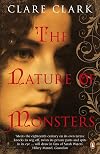
Only about 30+ pages into the book, I found myself hooked by the author's fluent, eloquent prose and knew I had stumbled on a gem of a book written by an exceptionally talented writer. Her vivid imagery and evocative, descriptive prose roll off your tongue and bring alive early eighteenth-century London in front of your eyes with its multitude of sights, sounds, smells, tastes and different textures. Some of my favourite passages involve her descriptions of the newly re-built St Paul's show more Cathedral as it stands sentinel above the London skyline.
Against a backdrop of deep superstition, Eliza Tally is sold into service with an apothecary in London under the impression that he will rid her of her unwanted pregnancy and restore her reputation. Little does she know that he regards her as his ticket for admission to the Royal Society by writing a scientific treatise on maternal imagination, the firmly held belief that the behaviour of a pregnant woman, along with the effects of strong emotions like fear and desire, would manifest themselves physically in the form of the foetus or in their behaviour, himself compelled to do so by his own facial disfigurement. Some reviewers have criticised that the character of Grayson Black, the apothecary, remains "too remote", "vague" and "fades into the background"; I can't agree with that. It is true that the reader only encounters him on a handful of occasions, but by having him stay locked up in his study the author manages to convey the feeling of menace and uneasiness that pervades the household and the fact that all the inhabitants are terrified of him. It is not necessary for him to take a more active part in the developments as he already manages to pull all the strings like an obsessed puppet master.
My only criticism of note deals with the chapters where the author has Eliza interact with the bookseller and his daughter. Littered with quotes from obscure books of the period and meant as a sort of intellectual sparring between the two, it nevertheless feels forced and the passages are too long. I was impatient to be delayed in the development of the plot and had the impression that the author got slightly carried away and that a bit more judicious editing in those chapters would have been better; but that is only a minor quibble and will only minimally distract you from the pleasure of reading this book.
A warning: This book is not for the faint-hearted: her characters spit, fart, vomit, urinate, defecate, bleed, breastfeed and give birth. Some of the descriptions where the heroine, Eliza, tries to abort the worm, as she calls it, are not easy to read but if you can stomach these passages, you will be rewarded with a novel that merits repeated readings, where you will re-discover new details and beautiful and often luminous prose that will enrich your life. show less
Against a backdrop of deep superstition, Eliza Tally is sold into service with an apothecary in London under the impression that he will rid her of her unwanted pregnancy and restore her reputation. Little does she know that he regards her as his ticket for admission to the Royal Society by writing a scientific treatise on maternal imagination, the firmly held belief that the behaviour of a pregnant woman, along with the effects of strong emotions like fear and desire, would manifest themselves physically in the form of the foetus or in their behaviour, himself compelled to do so by his own facial disfigurement. Some reviewers have criticised that the character of Grayson Black, the apothecary, remains "too remote", "vague" and "fades into the background"; I can't agree with that. It is true that the reader only encounters him on a handful of occasions, but by having him stay locked up in his study the author manages to convey the feeling of menace and uneasiness that pervades the household and the fact that all the inhabitants are terrified of him. It is not necessary for him to take a more active part in the developments as he already manages to pull all the strings like an obsessed puppet master.
My only criticism of note deals with the chapters where the author has Eliza interact with the bookseller and his daughter. Littered with quotes from obscure books of the period and meant as a sort of intellectual sparring between the two, it nevertheless feels forced and the passages are too long. I was impatient to be delayed in the development of the plot and had the impression that the author got slightly carried away and that a bit more judicious editing in those chapters would have been better; but that is only a minor quibble and will only minimally distract you from the pleasure of reading this book.
A warning: This book is not for the faint-hearted: her characters spit, fart, vomit, urinate, defecate, bleed, breastfeed and give birth. Some of the descriptions where the heroine, Eliza, tries to abort the worm, as she calls it, are not easy to read but if you can stomach these passages, you will be rewarded with a novel that merits repeated readings, where you will re-discover new details and beautiful and often luminous prose that will enrich your life. show less
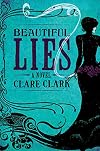
The basics: Set in 1887 London, Beautiful Lies is the story of Maribel Campbell Lowe, whose husband Edward Campbell Lowe is a politician. Maribel was born in Chile and educated in Paris. When a letter arrives from her estranged mother asking to meet in London, their picture perfect life begins to unravel.
My thoughts: One challenge with historical fiction can be making characters both true to their time and accessibly to contemporary readers. Writing about female characters can pose a show more particular challenge, especially in the case of Maribel Campbell Lowe, who pushed against the gender boundaries of the 1880s. Clark masterfully sets the stage of Victorian London through her descriptive and detailed writing, but it was the dialogue and inner thoughts of Maribel that most impressed me. It was fascinating to read the different ways Maribel spoke to her husband, society equals, and the hired help. Through these distinctions, Clark gave Maribel her defiant voice yet stayed true to history.
It's clear from the title of this novel there are lies, and I won't spoil the pleasure of deciphering the truths from the lies here. Clark bases this novel on the real life story of Gabriela and Robert Cunninghame Graham. Knowing the story is based on real people made it even more suspenseful. As eager as I was to discover Maribel's lies, I was also eager to see how this story matched reality (Clark has a lengthy--and fabulous--author's note at the end.) I'm fascinated by political history, as the perspective of history gives us enough distance to see the big picture, and I loved the detail of this turbulent political time. What is perhaps most impressive, however, is how Clark ties all of the details and issues of Victorian London to today. As I read, I was immersed in the world of Maribel, but I couldn't help realizing how many parallels there are to other times.
Favorite passage: "I am not interested in the Indians as curiosities. If I am to photograph them it should be as they really are. The truth, not the myth-making."
The verdict: Beautiful Lies transported me to Victorian England. Clark made the politics and culture of the time come alive and feel familiar, and I'll state my prediction now: look for this title on the 2013 Orange Prize longlist in March. show less
My thoughts: One challenge with historical fiction can be making characters both true to their time and accessibly to contemporary readers. Writing about female characters can pose a show more particular challenge, especially in the case of Maribel Campbell Lowe, who pushed against the gender boundaries of the 1880s. Clark masterfully sets the stage of Victorian London through her descriptive and detailed writing, but it was the dialogue and inner thoughts of Maribel that most impressed me. It was fascinating to read the different ways Maribel spoke to her husband, society equals, and the hired help. Through these distinctions, Clark gave Maribel her defiant voice yet stayed true to history.
It's clear from the title of this novel there are lies, and I won't spoil the pleasure of deciphering the truths from the lies here. Clark bases this novel on the real life story of Gabriela and Robert Cunninghame Graham. Knowing the story is based on real people made it even more suspenseful. As eager as I was to discover Maribel's lies, I was also eager to see how this story matched reality (Clark has a lengthy--and fabulous--author's note at the end.) I'm fascinated by political history, as the perspective of history gives us enough distance to see the big picture, and I loved the detail of this turbulent political time. What is perhaps most impressive, however, is how Clark ties all of the details and issues of Victorian London to today. As I read, I was immersed in the world of Maribel, but I couldn't help realizing how many parallels there are to other times.
Favorite passage: "I am not interested in the Indians as curiosities. If I am to photograph them it should be as they really are. The truth, not the myth-making."
The verdict: Beautiful Lies transported me to Victorian England. Clark made the politics and culture of the time come alive and feel familiar, and I'll state my prediction now: look for this title on the 2013 Orange Prize longlist in March. show less
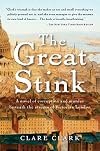
I hope no reader would pick up Clare Clark's The Great Stink and expect sweetness and light. You'll get none of it. This is a well-written descent into the very depths of depravity, even if it's sometimes too heavy on the gory details (this is not a book to be read during mealtimes).
Combining a murder mystery with a Dickensian (the adjective if overused, but when the shoe fits, it must be worn) legal wrangle, Clark writes as crisply and vividly about the intricate details of London's early show more Victorian sewer development and the associated bureaucratic nightmares as she does about the intimate and disturbing aspects of her characters' lives (her main character, William May, is a Crimean War vet manifesting very severe symptoms of what would probably be diagnosed now as PTSD).
While somewhat predictable in terms of plot, Clark's writing style makes this very much worth a read. But don't say I didn't warn you - this is not for the queasy. Several times I had to put it away for a day or two in favor of something more pleasant. But when I finished it, I was glad to have done so.
http://philobiblos.blogspot.com/2008/08/book-review-great-stink.html show less
Combining a murder mystery with a Dickensian (the adjective if overused, but when the shoe fits, it must be worn) legal wrangle, Clark writes as crisply and vividly about the intricate details of London's early show more Victorian sewer development and the associated bureaucratic nightmares as she does about the intimate and disturbing aspects of her characters' lives (her main character, William May, is a Crimean War vet manifesting very severe symptoms of what would probably be diagnosed now as PTSD).
While somewhat predictable in terms of plot, Clark's writing style makes this very much worth a read. But don't say I didn't warn you - this is not for the queasy. Several times I had to put it away for a day or two in favor of something more pleasant. But when I finished it, I was glad to have done so.
http://philobiblos.blogspot.com/2008/08/book-review-great-stink.html show less
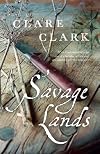
An interesting subject, but rather a tedious novel, unfortunately. The first chapter, introducing a 'casket girl' named Elisabeth Savaret who is about to journey from France to Louisiana in search of a husband, is promising. The second, about a nameless French boy sent to live with a native tribe, is intriguing. After that, the novel is best described in the words of Montaigne from one of Elisabeth's treasured books, with 'no form and no conclusion. Frequently its reasoning wandered from the show more point, drifting off into reverie before circling back to its origin and then stopping abruptly, without apology'. Elisabeth's intelligence and personality are sucked out of her upon marriage to Jean-Claude Babelon, a shiftless trader, and she becomes little more than a lovesick teenager, instead of the brave, independent, 'fierce' young woman she is regularly touted to be. Plus, the most important events - Elisabeth arriving in the new world and meeting Jean-Claude, for one - are told in retrospect, which is not only confusing but deflating. Like meeting up with an old friend, who says, mid-conversation, 'Oh yes, didn't I tell you I was married/pregnant/widowed, now?'
'The slimy ditches slithered with snakes and alligators, and at dusk swarms of mosquitoes rose from their slumbers to cast shadows against the violet sky. The aspect of the whole place was wretched.'
I did get some sense of the exotic setting, which is why I was initially tempted to read Clare Clark's novel. The heat, the wildlife, and the various hardships of 'New France' in the eighteenth century, not to mention the various tribes of 'savages', are all detailed beautifully by the author, but not all the adjectives in the world can make up for dull characters and limp dialogue. show less
'The slimy ditches slithered with snakes and alligators, and at dusk swarms of mosquitoes rose from their slumbers to cast shadows against the violet sky. The aspect of the whole place was wretched.'
I did get some sense of the exotic setting, which is why I was initially tempted to read Clare Clark's novel. The heat, the wildlife, and the various hardships of 'New France' in the eighteenth century, not to mention the various tribes of 'savages', are all detailed beautifully by the author, but not all the adjectives in the world can make up for dull characters and limp dialogue. show less
Lists
Awards


You May Also Like


Associated Authors
Statistics
- Works
- 7
- Members
- 2,033
- Popularity
- #12,643
- Rating
- 3.3
- Reviews
- 80
- ISBNs
- 100
- Languages
- 5