

D. J. Taylor (1) (1960–)
Author of Kept
For other authors named D. J. Taylor, see the disambiguation page.
About the Author
D.J. Taylor is a British critic, novelist, and biographer. Taylor contributes to many newspapers including the Guardian and the Daily Telegraph.
Series
Works by D. J. Taylor
Associated Works
My Favourite Year: A Collection of New Football Writing (1996) — Contributor — 182 copies, 8 reviews
How Steeple Sinderby Wanderers Won the F. A. Cup (1975) — Introduction, some editions — 160 copies, 5 reviews
Folio Magazine: 2012 — Contributor — 2 copies
Tagged
Common Knowledge
- Legal name
- Taylor, David John
- Birthdate
- 1960
- Gender
- male
- Education
- University of Oxford (St. John's College)
- Occupations
- critic
biographer
novelist - Organizations
- Norwich Writers' Circle
- Relationships
- Hore, Rachel (wife)
- Nationality
- UK
- Birthplace
- England, UK
- Places of residence
- Norwich, Norfolk, England, UK
- Associated Place (for map)
- England, UK
Members
Discussions
Derby Day by D.J. Taylor in Booker Prize (September 2011)
Reviews
Read: July-August 2018
Rating: 4/5 stars
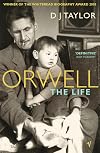
Despite the fact that George Orwell has been one of my favourite authors since I was a child (I read Animal Farm when I was at primary school - although admittedly I may not have been aware of the symbolism Orwell wanted to portray at the time!) I didn't really know anything about him beyond the fact that his real name was Eric Blair.
Taylor's book has changed all that for me, and allowed me to appreciate the real person behind the pseudonym. Orwell show more comes across as someone who is conflicted between who he is (being born into a well-off family and being privately educated at Eton) and who he wants to be (the 'common' working-class man) and that seems to be something he struggled with all his life. Similarly, learning about Orwell's experiences as a police officer in Burma and being shot in the throat while volunteering as a soldier in the Spain, his struggles with infertility with his wife and the eventual adoption of their son gives new depth to Orwell's writing and I look forward to reading and re-reading his novels with this new perspective in mind. show less
Rating: 4/5 stars
Despite the fact that George Orwell has been one of my favourite authors since I was a child (I read Animal Farm when I was at primary school - although admittedly I may not have been aware of the symbolism Orwell wanted to portray at the time!) I didn't really know anything about him beyond the fact that his real name was Eric Blair.
Taylor's book has changed all that for me, and allowed me to appreciate the real person behind the pseudonym. Orwell show more comes across as someone who is conflicted between who he is (being born into a well-off family and being privately educated at Eton) and who he wants to be (the 'common' working-class man) and that seems to be something he struggled with all his life. Similarly, learning about Orwell's experiences as a police officer in Burma and being shot in the throat while volunteering as a soldier in the Spain, his struggles with infertility with his wife and the eventual adoption of their son gives new depth to Orwell's writing and I look forward to reading and re-reading his novels with this new perspective in mind. show less
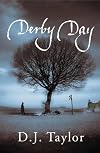
In Victorian England the Epsom Derby was the race that the entire country looked forward to each year. Assiduously following the form and reports about the horses and their owners, fortunes were won or lost on the result and the the best horse didn't always win the race. One of the favourites for the race is Tiberius, owned by an impoverished Lincolnshire gentleman called Davenant. However Mr Davenant's debts mean that Tiberius falls into the hands of Mr Happerton, recently married to the show more only daughter of an eminent barrister but both he and his wife have their own plans.
This is a wonderful book populated by a cast of expertly drawn characters from all walks of society. The plot links an audacious burglary at a jewellers, a police inspector, a governess and her charge, an aged but honest jockey, fraudsters and con men, their wives and mistresses. It is complex but incredibly readable and very cleverly put together. The race itself barely features but the colour and atmosphere of the Epsom Downs is vividly realised and the machinations of finance in the Victorian era are explored. In a world without credit cards, people borrowed money by way of promissory notes ('paper') and these debts could be bought and sold at will. Vulnerable individuals were prey to hangers-on and every had their own plans and schemes. Taylor has used the best of Victorian literature to draw on but has produced a modern take on the genre which more than holds its own. show less
This is a wonderful book populated by a cast of expertly drawn characters from all walks of society. The plot links an audacious burglary at a jewellers, a police inspector, a governess and her charge, an aged but honest jockey, fraudsters and con men, their wives and mistresses. It is complex but incredibly readable and very cleverly put together. The race itself barely features but the colour and atmosphere of the Epsom Downs is vividly realised and the machinations of finance in the Victorian era are explored. In a world without credit cards, people borrowed money by way of promissory notes ('paper') and these debts could be bought and sold at will. Vulnerable individuals were prey to hangers-on and every had their own plans and schemes. Taylor has used the best of Victorian literature to draw on but has produced a modern take on the genre which more than holds its own. show less
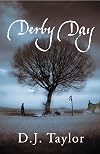
This subtitled Victorian mystery is centered around George Happerton, a man of uncertain means, questionable morals and high ambitions, who seeks to make a fortune by obtaining a race horse and entering him in the biggest horse race of the year. To accomplish this, he connivingly marries the daughter of a well-to-do lawyer in London, and the two manage to wheedle the funds he needs to purchase the animal. Happerton engages several shady characters to obtain additional capital, which he uses show more to bet in the race.
This was a well written mystery novel, which held my interest for the first 2/3 of the book. However, the last 1/3, which corresponded to the day of the race, was a long slow drag, which seemed like a 45 rpm record suddenly being played at 33 rpm. Overall this was an enjoyable novel, in keeping with this year's "Booker Lite" theme, but it will leave no strong impression with me, and did not deserve to make this year's longlist. show less
This was a well written mystery novel, which held my interest for the first 2/3 of the book. However, the last 1/3, which corresponded to the day of the race, was a long slow drag, which seemed like a 45 rpm record suddenly being played at 33 rpm. Overall this was an enjoyable novel, in keeping with this year's "Booker Lite" theme, but it will leave no strong impression with me, and did not deserve to make this year's longlist. show less
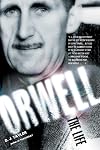
To be quite frank, I did not enjoy this book.
Not only did I not like the way it's written, but I didn't like what I was reading either.
Firstly, his research is impeccable, but it was so hard to know who anybody was in this book, he just pops up random characters left and right, and he'll just casually mention cousins and neighbours and you are expected to remember them all.
I think it's because he spent so long researching the stuff that he just has everybody memorized, but for a reader show more remembering casual friends and stuff like that by last name when they haven't been mentioned for 150 pages is hard.
He also mentions Orwell's father's death as an afterthought.
He has chapters about the most mundane stuff, and he mentions Orwell's father being sick many times.
But then he changes the subject and you are wondering whatever happened to his father.
Then you read another 20 pages and he mentions it while talking about something else.
Furthermore, after reading nearly 500 pages on this man's life, you begin to view the book as written for the purpose of revealing his dark nature.
Orwell's eccentricity and lack of social tact are basically what the book is about.
The back of the book jacket reads, "Taylor's magisterial assessment cuts through Orwell's iconic status to reveal a bitter critic who concealed a profound totalitarian streak and whose progress through the literary world of the 30s and 40s was characterized by the myths he built around himself."
Taylor writes the book to convince us that Orwell was a creepy poor man with an unhappy marriage, a womanizer and pitifully helpless father.
Then you remember the magisterial books that the man produced, and you realize that nothing in this portrayal of the man gives any indication of greatness or of the material he ended up producing.
The sole convincing argument was that 1984 was so gloomy because of the tortuous state the author himself was in when he wrote it.
I would give it 2 stars if I felt that the research was poor, but the author does display his knowledge of Orwell's works several times.
Towards the end he even mentions a few specific scenes and passages from the 1984 that appeared in Orwell's earlier writing. He has clearly pored over the hordes of work Orwell produced.
Pros:
Very well researched.
The photographs included are a great help in visualizing the people in his life.
Cons:
Disjointed, disorganized, haphazard writing. More than once he is making an argument, only to digress and be sidetracked for several pages. Then he continues his argument out of the blue and you are reminded, "Ah, that's what he was talking about."
Seems to write for the purpose of debunking Orwell's mythological status, which would be fine, but it makes for a very poor first read into the man's life.
So, if you are not an Orwell fan, and would like to read a dissertation on the man's darker side, then this book is for you.
However, if you are looking for your first biography on the man who produced utter genius like 1984 and Animal Farm, then I would suggest you start with something else.
B- show less
Not only did I not like the way it's written, but I didn't like what I was reading either.
Firstly, his research is impeccable, but it was so hard to know who anybody was in this book, he just pops up random characters left and right, and he'll just casually mention cousins and neighbours and you are expected to remember them all.
I think it's because he spent so long researching the stuff that he just has everybody memorized, but for a reader show more remembering casual friends and stuff like that by last name when they haven't been mentioned for 150 pages is hard.
He also mentions Orwell's father's death as an afterthought.
He has chapters about the most mundane stuff, and he mentions Orwell's father being sick many times.
But then he changes the subject and you are wondering whatever happened to his father.
Then you read another 20 pages and he mentions it while talking about something else.
Furthermore, after reading nearly 500 pages on this man's life, you begin to view the book as written for the purpose of revealing his dark nature.
Orwell's eccentricity and lack of social tact are basically what the book is about.
The back of the book jacket reads, "Taylor's magisterial assessment cuts through Orwell's iconic status to reveal a bitter critic who concealed a profound totalitarian streak and whose progress through the literary world of the 30s and 40s was characterized by the myths he built around himself."
Taylor writes the book to convince us that Orwell was a creepy poor man with an unhappy marriage, a womanizer and pitifully helpless father.
Then you remember the magisterial books that the man produced, and you realize that nothing in this portrayal of the man gives any indication of greatness or of the material he ended up producing.
The sole convincing argument was that 1984 was so gloomy because of the tortuous state the author himself was in when he wrote it.
I would give it 2 stars if I felt that the research was poor, but the author does display his knowledge of Orwell's works several times.
Towards the end he even mentions a few specific scenes and passages from the 1984 that appeared in Orwell's earlier writing. He has clearly pored over the hordes of work Orwell produced.
Pros:
Very well researched.
The photographs included are a great help in visualizing the people in his life.
Cons:
Disjointed, disorganized, haphazard writing. More than once he is making an argument, only to digress and be sidetracked for several pages. Then he continues his argument out of the blue and you are reminded, "Ah, that's what he was talking about."
Seems to write for the purpose of debunking Orwell's mythological status, which would be fine, but it makes for a very poor first read into the man's life.
So, if you are not an Orwell fan, and would like to read a dissertation on the man's darker side, then this book is for you.
However, if you are looking for your first biography on the man who produced utter genius like 1984 and Animal Farm, then I would suggest you start with something else.
B- show less
Lists
Awards


You May Also Like


Associated Authors
Statistics
- Works
- 31
- Also by
- 16
- Members
- 1,701
- Popularity
- #15,087
- Rating
- 3.5
- Reviews
- 55
- ISBNs
- 161
- Languages
- 2
- Favorited
- 2