
Lloyd Alexander (1924–2007)
Author of The Book of Three
About the Author
Lloyd Alexander, January 30, 1924 - May 17, 2007 Born Lloyd Chudley Alexander on January 30, 1924, in Philadelphia, Pennsylvania to Allan Audley and Edna Chudley Alexander, Lloyd knew from a young age that he wanted to write. He was reading by the time he was 3, and though he did poorly in school, show more at the age of fifteen, he announced that he wanted to become a writer. At the age of 19 in 1942, Alexander dropped out of the West Chester State Teachers College in Pennsylvania after only one term. In 1943, he attended Lafayette College in Easton, PA, before dropping out again and joining the United States Army during World War II. Alexander served in the Intelligence Department, stationed in Wales, and then went on to Counter-Intelligence in Paris, where he was promoted to Staff Sergeant. When the war ended in '45, Alexander applied to the Sorbonne, but returned to the States in '46, now married. Alexander worked as an unpublished writer for seven years, accepting positions such as cartoonist, advertising copywriter, layout artist, and associate editor for a small magazine. Directly after the war, he had translated works for such artists as Jean Paul Sartre. In 1955, "And Let the Credit Go" was published, Alexander's first book which led to 10 years of writing for an adult audience. He wrote his first children's book in 1963, entitled "Time Cat," which led to a long career of writing for children and young adults. Alexander is best known for his "Prydain Chronicles" which consist of "The Book of Three" in 1964, "The Black Cauldron" in 1965 which was a Newbery Honor Book, as well as an animated motion picture by Disney which appeared in 1985, "The Castle of Llyr" in 1966, "Taran Wanderer" in 1967, a School Library Journal's Best Book of the Year and "The High King" which won the Newberry Award. Many of his other books have also received awards, such as "The Fortune Tellers," which was a Boston Globe Horn Book Award winner. In 1986, Alexander won the Regina Medal for Lifetime Achievement from the Catholic Library Association. His titles have been translated into many languages including, Dutch, Spanish, French, German, Hebrew, Italian, Japanese, Norwegian, Serbo-Croation and Swedish. He died on May 17, 2007. (Bowker Author Biography) show less
Series
Works by Lloyd Alexander
Max Mondrosch 2 copies
Taran og borgen på øen 1 copy
Kong Taran 1 copy
Lad a Dog 1 copy
Crónicas de Prydain 1 copy
Księga trzech 1 copy
Newbery Award Acceptance 1 copy
Castle Llyr, The 1 copy
Three Complete Novels 1 copy
The Sacred City of Cats 1 copy
PEACE 1 copy
Associated Works
The Wall: (Intimacy) and Other Stories (1939) — Translator, some editions; Translator, some editions — 3,051 copies, 32 reviews
Firebirds: An Anthology of Original Fantasy and Science Fiction (2003) — Contributor — 851 copies, 24 reviews
The Wand in the Word: Conversations with Writers of Fantasy (2006) — Contributor — 255 copies, 9 reviews
The Outspoken Princess and the Gentle Knight: A Treasury of Modern Fairy Tales (1994) — Contributor — 210 copies, 3 reviews
The Prydain Companion: A Reference Guide to Lloyd Alexander's Prydain Chronicles (1989) — Foreword — 143 copies, 4 reviews
A Newbery Zoo: A dozen animal stories by Newbery Award-winning authors (1995) — Contributor — 39 copies, 2 reviews
Tagged
Common Knowledge
- Legal name
- Alexander, Lloyd Chudley
- Birthdate
- 1924-01-30
- Date of death
- 2007-05-17
- Gender
- male
- Education
- Upper Darby High School (graduated 1940)
University of Paris
Haverford College - Occupations
- author
soldier - Organizations
- United States Army (WWII)
- Awards and honors
- Upper Darby High School Wall of Fame
Regina Medal (1986) - Relationships
- Denni, Janine (wife)
Khalil, Madeleine (daughter)
November, Sharyn (goddaughter) - Short biography
- [from The Wizard in the Tree]
Lloyd Alexander received the Newbery medal for The High King, the fifth and final book of his distinguished fantasy series about the kingdom of Prydain. His The Marvelous Misadventures of Sebastian, which won the 1971 National Book Award for Children's Books, was described in The Horn Book as "a comic fantasy, successfully combining eighteenth-century briskness with romantic 'moonshine'. It can be read as an exciting series of adventures, of which many of the chapters end with a suspense line. Or it can be read as an allegory on the ambivalent power of beauty. Or -- best of all -- it can be read as the story of Sebastian's apprenticeship to life".
Mr. Alexander's The Cat Who Wished to Be a Man was an ALA Notable Children's Book of 1973. Said School Library Journal, "Lionel, a wizard's cat, persuades his master to turn him into a man. . . . Infused with humor, high spirits, and compassion, Lionel's story is a parable of the human condition that recognizes mankind's many frailties without despariing and offers hope that love and justice may sometimes prevail". - Cause of death
- cancer
- Nationality
- USA
- Birthplace
- Philadelphia, Pennsylvania, USA
- Place of death
- Drexel Hill, Pennsylvania, USA
- Burial location
- Arlington Cemetery, Drexel Hill, Delaware County, Pennsylvania (USA Plot: Monticello Mausoleum, B4-Back Wall)
- Associated Place (for map)
- Pennsylvania, USA
Members
Discussions
Found: Prince (?) flees after usurpation, joins rival army in Name that Book (December 2025)
Found: Book like Lloyd Alexander in Name that Book (April 2025)
***Group Read: The Chronicles of Prydain (Spoiler) in 75 Books Challenge for 2010 (May 2010)
***Group Read: The Chronicles of Prydain by Lloyd Alexander in 75 Books Challenge for 2010 (May 2010)
Group Read: The Chronicles of Prydain by Lloyd Alexander in 75 Books Challenge for 2009 (December 2009)
Reviews
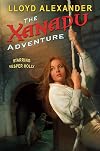
The Xanadu Adventure is, by far, the absolute worst book in the Vesper Holly series. Even as a child, I hated this final installment of the adventure series.
In The Xanadu Adventure Lloyd Alexander achieves the impossible; he manages to create a character who is even more annoying and self-absorbed than Vesper Holly herself—Tobias Passavant.
Tobias has installed himself, uninvited, into Vesper’s home and seems committed to making his residency permanent. He has overtaken Brinnie’s show more office and life, much to Brinnie’s great chagrin. Everyone (except Brinnie) seems to love Tobias, even though he has no charm, no tact, no sense of personal boundaries, and no sense, period. Vesper simpers around calling him ‘The Weed’, and he simpers around calling her ‘Carrots’ and quoting Shakespeare ad nauseum.
Tobias is fixated on deciphering an ancient language, but he has hit a snag in regards to the proper translation of the word ‘beans’. So, of course, the logical thing is for Tobias and Vesper to unilaterally decide that everyone should travel to Anatolia to visit the recently discovered ruins of Troy. Makes sense.
Consequently, without regard for anyone else’s personal safety, well-being, or comfort, Vesper drags her motley entourage on an expedition to the excavations at Troy. In true Vesper Holly fashion, however, they end up diverted to the wrong archaeological site; and, after falling for an incredibly lame ploy, they find themselves once more in the clutches of Vesper’s notorious archenemy Dr. Helvitius, who was supposedly killed off in Vesper’s last adventure.
Vesper and party eventually manage to escape and kill Dr. Helvitius again, only to fall back into his clutches a little while later onboard the Orient Express. They turn the tables on Dr. Helvitius, who manages to escape and die yet again; although his body is still never recovered. Hmmmm…?
It was all so trite and predictable. And absolutely none of the characters are even remotely likeable. I just couldn’t stand it.
The incessant references to Philadelphia and Philadelphians being the pinnacles of perfection and virtue were so heavy-handed and repetitive, I wanted to gag.
The fact Lloyd Alexander decided that strong-willed and effervescently independent heroine Vesper Holly had to end the series married and with child just adds insult to injury. His message to young girls is clear: you can be a free-spirit for a while, but eventually you’ll have to snag a man, settle down, and start making babies. Ugh. show less
In The Xanadu Adventure Lloyd Alexander achieves the impossible; he manages to create a character who is even more annoying and self-absorbed than Vesper Holly herself—Tobias Passavant.
Tobias has installed himself, uninvited, into Vesper’s home and seems committed to making his residency permanent. He has overtaken Brinnie’s show more office and life, much to Brinnie’s great chagrin. Everyone (except Brinnie) seems to love Tobias, even though he has no charm, no tact, no sense of personal boundaries, and no sense, period. Vesper simpers around calling him ‘The Weed’, and he simpers around calling her ‘Carrots’ and quoting Shakespeare ad nauseum.
Tobias is fixated on deciphering an ancient language, but he has hit a snag in regards to the proper translation of the word ‘beans’. So, of course, the logical thing is for Tobias and Vesper to unilaterally decide that everyone should travel to Anatolia to visit the recently discovered ruins of Troy. Makes sense.
Consequently, without regard for anyone else’s personal safety, well-being, or comfort, Vesper drags her motley entourage on an expedition to the excavations at Troy. In true Vesper Holly fashion, however, they end up diverted to the wrong archaeological site; and, after falling for an incredibly lame ploy, they find themselves once more in the clutches of Vesper’s notorious archenemy Dr. Helvitius, who was supposedly killed off in Vesper’s last adventure.
Vesper and party eventually manage to escape and kill Dr. Helvitius again, only to fall back into his clutches a little while later onboard the Orient Express. They turn the tables on Dr. Helvitius, who manages to escape and die yet again; although his body is still never recovered. Hmmmm…?
It was all so trite and predictable. And absolutely none of the characters are even remotely likeable. I just couldn’t stand it.
The incessant references to Philadelphia and Philadelphians being the pinnacles of perfection and virtue were so heavy-handed and repetitive, I wanted to gag.
The fact Lloyd Alexander decided that strong-willed and effervescently independent heroine Vesper Holly had to end the series married and with child just adds insult to injury. His message to young girls is clear: you can be a free-spirit for a while, but eventually you’ll have to snag a man, settle down, and start making babies. Ugh. show less
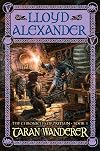
In which Taran must lose himself to find himself...
The most literary of the series, Taran Wanderer is probably my favourite thus far. Alexander seems to have got all his Tolkien ambition out of his system, and this book retreats back into a lovely, picaresque character study.
While several of the main characters return, many - including a couple of notable omissions - get a rest, which allows the format to focus on Taran's development. Here, he surpasses so many young orphan boys of fantasy show more lore, establishing a quest to genuinely find himself, whatever the answer may be. Along the way, he encounters numerous paragons of evil, of treachery, of cowardice, self-deceit, hypocrisy, and vapidity. At the same time, he meets people completely contented with their lot, and attempts to find his own place in the world.
There's not as much outright comedy in this book, although there are many moments of truth that earn a warm, knowing smile. And, along with the bard and the Fair Folk, Gurgi provides more than his fair share of joys. Is there any sight more beautiful in this series than that of Gurgi, perfectly cheerful, at the head of a small army of sheep? Adorable.
I'll be interested to see how Alexander ties things up in the final book, but certainly Taran Wanderer is an admirable continuation of the story. show less
The most literary of the series, Taran Wanderer is probably my favourite thus far. Alexander seems to have got all his Tolkien ambition out of his system, and this book retreats back into a lovely, picaresque character study.
While several of the main characters return, many - including a couple of notable omissions - get a rest, which allows the format to focus on Taran's development. Here, he surpasses so many young orphan boys of fantasy show more lore, establishing a quest to genuinely find himself, whatever the answer may be. Along the way, he encounters numerous paragons of evil, of treachery, of cowardice, self-deceit, hypocrisy, and vapidity. At the same time, he meets people completely contented with their lot, and attempts to find his own place in the world.
There's not as much outright comedy in this book, although there are many moments of truth that earn a warm, knowing smile. And, along with the bard and the Fair Folk, Gurgi provides more than his fair share of joys. Is there any sight more beautiful in this series than that of Gurgi, perfectly cheerful, at the head of a small army of sheep? Adorable.
I'll be interested to see how Alexander ties things up in the final book, but certainly Taran Wanderer is an admirable continuation of the story. show less

Probably my favorite of the Prydain series. It's a change from the earlier books in that Taran's quest is more personal than public and heroic, and the ending isn't quite as triumphant as his earlier missions. (Also, Eilonwy's absence means less humor than usual.) But I appreciated that he finally comes into his own and learns what is really important about identity (something I took longer to learn myself), and enjoyed his adventures among the Commot folk, especially Llonio the Lucky.
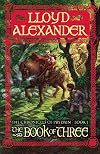
The inspiration from the Hobbit and The Lord of the Ring is pretty evident. Gwydion is Aragorn, the children of Don are the high elves, Doli's people are basically the forest elves, Medwyn is Beorn, Arawn is Morgoth, the Horned King is Sauron, Annuvin is Mordor, Doli is Gimli, Dahlben is Gandalf. But the central figures of the story are not so derivative, and there is an oracular pig, and Alexander's gentle humor.
Lists
Read in 2021 (1)
Favourite Books (1)
Best First Lines (1)
1964 Project (1)
The "A" List (1)
Elevenses (1)
Best Young Adult (1)
Five star books (1)
Ambleside Year 8 (1)
Witchy Fiction (1)
Cats in Fiction (1)
Farm Boy Fantasy (1)
1960s (4)
Books About Boys (4)
Read in 1999 (5)
Read in 2022 (5)
Princess Tales (6)
Ambleside Books (6)
My Wishlist - YA (1)
Book club books (1)
Allie's Wishlist (1)
Off on a Quest (1)
Newbery Adjacent (2)
4th Grade Books (2)
al.vick-series (2)
Favorite Series (2)
Awards


You May Also Like


Associated Authors
Statistics
- Works
- 95
- Also by
- 36
- Members
- 55,793
- Popularity
- #265
- Rating
- 3.9
- Reviews
- 776
- ISBNs
- 732
- Languages
- 19
- Favorited
- 158


