
Matt Madden
Author of 99 Ways to Tell a Story: Exercises in Style
About the Author
Image credit: Luigi Novi
Works by Matt Madden
Drawing Words and Writing Pictures: Making Comics: Manga, Graphic Novels, and Beyond (2008) — Author — 336 copies, 3 reviews
Associated Works
Gaytheist: Coming Out of My Orthodox Childhood (2024) — Editor, some editions — 45 copies, 3 reviews
The Rose Metal Press Field Guide to Graphic Literature: Artists and Writers on Creating Graphic Narratives, Poetry Comics, and Literary Collage (2023) — Contributor — 15 copies
Tagged
Common Knowledge
- Birthdate
- 1968
- Gender
- male
- Organizations
- National Association of Comics Art Educators
- Relationships
- Abel, Jessica (wife)
- Nationality
- USA
- Places of residence
- New York, New York, USA (birth)
Ann Arbor, Michigan, USA
Mexico City, Mexico - Associated Place (for map)
- USA
Members
Reviews

I picked up this graphic novel when I noted that it claimed to have been inspired by Italo Calvino's If on a winter's night a traveler, a book that I hold in high regard. Ex Libris is not an adaptation of the Calvino work in any sense. It lacks the second-person narrative mode, but includes the metafictional devices that allow for the serial deployment of different genres and styles, and it occasionally strikes the same notes of mise en abyme.
Ex Libris is organized in four chapters, and I show more read it over three days: Chapter 1, then Chapters 2 & 3, and finally Chapter 4. That pace allowed me to savor the shifts in presentation. The narrating protagonist is isolated and disoriented and alludes repeatedly to a frustrated affectional backstory with "M." In some respects, these elements reminded me of the Charles Burns Last Look graphic novels from a decade earlier. But they didn't feel like a satisfying substitute for the second-person mechanism in Calvino's text.
The pace and interest picked up dramatically in the second and third chapters. The art throughout capably exhibits the full range of varying comics genres, and the central op-art floor rug squared spiral motif--visible on the cover--is clever and effective. While the final chapter did offer a sense of completion (and the recursive epilogue seemed almost inevitable), it failed to blow my mind as I was rooting for it to do. show less
Ex Libris is organized in four chapters, and I show more read it over three days: Chapter 1, then Chapters 2 & 3, and finally Chapter 4. That pace allowed me to savor the shifts in presentation. The narrating protagonist is isolated and disoriented and alludes repeatedly to a frustrated affectional backstory with "M." In some respects, these elements reminded me of the Charles Burns Last Look graphic novels from a decade earlier. But they didn't feel like a satisfying substitute for the second-person mechanism in Calvino's text.
The pace and interest picked up dramatically in the second and third chapters. The art throughout capably exhibits the full range of varying comics genres, and the central op-art floor rug squared spiral motif--visible on the cover--is clever and effective. While the final chapter did offer a sense of completion (and the recursive epilogue seemed almost inevitable), it failed to blow my mind as I was rooting for it to do. show less

THE BEST AMERICAN COMICS 2011 is the first comic anthology I’ve read. It convinced me that the comic medium is not well suited for “best of” anthologies, unless the comic is intentional written to be ingested as a very short piece, like David Lasky’s six-panel “The Ultimate Graphic Novel.” An excerpt from a graphic novel just doesn’t do the work justice. What this anthology did was show me I need to get these graphic novels and read them in their entirety.
Comic fans will be show more familiar with the best, and most obvious, selections: an excerpt from Joe Sacco’s FOOTNOTES IN GAZA and Chris Ware’s JORDAN W. LINT TO THE AGE 65. Joe Sacco is a master of investigative journalism in the comic medium. His excerpt in the anthology details a massacre of Palestinian men by the Israelis in 1956. He then questions the reliability of memory when trying to discover the facts of the event. Chris Ware is doing some of the most stylistically imaginative work in comics while examining the sad mess people make of their lives.
There are some great surprises in this anthology too. Angie Wang’s short piece “Flower Mecha” is artistically beautiful and strange. Pollen is ruining a woman’s picnic and she fights it off in a hallucinatory mix of art deco and manga. Michael Defarge’s “Queen” is even stranger. A black glob of a creature walks through a strange alien world picking up pieces of mushrooms, flora, and landscape to turn itself into a freakish woman. Both of these pieces are surprisingly interesting, but I’m not sure they are the best of the past year. Looking at the notable mention list at the end of the anthology makes me wonder if there isn’t something better that tells a story using the full capabilities of the comic medium.
The mix of history and memoir in “Little House in the Big City” by Sabrina Jones was intriguing. The mix of history and fictional mystery in “The Mad Scientist” excerpt from RASL by Jeff Smith made me immediately want to read the entire series. “Winter,” an excerpt from Refresh, Refresh by Danica Novgodorrodov, Benjamin Percy, and James Ponsoldt has a great abstract watercolor dream sequence in the middle, but the excerpt simply doesn’t give enough of the story to stand on its own. It’s another one I want to read in its entirety. Kate Beaton’s take on The Great Gatsby is hilarious.
Alison Bechdel is the guest editor for this year’s anthology. She mentions in her introduction that there is a metafiction theme in many of the selections. The best example would be “Pet Cat” by Joey Alison Sayers. Sayers documents the history of a comic strip in its many incarnations until finally God takes over the writing of the strip. The satire comments on how artists are disrespected and exploited.
The anthology was an interesting read, and it pointed me to some works that I wouldn’t have known otherwise. I do have a gripe, and I’m sure I’ll get ripped by someone for it, because Bechdel is well respected as a writer and artist. The problem is there’s no hiding her subjectivity or agenda in this anthology. Many of the chosen selections highlight an obvious feminist and gay perspective. “Flower Mecha” and “Queen” are perhaps overt feminist symbolism. Other selections, like “Manifestation” by Gabrielle Bell (which opens the book) and “Weekends Abroad” by Eric Orner, are manifestly feminist and gay, respectively. Again, I look at the list of notable mentions and wonder if there isn’t quite a few on that list that are better comics overall. When the subjectivity is so obvious, I think we have to question is this really an anthology of the best comics in 2011? I understand that an anthology of this sort with a guest editor will never completely escape subjectivity, but I’d like to see some semblance of trying to find a true “best” based on the quality of the work and not some other criterion. Don’t get me wrong. There are quite a few selections in this anthology that deserve to be here. show less
Comic fans will be show more familiar with the best, and most obvious, selections: an excerpt from Joe Sacco’s FOOTNOTES IN GAZA and Chris Ware’s JORDAN W. LINT TO THE AGE 65. Joe Sacco is a master of investigative journalism in the comic medium. His excerpt in the anthology details a massacre of Palestinian men by the Israelis in 1956. He then questions the reliability of memory when trying to discover the facts of the event. Chris Ware is doing some of the most stylistically imaginative work in comics while examining the sad mess people make of their lives.
There are some great surprises in this anthology too. Angie Wang’s short piece “Flower Mecha” is artistically beautiful and strange. Pollen is ruining a woman’s picnic and she fights it off in a hallucinatory mix of art deco and manga. Michael Defarge’s “Queen” is even stranger. A black glob of a creature walks through a strange alien world picking up pieces of mushrooms, flora, and landscape to turn itself into a freakish woman. Both of these pieces are surprisingly interesting, but I’m not sure they are the best of the past year. Looking at the notable mention list at the end of the anthology makes me wonder if there isn’t something better that tells a story using the full capabilities of the comic medium.
The mix of history and memoir in “Little House in the Big City” by Sabrina Jones was intriguing. The mix of history and fictional mystery in “The Mad Scientist” excerpt from RASL by Jeff Smith made me immediately want to read the entire series. “Winter,” an excerpt from Refresh, Refresh by Danica Novgodorrodov, Benjamin Percy, and James Ponsoldt has a great abstract watercolor dream sequence in the middle, but the excerpt simply doesn’t give enough of the story to stand on its own. It’s another one I want to read in its entirety. Kate Beaton’s take on The Great Gatsby is hilarious.
Alison Bechdel is the guest editor for this year’s anthology. She mentions in her introduction that there is a metafiction theme in many of the selections. The best example would be “Pet Cat” by Joey Alison Sayers. Sayers documents the history of a comic strip in its many incarnations until finally God takes over the writing of the strip. The satire comments on how artists are disrespected and exploited.
The anthology was an interesting read, and it pointed me to some works that I wouldn’t have known otherwise. I do have a gripe, and I’m sure I’ll get ripped by someone for it, because Bechdel is well respected as a writer and artist. The problem is there’s no hiding her subjectivity or agenda in this anthology. Many of the chosen selections highlight an obvious feminist and gay perspective. “Flower Mecha” and “Queen” are perhaps overt feminist symbolism. Other selections, like “Manifestation” by Gabrielle Bell (which opens the book) and “Weekends Abroad” by Eric Orner, are manifestly feminist and gay, respectively. Again, I look at the list of notable mentions and wonder if there isn’t quite a few on that list that are better comics overall. When the subjectivity is so obvious, I think we have to question is this really an anthology of the best comics in 2011? I understand that an anthology of this sort with a guest editor will never completely escape subjectivity, but I’d like to see some semblance of trying to find a true “best” based on the quality of the work and not some other criterion. Don’t get me wrong. There are quite a few selections in this anthology that deserve to be here. show less
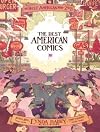
I have this problem with Summer Reading lists that are doled out by schools. Basically, they suck. They suck the joy of reading right down to the marrow and attempt to equate vacation time with extended education. Either schools should go year-round and quit the pretense or Summer Reading lists need to lighten up. Spend the Summer returning fun the the reading quotient, there'll be plenty of time starting in September for reading the Serious, the Dry, the Meaningful to be analyzed within show more inches of their pulpy lives.
I've got plenty of suggestions for alternate Summer Reading but today I want to talk about comics, and specifically The Best American Comics of 2008. I've actually wanted to talk about this for months but teetered on the edge of deciding whether or not the collection is appropriate. It's that whole chicken v. egg thing of whether or not some graphic imagery and story elements are appropriate for teens or if they're already seeing them in other places (like movies and TV) and there's little harm involved in comics that do the same thing.
Murder, sex, and drugs are involved, but these are topics often touched on in Young Adult literature. The difference is that when they appear in comics there's this feeling that somehow minors are being corrupted, that "comics" equals "funny" or "humorous" and that anything more is some grand betrayal of morals.
Editor Lynda Berry mentions in her introduction that "If this book had been in my house when I was a kid, I would have found a way to read it in secret." This is exactly what I would have done as a kid, and it got me wondering if that still isn't the best way to discover a world of comics beyond superheroes and other ridiculous over-muscled, tights-wearing vigilantes. On the other hand, shouldn't we have evolved in our thinking that kids shouldn't have to discover these things in secret? Sure, the thrill of doing something forbidden is lost, as is the wonderment that comes with discovery, but comics already have a hard enough time (though it's getting better) with acceptance that maybe that secret reading should be secret no longer.
For anyone who grew up, as I did, looking forward to the comics in the alternative weekly papers, and those who have kept tabs with small press and alternative comics, there are few surprises here. Matt Groening, Nick Bertozzi, Kaz, Jaime Hernandez, Seth, Alison Bechdel, Rick Geary, Chris Ware, Derf... the line-up reads like a brief history of 80s and 90s comics history, and the fact that these folks are still around (and perhaps to some extent largely unknown) may make a larger point about comics history in America. The fact that one "mainstream" comic was chosen - a Batman: Year 100 excerpt was chosen and pulled at the last minute by its publisher makes another point about this collection: there's still a Wild West frontier in comics.
With a wide range of styles and subject matter, the comics Barry has chosen are incredibly strong. Usually with collections like this the pieces I like are outweighed by the number I don't, but here I found only two duds and a couple of marginal pieces and the rest were solid. Subjects cover everything from the opening comic where fratricide is played as a casual punchline to the horrors of the war in Iraq from a journalist to kids playing war and discovering girlie magazines while "invading" a homeless encampment. The four panel strip format flips it's wig with surreality, the Tortoise and the Hare becomes a battle between a rock-steady drummer on the one hand and a party-hearty type on the other, a pair of nocturnal ragamuffins spending the night building a tower of boxes to play hopscotch on, young woman tries to help a drug addict, a man is sanguine about losing his love to a suicidal cult, Cupid's assistant takes over for a day and has cats mating with dogs (literally) in no time... there's something for (and possibly to offend) every sensibility, though that isn't it's purpose.
To those who have felt the short story is dead, I propose that the short story is alive and well in the form of comics. Even as stand-alone excepts from larger works, these stories deliver – not so much a punchline but a promise of a satisfying resolution.
There is always that danger that one person's "best" is another person's worst, but omnibus collections like The Best American Comics series (previous editions edited by Harvey Pekar and Chris Ware) and Flight (now in it's fifth volume, edited by Kazu Kibuishi) are a great ways to sample what's out there and explore the possibilities of storytelling that don't involve nefarious villains plotting to take over the world.
Lynda Barry's advice for how to approach the book is one I wish more adults would encourage in collections. She suggests opening the book to find something of interest – as a kid she would have tried to zoom in on swear words or crazy pictures – and start reading from there. Jump around, find what interests, read in pieces, not all at once. Linear is highly overrated and constricting, not unlike a lot of educational thinking about Summer Reading.
Lighten up and enjoy the experience. show less
I've got plenty of suggestions for alternate Summer Reading but today I want to talk about comics, and specifically The Best American Comics of 2008. I've actually wanted to talk about this for months but teetered on the edge of deciding whether or not the collection is appropriate. It's that whole chicken v. egg thing of whether or not some graphic imagery and story elements are appropriate for teens or if they're already seeing them in other places (like movies and TV) and there's little harm involved in comics that do the same thing.
Murder, sex, and drugs are involved, but these are topics often touched on in Young Adult literature. The difference is that when they appear in comics there's this feeling that somehow minors are being corrupted, that "comics" equals "funny" or "humorous" and that anything more is some grand betrayal of morals.
Editor Lynda Berry mentions in her introduction that "If this book had been in my house when I was a kid, I would have found a way to read it in secret." This is exactly what I would have done as a kid, and it got me wondering if that still isn't the best way to discover a world of comics beyond superheroes and other ridiculous over-muscled, tights-wearing vigilantes. On the other hand, shouldn't we have evolved in our thinking that kids shouldn't have to discover these things in secret? Sure, the thrill of doing something forbidden is lost, as is the wonderment that comes with discovery, but comics already have a hard enough time (though it's getting better) with acceptance that maybe that secret reading should be secret no longer.
For anyone who grew up, as I did, looking forward to the comics in the alternative weekly papers, and those who have kept tabs with small press and alternative comics, there are few surprises here. Matt Groening, Nick Bertozzi, Kaz, Jaime Hernandez, Seth, Alison Bechdel, Rick Geary, Chris Ware, Derf... the line-up reads like a brief history of 80s and 90s comics history, and the fact that these folks are still around (and perhaps to some extent largely unknown) may make a larger point about comics history in America. The fact that one "mainstream" comic was chosen - a Batman: Year 100 excerpt was chosen and pulled at the last minute by its publisher makes another point about this collection: there's still a Wild West frontier in comics.
With a wide range of styles and subject matter, the comics Barry has chosen are incredibly strong. Usually with collections like this the pieces I like are outweighed by the number I don't, but here I found only two duds and a couple of marginal pieces and the rest were solid. Subjects cover everything from the opening comic where fratricide is played as a casual punchline to the horrors of the war in Iraq from a journalist to kids playing war and discovering girlie magazines while "invading" a homeless encampment. The four panel strip format flips it's wig with surreality, the Tortoise and the Hare becomes a battle between a rock-steady drummer on the one hand and a party-hearty type on the other, a pair of nocturnal ragamuffins spending the night building a tower of boxes to play hopscotch on, young woman tries to help a drug addict, a man is sanguine about losing his love to a suicidal cult, Cupid's assistant takes over for a day and has cats mating with dogs (literally) in no time... there's something for (and possibly to offend) every sensibility, though that isn't it's purpose.
To those who have felt the short story is dead, I propose that the short story is alive and well in the form of comics. Even as stand-alone excepts from larger works, these stories deliver – not so much a punchline but a promise of a satisfying resolution.
There is always that danger that one person's "best" is another person's worst, but omnibus collections like The Best American Comics series (previous editions edited by Harvey Pekar and Chris Ware) and Flight (now in it's fifth volume, edited by Kazu Kibuishi) are a great ways to sample what's out there and explore the possibilities of storytelling that don't involve nefarious villains plotting to take over the world.
Lynda Barry's advice for how to approach the book is one I wish more adults would encourage in collections. She suggests opening the book to find something of interest – as a kid she would have tried to zoom in on swear words or crazy pictures – and start reading from there. Jump around, find what interests, read in pieces, not all at once. Linear is highly overrated and constricting, not unlike a lot of educational thinking about Summer Reading.
Lighten up and enjoy the experience. show less

This book does my job for me. Working at a comic shop, I'm often asked for recommendations. The Best American Comics 2010 anthology offers premade recommendations, from the insanely popular (Scott Pilgrim, Asterios Polyp) to the obscure (Steve MacIsaac's "Ex Communication").
Two of the excerpts really blew me away: Johnny Hiro by Fred Chao and The Lagoon by Lilli Carré. Johnny Hiro is a mix of crazy hijinks and adorably sweet romance. I ran out and bought a copy as soon as I finished the show more excerpt. The Lagoon is gorgeously drawn and a bit haunting.
Of course, there were excerpts I disliked as well. (Am I the only person who hates Asterios Polyp? Ugh.) But, overall, it was a good mix. If you want to get a overview of the graphic novels available but don't know where to start, read this book. You'll find something you love. show less
Two of the excerpts really blew me away: Johnny Hiro by Fred Chao and The Lagoon by Lilli Carré. Johnny Hiro is a mix of crazy hijinks and adorably sweet romance. I ran out and bought a copy as soon as I finished the show more excerpt. The Lagoon is gorgeously drawn and a bit haunting.
Of course, there were excerpts I disliked as well. (Am I the only person who hates Asterios Polyp? Ugh.) But, overall, it was a good mix. If you want to get a overview of the graphic novels available but don't know where to start, read this book. You'll find something you love. show less
Lists
Awards


You May Also Like


Associated Authors
Statistics
- Works
- 22
- Also by
- 11
- Members
- 2,059
- Popularity
- #12,494
- Rating
- 3.5
- Reviews
- 61
- ISBNs
- 31
- Languages
- 4