
Charles Warren Adams (1833–1903)
Author of The Notting Hill Mystery
About the Author
Disambiguation Notice:
Charles Warren Adams was an English lawyer, publisher and anti-vivisectionist, now known from documentary evidence to have been the author of The Notting Hill Mystery. This is usually taken to be the first full-length detective novel in English. Born in 1833, he was the son of children's author Charlotte Adams, and the younger half-brother of clergymen and authors William Adams and Henry Cadwallader Adams. As a lawyer, Adams was involved in the bailout of the publishing firm Saunders, Otley & Co., which published his crime novel Velvet Lawn (1864) and detective novel The Notting Hill Mystery (1865) under the pseudonym Charles Felix.
Works by Charles Warren Adams
Associated Works
The Rivals of Sherlock Holmes: The Greatest Detective Stories: 1837-1914 (2019) — Contributor — 40 copies
Tagged
Common Knowledge
- Canonical name
- Adams, Charles Warren
- Legal name
- Adams, Charles Warren
- Other names
- Felix, Charles
- Birthdate
- 1833
- Date of death
- 1903
- Gender
- male
- Relationships
- Adams, Charlotte (mother)
Adams, H.C. (step-brother)
Adams, William (step-brother) - Nationality
- UK
- Map Location
- UK
- Disambiguation notice
- Charles Warren Adams was an English lawyer, publisher and anti-vivisectionist, now known from documentary evidence to have been the author of The Notting Hill Mystery. This is usually taken to be the first full-length detective novel in English.
Born in 1833, he was the son of children's author Charlotte Adams, and the younger half-brother of clergymen and authors William Adams and Henry Cadwallader Adams. As a lawyer, Adams was involved in the bailout of the publishing firm Saunders, Otley & Co., which published his crime novel Velvet Lawn (1864) and detective novel The Notting Hill Mystery (1865) under the pseudonym Charles Felix.
Members
Reviews
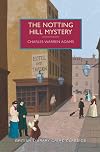
Before Émile Gaboriau’s L'affaire Lerouge (1866), Wilkie Collins’ The Moonstone (1868), or Sir Arthur Conan Doyle’s A Study in Scarlet (1886), there was The Notting Hill Mystery. Written under the pen name Charles Felix (now believed to be Charles Warren Adams) and first serialized in 1862 in a magazine, it became the first detective novel when it was published in one volume in 1865.
Before I got an ARC of this book from NetGalley, I had heard of neither the author nor the novel. The show more Notting Hill Mystery follows the attempts by insurance investigator Ralph Henderson to prove that the death of Baron R**’s wife was no accident but murder. Readers will realize immediately that Baron R** is guilty; after all, what innocent man takes out five £5,000 life insurance policies on his wife’s life in the span of four months? The fun of the novel could have been tracing how Henderson manages to uncover evidence in what appears to be a perfect crime and expose the baron. Instead, for a full fourth of the novel, it bogs down in a ponderous exchanges of letters recounting the entire life of Gertrude Boleton Anderton, the wispy semi-invalid who will become Baron R**’s victim, literally from before her birth. After this tedious backstory, the novel continues as a series of depositions, documents, letters, and other paperwork that the pedantic Henderson ferrets out. While some authors can make epistolary novels into great successes (e.g., Bellfield Hall: Or, The Observations of Miss Dido Kent by Anna Dean; Lady Susan by Jane Austen; Bridget Jones's Diary by Helen Fielding; The Color Purple by Alice Walker; Where'd You Go, Bernadette by Maria Semple; Daddy-Long-Legs by Jean Webster), Adams simply doesn’t pull it off.
Audiences have evolved in the 150 years since The Notting Hill Mystery was first published; however, 21st century audiences continue to appreciate 19th century novels, such as The Moonstone, The Woman in White, the Sherlock Holmes stories, Jane Eyre, Great Expectations, and many more because of memorable characters and gripping narratives. The Notting Hill Mystery has neither. What it does have are cardboard villains (hypnotist Baron R** being clearly a charlatan and a malevolent crook), sickly-pale simpleton victims, implausible coincidences worthy of a Victorian Penny Dreadful, silly supernatural doings, and even the canard about child-abducting gypsies. If there’s a Victorian melodrama cliché missing, I can’t imagine what it is. I found myself skimming to get to the end.
Poisoned Pen Press, in re-releasing this groundbreaking novel, has done a favor to students of the history of the mystery; run-of-the-mill mystery buffs won’t find anything of value here. With my love of 19th century novels, I am more patient than most readers; even so, had I not been under obligation to provide a review, I would have bailed before I was one-fifth of the way through.
To reiterate in the interest of full disclosure, I received this book from NetGalley and Poisoned Pen Press in exchange for an honest review. show less
Before I got an ARC of this book from NetGalley, I had heard of neither the author nor the novel. The show more Notting Hill Mystery follows the attempts by insurance investigator Ralph Henderson to prove that the death of Baron R**’s wife was no accident but murder. Readers will realize immediately that Baron R** is guilty; after all, what innocent man takes out five £5,000 life insurance policies on his wife’s life in the span of four months? The fun of the novel could have been tracing how Henderson manages to uncover evidence in what appears to be a perfect crime and expose the baron. Instead, for a full fourth of the novel, it bogs down in a ponderous exchanges of letters recounting the entire life of Gertrude Boleton Anderton, the wispy semi-invalid who will become Baron R**’s victim, literally from before her birth. After this tedious backstory, the novel continues as a series of depositions, documents, letters, and other paperwork that the pedantic Henderson ferrets out. While some authors can make epistolary novels into great successes (e.g., Bellfield Hall: Or, The Observations of Miss Dido Kent by Anna Dean; Lady Susan by Jane Austen; Bridget Jones's Diary by Helen Fielding; The Color Purple by Alice Walker; Where'd You Go, Bernadette by Maria Semple; Daddy-Long-Legs by Jean Webster), Adams simply doesn’t pull it off.
Audiences have evolved in the 150 years since The Notting Hill Mystery was first published; however, 21st century audiences continue to appreciate 19th century novels, such as The Moonstone, The Woman in White, the Sherlock Holmes stories, Jane Eyre, Great Expectations, and many more because of memorable characters and gripping narratives. The Notting Hill Mystery has neither. What it does have are cardboard villains (hypnotist Baron R** being clearly a charlatan and a malevolent crook), sickly-pale simpleton victims, implausible coincidences worthy of a Victorian Penny Dreadful, silly supernatural doings, and even the canard about child-abducting gypsies. If there’s a Victorian melodrama cliché missing, I can’t imagine what it is. I found myself skimming to get to the end.
Poisoned Pen Press, in re-releasing this groundbreaking novel, has done a favor to students of the history of the mystery; run-of-the-mill mystery buffs won’t find anything of value here. With my love of 19th century novels, I am more patient than most readers; even so, had I not been under obligation to provide a review, I would have bailed before I was one-fifth of the way through.
To reiterate in the interest of full disclosure, I received this book from NetGalley and Poisoned Pen Press in exchange for an honest review. show less
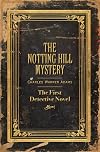
Can't quite fathom why this would be called "the first detective novel" since "The Trail of the Serpent" came out the previous year and actually contains a detective. Nevertheless, it was a pretty interesting entry in early crime fiction. The story is told through a variety of documents supposedly collected by an insurance inspector in a case of suspicious poisoning. It's quite engaging and fast to read. Though there is no real narrative and you can tell pretty early on what the solution to show more the mystery is, I still read it with great enjoyment.
Including doctor's reports, interviews, diaries, letters, and other testimonies, the author does a fine job of keeping the reader's interest while also introducing some elements of criminology that I suspect were fairly new (the chemical analyses, presumably). Also, rather shockingly for the time (I would think), vivid descriptions of medical symptoms and frequent mentions of "diarrhoea." (Can this possibly be a term it was polite to bandy about in a family magazine?!) The book was fresh and engaging even after all these years, and some elements felt positively 20th century.
HOWEVER, there are some major plot holes that really irked me. Spoilerish ahead: I'm fine with suspending my disbelief and accepting mesmerism and poisoning by proxy. Whatever. I accept those as part of a Victorian mindset of the possible. But these two things bothered me: 1. Ralph Henderson never sufficiently establishes how he came to make a connection between the cases of Mrs Anderton and the Baroness (which led to the research into Mrs Anderton's family history, upon which hangs the solution of the mystery). 2. Motive. How did the murderer think he could collect a 25,000 pound inheritance on a person whom NOBODY (including the victim herself) knew to be the beneficiary of that fortune and for which no paper trail establishing her identity existed? These things annoyed me constantly throughout the book and (most importantly) took away from its reputation as a well-crafted example of the mystery genre. show less
Including doctor's reports, interviews, diaries, letters, and other testimonies, the author does a fine job of keeping the reader's interest while also introducing some elements of criminology that I suspect were fairly new (the chemical analyses, presumably). Also, rather shockingly for the time (I would think), vivid descriptions of medical symptoms and frequent mentions of "diarrhoea." (Can this possibly be a term it was polite to bandy about in a family magazine?!) The book was fresh and engaging even after all these years, and some elements felt positively 20th century.
HOWEVER, there are some major plot holes that really irked me. Spoilerish ahead: I'm fine with suspending my disbelief and accepting mesmerism and poisoning by proxy. Whatever. I accept those as part of a Victorian mindset of the possible. But these two things bothered me: 1. Ralph Henderson never sufficiently establishes how he came to make a connection between the cases of Mrs Anderton and the Baroness (which led to the research into Mrs Anderton's family history, upon which hangs the solution of the mystery). 2. Motive. How did the murderer think he could collect a 25,000 pound inheritance on a person whom NOBODY (including the victim herself) knew to be the beneficiary of that fortune and for which no paper trail establishing her identity existed? These things annoyed me constantly throughout the book and (most importantly) took away from its reputation as a well-crafted example of the mystery genre. show less
As a story in its own right, The Notting Hill Mystery is a bit of a dud. It spends a great deal of time plodding along on details in such a way where the point is obvious long before the book actually reaches it and getting through to the end felt like a bit of a slog.
What’s more impressive is its historical value as a very early mystery novel and how ahead of its time it was given the techniques first used here which would later become core to the genre. The book starts with an show more introduction of its narrator, an insurance agent tasked with figuring out whether the victim’s death is a legitimate claim to be paid out or if some other force is at work and from there he recounts various interviews, letters, scientific reports, and his own conclusions to show how the victim died and the nature of her death.
Though a bit dull, it still manages to be interesting as you see the story unfolding and the general contours of the mystery narrow until you’re left with the conclusion at the book’s end. In using such a wide range of evidence Felix lets us see the crime from multiple different angles and understand it in such a way where he relies less on the machinations of some genius detective but on the clear logic of evidence coming together to paint a unified picture. So while it might not make for nearly as snappy of a tale as something like the Sherlock Holmes stories or one of the genre’s later great detectives, the book still manages to construct a well-designed mystery for the reader to uncover as the story progresses.
I wouldn’t recommend this as something you would read for pleasure, but for anyone like myself who is interested in the Mystery genre more broadly and wants to understand its evolution, this is a worthwhile title to pick up. While it's a shame it took so long to get the proper appreciation (a real shame considering what a different trajectory the genre might have taken if more books like this followed) it still stands as an interesting time capsule and should definitely be on the list of any mystery aficionado. show less
What’s more impressive is its historical value as a very early mystery novel and how ahead of its time it was given the techniques first used here which would later become core to the genre. The book starts with an show more introduction of its narrator, an insurance agent tasked with figuring out whether the victim’s death is a legitimate claim to be paid out or if some other force is at work and from there he recounts various interviews, letters, scientific reports, and his own conclusions to show how the victim died and the nature of her death.
Though a bit dull, it still manages to be interesting as you see the story unfolding and the general contours of the mystery narrow until you’re left with the conclusion at the book’s end. In using such a wide range of evidence Felix lets us see the crime from multiple different angles and understand it in such a way where he relies less on the machinations of some genius detective but on the clear logic of evidence coming together to paint a unified picture. So while it might not make for nearly as snappy of a tale as something like the Sherlock Holmes stories or one of the genre’s later great detectives, the book still manages to construct a well-designed mystery for the reader to uncover as the story progresses.
I wouldn’t recommend this as something you would read for pleasure, but for anyone like myself who is interested in the Mystery genre more broadly and wants to understand its evolution, this is a worthwhile title to pick up. While it's a shame it took so long to get the proper appreciation (a real shame considering what a different trajectory the genre might have taken if more books like this followed) it still stands as an interesting time capsule and should definitely be on the list of any mystery aficionado. show less
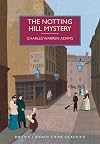
This is a very early detective novel, published in 1865, though the sleuth is actually an insurance broker, not an actual detective or policeman, investigating an insurance scam that turns out to have been the motive for a series of murders. The very nineteenth century phenomenon of mesmerism also plays a strong part. The entire novel is told not through a plot narrative, but through extracts from interviews and depositions for a court case, giving the novel a slightly post-modern feel. show more Indeed it is almost like a series of lectures on how to make logical deductions, a tour de force that Sherlock Holmes (not created for over 20 years after this novel's publication) would have been proud of, but a feature which he decried as lacking from Watson's human interest-focused stories of his exploits. An interesting curiosity if you stick with it, but not really surprising that later detective novels didn't follow this style. show less
Lists
You May Also Like


Associated Authors
Statistics
- Works
- 3
- Also by
- 3
- Members
- 240
- Popularity
- #94,568
- Rating
- 3.2
- Reviews
- 15
- ISBNs
- 21
- Languages
- 3