
André Brink (1935–2015)
Author of A Dry White Season
About the Author
André Brink was born on May 29, 1935 in Vrede, South Africa. He studied English and Afrikaans at the University in Potchefstroom and comparative literature in Paris. He was a South African writer and educator. He became a part of a group of writers known as Die Sestigers upon returning to South show more Africa in the 1960s. The group aimed to broaden Afrikaner fiction by writing about sexual and moral matters and the failings of the traditional political system. His books included Rumors of Rain, Looking on Darkness, A Dry White Season, and States of Emergency. Some of his books were banned in South Africa. He became a professor of Afrikaans and Dutch literature at Rhodes University and professor of English at the University of Cape Town. He has received the 1980 Martin Luther King Prize, the 1980 French Prix Medicis Etranger, and the 1982 Chevalier of the Legion d'Honneur. He was shortlisted for the Booker Prize twice and nominated for the Nobel Prize for literature on several occasions. He died on February 6, 2015 at the age of 79. (Bowker Author Biography) show less
Image credit: André Brink at The International Forum on the Novel, Lyon, France. Photo by Seamus Kearney / Wikimedia Commons.
Series
Works by André Brink
Pot-Pourri 3 copies
Olé: Reisboek oor Spanje 2 copies
Die Poësie van Breyten Breytenbach 2 copies
Fado 2 copies
Inteendeel 2 copies
Midi 2 copies
De Scherpe Randen van het Mozaïek 2 copies
Destabilizing Shakespeare 1 copy
Houd-den-bek 1 copy
Parys-Parys: Retoer 1 copy
DIE MEUL TEEN DIE HANG 1 copy
Το δικαίωμα του πόθου 1 copy
Brink Andrè 1 copy
Destabilising Shakespeare 1 copy
Associated Works
Windroos: Verhale deur 10 Sestigers — Contributor — 2 copies
Over X-jes, de zandloper en de herenbobbel. Een handleiding tot de kunsten voor Maarten Asscher (1998) — Contributor — 1 copy
Tagged
Common Knowledge
- Canonical name
- Brink, André
- Legal name
- Brink, André Philippus
- Birthdate
- 1935-05-29
- Date of death
- 2015-02-06
- Gender
- male
- Education
- Potchefstroom University
Sorbonne University
Lydenburg High School - Occupations
- emeritus professor
novelist - Organizations
- University of Cape Town
Sestiger movement - Awards and honors
- Monismanien Prize (1992)
Order of Ikhamanga
South African Literary Award Lifetime Achievement (2006) - Agent
- Liepman Agency
- Relationships
- Brink, Elsabe (sister)
- Short biography
- André Brink, a major South African writer whose work has shaken conscience and culture in Afrikanerdom, contributed significantly to the cause against apartheid. With democracy, he now sees no further need to be overtly political in his writing and feels a new freedom to write whatever he feels like.
- Nationality
- South Africa
- Birthplace
- Vrede, South Africa
- Places of residence
- Vrede, South Africa
Cape Town, South Africa
Jagersfontein, South Africa
Brits, South Africa
Douglas, South Africa
Sabie, South Africa (show all 7)
Lydenburg, South Africa - Place of death
- in flight (Amsterdam to Cape Town)
- Associated Place (for map)
- South Africa
Members
Discussions
Philida by André Brink in Booker Prize (August 2012)
Reviews
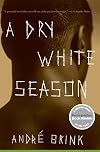
“What can I do but what I have done? I cannot choose not to intervene: that would be a denial and a mockery not only of everything I believe in, but of the hope that compassion may survive among men.”
Ben is a white South African school teacher who believes in the essential fairness of his government, until circumstances and the moral choices he must make upend his life. Gordon, the black janitor at the school where Ben teaches, approaches Ben for help when his teenage son Jonathan show more disappears during the Soweto riots. Ben agrees to help Gordon, and through witnesses they trace Jonathan to the custody of the Special Branch. Within days, however, Jonathan is dead, and the Special Branch denies ever having had him in custody.
Gordon feels compelled to investigate the circumstances of his son’s death, and Ben agrees to continue to help him. Very shortly, however, Gordon is arrested by the Special Branch, and after a short time in custody, Gordon is also dead, an alleged suicide. Now, Ben carries on the investigation, and other deaths ensue, including, as we learn in the opening pages of this novel, Ben’s own.
This book was written at the height of apartheid, just a few short years after the Soweto uprisings. The horrors of apartheid permeate the book in full force. The complicity and willingness of the vast majority of white people to believe the lies their government was telling (I.e. the Soweto uprisings were caused by Communist infiltrators) from a distance of the more than 40 years since this book was written seem almost unbelievable. Yet so many looked away from the government-sponsored murders, and accepted the arrests, harassment, the spying and beatings and torture and even the deaths of anyone questioning the regime.
While this is an important book (on the 1001 list), and is very well written, it does not totally transcend its time. I found that most of the female characters did not ring true. They are the most willing to accept the status quo and believe the government’s lies. The one female character who has some political awareness and courage, Melanie, seems mostly to be there as a love/sex interest for Ben (and there are a few torrid sex scenes I could have done without). Nevertheless, this is a book I recommend.
Parenthetically, the following quote, written in 1979, is one of the earliest mentions of white privilege I am aware of:
“Whether I like it or not, whether I feel like cursing my own condition or not...I am white. This is the small, final, terrifying truth of my broken world. I am white. And because I’m white I am born into a state of privilege. Even if I fight the system that has reduced us to this I remain white, and favored by the very circumstances I abhor. Even if I’m hated, and ostracized, and persecuted, and in the end destroyed, nothing can make me black.”
4 stars show less
Ben is a white South African school teacher who believes in the essential fairness of his government, until circumstances and the moral choices he must make upend his life. Gordon, the black janitor at the school where Ben teaches, approaches Ben for help when his teenage son Jonathan show more disappears during the Soweto riots. Ben agrees to help Gordon, and through witnesses they trace Jonathan to the custody of the Special Branch. Within days, however, Jonathan is dead, and the Special Branch denies ever having had him in custody.
Gordon feels compelled to investigate the circumstances of his son’s death, and Ben agrees to continue to help him. Very shortly, however, Gordon is arrested by the Special Branch, and after a short time in custody, Gordon is also dead, an alleged suicide. Now, Ben carries on the investigation, and other deaths ensue, including, as we learn in the opening pages of this novel, Ben’s own.
This book was written at the height of apartheid, just a few short years after the Soweto uprisings. The horrors of apartheid permeate the book in full force. The complicity and willingness of the vast majority of white people to believe the lies their government was telling (I.e. the Soweto uprisings were caused by Communist infiltrators) from a distance of the more than 40 years since this book was written seem almost unbelievable. Yet so many looked away from the government-sponsored murders, and accepted the arrests, harassment, the spying and beatings and torture and even the deaths of anyone questioning the regime.
While this is an important book (on the 1001 list), and is very well written, it does not totally transcend its time. I found that most of the female characters did not ring true. They are the most willing to accept the status quo and believe the government’s lies. The one female character who has some political awareness and courage, Melanie, seems mostly to be there as a love/sex interest for Ben (and there are a few torrid sex scenes I could have done without). Nevertheless, this is a book I recommend.
Parenthetically, the following quote, written in 1979, is one of the earliest mentions of white privilege I am aware of:
“Whether I like it or not, whether I feel like cursing my own condition or not...I am white. This is the small, final, terrifying truth of my broken world. I am white. And because I’m white I am born into a state of privilege. Even if I fight the system that has reduced us to this I remain white, and favored by the very circumstances I abhor. Even if I’m hated, and ostracized, and persecuted, and in the end destroyed, nothing can make me black.”
4 stars show less
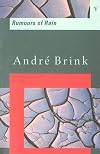
Brink's narrator Martin Mynhardt must have been constructed to personify the most unpalatable elements of apartheid South Africa and its Afrikaner ruling class. He is a rich and successful businessman and mine owner, who is arrogant, insensitive, exploitative, and misogynistic. As a narrative voice this takes some getting used to, but Brink's talent is such that one almost feels sorry for him by the end of this tale, which sees the cosy complacencies of his world, and his attempts to keep show more its various elements separate, dismantled piece by piece over the course of a long weekend. He emerges as a nuanced character, deeply flawed but very human. The portrayals of his friends and family are skilfully drawn but also somewhat symbolic - his best friend Bernard is a lawyer who has decided he has to fight the system and is on trial, and his son Louis has come back from military service in Angola deeply disillusioned and questioning.
The foreground events of the story cover Martin's reminiscences of a trip with his son to visit his mother on the family farm, which he needs to persuade his mother to agree to leave and sell. The narrative is full of asides and back stories, with many events and people alluded to long before their stories are revealed in detail. The events of the book seem all the more relevant given what happened a dozen years later - Brink's analysis of why the system had to change is impressive, perceptive and prophetic show less
The foreground events of the story cover Martin's reminiscences of a trip with his son to visit his mother on the family farm, which he needs to persuade his mother to agree to leave and sell. The narrative is full of asides and back stories, with many events and people alluded to long before their stories are revealed in detail. The events of the book seem all the more relevant given what happened a dozen years later - Brink's analysis of why the system had to change is impressive, perceptive and prophetic show less
There comes a day when, for the first time, violence is used not because it is unavoidable but because it is easier. There comes a day when, for the first time, a leader is allowed to promote his own interests simply because he happens to be the leader. There comes a day when, for the first time, the weak one is exploited, not in ignorance but because he cannot offer resistance. There comes a day when, for the first time, a verdict in a court case is given, not on the basis of what is right show more but on the basis of what is expedient.
This long and angry dispatch from the heart of apartheid South Africa can be an oppressive read, though for understandable reasons. Less understandable, perhaps, were the frankly terrifying number of modern parallels that emerged from this putatively historical document.
The narrator at the core of the novel, Martin Mynhardt, is a hugely successful Afrikaner businessman and one of the very pillars of white-supremacist society, who thinks of himself as contributing to the good of his community and his country. He doesn't hate black people; rather, he likes to believe that apartheid is probably good for them, on balance. Extending real political power would be a mistake: ‘they've simply not developed far enough to handle such sophisticated forms of Western organisation. A matter of evolution.’
Through Mynhardt we're introduced to a complex web of interlinked friends, colleagues, lovers and family members who represent a cross-section of 1970s South African society, from the rural farmstead matron to the idealistic city student, the determined black businessman to the angry white activist; lawyers, witchdoctors, religious figures and expatriates, all of them ultimately grappling with the same basic fact of life.
If you have the stomach for it, experiencing the world through the eyes of a proponent of apartheid should be an educational experience. My problem was that – despite his ingratiating and plausible self-justifications – Mynhardt is made into something a bit too much like a cartoon villain. It is not enough for him to be a stalwart of racism; he is also a neglectful father, an unfaithful husband, an appalling friend, a heartless capitalist (‘people are essentially economic propositions’), a manipulative son and a serial user of the women he eyes up as ‘ripe and more than ready to be bruised’.
It may be that Brink is making a point about what's now called ‘intersectionality’ – the ways racism can be related to other social or sexual hierarchies and privileges. Indeed at one point, these links are made quite explicitly by one of Mynhardt's playthings:
“You're an Afrikaner, so you must be a male chauvinist.”
“I fail to see what the two can have in common.”
“Everything.” She sat down opposite me again, on the edge of the chair, her knees primly together. “Because this is a man's land, don't you see? Big-game, rugby, industries, power politics, racism. You Afrikaners have no room for women. The only place you assign to us is flat on our backs with our legs open for the Big Boss to in-and-out as he pleases.”
But I don't believe this is representative; the whole issue with apartheid, and similar systems, is that the people who support it are very often kind-hearted folks, good family-men, attentive partners and loving parents, who simply live by means of colossal, sustained acts of cognitive dissonance. By making Mynhardt wholly objectionable, Brink loses, I think, several opportunities to make us as readers sympathise with him, which would have been a much more troubling and interesting response than simply loathing him completely from start to finish.
‘I have tried with so much care,’ Mynhardt says towards the end, ‘to keep all the elements of my life apart and intact.’ His emotional apartheid is heading for a violent collapse that will mirror the one about to overtake society; as the riots break out in Soweto, there are symmetrical eruptions of tragedy and abuse in his own circle. Despite the novel's conceptual issues, it all makes for a very dark and powerful climax, as the rumours of rain finally end in the kind of downpour only Africa can produce. Read it for future tips as well as historical context. show less
This long and angry dispatch from the heart of apartheid South Africa can be an oppressive read, though for understandable reasons. Less understandable, perhaps, were the frankly terrifying number of modern parallels that emerged from this putatively historical document.
The narrator at the core of the novel, Martin Mynhardt, is a hugely successful Afrikaner businessman and one of the very pillars of white-supremacist society, who thinks of himself as contributing to the good of his community and his country. He doesn't hate black people; rather, he likes to believe that apartheid is probably good for them, on balance. Extending real political power would be a mistake: ‘they've simply not developed far enough to handle such sophisticated forms of Western organisation. A matter of evolution.’
Through Mynhardt we're introduced to a complex web of interlinked friends, colleagues, lovers and family members who represent a cross-section of 1970s South African society, from the rural farmstead matron to the idealistic city student, the determined black businessman to the angry white activist; lawyers, witchdoctors, religious figures and expatriates, all of them ultimately grappling with the same basic fact of life.
If you have the stomach for it, experiencing the world through the eyes of a proponent of apartheid should be an educational experience. My problem was that – despite his ingratiating and plausible self-justifications – Mynhardt is made into something a bit too much like a cartoon villain. It is not enough for him to be a stalwart of racism; he is also a neglectful father, an unfaithful husband, an appalling friend, a heartless capitalist (‘people are essentially economic propositions’), a manipulative son and a serial user of the women he eyes up as ‘ripe and more than ready to be bruised’.
It may be that Brink is making a point about what's now called ‘intersectionality’ – the ways racism can be related to other social or sexual hierarchies and privileges. Indeed at one point, these links are made quite explicitly by one of Mynhardt's playthings:
“You're an Afrikaner, so you must be a male chauvinist.”
“I fail to see what the two can have in common.”
“Everything.” She sat down opposite me again, on the edge of the chair, her knees primly together. “Because this is a man's land, don't you see? Big-game, rugby, industries, power politics, racism. You Afrikaners have no room for women. The only place you assign to us is flat on our backs with our legs open for the Big Boss to in-and-out as he pleases.”
But I don't believe this is representative; the whole issue with apartheid, and similar systems, is that the people who support it are very often kind-hearted folks, good family-men, attentive partners and loving parents, who simply live by means of colossal, sustained acts of cognitive dissonance. By making Mynhardt wholly objectionable, Brink loses, I think, several opportunities to make us as readers sympathise with him, which would have been a much more troubling and interesting response than simply loathing him completely from start to finish.
‘I have tried with so much care,’ Mynhardt says towards the end, ‘to keep all the elements of my life apart and intact.’ His emotional apartheid is heading for a violent collapse that will mirror the one about to overtake society; as the riots break out in Soweto, there are symmetrical eruptions of tragedy and abuse in his own circle. Despite the novel's conceptual issues, it all makes for a very dark and powerful climax, as the rumours of rain finally end in the kind of downpour only Africa can produce. Read it for future tips as well as historical context. show less

Ben du Toit thinks of himself as an ordinary Afrikaner with no particular interest in politics, a simple Johannesburg schoolteacher. But he's suddenly forced to confront his illusions about the kind of country he's living in when his black friend Gordon dies in police custody, having been arrested for nothing more than trying to find out what happened to his teenage son, killed in the aftermath of the Soweto school protests. Ben's tentative attempts to get information from the police and show more then to help Gordon's widow with the inquest soon make him realise that the authorities have something to hide, reinforcing his stubborn wish to find out what really happened and make sure it doesn't happen again. And of course the police are soon making sure that Ben himself understands how much power they have, when nasty things start happening to him and the people around him.
In the end, of course, he can't hope to win, and he also knows only too well that he can't hope to stop being a privileged white person, but as a friend tells him, there are two kinds of madness one should guard against: One is the belief that we can do everything. Another is the belief that we can do nothing. He has to go on and fail so that it will be a little bit easier for the next person to fail less badly. And eventually the system will be overcome.
Brink sticks to a fairly detached, thriller-like type of narrative, obviously wanting this to be read by those who haven't thought about the problems of Apartheid any more than Ben had at the start of the book. And also knowing that not many people in South Africa would get to read it anyway, as long as the National Party remained in charge. But he did write both an Afrikaans and an English version of it, as he did for most of his later books. show less
In the end, of course, he can't hope to win, and he also knows only too well that he can't hope to stop being a privileged white person, but as a friend tells him, there are two kinds of madness one should guard against: One is the belief that we can do everything. Another is the belief that we can do nothing. He has to go on and fail so that it will be a little bit easier for the next person to fail less badly. And eventually the system will be overcome.
Brink sticks to a fairly detached, thriller-like type of narrative, obviously wanting this to be read by those who haven't thought about the problems of Apartheid any more than Ben had at the start of the book. And also knowing that not many people in South Africa would get to read it anyway, as long as the National Party remained in charge. But he did write both an Afrikaans and an English version of it, as he did for most of his later books. show less
Lists
Awards


You May Also Like


Associated Authors
Statistics
- Works
- 94
- Also by
- 6
- Members
- 4,907
- Popularity
- #5,119
- Rating
- 3.8
- Reviews
- 120
- ISBNs
- 476
- Languages
- 16
- Favorited
- 16