
About the Author
Jeff Greenfield is a senior analyst and anchor for CNN.
Works by Jeff Greenfield
Then Everything Changed : Stunning Alternate Histories of American Politics : JFK, RFK, Carter, Ford, Reagan (2011) 216 copies, 8 reviews
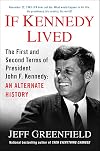
If Kennedy Lived: The First and Second Terms of President John F. Kennedy: An Alternate History (2013) 110 copies, 16 reviews
Associated Works
On the Firing Line: The Public Life of Our Public Figures (1989) — Contributor — 127 copies, 1 review
Tagged
Common Knowledge
- Canonical name
- Greenfield, Jeff
- Birthdate
- 1943-06-10
- Gender
- male
- Education
- University of Wisconsin-Madison
Yale Law School
Bronx High School of Science, New York, New York, USA - Occupations
- journalist
author - Organizations
- CBS News
ABC News - Awards and honors
- Emmy Award (1985, 1990, 1992)
- Nationality
- USA
- Birthplace
- New York, New York, USA
- Places of residence
- Salisbury, Connecticut, USA
- Associated Place (for map)
- USA
Members
Reviews
Then Everything Changed: Stunning Alternate Histories of American Politics: JFK, RFK, Carter, Ford, Reagan by Jeff Greenfield
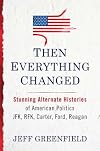
Even though I don't write about it too much here, I'm something of a politics junkie by nature, and I also happen to love some well-informed speculative writing, so when I learned that Jeff Greenfield had written Then Everything Changed: Stunning Alternate Histories of American Politics: JFK, RFK, Carter, Ford, Reagan (G.P. Putnam's Sons, 2011) the book went right on the "must read" list.
Putting his many years of political reporting and experience to good use, Greenfield has taken three show more "turning points" and spun out the longterm scenarios of what might have happened had things gone differently. As he writes in the preface, "what would have happened if small twists of fate had given us different leaders, with different beliefs, strengths, and weaknesses? I've tried here to answer that question by exploring, in dramatic narrative form, complete with characters, thoughts, and dialogue, a trio of contemporary alternate American histories, all flowing from events that came a mere hairsbreadth away from actually happening" (p. xii).
What if a suicide bomber had killed JFK outside his house in December, 1960, before the electors had cast their ballots? What if RFK hadn't been shot in June, 1968, just after winning the California primary? What if Gerald Ford had recovered from a crucial gaffe during a 1976 debate, and won reelection? Greenfield outlines what the next years and decades might have looked like under those circumstances. While some of the conclusions may seem implausible, far-fetched, or even silly, I'm hard pressed to say that any of Greenfield's flights of fancy are any less likely than some of the actual things we've seen in our politics over the last few decades.
From what he writes in the Acknowledgments, it would appear that Greenfield had been contracted to write a novel (he'd done an earlier one for Putnam). I'm glad that he ended up writing this book instead, and I certainly hope he had as much fun writing it as I had reading it. I absolutely loved the arcana he delved into, from the complicated mechanics of Democratic primary delegate math to the vice-presidential calculations of the 1980 candidates. If you get as excited about these things as I do, go out and buy this book, and read it closely.
http://philobiblos.blogspot.com/2011/09/book-review-then-everything-changed.html show less
Putting his many years of political reporting and experience to good use, Greenfield has taken three show more "turning points" and spun out the longterm scenarios of what might have happened had things gone differently. As he writes in the preface, "what would have happened if small twists of fate had given us different leaders, with different beliefs, strengths, and weaknesses? I've tried here to answer that question by exploring, in dramatic narrative form, complete with characters, thoughts, and dialogue, a trio of contemporary alternate American histories, all flowing from events that came a mere hairsbreadth away from actually happening" (p. xii).
What if a suicide bomber had killed JFK outside his house in December, 1960, before the electors had cast their ballots? What if RFK hadn't been shot in June, 1968, just after winning the California primary? What if Gerald Ford had recovered from a crucial gaffe during a 1976 debate, and won reelection? Greenfield outlines what the next years and decades might have looked like under those circumstances. While some of the conclusions may seem implausible, far-fetched, or even silly, I'm hard pressed to say that any of Greenfield's flights of fancy are any less likely than some of the actual things we've seen in our politics over the last few decades.
From what he writes in the Acknowledgments, it would appear that Greenfield had been contracted to write a novel (he'd done an earlier one for Putnam). I'm glad that he ended up writing this book instead, and I certainly hope he had as much fun writing it as I had reading it. I absolutely loved the arcana he delved into, from the complicated mechanics of Democratic primary delegate math to the vice-presidential calculations of the 1980 candidates. If you get as excited about these things as I do, go out and buy this book, and read it closely.
http://philobiblos.blogspot.com/2011/09/book-review-then-everything-changed.html show less

Rating: 3.5* of five
The Publisher Says: At 5:00 p.m. on September 11, 2001, an ashen-faced but composed President Al Gore stepped into the East Room of the White House to deliver a televised address to the nation. With him were former presidents Clinton and Bush, as well as Texas governor George W. Bush—flown to Washington from Dallas on a military jet, his first visit back to the capital after the close race that lost him the presidency just months before.
That’s not how you remember show more it?
Imagine if the 2000 presidential election had turned out differently and Al Gore had defeated George W. Bush to become the 43rd president of the United States. How might events have played out? Would Osama bin Laden have loomed as large? Would the 9/11 attacks have been even worse? Would we have invaded Iraq? Would the economy have plunged into recession?
This is the provocative alternate universe of 43*, a riveting thriller by veteran political commentator Jeff Greenfield. Richly reported and anchored in actual events, 43*: When Gore Beat Bush is the fascinating follow-up to Greenfield’s bestselling Then Everything Changed, which imagined what-if scenarios for the Kennedy, Ford, Carter, and Reagan administrations.
Greenfield takes readers deep inside the Gore administration and reveals high-level meetings, top-secret programs, and ego-fueled battles that forever altered the global landscape. And in Greenfield’s hauntingly plausible parallel universe, the law of unintended consequences has a dramatic effect on the fate of the United States.
“It’s the ‘butterfly effect,’” writes Greenfield, “where one dead butterfly millions of years ago leads to a contemporary world immeasurably more coarse, less kind. It’s the notion of the old nursery rhyme: ‘For want of a nail the kingdom was lost.’”
My Review: I'll lead off with the fact that I agree with Greenfield's central premise: No way in HELL was a Gore presidency going to be an easy and smooth continuation of Clinton's easy and smooth presidency. (pause for hilarious laughter) Lieberman was a stupid, bad choice for veep; Gore himself was visibly annoyed by the process of campaigning on an even footing with that simpering chimp, and it showed; and perhaps most tellingly, Gore is a smart man, and Murrikinz hates them some smart folk. Lookit what happened to that nice perfesser dude in the 1950s. (Adlai Stevenson, for the furriners and nursery crowd.)
Rep. Tom DeLay would've been a freakin' nightmare opponent as Speaker-in-fact, Sen. Jesse Helms, well, let's just say there's some folks for whom death is too good, and on and on and on. This is matched against Gore's clear strengths: at that time, 25 years in Washington as an elected official, a lifetime in politics via his daddy's Senate life, a pretty blonde wife with some wingnutty ideas about free speech that would've played well in the shitty little GOP burgs that, for some reason, haven't been ethnically cleansed. Proof positive there is no vast left-wing conspiracy, that.
And while I agree that Gore's proven effectiveness at knocking heads saved the 1996 Olympics, I don't agree with Mr. Greenfield's assessment that a Gore presidency would've been ineffective at doing much the same in DC's intelligence community. I suspect that Mr. Greenfield had excellent reasons for his choice...read the Acknowledgments, man's up on this stuff...but I dunno, this seems an easy-to-write choice, not an inevitable one. Like the millionaire tax-free battle. Like the dot-bust. Due attention is paid to the screaming rooms at Faux News and on Wingnut Central Raddee-O-Land, and their entrenched right-wing insane clown posse. These would've made Gore's life hell, as they have Obama's. Like enough, they'd've been even more strident under Gore because of their sense of outrage: He's one of us and he's not twangin' the Teabilly Horst Wessel!
Whatever my cavils about that, let me assure you the piece is well-written and contains the trademark Greenfield slyness. Moments of savorable irony for political junkies are placed hither, thither, and yon, but those without the information needed to appreciate them won't feel a sharp whizz as the ninja star slices their hair-do.
So why the mingy three-and-a-half of five rating? Because, in the end, I felt I was being in-the-roomed. I was too close to the trees and I wanted a look at the forest. Now a big part of that is the length of the piece, at under 100pp. Can't do it all, after all, when you're aiming at the lunch-plus-commute reader. But it's more than that. Greenfield knows a lot more than I do about his subject. He's telling his own story, and it's got plausibility everywhere and everywhen. So why is it that I can purse my lips and shake my head and wonder what makes you think that follows from this other thing? Just working from his own data presented in the piece, I wasn't as sold as I expected to be.
But I was sold enough to say this to you: Spend $1.99 on this Kindle Single and you'll have ~2hrs tops of well-crafted, thought-provoking, and ultimately satisfying counterfactual fun.
This work is licensed under a Creative Commons Attribution-NonCommercial-ShareAlike 3.0 Unported License. show less
The Publisher Says: At 5:00 p.m. on September 11, 2001, an ashen-faced but composed President Al Gore stepped into the East Room of the White House to deliver a televised address to the nation. With him were former presidents Clinton and Bush, as well as Texas governor George W. Bush—flown to Washington from Dallas on a military jet, his first visit back to the capital after the close race that lost him the presidency just months before.
That’s not how you remember show more it?
Imagine if the 2000 presidential election had turned out differently and Al Gore had defeated George W. Bush to become the 43rd president of the United States. How might events have played out? Would Osama bin Laden have loomed as large? Would the 9/11 attacks have been even worse? Would we have invaded Iraq? Would the economy have plunged into recession?
This is the provocative alternate universe of 43*, a riveting thriller by veteran political commentator Jeff Greenfield. Richly reported and anchored in actual events, 43*: When Gore Beat Bush is the fascinating follow-up to Greenfield’s bestselling Then Everything Changed, which imagined what-if scenarios for the Kennedy, Ford, Carter, and Reagan administrations.
Greenfield takes readers deep inside the Gore administration and reveals high-level meetings, top-secret programs, and ego-fueled battles that forever altered the global landscape. And in Greenfield’s hauntingly plausible parallel universe, the law of unintended consequences has a dramatic effect on the fate of the United States.
“It’s the ‘butterfly effect,’” writes Greenfield, “where one dead butterfly millions of years ago leads to a contemporary world immeasurably more coarse, less kind. It’s the notion of the old nursery rhyme: ‘For want of a nail the kingdom was lost.’”
My Review: I'll lead off with the fact that I agree with Greenfield's central premise: No way in HELL was a Gore presidency going to be an easy and smooth continuation of Clinton's easy and smooth presidency. (pause for hilarious laughter) Lieberman was a stupid, bad choice for veep; Gore himself was visibly annoyed by the process of campaigning on an even footing with that simpering chimp, and it showed; and perhaps most tellingly, Gore is a smart man, and Murrikinz hates them some smart folk. Lookit what happened to that nice perfesser dude in the 1950s. (Adlai Stevenson, for the furriners and nursery crowd.)
Rep. Tom DeLay would've been a freakin' nightmare opponent as Speaker-in-fact, Sen. Jesse Helms, well, let's just say there's some folks for whom death is too good, and on and on and on. This is matched against Gore's clear strengths: at that time, 25 years in Washington as an elected official, a lifetime in politics via his daddy's Senate life, a pretty blonde wife with some wingnutty ideas about free speech that would've played well in the shitty little GOP burgs that, for some reason, haven't been ethnically cleansed. Proof positive there is no vast left-wing conspiracy, that.
And while I agree that Gore's proven effectiveness at knocking heads saved the 1996 Olympics, I don't agree with Mr. Greenfield's assessment that a Gore presidency would've been ineffective at doing much the same in DC's intelligence community. I suspect that Mr. Greenfield had excellent reasons for his choice...read the Acknowledgments, man's up on this stuff...but I dunno, this seems an easy-to-write choice, not an inevitable one. Like the millionaire tax-free battle. Like the dot-bust. Due attention is paid to the screaming rooms at Faux News and on Wingnut Central Raddee-O-Land, and their entrenched right-wing insane clown posse. These would've made Gore's life hell, as they have Obama's. Like enough, they'd've been even more strident under Gore because of their sense of outrage: He's one of us and he's not twangin' the Teabilly Horst Wessel!
Whatever my cavils about that, let me assure you the piece is well-written and contains the trademark Greenfield slyness. Moments of savorable irony for political junkies are placed hither, thither, and yon, but those without the information needed to appreciate them won't feel a sharp whizz as the ninja star slices their hair-do.
So why the mingy three-and-a-half of five rating? Because, in the end, I felt I was being in-the-roomed. I was too close to the trees and I wanted a look at the forest. Now a big part of that is the length of the piece, at under 100pp. Can't do it all, after all, when you're aiming at the lunch-plus-commute reader. But it's more than that. Greenfield knows a lot more than I do about his subject. He's telling his own story, and it's got plausibility everywhere and everywhen. So why is it that I can purse my lips and shake my head and wonder what makes you think that follows from this other thing? Just working from his own data presented in the piece, I wasn't as sold as I expected to be.
But I was sold enough to say this to you: Spend $1.99 on this Kindle Single and you'll have ~2hrs tops of well-crafted, thought-provoking, and ultimately satisfying counterfactual fun.
This work is licensed under a Creative Commons Attribution-NonCommercial-ShareAlike 3.0 Unported License. show less
Then Everything Changed: Stunning Alternate Histories of American Politics: JFK, RFK, Carter, Ford, Reagan by Jeff Greenfield
Because I am such a sucker for “what if?” types of books, “Then Everything Changed” is right up my alley. I heard the author interviewed on the radio…a few months ago? The idea of a book about what MIGHT have happened if a few key events had/had not taken place in the political arena was fascinating to me.
I found myself absolutely engrossed in the well researched and well supported alternate political realities that author Jeff Greenfield laid out. Instead of taking some obvious show more “What ifs?” like “What if JFK hadn’t been assassinated?” he starts at a little known point in history, (which in itself was fascinating) and then JFK is killed before he takes office. He then lays out such realistic and dramatic difference scenarios that the reader is sucked into this new history. Some changes are for the better, some are worse…and many are both. Some historical events that really did happen just happen sooner or later than they did in reality and some happen in completely different ways. He then does the same for RFK, Carter, Ford and Regan.
The one criticism I had for the book is the wink and nod that Greenfield gives in his alternate versions to the future/the events that really did take place. Comments like a presidential aide in 1963 saying, “…let’s be serious: there’s no way on earth the public would ever stand for a court deciding who is going to be president.” Or in 1976, when a presidential candidate wins the popular vote but loses the electoral vote, “A newly elected twenty-eight-year old congressman from Tennessee, Al Gore, Jr., announced that his first act would be to introduce a Constitutional amendment to award the Presidency to the popular-vote winner. “It is indefensible,” Gore said, “that a candidate who received the most votes would be denied the Presidency by an archaic, outmoded mechanism, and we must ensure that no future candidate will ever suffer this outrageous injustice.” And then when an unexpected President is caught in a compromising situation by his Deputy Chief of Staff, the scene it just too cutesy. I wish there were fewer of these clever plot points, so I didn’t find myself rolling my eyes as much.
I learned a great deal from this book, most notably about the Middle East (which is a topic of which I am hopelessly ignorant) and about many of the players in 1960s Democratic politics, which was very interesting. I would recommend this book to other political junkies and to anyone who like to imagine what might have been… show less
I found myself absolutely engrossed in the well researched and well supported alternate political realities that author Jeff Greenfield laid out. Instead of taking some obvious show more “What ifs?” like “What if JFK hadn’t been assassinated?” he starts at a little known point in history, (which in itself was fascinating) and then JFK is killed before he takes office. He then lays out such realistic and dramatic difference scenarios that the reader is sucked into this new history. Some changes are for the better, some are worse…and many are both. Some historical events that really did happen just happen sooner or later than they did in reality and some happen in completely different ways. He then does the same for RFK, Carter, Ford and Regan.
The one criticism I had for the book is the wink and nod that Greenfield gives in his alternate versions to the future/the events that really did take place. Comments like a presidential aide in 1963 saying, “…let’s be serious: there’s no way on earth the public would ever stand for a court deciding who is going to be president.” Or in 1976, when a presidential candidate wins the popular vote but loses the electoral vote, “A newly elected twenty-eight-year old congressman from Tennessee, Al Gore, Jr., announced that his first act would be to introduce a Constitutional amendment to award the Presidency to the popular-vote winner. “It is indefensible,” Gore said, “that a candidate who received the most votes would be denied the Presidency by an archaic, outmoded mechanism, and we must ensure that no future candidate will ever suffer this outrageous injustice.” And then when an unexpected President is caught in a compromising situation by his Deputy Chief of Staff, the scene it just too cutesy. I wish there were fewer of these clever plot points, so I didn’t find myself rolling my eyes as much.
I learned a great deal from this book, most notably about the Middle East (which is a topic of which I am hopelessly ignorant) and about many of the players in 1960s Democratic politics, which was very interesting. I would recommend this book to other political junkies and to anyone who like to imagine what might have been… show less
If Kennedy lived : the first and second terms of President John F. Kennedy : an alternate history by Jeff Greenfield
Rating: 4* of five
The Publisher Says: November 22, 1963: JFK does not die. What would happen to his life, his presidency, his country, his world?
Based on memoirs, histories, oral histories, fresh reporting, and his own knowledge of the players, this book looks at the tiny hinges of history—and the extraordinary changes that would have resulted if they had gone another way.
Now he presents his most compelling narrative of all about the historical event that has riveted us for fifty years. show more What if Kennedy were not killed that fateful day? What would the 1964 campaign have looked like? Would changes have been made to the ticket? How would Kennedy, in his second term, have approached Vietnam, civil rights, the Cold War? With Hoover as an enemy, would his indiscreet private life finally have become public? Would his health issues have become so severe as to literally cripple his presidency? And what small turns of fate in the days and years before Dallas might have kept him from ever reaching the White House in the first place?
As with Then Everything Changed, the answers Greenfield provides and the scenarios he develops are startlingly realistic, rich in detail, shocking in their projections, but always deeply, remarkably plausible. It is a tour de force of American political history.
My Review: See all those questions in the publisher's copy above? Those are the very ones that Jeff Greenfield, a pundit and powerful columnist, addresses with a great deal of panache and a large helping of nerve. Greenfield was often seen on Nightline during its glory years as THE political chat show.
Greenfield graduated with a JD from Yale before going to work for Sen. Robert F. Kennedy after the president was assassinated. That in mind, imagine my surprise when RFK comes across as a really vicious, very nasty character in this telling of his brother's presidency. Apparently he was no saint. But then again, neither was Jack, as we all now know.
What makes me most happy about this book is its major weakness: If you're not conversant with the politics and personalities of that day, this book will read like a fairly dry novel. Without knowing the name McGeorge Bundy, for example, there's not much point in picking up the book. Better yet, if the name carries with it an image of hornrims and a honking accent, the book will light a little Eternal Flame for Camelot.
And for my own part, I'd LOVE to have seen what Vaughn Meader would've done with a second term! (Yes, I know that went whoooshing over a lot of non-gray heads. So will the rest of the book.)
So why give the serviceable, journalistic prose four stars? Because the prose isn't the point. The tale, the imagining of JFK fighting and winning a very different 1964 election battle and doing so much damage to his own interests...that is what people with memories of that horrible, horrible moment in time when our president was murdered before our horrified eyes would pay the $12.99 for a Kindle copy, or $26.95 for a hardcover version of the book to experience.
This work is licensed under a Creative Commons Attribution-NonCommercial-ShareAlike 3.0 Unported License. show less
The Publisher Says: November 22, 1963: JFK does not die. What would happen to his life, his presidency, his country, his world?
Based on memoirs, histories, oral histories, fresh reporting, and his own knowledge of the players, this book looks at the tiny hinges of history—and the extraordinary changes that would have resulted if they had gone another way.
Now he presents his most compelling narrative of all about the historical event that has riveted us for fifty years. show more What if Kennedy were not killed that fateful day? What would the 1964 campaign have looked like? Would changes have been made to the ticket? How would Kennedy, in his second term, have approached Vietnam, civil rights, the Cold War? With Hoover as an enemy, would his indiscreet private life finally have become public? Would his health issues have become so severe as to literally cripple his presidency? And what small turns of fate in the days and years before Dallas might have kept him from ever reaching the White House in the first place?
As with Then Everything Changed, the answers Greenfield provides and the scenarios he develops are startlingly realistic, rich in detail, shocking in their projections, but always deeply, remarkably plausible. It is a tour de force of American political history.
My Review: See all those questions in the publisher's copy above? Those are the very ones that Jeff Greenfield, a pundit and powerful columnist, addresses with a great deal of panache and a large helping of nerve. Greenfield was often seen on Nightline during its glory years as THE political chat show.
Greenfield graduated with a JD from Yale before going to work for Sen. Robert F. Kennedy after the president was assassinated. That in mind, imagine my surprise when RFK comes across as a really vicious, very nasty character in this telling of his brother's presidency. Apparently he was no saint. But then again, neither was Jack, as we all now know.
What makes me most happy about this book is its major weakness: If you're not conversant with the politics and personalities of that day, this book will read like a fairly dry novel. Without knowing the name McGeorge Bundy, for example, there's not much point in picking up the book. Better yet, if the name carries with it an image of hornrims and a honking accent, the book will light a little Eternal Flame for Camelot.
And for my own part, I'd LOVE to have seen what Vaughn Meader would've done with a second term! (Yes, I know that went whoooshing over a lot of non-gray heads. So will the rest of the book.)
So why give the serviceable, journalistic prose four stars? Because the prose isn't the point. The tale, the imagining of JFK fighting and winning a very different 1964 election battle and doing so much damage to his own interests...that is what people with memories of that horrible, horrible moment in time when our president was murdered before our horrified eyes would pay the $12.99 for a Kindle copy, or $26.95 for a hardcover version of the book to experience.
This work is licensed under a Creative Commons Attribution-NonCommercial-ShareAlike 3.0 Unported License. show less
 This review was written for LibraryThing Early Reviewers.
Awards

You May Also Like


Associated Authors
Statistics
- Works
- 15
- Also by
- 2
- Members
- 739
- Popularity
- #34,364
- Rating
- 3.5
- Reviews
- 27
- ISBNs
- 32

