
Alexander von Humboldt (1769–1859)
Author of Jaguars and Electric Eels
About the Author
Baron Alexander von Humboldt was born in Berlin, Germany. During his early school years, he studied such subjects as geology, biology, metallurgy, and mining, and his main interest was in nature and other lands. In 1796 Humboldt traveled to the German Alps, where he measured the atmospheric show more pressure, humidity, and oxygen content of the air. Shortly after, in 1799, he was granted permission by the Spanish king to explore Spain's mysterious holdings in the Americas. For the next five years, he and his companion, Aime Bonplaud, explored the region that is now Venezuela, Cuba, Colombia, Peru, Ecuador, and Mexico. While in the Andes, he fell prey to mountain sickness, which led him to become the first person to explain that the sickness was caused by a lack of oxygen. During these travels, he and Bonplaud collected 60,000 plant specimens; mapped the area; and studied its climates, bodies of water, wildlife, and minerals. The findings of this exhaustive adventure were published in a 23-volume series, Voyage de Humboldt et Bonplaud (1805--34). In 1829, at the invitation of the Russian government, Humboldt made an expedition to Russia and Siberia, categorizing, observing, and recording as he went. One of the results of this expedition was a 5-volume work, Kosmos (1845-62), in which he tried to combine the vague ideals of the eighteenth century with the exact scientific requirements of his own. Considered one of the founders of modern geography, Humboldt showed geographers that there was more to the study of geography than the shape of Earth and its regions. He gave them a system of geographic inquiry, he was the first to draw an isothermal map, studied tropical storms and volcanoes, and pioneered the field of terrestrial magnetism. Equally important, he was responsible for one of the first examples of international scientific cooperation, which led to the formation of a system of meteorological stations throughout Russia and Great Britain. During one of his many expeditions, he measured the temperature of the current with which his ship sailed from Lima, Peru, to Acapulco, Mexico. Later this current was named the Humboldt Current in his honor. (Bowker Author Biography) show less
Image credit: Painting by Joseph Stieler (1843)
Series
Works by Alexander von Humboldt
Personal Narrative of a Journey to the Equinoctial Regions of the New Continent [Abridged - Penguin Classics] (1995) 160 copies, 2 reviews
Cosmos: A Sketch of the Physical Description of the Universe (1997) — Author — 145 copies, 2 reviews
Personal Narrative of a Journey to the Equinoctial Regions of the New Continent: Abridged Edition (Penguin Classics) (1970) 74 copies, 1 review
Cosmos: A Sketch of the Physical Description of the Universe; Volume 2 (Foundations of Natural History) (1997) 32 copies
Personal Narrative of Travels to the Equinoctial Regions of America, During the Year 1799-1804 - Volume 1 (2007) 27 copies, 1 review
Views of the Cordilleras and Monuments of the Indigenous Peoples of the Americas: A Critical Edition (2013) 23 copies, 1 review
Personal Narrative of Travels to the Equinoctial Regions of America, During the Year 1799-1804 - Volume 2 (2009) 21 copies
Personal Narrative of Travels to the Equinoctial Regions of America, Vol. III (in 3 volumes): During the Years 1799-1804 (2009) 17 copies
Cosmos, Vol. 4: Sketch of a Physical Description of the Universe; Part 1 (Classic Reprint) (2004) 12 copies
Alexander von Humboldt: The Complete Drawings from the American Travel Journals (2018) — Author — 11 copies
Viaggio alle regioni equinoziali del nuovo continente fatto nel 1799, 1800, 1801, 1802, 1803 e 1804: relazione storica (1986) 3 copies
Ideas para una geografia de las plantas. Más Un cuadro de la naturaleza de los países tropicales (Spanish Edition) (1986) 3 copies
Das Buch der Begegnungen: Menschen – Kulturen – Geschichten aus den Amerikanischen Reisetagebüchern von Alexander von Humboldt (2018) 3 copies
Alejandro de Humboldt en Colombia 3 copies
Studienausgabe, 7 Bde. in Tl.-Bdn., Bd.1, Schriften zur Geographie der Pflanzen: Bd. 1 (1989) 3 copies
Darmstädter Ausgabe. Band IV, Mexico-Werk : Politische Ideen Zu Mexico : Mexicanische Landeskunde (2014) 2 copies
Die Frankfurter Schule und die Folgen Referate eines Symposiums der Alexander von Humboldt-Stiftung vom 10.-15. Dezember 1984 in Ludwigsburg (1986) 2 copies
Studienausgabe, 7 Bde. in Tl.-Bdn., Bd.7, Kosmos, 2 Tl.-Bde.: Bd. 7 in 2 Teilbänden. Teilband 2 2 copies
Studienausgabe: Studienausgabe, 7 Bde. in Tl.-Bdn., Bd.7, Kosmos, 2 Tl.-Bde.: Bd. 7 in 2 Teilbänden. (1993) 2 copies
Essai Sur La Geographie Des Plantes: Accompagne D'Un Tableau Physique Des Regions Equinoxiales (1805) (2010) 1 copy
Cosmos, Vol. 1: Ensayo de una Descripcion Fisica del Mundo (Classic Reprint) (Spanish Edition) (2017) 1 copy
Ideen zu einem Versuch, die Grenzen der Wirksamkeit des Staats zu bestimmen (German Edition) (2012) 1 copy
Kosmos â Entwurf einer physischen Weltbeschreibung (vollständige digitalisierte Ausgabe) (2014) 1 copy
Humboldtiana 1 copy
Второе открытие Америки 1 copy
Aspects Of Nature V2: In Different Lands And Different Climates, With Scientific Elucidations (1849) (2008) 1 copy
Ensayo Político Sobre el Reino de la Nueva-España, Vol. 3 (Classic Reprint) (Spanish Edition) (2018) 1 copy
Auf dem Orinoko — Author — 1 copy
Beiderseits des Amazonas. Reisen deutscher Forscher des 19. Jahrhunderts durch Südamerika (1975) 1 copy
Aspects Of Nature V1: In Different Lands And Different Climates, With Scientific Elucidations (1849) (2008) 1 copy
Kosmos und Humanität 1 copy
De distributione geographica plantarum secundum coeli temperiem et altitudinem montium, prolegomena 1 copy, 1 review
Studienausgabe, 7 Bde. in Tl.-Bdn., Bd.6, Schriften zur Physikalischen Geographie: Bd. 6 (1989) 1 copy
Viaje a las Regiones Equinocciales del Nuevo Continente. Tomo V : libro 9, índices alfabéticos y de lugares (1991) 1 copy
Kleinere Schriften 1 copy
Versuche über die chemische Zerlegung des Luftkreises : und über einige andere Gegenstände der Naturlehre (1976) 1 copy
Asie Centrale, Vol. 1: Recherches sur les Chaines de Montagnes Et la Climatologie Comparée (Classic Reprint) (2017) 1 copy
Abenteurer und Entdecker 1 copy
Viaje a las Regiones Equinocciales del Nuevo Continente Hecho en ..., Volume 1 (Spanish Edition) (2009) 1 copy
Associated Works
Tagged
Common Knowledge
- Canonical name
- von Humboldt, Alexander
- Legal name
- Humboldt, Friedrich Heinrich Alexander, Baron von
- Birthdate
- 1769-09-14
- Date of death
- 1859-05-06
- Gender
- male
- Education
- Freiberg School of Mines (Dipl. 1792)
University of Göttingen
Europa-Universität Viadrina Frankfurt (Oder) - Occupations
- naturalist
explorer
geographer - Organizations
- Humboldt University of Berlin
University of Berlin - Awards and honors
- American Philosophical Society (1804)
Prussian Academy of Sciences (1805)
Royal Swedish Academy of Sciences (Foreign Member, 1810)
American Antiquarian Society (1816)
Linnean Society of London (1818)
New York Historical Society (1820) (show all 19)
American Academy of Arts and Sciences (Foreign Honorary Member, 1822)
Pour le Mérite (1842)
American Ethnological Society (1843)
American Geographical and Statistical Society (1856)
Royal Society (Foreign Member, 1815)
Privy Counsellor (1829)
Chancellor of the Order of Merit (1842)
Order of the Red Eagle (1844)
Order of the Black Eagle (1847)
Order of Saints Maurice and Lazarus (Knight Grand Cross, 1850)
Copley Medal (1852)
Bavarian Maximilian Order for Science and Art (1853)
Order of Guadalupe (Knight Grand Cross, 1863) - Relationships
- Humboldt, Wilhelm von (brother)
Humboldt, Caroline von (sister-in-law)
Herz, Henriette (friend) - Nationality
- Germany
- Birthplace
- Berlin, Margraviate of Brandenburg, Holy Roman Empire
- Places of residence
- Berlin, Prussia, German Empire
Paris, France - Place of death
- Berlin, Prussia, German Confederation
- Burial location
- Schloss Tegel, Berlin, Germany
Members
Reviews
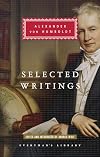
One of the last true polymaths, able to be at the forefront of several fields, and an early exponent of bringing science to the (educated, non-scientific) people, Humboldt was a colossal global celebrity in his day whose star has waned as his ideas have been updated or superseded. Another factor working against him is the sheer volume and meticulous detail of his writings, even the ones intended for the wider public. This Everyman selection is an excellent attempt to bring Humboldt back into show more focus.
The basis of Humboldt's career, and of much of his oeuvre, was his expedition to the Americas from 1799-1804. Half of this volume is given up to his "personal narrative" of the trip, which unfortunately only covered the first part of it, to what is now Venezuela where he journeyed along the Orinoco and other tropical rivers before heading for a stop in Cuba. Despite its being cut short I found this the most readable text in the selection, largely thanks to judicious abridgment of the lengthier and more abstruse technical speculations. What makes it a pleasure is Humboldt's unbounded curiosity about everything, and the way his scientific lens only enhances his delight in the beauty of what he discovers. He rarely mentions the difficulty and dreadfulness of spending months living in a dug-out canoe with little or no respite from clouds of mosquitoes, water-borne parasites, etc., but admirers of boys' own exploration tales will find a bit of that here, too. If only we had the same day-by-day account, combining minor incidents with notable observations and scientific theory, of the rest of his trip which covered Mexico, Colombia, and the Inca territories.
Then we have excerpts from six other Humboldt works, some better than others. The "Essay on the Geography of Plants" expounds what was perhaps Humboldt's greatest scientific achievement, the understanding of how climate zones influence flora, and how these zones can be defined. Despite this it isn't a great read for the layman, suffering like all his writings from the fact that its value now is more as a historical document than a useful piece of science writing.
"Views of Nature" demonstrates the more romantic side of the man, as he sketches various scenes from his experiences in the "torrid zone". The short description of dusk and night in the middle of the rainforest will stay with me.
Then we have "Views of the Cordilleras and Monuments of the Indigenous Peoples of the Americas", which for me was the other highlight of this volume. Unfortunately, the beautiful engravings which accompanied the original text can't be properly represented in a book like this, but the reproductions at least give you some idea. Humboldt's writing is compelling, too, and his open-mindedness and respect (mostly) for indigenous cultures is very evident.
The selection from the "Political Essay on the Island of Cuba" is the chapter on slavery which was removed, to Humboldt's chagrin, from a U.S. edition. It is a strong indictment of the practice, on political and economic as well as moral grounds, which deserves a wider audience.
Finally, there is a part of his magnum opus, "Cosmos, Sketch of a Physical Description of the Universe". Wisely the editor has left out the actual physical description of the universe, which although doubtless a fascinating read in its time (and rather groundbreaking) will be old news or simply wrong to us. What we have instead is a couple of early parts of the work: first, an introductory text detailing his ur-philosophy of multi-disciplinarism and how the various sciences can only enhance each other, the interconnectedness of things and how increased understanding of natural phenomena should enhance rather than diminish our sense of wonder - all thoroughly modern (and secular) ideas. Then there's a survey of the representation of nature in literature from the earliest times, which I really enjoyed, especially the stirring eulogia of nature in scripture and of Camoens' Lusiads, along with brief discussions of nature in landscape painting and the cultivation of tropical plants.
Humboldt is a strange case of a great thinker, and in some ways great writer, who for very valid reasons has slipped into obscurity. His strengths then are weaknesses now, and for magnifying the former and mitigating the latter I'm thankful to Andrea Wulf and the publishers of this book. Wulf apologises in her introduction for a couple of the translations which are old and slightly stilted, but this is no big deal for anyone a little familiar with Victorian English prose. show less
The basis of Humboldt's career, and of much of his oeuvre, was his expedition to the Americas from 1799-1804. Half of this volume is given up to his "personal narrative" of the trip, which unfortunately only covered the first part of it, to what is now Venezuela where he journeyed along the Orinoco and other tropical rivers before heading for a stop in Cuba. Despite its being cut short I found this the most readable text in the selection, largely thanks to judicious abridgment of the lengthier and more abstruse technical speculations. What makes it a pleasure is Humboldt's unbounded curiosity about everything, and the way his scientific lens only enhances his delight in the beauty of what he discovers. He rarely mentions the difficulty and dreadfulness of spending months living in a dug-out canoe with little or no respite from clouds of mosquitoes, water-borne parasites, etc., but admirers of boys' own exploration tales will find a bit of that here, too. If only we had the same day-by-day account, combining minor incidents with notable observations and scientific theory, of the rest of his trip which covered Mexico, Colombia, and the Inca territories.
Then we have excerpts from six other Humboldt works, some better than others. The "Essay on the Geography of Plants" expounds what was perhaps Humboldt's greatest scientific achievement, the understanding of how climate zones influence flora, and how these zones can be defined. Despite this it isn't a great read for the layman, suffering like all his writings from the fact that its value now is more as a historical document than a useful piece of science writing.
"Views of Nature" demonstrates the more romantic side of the man, as he sketches various scenes from his experiences in the "torrid zone". The short description of dusk and night in the middle of the rainforest will stay with me.
Then we have "Views of the Cordilleras and Monuments of the Indigenous Peoples of the Americas", which for me was the other highlight of this volume. Unfortunately, the beautiful engravings which accompanied the original text can't be properly represented in a book like this, but the reproductions at least give you some idea. Humboldt's writing is compelling, too, and his open-mindedness and respect (mostly) for indigenous cultures is very evident.
The selection from the "Political Essay on the Island of Cuba" is the chapter on slavery which was removed, to Humboldt's chagrin, from a U.S. edition. It is a strong indictment of the practice, on political and economic as well as moral grounds, which deserves a wider audience.
Finally, there is a part of his magnum opus, "Cosmos, Sketch of a Physical Description of the Universe". Wisely the editor has left out the actual physical description of the universe, which although doubtless a fascinating read in its time (and rather groundbreaking) will be old news or simply wrong to us. What we have instead is a couple of early parts of the work: first, an introductory text detailing his ur-philosophy of multi-disciplinarism and how the various sciences can only enhance each other, the interconnectedness of things and how increased understanding of natural phenomena should enhance rather than diminish our sense of wonder - all thoroughly modern (and secular) ideas. Then there's a survey of the representation of nature in literature from the earliest times, which I really enjoyed, especially the stirring eulogia of nature in scripture and of Camoens' Lusiads, along with brief discussions of nature in landscape painting and the cultivation of tropical plants.
Humboldt is a strange case of a great thinker, and in some ways great writer, who for very valid reasons has slipped into obscurity. His strengths then are weaknesses now, and for magnifying the former and mitigating the latter I'm thankful to Andrea Wulf and the publishers of this book. Wulf apologises in her introduction for a couple of the translations which are old and slightly stilted, but this is no big deal for anyone a little familiar with Victorian English prose. show less
Personal Narrative of a Journey to the Equinoctial Regions of the New Continent: Abridged Edition (Penguin Classics) by Alexander von Humboldt
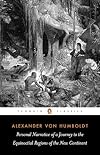
This abridged version of Humboldt’s “Personal Narrative” gives us an enjoyable taste of the travels of the scientist and explorer in South America between 1799 and 1804.
Humboldt did not just study nature; he also enjoyed its beauty, and the book contains vivid descriptions of the sights he saw. He wrote that: “No words can evoke the feelings of a naturalist who first steps on soil outside Europe.”
This is very similar to how Charles Darwin later described his feelings on first show more setting foot in a Brazilian forest in “The Voyage of the Beagle”.
Humboldt’s Narrative had a big influence on Darwin when he first read it as a student at Cambridge. It contributed both to Darwin’s urge to travel and to his desire to contribute something to scientific knowledge. He even took a copy of Humboldt’s book on the Beagle with him. Later, when Darwin’s own “Voyage” book was published, Darwin was delighted when Humboldt himself praised it.
Another link between Humboldt and Darwin is the fact that both were strongly opposed to slavery. Humboldt wrote this, for example:
“Nowhere else in the world seems more appropriate to dissipate melancholy and restore peace to troubled minds than Tenerife and Madeira. These effects are due not only to the magnificent situation and to the purity of the air, but above all to the absence of slavery, which so deeply revolts us in all those places where Europeans have brought what they call their “enlightenment” and their “commerce” to their colonies.”
In his science Humboldt was a polymath whose research covered anthropology, biology, botany, geography, geology, zoology and more. But he also saw that nature was an interconnected whole and that “Everything is interrelated”. This view, that we need to see the unity of nature whilst trying to understand the parts that make up the whole, is similar to an aspect of what Marxist (but non-Stalinist) scientists such as Richard Lewontin refer to as the dialectical view of nature.
Sadly, Humboldt is not widely remembered today. But it is not surprising that his name is not as well known as Darwin’s. Humboldt contributed a great deal to science, but he did not make such a world-shattering breakthrough as Darwin did when he came up with natural selection as the mechanism for evolution. show less
Humboldt did not just study nature; he also enjoyed its beauty, and the book contains vivid descriptions of the sights he saw. He wrote that: “No words can evoke the feelings of a naturalist who first steps on soil outside Europe.”
This is very similar to how Charles Darwin later described his feelings on first show more setting foot in a Brazilian forest in “The Voyage of the Beagle”.
Humboldt’s Narrative had a big influence on Darwin when he first read it as a student at Cambridge. It contributed both to Darwin’s urge to travel and to his desire to contribute something to scientific knowledge. He even took a copy of Humboldt’s book on the Beagle with him. Later, when Darwin’s own “Voyage” book was published, Darwin was delighted when Humboldt himself praised it.
Another link between Humboldt and Darwin is the fact that both were strongly opposed to slavery. Humboldt wrote this, for example:
“Nowhere else in the world seems more appropriate to dissipate melancholy and restore peace to troubled minds than Tenerife and Madeira. These effects are due not only to the magnificent situation and to the purity of the air, but above all to the absence of slavery, which so deeply revolts us in all those places where Europeans have brought what they call their “enlightenment” and their “commerce” to their colonies.”
In his science Humboldt was a polymath whose research covered anthropology, biology, botany, geography, geology, zoology and more. But he also saw that nature was an interconnected whole and that “Everything is interrelated”. This view, that we need to see the unity of nature whilst trying to understand the parts that make up the whole, is similar to an aspect of what Marxist (but non-Stalinist) scientists such as Richard Lewontin refer to as the dialectical view of nature.
Sadly, Humboldt is not widely remembered today. But it is not surprising that his name is not as well known as Darwin’s. Humboldt contributed a great deal to science, but he did not make such a world-shattering breakthrough as Darwin did when he came up with natural selection as the mechanism for evolution. show less
Alexander von Humboldt details his adventures and explorations in Venezuela in 1800 in a beautifully written little travelogue. His intellectual curiosity knows no bounds and his skills at recording his observations are wonderfully lyrical. The flora, fauna, land, rivers, mountains, weather -- nothing escapes his observation. Not even the people who he objectively studies and records with clarity. He is open minded enough to recognize European pretensions and set them aside while living show more along side those who would be considered from the most primitive of cultures. His observations foreshadow the disastrous man-made changes to the land and environment as natural resources were even then being ripped from the land without thought for the future. This is a delightful adventure in the dense green jungle of a primeval land. show less
I’ve come to love nonfiction works from authors who’ve trekked the world thanks. So I couldn’t miss this book written about the author’s journey through Venezuela from 1798-1804. He was a naturalist so he includes many in-depth descriptions of plants and animals, landscapes and people. He was obviously extremely knowledgeable and tough to be able to deal with the harsh terrains of all sorts. He was sensitive to the plight of slaves, but less sensitive to some tribes he labeled lazy. show more But he was fair, too, identifying the good, the bad, the ugly, and the lovely (and sometimes the crazy) about all the people he encountered. One obviously native man insisted he was white and held himself out as so pretentious it was quite comical. Sometimes a bit boring, but overall this was a fascinating peak at a world far distant from our own. show less
Lists
Awards


You May Also Like


Associated Authors
Statistics
- Works
- 215
- Also by
- 7
- Members
- 1,665
- Popularity
- #15,418
- Rating
- 3.8
- Reviews
- 22
- ISBNs
- 299
- Languages
- 12
- Favorited
- 7


