
Kel Richards
Author of The Aussie Bible
About the Author
Series
Works by Kel Richards
The Country House Murders: A 1930s murder mystery (1930s Murder Mystery 2) (2015) 4 copies, 1 review
Flash Jim: The astonishing story of the convict fraudster who wrote Australia's first dictionary (2021) 2 copies
Flash Jim: The astonishing story of the convict fraudster who wrote Australia's first dictionary 2 copies, 2 reviews
Christmas Words Unwrapped 1 copy
Forgiving Hitler 1 copy
Associated Works
Tagged
Common Knowledge
- Canonical name
- Richards, Kel
- Legal name
- Richards, Kevin Barry
- Birthdate
- 1946-02-08
- Gender
- male
- Occupations
- radio personality/broadcaster
writer (novelist)
writer (television dramas) - Organizations
- NewsRadio
- Nationality
- Australia
- Birthplace
- Belmore NSW
- Associated Place (for map)
- Belmore NSW
Members
Reviews
Flash Jim: The astonishing story of the convict fraudster who wrote Australia's first dictionary by Kel Richards
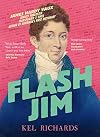
Though English has been considered the language of our country since it was invaded/colonised by the British in 1788, did you know that legally Australia has no official language? Neither did I! While our language today continues to adhere to the conventions of British English with regards to spelling and grammar, from very early on, Australian English began to develop its own unique quirks.
Slang, also known as flash and cant, was a term originally used to refer to the language used mostly show more by criminals in 16th and 17th century England and so it’s no surprise that it thrived in Australia, and took on a life of its own as British, Irish, and Scottish convicts mixed in the British penal colony.
In 1812 an opportunistic convict, James Hardy Vaux, heard the grumblings of the colony’s police and magistrates who were at a loss to understand much of the slang used among criminals, and always eager to press any advantage, presented his supervisor with ‘A New and Comprehensive Vocabulary of the Flash Language’ – Australia’s very first dictionary. Included as an Appendix in Flash Jim, browsing through the dictionary proves fascinating, revealing words and phrases both strange and familiar.
The bulk of Kel Richards Flash Jim however is a biography of James Vaux, drawing on several sources, mainly the man’s own published memoirs, ‘Memoirs of The First Thirty-Two Years of the Life Of James Hardy Vaux, A Swindler and Pickpocket; Now Transported, For The Second Time, And For Life, To New South Wales. Written By Himself.’
Flash Jim reveals a man who was an extraordinary character. Though born into a family able to provide him a good education and entry into a comfortable profession, James took his first step into a life of crime by embezzling from his employer at aged fourteen. Over the next few years, never satisfied with wages earned as a clerk, James indulged in a number of illegal activities from confidence scams to pick pocketing, with reasonable success, that is until inevitably, his luck ran out. Not that even being sentenced to transportation to New Holland on three separate occasions, seemed to deter his criminal impulses. Vaux, who used a number of aliases over his lifetime, seemed to have possessed an uncanny charm which often saw him turn even the most dire of circumstances to his advantage. I was absolutely fascinated by him, and his antics, marvelling at his ego and nerve, though as Richards regularly reminds us, Vaux’s own words can hardly be trusted.
It’s unclear just how much of Richards own creativity informs the retelling he has crafted, though I imagine he has taken some liberties. I thought it read well, though personally I would have preferred for the author to have found a way to integrate the story of the dictionary more fully into the narrative of Vaux’s biography.
James Hardy Vaux is the sort of incorrigible, dissolute character that Australians delight in claiming as part of our convict past so I’m surprised that I hadn’t heard of him before now, particularly given his twin achievements as the writer of Australia’s first dictionary, and the first true-crime memoir. I expect Flash Jim will be enjoyed by readers interested in Australian colonial history, the etymology of Australian English, or just a bang up yarn. show less
Slang, also known as flash and cant, was a term originally used to refer to the language used mostly show more by criminals in 16th and 17th century England and so it’s no surprise that it thrived in Australia, and took on a life of its own as British, Irish, and Scottish convicts mixed in the British penal colony.
In 1812 an opportunistic convict, James Hardy Vaux, heard the grumblings of the colony’s police and magistrates who were at a loss to understand much of the slang used among criminals, and always eager to press any advantage, presented his supervisor with ‘A New and Comprehensive Vocabulary of the Flash Language’ – Australia’s very first dictionary. Included as an Appendix in Flash Jim, browsing through the dictionary proves fascinating, revealing words and phrases both strange and familiar.
The bulk of Kel Richards Flash Jim however is a biography of James Vaux, drawing on several sources, mainly the man’s own published memoirs, ‘Memoirs of The First Thirty-Two Years of the Life Of James Hardy Vaux, A Swindler and Pickpocket; Now Transported, For The Second Time, And For Life, To New South Wales. Written By Himself.’
Flash Jim reveals a man who was an extraordinary character. Though born into a family able to provide him a good education and entry into a comfortable profession, James took his first step into a life of crime by embezzling from his employer at aged fourteen. Over the next few years, never satisfied with wages earned as a clerk, James indulged in a number of illegal activities from confidence scams to pick pocketing, with reasonable success, that is until inevitably, his luck ran out. Not that even being sentenced to transportation to New Holland on three separate occasions, seemed to deter his criminal impulses. Vaux, who used a number of aliases over his lifetime, seemed to have possessed an uncanny charm which often saw him turn even the most dire of circumstances to his advantage. I was absolutely fascinated by him, and his antics, marvelling at his ego and nerve, though as Richards regularly reminds us, Vaux’s own words can hardly be trusted.
It’s unclear just how much of Richards own creativity informs the retelling he has crafted, though I imagine he has taken some liberties. I thought it read well, though personally I would have preferred for the author to have found a way to integrate the story of the dictionary more fully into the narrative of Vaux’s biography.
James Hardy Vaux is the sort of incorrigible, dissolute character that Australians delight in claiming as part of our convict past so I’m surprised that I hadn’t heard of him before now, particularly given his twin achievements as the writer of Australia’s first dictionary, and the first true-crime memoir. I expect Flash Jim will be enjoyed by readers interested in Australian colonial history, the etymology of Australian English, or just a bang up yarn. show less
An Aussie Christmas carol : Charles Dickens' immortal tale retold as an Aussie bush yarn by Kel Richards

Opening paragraph: ‘…Jack Marley was dead. He was dead and buried in the little cemetery at the end of the main street in the small outback town of Dandaloo. The town doctor had signed the death certificate. The town carpenter had nailed Jack Marley into a plain, wooden coffin – and old Jack hadn’t once hammered on the lid and yelled to be let out. So there could be no doubt about it: Jack Marley was dead.
He was as dead as the hopes of a punter when the favourite runs last in the show more Melbourne Cup. He was as dead as Dandaloo Creek in the middle of summer, when it’s nothing but a dried-up gully. He was as dead as the big blue-black blowflies stuck to the flypaper in the Dandaloo pub. He was as dead as the brown snake Bluey Grimnes chopped in half with his mattock when he was digging Marley’s grave. There was no doubt about it: Jack Marley was dead.…’
I did the first few paragraphs to demonstrate the Australianest of the story. Charles Dickens classic Christmas tale is retold by Kel Richards as an Aussie bush yarn. Cold, wintery England is exchanged for hot, summery outback Australia; Ebenezer Scrooge morphs into Ted Scrooge – old stock and station agent who won’t let his long suffering employee, Bob Cratchit, turn a cooling fan on in the unrelenting heat of an Aussie Christmas eve. As with the original story – Ted’s partner comes to warn him about life after death if Ted doesn’t change his ways. There are the three Christmas ghosts – past, present and future – who have to travel through a red dust storm instead of swirling snow. And yes there is a tiny Tim :)
Kel Richards is an ABC radio presenter, leading the afternoon show on weekends – and is a word guru, with his own short segment called wordwatch. His wit and humour comes through on every page as he brought alive a much loved story for me. show less
He was as dead as the hopes of a punter when the favourite runs last in the show more Melbourne Cup. He was as dead as Dandaloo Creek in the middle of summer, when it’s nothing but a dried-up gully. He was as dead as the big blue-black blowflies stuck to the flypaper in the Dandaloo pub. He was as dead as the brown snake Bluey Grimnes chopped in half with his mattock when he was digging Marley’s grave. There was no doubt about it: Jack Marley was dead.…’
I did the first few paragraphs to demonstrate the Australianest of the story. Charles Dickens classic Christmas tale is retold by Kel Richards as an Aussie bush yarn. Cold, wintery England is exchanged for hot, summery outback Australia; Ebenezer Scrooge morphs into Ted Scrooge – old stock and station agent who won’t let his long suffering employee, Bob Cratchit, turn a cooling fan on in the unrelenting heat of an Aussie Christmas eve. As with the original story – Ted’s partner comes to warn him about life after death if Ted doesn’t change his ways. There are the three Christmas ghosts – past, present and future – who have to travel through a red dust storm instead of swirling snow. And yes there is a tiny Tim :)
Kel Richards is an ABC radio presenter, leading the afternoon show on weekends – and is a word guru, with his own short segment called wordwatch. His wit and humour comes through on every page as he brought alive a much loved story for me. show less
Flash Jim: The astonishing story of the convict fraudster who wrote Australia's first dictionary by Kel Richards

FLASH JIM is the story of James Hardy Vaux, writer of Australia's first dictionary and first true-crime memoir. It's kind of appealing to know the first dictionary came about as a result of the inability of colonial police and magistrates to understand the slang used by the criminal classes. I will admit to being somewhat startled still to discover the words and phrases that are particularly unique to Australian English (normally as a result of the utterly blank look on the face of the show more hearer from another land).
But the story of James Hardy Vaux is the main point of FLASH JIM, with a reprint of the original dictionary included at the end, entitled A New and Comprehensive Vocabulary of the Flash Language. This is the component of the book that I found particularly fascinating, with many of the words and phrases new to me, and many still in common use today.
The bulk of the biography by Richards uses for source material Vaux's own published memoir, entitled 'Memoirs of the First Thirty-Two Years of the Life of James Hardy Vaux, A Swindler and Pickpocket; Now Transported, For the Second Time, and For Life, To New South Wales. Written by Himself'. Needless to say Vaux seems like an unrepentant man, somebody very inclined towards being quite chuffed with themselves. Despite being born into a relatively well off family, with the offer of a good education and a long-term professional career, he took to crime at the age of fourteen starting out embezzling an employer, raising that to confidence scams, pick-pocketing and a range of other crimes designed to supplement that wage he was usually earning working as a clerk. Despite what was ultimately three transportation's to the penal colony in the end, nothing much seemed to dissuade Vaux from his preference for crime, and he developed a hefty ego and a sense of charm that he seemed to think would detract from the ongoing criminal behaviour.
Having said that, its hard to know exactly what to believe given the primary source is the subject's own words, and ego definitely appears to have been something he had in spades. And perhaps that's where my greatest doubt about FLASH JIM came from. Whilst very readable, there's something here that didn't flow quite right, for want of a better description, perhaps best described as a lack of connectivity between the story of the dictionary itself and the story of Vaux's own life. There's also some interesting gaps in the lifestory (questions never able to be answered it seems); two wives, fate unknown; and his own vanishing after being released from a third stint in a Sydney jail. No record of him ever found again, no idea where he died or how or when. Odd ending for a flashy, egotistical, centre of attention type such as James Hardy Vaux. Perhaps that's part of the reason for the dictionary and his own story being largely unknown. To rectify that, FLASH JIM, is well worth a read.
https://www.austcrimefiction.org/review/flash-jim-kel-richards show less
But the story of James Hardy Vaux is the main point of FLASH JIM, with a reprint of the original dictionary included at the end, entitled A New and Comprehensive Vocabulary of the Flash Language. This is the component of the book that I found particularly fascinating, with many of the words and phrases new to me, and many still in common use today.
The bulk of the biography by Richards uses for source material Vaux's own published memoir, entitled 'Memoirs of the First Thirty-Two Years of the Life of James Hardy Vaux, A Swindler and Pickpocket; Now Transported, For the Second Time, and For Life, To New South Wales. Written by Himself'. Needless to say Vaux seems like an unrepentant man, somebody very inclined towards being quite chuffed with themselves. Despite being born into a relatively well off family, with the offer of a good education and a long-term professional career, he took to crime at the age of fourteen starting out embezzling an employer, raising that to confidence scams, pick-pocketing and a range of other crimes designed to supplement that wage he was usually earning working as a clerk. Despite what was ultimately three transportation's to the penal colony in the end, nothing much seemed to dissuade Vaux from his preference for crime, and he developed a hefty ego and a sense of charm that he seemed to think would detract from the ongoing criminal behaviour.
Having said that, its hard to know exactly what to believe given the primary source is the subject's own words, and ego definitely appears to have been something he had in spades. And perhaps that's where my greatest doubt about FLASH JIM came from. Whilst very readable, there's something here that didn't flow quite right, for want of a better description, perhaps best described as a lack of connectivity between the story of the dictionary itself and the story of Vaux's own life. There's also some interesting gaps in the lifestory (questions never able to be answered it seems); two wives, fate unknown; and his own vanishing after being released from a third stint in a Sydney jail. No record of him ever found again, no idea where he died or how or when. Odd ending for a flashy, egotistical, centre of attention type such as James Hardy Vaux. Perhaps that's part of the reason for the dictionary and his own story being largely unknown. To rectify that, FLASH JIM, is well worth a read.
https://www.austcrimefiction.org/review/flash-jim-kel-richards show less
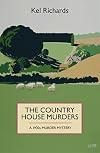
A middle-of-the-road murder mystery. Entertaining enough although the author can't seem to make his mind up as to the style in which he is trying to write - is it a comedy? Plenty of references to P.G Wodehouse which sit somewhat incongruously with the the subject although I didn't mind them. What I did mind were the extended theological musings that add absolutely nothing to either the story or the characters. I thin this could turn into a good series if the author could stick to his golden show more age murder-mystery theme. show less
Lists
You May Also Like


Associated Authors
Statistics
- Works
- 61
- Also by
- 2
- Members
- 1,230
- Popularity
- #20,871
- Rating
- 3.2
- Reviews
- 16
- ISBNs
- 102