
Abbie Farwell Brown (1871–1927)
Author of In the Days of Giants: A Book of Norse Tales
About the Author
Works by Abbie Farwell Brown
The Boyhood of Edward MacDowell 2 copies
The Little Friend 1 copy
Associated Works
Tagged
Common Knowledge
- Legal name
- Brown, Abbie Farwell
- Other names
- Neal, Jean (pen name)
- Birthdate
- 1871-08-21
- Date of death
- 1927-03-05
- Gender
- female
- Education
- Radcliffe College
Girls' Latin School
Bowdoin School - Occupations
- author
poet - Organizations
- Authors' Club of Boston
New England Poetry Club
Poetry Society of America
Radcliffe Club - Relationships
- Brown, Ethel Clare (sister)
- Cause of death
- cancer
- Nationality
- USA
- Birthplace
- Boston, Massachusetts, USA
- Places of residence
- Beacon Hill, Boston, Massachusetts, USA
- Place of death
- Beacon Hill, Boston, Massachusetts, USA
- Burial location
- Mount Auburn Cemetery, Cambridge, Massachusetts, USA
- Associated Place (for map)
- Boston, Massachusetts, USA
Members
Reviews
"You are so unimaginative!... You judge the tale finished while the best has yet to be told."
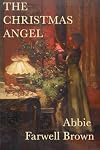
Those are two of my favorite lines from the classic, Christmas-Carol-esque tale The Christmas Angel by author Abbie Farwell Brown. Here we find a bitter, lonely old woman occupying herself on Christmas Eve with earnest tasks: burning toys in her fireplace and conducting covert little experiments on the public to prove to herself that the Christmas spirit is a humbug.
Oh, I didn't eat it up quite like show more the Dickens classic this fantastical work resembles in different ways, but I still found it worth the time. I got a little nervous at the appearance of two Jewish boys in the story, wondering how the author would handle them in this tale from 1910—and a Christmas tale at that. But I breathed easier after while. What's more, my heart nodded in agreement with one character's sentiments about people who supposedly know so much better than others and wind up miserable.
This old-fashioned read is a fairy tale, but its messages ring true, and not just for Christmas. show less
Those are two of my favorite lines from the classic, Christmas-Carol-esque tale The Christmas Angel by author Abbie Farwell Brown. Here we find a bitter, lonely old woman occupying herself on Christmas Eve with earnest tasks: burning toys in her fireplace and conducting covert little experiments on the public to prove to herself that the Christmas spirit is a humbug.
Oh, I didn't eat it up quite like show more the Dickens classic this fantastical work resembles in different ways, but I still found it worth the time. I got a little nervous at the appearance of two Jewish boys in the story, wondering how the author would handle them in this tale from 1910—and a Christmas tale at that. But I breathed easier after while. What's more, my heart nodded in agreement with one character's sentiments about people who supposedly know so much better than others and wind up miserable.
This old-fashioned read is a fairy tale, but its messages ring true, and not just for Christmas. show less

Miss Angelina Terry was a woman with no time for nonsense, which she expansively defined to include everything from forgiveness for her estranged brother to indulging in the joy of the holidays. "Fiddlestick!" was invariably her response. Sorting through a chest containing the toys and holiday decorations of her youth one Christmas season, Miss Terry hit upon the perfect way of demonstrating just how ridiculous the idea of "Christmas Spirit" was. Leaving each of the toys out on the street, show more she watched as they were either stolen or destroyed, one by one, confirmed in her disdain for her fellow human beings. But then something unexpected occurred: falling asleep before the fire, Miss Terry was visited by the Christmas Angel, who showed her what really happened with each of those toys, once she stopped watching. Humbled by this glimpse into the true hearts and lives of her fellows, she opened herself up to the best impulses that Christmas brings, and was amply rewarded...
Originally published in 1910, Abbie Farwell Brown's The Christmas Angel was described by reviewers of its day as being akin to Charles Dickens' A Christmas Carol, and it's not difficult to see why. In both stories, a curmudgeonly anti-Christmas individual is converted to a better way of life, and a better appreciation for the meaning of the holiday, through the intervention of a supernatural force, be it ghosts or angels. Brown's tale is somewhat more sentimental, and not nearly as gripping as Dickens', but is a pleasing little Christmas confection all the same. Some of the developments are quite unrealistic - the concluding adoption of little Mary, for instance - but others, such as the rapprochement between Miss Terry and her brother, feel entirely appropriate and fitting. I was particularly struck, during my reading, by the sub-plot involving the two little Jewish boys who take the Jack-in-the-Box, and quarrel over it, before eventually deciding to give it to a little Christian boy they know who is bed-ridden. Brown's depiction of the two boys, who are shown to have the Christmas Spirit - or something akin to it - but who are allowed to remain just what they are (there is no effort at conversion, in other words), impressed me. I was also struck by the sub-plot involving the drunken Irishman who, after impiously kicking the Christmas Angel, is shown to have a moment of awakening. This is one of two plot elements - the other being the abusive character of Mary's drunken aunt and uncle - with a strong temperance theme.
All in all, this was an entertaining little Christmas tale, one I would recommend to anyone looking for sweet, old-fashioned holiday tales to enjoy during the season. show less
Originally published in 1910, Abbie Farwell Brown's The Christmas Angel was described by reviewers of its day as being akin to Charles Dickens' A Christmas Carol, and it's not difficult to see why. In both stories, a curmudgeonly anti-Christmas individual is converted to a better way of life, and a better appreciation for the meaning of the holiday, through the intervention of a supernatural force, be it ghosts or angels. Brown's tale is somewhat more sentimental, and not nearly as gripping as Dickens', but is a pleasing little Christmas confection all the same. Some of the developments are quite unrealistic - the concluding adoption of little Mary, for instance - but others, such as the rapprochement between Miss Terry and her brother, feel entirely appropriate and fitting. I was particularly struck, during my reading, by the sub-plot involving the two little Jewish boys who take the Jack-in-the-Box, and quarrel over it, before eventually deciding to give it to a little Christian boy they know who is bed-ridden. Brown's depiction of the two boys, who are shown to have the Christmas Spirit - or something akin to it - but who are allowed to remain just what they are (there is no effort at conversion, in other words), impressed me. I was also struck by the sub-plot involving the drunken Irishman who, after impiously kicking the Christmas Angel, is shown to have a moment of awakening. This is one of two plot elements - the other being the abusive character of Mary's drunken aunt and uncle - with a strong temperance theme.
All in all, this was an entertaining little Christmas tale, one I would recommend to anyone looking for sweet, old-fashioned holiday tales to enjoy during the season. show less
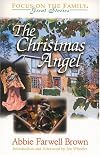
On Christmas Eve, a miserable old Spinster sets out to destroy a box of old childhood toys; but before throwing each toy into the Library fireplace she conducts an experiment to prove that there is no Christmas Spirit left. She throws four old toys into the streets to see what becomes of them only to find that these old forgotten toys, which she calls rubbish, bring out the worst in those who finds them........until she stumbles upon an old family ornament......a Christmas Angel from Miss show more Terry's childhood whom she and her brother often put on top of their Christmas Tree. The Angel helps Miss Terry see the error of her ways and reveals the truth behind each of her 'experiments', revealing the true outcome of each toy that Miss Terry threw out onto the pavement with a very different outcome from what Miss Terry assumed happened to each toy.
Each toy that Angelina Terry throws out touches the life of a person in a very special way.
• A little sick boy is given the gift of a Jack-In-the Box that was found by two Jewish Boys.
• An arrogant Millionaire turns over a new leaf and gets a new lease on life when he rescues a little boy who was about to be run over by a truck when the toy Flannel Dog that Miss Terry threw out was crushed under a car.....when the arrogant Millionaire threw the dog unto the street in a haughty manner.
• An embittered mother who lost her child finds the true meaning of Christmas and has a change of heart when she finds Miss Terry's brother's Noah's Ark.
• An abused child finds the true meaning of Christmas and a warm home when she finds Miranda, Miss Terry's old doll.
• A drunken old sinner finds a Guardian Angel who helps him mend his ways on Christmas Eve.
This is a charming story full of the Christmas Spirit. Abbey Farbel Brown has written a modern twist to Dickens's A Christmas Carol in an original way. I absolutely loved this story! The story is short enough to read in one sitting and full of the true meaning of Christmas.
Abbey Farbell Brown, a descendant of the earliest New England settlers, was born on Beacon Hill, in 1871 in Boston. Brown attended the Boston Girl's Latin School and became intimate friends with Prescott Peabody. Abbey graduated from Radcliffe College in 1894.
Also by this Author:
A Pocketful of Poesies (1902). The Curious Book of Birds (1903). The Star Jewels (1905). Brothers and Sisters (1906). Friends and Cousins (1907). Fresh Posies; Rhymes to Read and Pieces to Speak (1908). The Christmas Angel (1910). Their City Christmas; a Story for Boys and Girls (1912). Songs of Sixpence (1914). Kensington Town (1915). Surprise House (1917). The Gift; a Christmas Story (1920). Heart of New England (1920). The Rock of Liberty; a Pilgrim Ode (1920). What Luck! A Study in Opposites (1920). The Green Trunk; a Masque (1921). Round Robin (1921). The Lights of Beacon Hill; a Christmas Message (1922). The New England Poetry Club; an Outline of Its History, 1915-1923 (1923). Our Christmas Tree (1925). The Silver Stairs; Poems (1926). Under the Rowan Tree (1926). The Lantern and Other Plays for Children (1928). The Little Friend (1960). show less
Each toy that Angelina Terry throws out touches the life of a person in a very special way.
• A little sick boy is given the gift of a Jack-In-the Box that was found by two Jewish Boys.
• An arrogant Millionaire turns over a new leaf and gets a new lease on life when he rescues a little boy who was about to be run over by a truck when the toy Flannel Dog that Miss Terry threw out was crushed under a car.....when the arrogant Millionaire threw the dog unto the street in a haughty manner.
• An embittered mother who lost her child finds the true meaning of Christmas and has a change of heart when she finds Miss Terry's brother's Noah's Ark.
• An abused child finds the true meaning of Christmas and a warm home when she finds Miranda, Miss Terry's old doll.
• A drunken old sinner finds a Guardian Angel who helps him mend his ways on Christmas Eve.
This is a charming story full of the Christmas Spirit. Abbey Farbel Brown has written a modern twist to Dickens's A Christmas Carol in an original way. I absolutely loved this story! The story is short enough to read in one sitting and full of the true meaning of Christmas.
Abbey Farbell Brown, a descendant of the earliest New England settlers, was born on Beacon Hill, in 1871 in Boston. Brown attended the Boston Girl's Latin School and became intimate friends with Prescott Peabody. Abbey graduated from Radcliffe College in 1894.
Also by this Author:
A Pocketful of Poesies (1902). The Curious Book of Birds (1903). The Star Jewels (1905). Brothers and Sisters (1906). Friends and Cousins (1907). Fresh Posies; Rhymes to Read and Pieces to Speak (1908). The Christmas Angel (1910). Their City Christmas; a Story for Boys and Girls (1912). Songs of Sixpence (1914). Kensington Town (1915). Surprise House (1917). The Gift; a Christmas Story (1920). Heart of New England (1920). The Rock of Liberty; a Pilgrim Ode (1920). What Luck! A Study in Opposites (1920). The Green Trunk; a Masque (1921). Round Robin (1921). The Lights of Beacon Hill; a Christmas Message (1922). The New England Poetry Club; an Outline of Its History, 1915-1923 (1923). Our Christmas Tree (1925). The Silver Stairs; Poems (1926). Under the Rowan Tree (1926). The Lantern and Other Plays for Children (1928). The Little Friend (1960). show less
This short but sweet story resembles “A Christmas Carol” is certain respects. Set on Christmas Eve, we meet an old woman who despises the time of year, but something supernatural persuades her to changes her ways. Instead of ghosts, we have the Christmas Angel.
Of the characters, I felt most sympathetic towards ten-year-old Mary, who’s an orphan forced to live with drunken relatives who don’t care about her.
Although this story is ideally tailored for children, I can vouch that it’s show more suitable for adults too. I really like the feel-good factor. show less
Of the characters, I felt most sympathetic towards ten-year-old Mary, who’s an orphan forced to live with drunken relatives who don’t care about her.
Although this story is ideally tailored for children, I can vouch that it’s show more suitable for adults too. I really like the feel-good factor. show less
Lists
You May Also Like


Associated Authors
Statistics
- Works
- 17
- Also by
- 3
- Members
- 322
- Popularity
- #73,504
- Rating
- 3.5
- Reviews
- 16
- ISBNs
- 66
- Languages
- 2
- Favorited
- 1