
Saki (1) (1870–1916)
Author of The Short Stories of Saki
For other authors named Saki, see the disambiguation page.
Saki (1) has been aliased into H. H. Munro.
Works by Saki
Works have been aliased into H. H. Munro.
Mini Modern Classics Filboid Studge Story of a Mouse That Helped (Penguin Mini Modern Classics) (2011) 37 copies
A Twist in the Tale (Selections: Dusk, The Necklace, An Occurance at Owl Creek, The Gift of the Magi) (2001) 25 copies
Mrs. Packletide's Tiger and Other Stories (Penguin Readers (Graded Readers)) (1993) 12 copies, 1 review
O Contador De Historias 9 copies
Sredni Vashtar [short story] 9 copies
Reading & Training : Saki : Wicked and humorous tales [book + sound recording] (2006) — Writer — 9 copies
De complete verhalen 8 copies
The Watched Pot 8 copies
Sämtliche Geschichten IV. Das Friedensspielzeug und Das eckige Ei. Vierzig Geschichten (1988) 6 copies
Four Tales of Obstinance & Asperity 6 copies
Tea {short story} 5 copies
Karl-Ludwig's Window 5 copies
The Boar-Pig {short story} 5 copies
The Death-Trap 5 copies
A Tela Humana 5 copies
The Quest {short story} 4 copies
L'Insupportable Bassington suivi de Reginald au Carlton et autres nouvelles inédites (1989) 4 copies
The Guests {short story} 4 copies
Louise {short story} 4 copies
A Little Red Book of Wit & Shudders 4 copies
The Stake {short story} 3 copies
"The Man with the Scar" and Other Stories (Macmillan Advanced Readers Series) (1986) 3 copies, 1 review
The Bag [short story] 3 copies
The Name-Day {short story} 3 copies
Esmé [short story] 3 copies
Adrian {short story} 3 copies
Cousin Teresa {short story} 3 copies
A Matter Of Sentiment 3 copies
The Recessional {short story} 3 copies
The Talking-Out Of Tarrington 3 copies
The Hen {short story} 3 copies
The Image Of The Lost Soul 3 copies
The Sex That Doesn't Shop 3 copies
The Chaplet {short story} 3 copies
The Match-Maker 3 copies
The Story-Teller 3 copies
The Occasional Garden 3 copies
The Easter Egg [short story] 3 copies
The Seven Cream Jugs [short story] 3 copies
The Romancers {short story} 3 copies
The Cobweb {short story} 3 copies
Dusk 3 copies
The Gala Programme [short story] 3 copies
The She-Wolf [short story] 3 copies
The Seventh Pullet {short story} 3 copies
The Way to the Dairy {short story} 3 copies
Short Fiction 2 copies
Wratislav 2 copies
The Treasure-Ship 2 copies
The Sheep 2 copies
Morlvera 2 copies
The Yarkand Manner 2 copies
Quail Seed 2 copies
Canossa 2 copies
The Oversight 2 copies
Birds On The Western Front 2 copies
For The Duration Of The War 2 copies
The Phantom Luncheon 2 copies
The Comments Of Moung Ka 2 copies
The Old Town Of Pskoff 2 copies
The Cupboard Of The Yesterdays 2 copies
The Threat 2 copies
The Achievement of the Cat 2 copies
The Infernal Parliament 2 copies
The Dreamer 2 copies
Ministers of Grace [Short Story] 2 copies
The Quince Tree 2 copies
The Feast of Nemesis [short story] 2 copies
Cross Currents 2 copies
Reginald's Drama 2 copies
Reginald On Tariffs 2 copies
Reginald's Rubaiyat 2 copies
The Innocence Of Reginald 2 copies
Reginald On Besetting Sins 2 copies
Reginald At The Carlton 2 copies
Reginald on House-Parties 2 copies
Reginald On Worries 2 copies
The unkindest blow 2 copies
The Mouse 2 copies
Reginald's Choir Treat 2 copies
A Young Turkish Catastrophe 2 copies
On Approval 2 copies
Reginald On The Academy 2 copies
The Peace Offering 2 copies
Judkin Of The Parcels 2 copies
Reginald's Peace Poem 2 copies
The Soul of Laploshka 2 copies
The Strategist 2 copies
Dogged [Short Story] 1 copy
The Unspeakable Bassington 1 copy
A Defensive Diamond-The Wolves of Cernogatz- Esme -The Yarkand Manner/ Ingilizce Hikayeler A2 Stage2 (2020) 1 copy
Tobermory und noch ein paar Geschichten / Tobermory and some other Stories. Englisch- Deutsch. (1987) 1 copy
The Boar 1 copy
I giocattoli della pace 1 copy
A Housing Problem (in Saki) 1 copy
Bizarre Stories. Skurile englische Kurzgeschichten mit Übersetzungshilfen. (Lernmaterialien) (2004) 1 copy
Coffee Break Classics Vol. One: Short Fiction by the World's Greatest Authors from Sparrow Classics 1 copy
Los mejores cuentos de Saki 1 copy
38 Great Stories 1 copy
The Optimist 1 copy
Cuentos 1 copy
The Pond (in Saki) 1 copy
SEVEN 1 copy
The Holy War (in Saki) 1 copy
Sardonic Tales 1 copy
Associated Works
Works have been aliased into H. H. Munro.
In the Stacks: Short Stories about Libraries and Librarians (2002) — Contributor — 547 copies, 13 reviews
The Penguin Book of Christmas Stories: From Hans Christian Andersen to Angela Carter (2019) — Author — 329 copies, 5 reviews
75 Short Masterpieces: Stories from the World's Literature (1961) — Contributor — 319 copies, 2 reviews
Pages Passed from Hand to Hand: The Hidden Tradition of Homosexual Literature in English from 1748 to 1914 (1997) — Contributor — 185 copies, 1 review
The Graphic Canon, Vol. 3: From Heart of Darkness to Hemingway to Infinite Jest (2013) — Contributor — 162 copies, 1 review
The Sophisticated Cat: A Gathering of Stories, Poems, and Miscellaneous Writings About Cats (1992) — Contributor — 112 copies, 1 review
Chamber of Horrors: Great Tales of Terror and the Supernatural (1984) — Contributor — 71 copies, 1 review
The House of the Nightmare and Other Eerie Tales (1967) — Contributor; Author, some editions — 54 copies, 2 reviews
The Moons at Your Door: An Anthology of Hallucinatory Tales (Strange Attractor Press) (2016) — Contributor — 53 copies, 1 review
The Greatest Christmas Stories of All Time: Timeless Classics That Celebrate the Season (2006) — Contributor — 50 copies
Great Horror Stories: Tales by Stoker, Poe, Lovecraft and Others (2008) — Contributor — 46 copies, 2 reviews
Alternative Alices: Visions and Revisions of Lewis Carroll's Alice Books : An Anthology (1997) — Contributor — 43 copies, 1 review
The Roads from Bethlehem: Christmas Literature from Writers Ancient and Modern (1993) — Contributor — 34 copies, 1 review
The Best of Both Worlds: An Anthology of Stories for All Ages (1968) — Contributor — 25 copies, 1 review
Selected Shorts: A Touch of Magic (Selected Shorts: A Celebration of the Short Story) (2009) — Contributor — 25 copies, 4 reviews
Shape Shifters: Fantasy and Science Fiction Tales About Humans Who Can Change Their Shapes (1978) — Contributor — 20 copies, 1 review
Homefront Horrors: Frights Away from the Front Lines, 1914-1918 (2016) — Contributor — 16 copies, 1 review
Doug Bradley's Spinechillers Audio Books, Volume 1: Classic Horror Stories (2009) — Contributor — 13 copies, 3 reviews
A Treasury of Great Short Stories — Contributor — 7 copies
Masters of Horror & Suspense (The Interlopers The Specter The Tell-Tale Heart The Cask of Amontillado) (1989) — Contributor — 7 copies
Selected Stories of Great Authors — Contributor — 3 copies
Adventure Stories for Girls — Contributor — 3 copies
Modern Short Stories — Contributor — 3 copies
Cats of Shadow, Claws of Darkness: Stories of Were-Cats, Ghost Cats, and Other Supernatural Felines (2012) — Contributor — 2 copies
Short Stories: Old and New — Contributor — 1 copy
The Most Dangerous Game and Other Stories of Menace and Adventure (2013) — Contributor — 1 copy, 1 review
Great Ghost Stories — Contributor — 1 copy
Tagged
Common Knowledge
- Legal name
- Munro, Hector Hugh
- Other names
- Munro, H. H.
Saki - Birthdate
- 1870-12-18
- Date of death
- 1916-11-14
- Gender
- male
- Education
- Bedford Grammar School, Bedford, Bedfordshire, England, UK
Bedford School, Bedford, Bedfordshire, England, UK - Occupations
- journalist
short story writer
playwright
policeman
Lance Sergeant, Royal Fusiliers
Trooper, 2nd King Edward's Horse - Organizations
- British Army (WWI)
Indian Imperial Police
2nd King Edward's Horse
22nd Battalion of the Royal Fusiliers - Relationships
- Yates, Dornford (cousin)
- Short biography
- Hector Hugh Munro, better known by the pen name Saki, was a British writer. He was killed in action on the Western Front in World War I.
- Cause of death
- killed in battle
- Nationality
- UK
- Birthplace
- Akyab, Burma [Now Myanmar]
- Places of residence
- Akyab, Burma
France
Pilton, Devon, England, UK
Bedford School, Bedfordshire, England, UK
Burma
St Petersburg, Russian Empire (show all 8)
Paris, France
London, England, UK - Place of death
- Beaumont-Hamel, Somme, France
- Burial location
- Thiepval, France [no known grave]
Members
Discussions
26Shorts2026: prompt --- quest in 26 Short Stories for 2026 (Sunday 11:35am)
THE DEEP ONES: "The Music on the Hill" by Saki in The Weird Tradition (November 2021)
Found: Funny children's short story included in an anthology in Name that Book (September 2021)
Reviews

THE CHRONICLES OF CLOVIS is a collection of twenty-eight short stories. The longest tale stretches to a whopping ten pages, but most of them are more in the three- to five-page range. Clovis, an affluent young man with a troublemaker’s spirit, serves as a unifying force throughout the majority of the stories, whether he acts as instigator, storyteller, or avid listener.
I bought the book for two reasons. First, it contains “Sredni Vashtar,” one of my favourite short stories. Second, show more the mouldering old Penguin I snagged at the Children’s Hospital’s latest Book Market is absolutely gorgeous. It looks like it’s about to fall apart, but the binding is solid and the book feels wonderful in the hand. Reading it was always a sensual pleasure (in the literal sense), even if it sometimes left something to be desired on an intellectual level.
It’s not that THE CHRONICLES OF CLOVIS is poorly written or unworthy of deeper thought; it’s just that it’s so bloody hateful. Saki is a satirist who writes in the Wildean mode. He’s concerned with upper class characters who care little for anything but their own pleasure. They’re quite happy to run roughshod over everyone else, provided it adds a little fun to their day.
The result is a set of stories about a classist, self-centered, altogether unpleasant group of people whose behavior is coded as funny. As I read, I discovered that my already low tolerance for this kind of thing takes a nosedive when there’s a humorous bend to it. The stories I loved, like “Sredni Vashtar” and “The Hounds of Fate,” are dark and cruel without much in the way of an amusement factor. The ones I loathed, like the anti-Suffragist “Hermann the Irascible – A Story of the Great Weep,” are clearly meant to offer hilarious social commentary.
To be fair, it’s entirely possible to read these stories as a condemnation of this sort of behavior; a sort of, “damn, rich folks can be stupid about their privileges” type of deal. I think the inclusion of “Hermann” proves Saki held with at least some of the attitudes his characters espouse, though. In this story, King Hermann of England “helps” women see they’d rather not have the vote by making it mandatory that they vote in every single election for every single kind of public official. By the end, they’re clamouring for a return to the old ways.
OMFG, y’all. O. M. F. G.
And yet, I couldn’t dislike THE CHRONICLES OF CLOVIS. I hated so much about the things it chose to be, but Saki’s evocative prose and his careful (if morally frustrating) delineations of character were often enough to see me through. I didn’t always like the book, but I usually enjoyed it--perhaps because I had a wonderful time scowling at it.
It’s worth noting, too, that there are many women herein, and outside of “Hermann,” I don’t think Saki treats them as appreciably more repugnant or flawed than any of his male characters. Everyone, regardless of gender, possesses a great number of faults, many of which spring from their vast privilege. Some of this privilege is gendered, but I feel like most of it has to do with social standing. Many, though not all, negotiations take place between people of the same gender. Problems arise when the characters are unable to reconcile their own faults with everyone else’s.
Basically, THE CHRONICLES OF CLOVIS is worth reading for the prose and the satisfaction of growling profanities at the dodgier bits, but don’t expect something progressive from it. It’s a product of its time and is often disgusting by modern standards.
(This review originally appeared on my blog, Stella Matutina.) show less
I bought the book for two reasons. First, it contains “Sredni Vashtar,” one of my favourite short stories. Second, show more the mouldering old Penguin I snagged at the Children’s Hospital’s latest Book Market is absolutely gorgeous. It looks like it’s about to fall apart, but the binding is solid and the book feels wonderful in the hand. Reading it was always a sensual pleasure (in the literal sense), even if it sometimes left something to be desired on an intellectual level.
It’s not that THE CHRONICLES OF CLOVIS is poorly written or unworthy of deeper thought; it’s just that it’s so bloody hateful. Saki is a satirist who writes in the Wildean mode. He’s concerned with upper class characters who care little for anything but their own pleasure. They’re quite happy to run roughshod over everyone else, provided it adds a little fun to their day.
The result is a set of stories about a classist, self-centered, altogether unpleasant group of people whose behavior is coded as funny. As I read, I discovered that my already low tolerance for this kind of thing takes a nosedive when there’s a humorous bend to it. The stories I loved, like “Sredni Vashtar” and “The Hounds of Fate,” are dark and cruel without much in the way of an amusement factor. The ones I loathed, like the anti-Suffragist “Hermann the Irascible – A Story of the Great Weep,” are clearly meant to offer hilarious social commentary.
To be fair, it’s entirely possible to read these stories as a condemnation of this sort of behavior; a sort of, “damn, rich folks can be stupid about their privileges” type of deal. I think the inclusion of “Hermann” proves Saki held with at least some of the attitudes his characters espouse, though. In this story, King Hermann of England “helps” women see they’d rather not have the vote by making it mandatory that they vote in every single election for every single kind of public official. By the end, they’re clamouring for a return to the old ways.
OMFG, y’all. O. M. F. G.
And yet, I couldn’t dislike THE CHRONICLES OF CLOVIS. I hated so much about the things it chose to be, but Saki’s evocative prose and his careful (if morally frustrating) delineations of character were often enough to see me through. I didn’t always like the book, but I usually enjoyed it--perhaps because I had a wonderful time scowling at it.
It’s worth noting, too, that there are many women herein, and outside of “Hermann,” I don’t think Saki treats them as appreciably more repugnant or flawed than any of his male characters. Everyone, regardless of gender, possesses a great number of faults, many of which spring from their vast privilege. Some of this privilege is gendered, but I feel like most of it has to do with social standing. Many, though not all, negotiations take place between people of the same gender. Problems arise when the characters are unable to reconcile their own faults with everyone else’s.
Basically, THE CHRONICLES OF CLOVIS is worth reading for the prose and the satisfaction of growling profanities at the dodgier bits, but don’t expect something progressive from it. It’s a product of its time and is often disgusting by modern standards.
(This review originally appeared on my blog, Stella Matutina.) show less

"Mrs. De Ropp was Conradin's cousin and guardian, and in his eyes she represented those three-fifths of the world that are necessary and disagreeable and real; the other two-fifths, in perpetual antagonism to the foregoing, were summed up in himself and his imagination"
I love that kind of writing, those kinds of sentences: controlled, complex, original. In other words, just so stinkin' well written, a contrast to the loosey-goosey vernacular (as is this review, all my reviews).
This is just show more one short story from the collection, The Chronicles of Clovis, by Saki, 1911. I will be reading all the stories soon. I have a minor 2025 project where I want to purposely read works from www.gutenberg.org. I don't know why. I want to give the site some love, I think. Does reading in the html from there give it love? I hope so. (I also do make semi-regular small donations to it and www.openlibrary.org.)
Another minor mission I'm on is to learn, "What is this sort of story called?!" It's the kind of short tale where at the end, there is, not exactly a twist, but a sudden comeuppance for one or more of the characters as a result of their bad, or at least misguided, behavior. I've read two others like that of late: The Phoenix by Sylvia Townsend Warner (of Lolly Willowes fame and Mr Loveday's Little Outing & Other Early Stories by Evelyn Waugh of Brideshead Revisited fame.
So, something of a sub-sub genre. (I'm vaguely also reminded of some of Ray Bradbury short stories which depend upon a sudden realization at the end.)
It's as if the writer is entertaining you and knows you are blithely going along, willing to be entertained effortlessly. Then at the end, slap!, as if the writer is saying, "What do you think of that? Now go back and contemplate what you've just read and with a little more depth this time if you please." It's a little gimmicky, but also perversely rewarding.
If you know the name of the technique, I'd love to know!
"Do one thing for me, Sredni Vashtar." show less
I love that kind of writing, those kinds of sentences: controlled, complex, original. In other words, just so stinkin' well written, a contrast to the loosey-goosey vernacular (as is this review, all my reviews).
This is just show more one short story from the collection, The Chronicles of Clovis, by Saki, 1911. I will be reading all the stories soon. I have a minor 2025 project where I want to purposely read works from www.gutenberg.org. I don't know why. I want to give the site some love, I think. Does reading in the html from there give it love? I hope so. (I also do make semi-regular small donations to it and www.openlibrary.org.)
Another minor mission I'm on is to learn, "What is this sort of story called?!" It's the kind of short tale where at the end, there is, not exactly a twist, but a sudden comeuppance for one or more of the characters as a result of their bad, or at least misguided, behavior. I've read two others like that of late: The Phoenix by Sylvia Townsend Warner (of Lolly Willowes fame and Mr Loveday's Little Outing & Other Early Stories by Evelyn Waugh of Brideshead Revisited fame.
So, something of a sub-sub genre. (I'm vaguely also reminded of some of Ray Bradbury short stories which depend upon a sudden realization at the end.)
It's as if the writer is entertaining you and knows you are blithely going along, willing to be entertained effortlessly. Then at the end, slap!, as if the writer is saying, "What do you think of that? Now go back and contemplate what you've just read and with a little more depth this time if you please." It's a little gimmicky, but also perversely rewarding.
If you know the name of the technique, I'd love to know!
"Do one thing for me, Sredni Vashtar." show less

A tribute
My father cultivated my love of Saki, by reading aloud to me as a child.
There was always something of the pontificating Reginald about him.
And he probably wanted me to be a wily Saki child, outwitting the adults - with the exception of himself.
I regularly read the stories through early adulthood.
Later, Saki faded to a fond memory - but one I always intended to return to.
In recent weeks, I’ve been dipping in and out of the stories again, and I told my father.
We chatted and he show more mentioned this was his favourite (though neither Reginald nor children feature).
Of course, I read it.
Of course, I loved it.
I wish I’d told him that before it was suddenly too late.
This one’s for you, Daddy.
I miss you.
Image: With my father, July 2018
The Story
The opening line shows how Saki influenced Wodehouse - another love my father inculcated in me and who I need to revisit:
“Egbert came into the large, dimly lit drawing-room with the air of a man who is not certain whether he is entering a dovecote or a bomb factory, and is prepared for either eventuality.”
Egbert and Lady Anne are an aging couple. The script of their relationship is familiar but not necessarily predictable. Each has their role. Egbert’s is supplicant and peace-maker.
“By way of breaking whatever ice might be floating on the surface he made a remark about a dim religious light. He or Lady Anne were accustomed to make that remark between 4.30 and 6 on winter and late autumn evenings.”
But something is wrong. Differently so.
“As a rule Lady Anne’s displeasure became articulate and markedly voluble after four minutes of introductory muteness.”
Egbert tries to surmise what, and defaults to small talk, feeding the cat, and eventually to apologies. To no avail.
“To get the worst of an argument with her was no new experience. To get the worst of a monologue was a humiliating novelty.”
My Father
SPOILER for story is implied below...
My father loved fierce, intelligent, informed debate and didn’t suffer fools gladly, if at all.
I am my father’s daughter.
We are/were (which tense?) both opinionated and we disagreed on many things.
But we enjoyed sparring, and it didn’t make us doubt our love for each other.
The twist in the story is comically dark and maybe a bit predictable.
But in the circumstances, it is horribly apt as well.
My father would have appreciated that.
But he can’t.
I must try.
I could win arguments now, but as Saki and Egbert knew, there would be no joy in that.
It’s a cliché because it’s true:
You only really appreciate what you have when you’ve lost it.
I am lost right now.
More Saki
I'm gradually collating reviews of Saki short stories under The Best of Saki, HERE, as I read them in a rambling way, over several weeks and months.
You can find his stories, free, on Gutenberg. For example, HERE. Most are very short. show less
My father cultivated my love of Saki, by reading aloud to me as a child.
There was always something of the pontificating Reginald about him.
And he probably wanted me to be a wily Saki child, outwitting the adults - with the exception of himself.
I regularly read the stories through early adulthood.
Later, Saki faded to a fond memory - but one I always intended to return to.
In recent weeks, I’ve been dipping in and out of the stories again, and I told my father.
We chatted and he show more mentioned this was his favourite (though neither Reginald nor children feature).
Of course, I read it.
Of course, I loved it.
I wish I’d told him that before it was suddenly too late.
This one’s for you, Daddy.
I miss you.
Image: With my father, July 2018
The Story
The opening line shows how Saki influenced Wodehouse - another love my father inculcated in me and who I need to revisit:
“Egbert came into the large, dimly lit drawing-room with the air of a man who is not certain whether he is entering a dovecote or a bomb factory, and is prepared for either eventuality.”
Egbert and Lady Anne are an aging couple. The script of their relationship is familiar but not necessarily predictable. Each has their role. Egbert’s is supplicant and peace-maker.
“By way of breaking whatever ice might be floating on the surface he made a remark about a dim religious light. He or Lady Anne were accustomed to make that remark between 4.30 and 6 on winter and late autumn evenings.”
But something is wrong. Differently so.
“As a rule Lady Anne’s displeasure became articulate and markedly voluble after four minutes of introductory muteness.”
Egbert tries to surmise what, and defaults to small talk, feeding the cat, and eventually to apologies. To no avail.
“To get the worst of an argument with her was no new experience. To get the worst of a monologue was a humiliating novelty.”
My Father
SPOILER for story is implied below...
My father loved fierce, intelligent, informed debate and didn’t suffer fools gladly, if at all.
I am my father’s daughter.
We are/were (which tense?) both opinionated and we disagreed on many things.
But we enjoyed sparring, and it didn’t make us doubt our love for each other.
The twist in the story is comically dark and maybe a bit predictable.
But in the circumstances, it is horribly apt as well.
My father would have appreciated that.
But he can’t.
I must try.
I could win arguments now, but as Saki and Egbert knew, there would be no joy in that.
It’s a cliché because it’s true:
You only really appreciate what you have when you’ve lost it.
I am lost right now.
More Saki
I'm gradually collating reviews of Saki short stories under The Best of Saki, HERE, as I read them in a rambling way, over several weeks and months.
You can find his stories, free, on Gutenberg. For example, HERE. Most are very short. show less
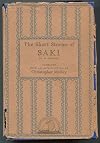
This is a singular book. For Americans, who might not be familiar with H. H. Munro (known as Saki), it can be a bit surprising the witheringly dry sense of humour that shows throughout the stories. Further, the tendency of his characters to employ sarcasm and outright invective towards the more pretentious members of society (who often seem to be scornful, flighty women), makes his book seem like an unlikely companion to Jane Austen's work. However, while Austen was more masterful in the show more development of characters that were realistic, Saki's main characters can sometimes seem like the fantastical superheros of a shrinking individual who hopes to vanquish those he deems to be too serious or self-satisfied; a vicarious visualization of what he wishes he could do. In that way, he writes much like an introverted adolescent might speak to themselves—after they have had to deal too much with overbearing and foolish adults. If you can get over some of the less delicate definitions of the fairer sex, and dispense with any shred of concern for social conventions, you might find this a rather humorous collection. show less
Lists
Awards


You May Also Like
Associated Authors
Statistics
- Works
- 321
- Also by
- 226
- Members
- 6,436
- Popularity
- #3,823
- Rating
- 3.9
- Reviews
- 168
- ISBNs
- 606
- Languages
- 19
- Favorited
- 3
