
Rob Wilkins (1)
Author of Terry Pratchett: A Life With Footnotes: The Official Biography
For other authors named Rob Wilkins, see the disambiguation page.
About the Author
Image credit: photo by Colin McKenzie
Works by Rob Wilkins
Associated Works
Tagged
Common Knowledge
- Birthdate
- 20th century
- Gender
- male
- Short biography
- [from Goodreads]
Rob Wilkins worked with Terry Pratchett for more than twenty years, first as his personal assistant and later as his business manager. With Rhianna, Terry's daughter, he now manages the Pratchett literary estate and Terry's production company, Narrativia. - Nationality
- UK
- Associated Place (for map)
- UK
Members
Discussions
Official biography of Terry Pratchett in All Things Discworldian - The Guild of Pratchett Fans (February 2024)
Reviews

Biographies, especially biographies of people who had already died, are one of those genres where you know how the story ends - so it is all about the path to that end. But knowing how it ends and reading about it turned out to be very different things when you care about the subject.
One day in the last days of the 20th century, a friend convinced me to read two series - Zelazny's Amber books and the first 4 books of the Watch subseries of Discworld. My relationship with fantasy up to this show more point had been mostly indifferent - I loved science fiction but most of the fantasy I had seen had been either the never ending tales of someone going on a quest (I bounced really hard out from The Lord of the Rings at one point - it was much later than I saw more in it than the tale of the trip) or the swords and magic part of the genre (think Conan for example). But I suffered of lack of funds and I had read all the science fiction we had at hand so... fantasy it was. Amber made me raise my brow - I was not as enamored with it as she was but I did not dislike it. [Guards! Guards!] on the other hand had me within 5 pages - and it still had not given up its enchantment on me. At the time I liked mostly dead authors (with some exceptions) or authors' older series (and unlike these days, most of these series did not suddenly get a new book 30 years later...) so liking an author who is not only alive but also still writes books in the series was... fascinating.
That's how my personal story with Sir Terry began and most of the people who liked his stories will have their own. His illness and then his death were one of my first experiences with an author I had started following and reading dying after a protracted illness. So reading his biography was almost inevitable - and it is a perfect way to say goodbye and thanks for all the stories.
Rob Wilkins started as a personal assistant and slowly turned into a lot more. So him telling this story, the one that Sir Terry did not manage to tell himself, is somehow fitting. He mixes what he had seen with what he had been told with the parts of the autobiography that Pratchett managed to write to create the portrait of a human - who turned out to have the gift of storytelling.
But it was not always that obvious - he hated reading (until he did not), he published his first story extremely young (and then took a very long time to actually get to writing the books we know him by). He had a normal job (for some value of normal), he had a family and he had bees. But somewhere in all of that normal life, there were the stories to be told and they started coming. Slowly at first and then much much faster.
I expected that the parts I will enjoy the most in this biography will be the parts about the books but it is the human behind the stories that stole the show. The grief and loss are palpable in the text - the book is nostalgic and heartfelt but also funny - in ways I did not expect. Rib Wilkins spent enough time with Pratchett and transcribed and sorted out enough of the books to catch something of Terry's wit (or maybe he always had it and the relationship made it more pronounced). When the inevitable happened and the diagnosis finally showed up in the book, I wanted to stop reading - it was like losing a friend. And yet, it is part of the story.
A life ending too early is always a tragedy. Rob Wilkins had done a wonderful job in showing us sides of the man we may have not known about. If you are looking for scandals, read something else - not because the life was blameless but because a good man's scandals are never going to be very interesting to people. And Terry Pratchett was a good man (maybe cranky, maybe not always reasonable but a good man). show less
One day in the last days of the 20th century, a friend convinced me to read two series - Zelazny's Amber books and the first 4 books of the Watch subseries of Discworld. My relationship with fantasy up to this show more point had been mostly indifferent - I loved science fiction but most of the fantasy I had seen had been either the never ending tales of someone going on a quest (I bounced really hard out from The Lord of the Rings at one point - it was much later than I saw more in it than the tale of the trip) or the swords and magic part of the genre (think Conan for example). But I suffered of lack of funds and I had read all the science fiction we had at hand so... fantasy it was. Amber made me raise my brow - I was not as enamored with it as she was but I did not dislike it. [Guards! Guards!] on the other hand had me within 5 pages - and it still had not given up its enchantment on me. At the time I liked mostly dead authors (with some exceptions) or authors' older series (and unlike these days, most of these series did not suddenly get a new book 30 years later...) so liking an author who is not only alive but also still writes books in the series was... fascinating.
That's how my personal story with Sir Terry began and most of the people who liked his stories will have their own. His illness and then his death were one of my first experiences with an author I had started following and reading dying after a protracted illness. So reading his biography was almost inevitable - and it is a perfect way to say goodbye and thanks for all the stories.
Rob Wilkins started as a personal assistant and slowly turned into a lot more. So him telling this story, the one that Sir Terry did not manage to tell himself, is somehow fitting. He mixes what he had seen with what he had been told with the parts of the autobiography that Pratchett managed to write to create the portrait of a human - who turned out to have the gift of storytelling.
But it was not always that obvious - he hated reading (until he did not), he published his first story extremely young (and then took a very long time to actually get to writing the books we know him by). He had a normal job (for some value of normal), he had a family and he had bees. But somewhere in all of that normal life, there were the stories to be told and they started coming. Slowly at first and then much much faster.
I expected that the parts I will enjoy the most in this biography will be the parts about the books but it is the human behind the stories that stole the show. The grief and loss are palpable in the text - the book is nostalgic and heartfelt but also funny - in ways I did not expect. Rib Wilkins spent enough time with Pratchett and transcribed and sorted out enough of the books to catch something of Terry's wit (or maybe he always had it and the relationship made it more pronounced). When the inevitable happened and the diagnosis finally showed up in the book, I wanted to stop reading - it was like losing a friend. And yet, it is part of the story.
A life ending too early is always a tragedy. Rob Wilkins had done a wonderful job in showing us sides of the man we may have not known about. If you are looking for scandals, read something else - not because the life was blameless but because a good man's scandals are never going to be very interesting to people. And Terry Pratchett was a good man (maybe cranky, maybe not always reasonable but a good man). show less
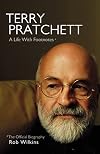
Took me a while to start reading this (published in 2022), mostly because this book, of all the books around Terry Pratchett, will mean knowing something personal about the man behind the genius. Written by Terry's long-time assistant, and very good friend, Rob Wilkins, this is an emotional (inspiring / hilarious and frequently brutally honest) walk through exactly that. At the heart of the writing genius was a gloriously grumpy, irascible, kind and funny human being, with a capacity for show more vision and thought that was utterly astounding.
Wilkins came into Terry's life as a result of a very fun episode in which a bad case of staff envy overtook Terry on hearing novelist Jilly Cooper talk about her invaluable PA. Of course that could simply be Terry's way of justifying a deep seated understanding that the day to day wasn't his strong point - and how could it be with a proto-book on the page in front of him and goodness knows how many brewing quietly in the back of his mind. Aside from the day to day reality of dealing with "the author" Wilkins became a firm friend, almost a family member in some ways - dealing with the complications of the day to day, as well as life on the road before, and sadly after, Terry's increasing impairment due to the early and rare form of Alzheimer's he was dealing with.
To read about life in the day to day job of "the author" was fascinating, but to read about it as he gradually lost capacity such an emotional journey - Terry was a perfectionist, and a deep and creative thinker, who was gradually and inexorably losing all of that - his ability to think remained until the final book, but his ability to transcribe was lost. The idea that he managed to hold onto the complex Discworld and Chalk environments as he described the stories to Wilkins was heart-breaking. I can't imagine what it was like for Wilkins, and Terry's family as they stood by, unable to do anything but support, never able to stop the progress. In particular, the scene described as Neil Gaiman arrived to visit his dear friend one final time took me quite some time to read - the kindness, the gentleness of approach, the sense of profound sorrow and loss, and the sheer awfulness of a disease that takes the core of someone and leaves the shell behind was moving, beautiful and utterly devastating all at the same time.
Wilkins did an outstanding job with this biography (including footnotes which made me smile a lot). It can't have been easy to write, every moment a reminder of what those close to Terry lost. What we have all lost. Of course, there are always the books which are wonderful to read and re-read over and over again, the thought that there were other entries percolating in his mind, before he lost the ability to write them, and before he lost his life, well, it's sad. The thought that his presence has now gone from his family and friends way too early is awful.
This book definitely serves as a reminder that his name must continue to be spoken.
GNU Sir Terry Pratchett.
https://www.austcrimefiction.org/review/terry-pratchett-life-footnotes show less
Wilkins came into Terry's life as a result of a very fun episode in which a bad case of staff envy overtook Terry on hearing novelist Jilly Cooper talk about her invaluable PA. Of course that could simply be Terry's way of justifying a deep seated understanding that the day to day wasn't his strong point - and how could it be with a proto-book on the page in front of him and goodness knows how many brewing quietly in the back of his mind. Aside from the day to day reality of dealing with "the author" Wilkins became a firm friend, almost a family member in some ways - dealing with the complications of the day to day, as well as life on the road before, and sadly after, Terry's increasing impairment due to the early and rare form of Alzheimer's he was dealing with.
To read about life in the day to day job of "the author" was fascinating, but to read about it as he gradually lost capacity such an emotional journey - Terry was a perfectionist, and a deep and creative thinker, who was gradually and inexorably losing all of that - his ability to think remained until the final book, but his ability to transcribe was lost. The idea that he managed to hold onto the complex Discworld and Chalk environments as he described the stories to Wilkins was heart-breaking. I can't imagine what it was like for Wilkins, and Terry's family as they stood by, unable to do anything but support, never able to stop the progress. In particular, the scene described as Neil Gaiman arrived to visit his dear friend one final time took me quite some time to read - the kindness, the gentleness of approach, the sense of profound sorrow and loss, and the sheer awfulness of a disease that takes the core of someone and leaves the shell behind was moving, beautiful and utterly devastating all at the same time.
Wilkins did an outstanding job with this biography (including footnotes which made me smile a lot). It can't have been easy to write, every moment a reminder of what those close to Terry lost. What we have all lost. Of course, there are always the books which are wonderful to read and re-read over and over again, the thought that there were other entries percolating in his mind, before he lost the ability to write them, and before he lost his life, well, it's sad. The thought that his presence has now gone from his family and friends way too early is awful.
This book definitely serves as a reminder that his name must continue to be spoken.
GNU Sir Terry Pratchett.
https://www.austcrimefiction.org/review/terry-pratchett-life-footnotes show less
A touching biography of Terry Pratchett written by his personal assistant (and later, his amanuensis). When he received his diagnosis of early onset Alzheimer's, Pratchett started making notes for an autobiography, and about the first half of the book draws heavily on those.
In the space of some 45 books, Terry Pratchett went from witty pastiches of heroic fantasy stories to deep (but still witty) examinations of the human condition. He made his first professional sale at the age of 15 (a show more short story called The Hades Business) to John Carnell for the magazine Science Fantasy, where his name appeared next to people like Michael Moorcock and Mervyn Peake. He left school at the age of 17 with no higher qualifications and went into journalism, starting on his local paper as the archetypal cub reporter. He had the luck to meet his first publisher, Colin Smythe, through his journalism work, and sold his first novel, The Carpet People, at the age of 23. He eventually moved to the Central Electricity Generating Board (CEGB) as a press officer for the south-west at the age of 32, three years before he sold the first Discworld novel, The Colour of Magic. Seven years later, on the back of astronomical sales, he took up writing full-time. In his lifetime, he sold over 100 million books and was knighted for Services to Literature in 2003, though he maintained that his greatest service to literature was “to avoid writing any”.
Rob Wilkins has drawn this account of Terry Pratchett's life from a close working relationship. It doesn't hold back from pointing out that Terry Pratchett wasn't necessarily the benign elf that he was sometimes depicted as. Certainly, the one time I spoke to him, I received moderately short shrift, and that was before he achieved megastardom status; but he was far from the worst offender in the "spiky author" stakes. Even then, in the late 1980s/early 1990s when he was still doing science fiction conventions, his reputation was such that he must have had countless people buttonholing him, and as this book shows, he did not suffer fools gladly. At times, this book does come over as more like Pratchett than Pratchett himself, but that's no bad thing. show less
In the space of some 45 books, Terry Pratchett went from witty pastiches of heroic fantasy stories to deep (but still witty) examinations of the human condition. He made his first professional sale at the age of 15 (a show more short story called The Hades Business) to John Carnell for the magazine Science Fantasy, where his name appeared next to people like Michael Moorcock and Mervyn Peake. He left school at the age of 17 with no higher qualifications and went into journalism, starting on his local paper as the archetypal cub reporter. He had the luck to meet his first publisher, Colin Smythe, through his journalism work, and sold his first novel, The Carpet People, at the age of 23. He eventually moved to the Central Electricity Generating Board (CEGB) as a press officer for the south-west at the age of 32, three years before he sold the first Discworld novel, The Colour of Magic. Seven years later, on the back of astronomical sales, he took up writing full-time. In his lifetime, he sold over 100 million books and was knighted for Services to Literature in 2003, though he maintained that his greatest service to literature was “to avoid writing any”.
Rob Wilkins has drawn this account of Terry Pratchett's life from a close working relationship. It doesn't hold back from pointing out that Terry Pratchett wasn't necessarily the benign elf that he was sometimes depicted as. Certainly, the one time I spoke to him, I received moderately short shrift, and that was before he achieved megastardom status; but he was far from the worst offender in the "spiky author" stakes. Even then, in the late 1980s/early 1990s when he was still doing science fiction conventions, his reputation was such that he must have had countless people buttonholing him, and as this book shows, he did not suffer fools gladly. At times, this book does come over as more like Pratchett than Pratchett himself, but that's no bad thing. show less

This is a biography of the Discworld author by his longtime assistant, based on notes Pratchett made toward an autobiography that he never got around to writing. Lots of good details on Pratchett's youth and early career especially; I liked hearing about his working as a journalist and as a press officer for a nuclear power plant in particular. There's also great but devastating insight into his later years, as the cognitive decline of Alzheimer's began to take hold. I did think that at show more times Wilkins is (for perhaps natural reasons) a bit too into Pratchett's finances and contracts, and I felt like Pratchett's wife totally disappeared from the book, but if you're even a mild Pratchett fan (which is where I would categorize myself) there's a lot to get out of this book. This is a strong work about a key figure in the sf&f field. (Abigail Nussbaum has a very good negative review of the book that I largely agree with... but I still think it's a very good book!) show less
Lists
Awards


You May Also Like


Associated Authors
Statistics
- Works
- 3
- Also by
- 6
- Members
- 548
- Popularity
- #45,523
- Rating
- 4.1
- Reviews
- 20
- ISBNs
- 16
- Languages
- 5
