
Fergus Bordewich
Author of Bound for Canaan: The Underground Railroad and the War for the Soul of America
About the Author
Fergus M. Bordewich is the author of several books, including America's Great Debate: Henry Clay, Stephen A. Douglas, and the Compromise That Preserved the Union, which won the Los Angeles Times Book Prize in history. He lives in San Francisco. Visit him at FergusBordewich.com.
Works by Fergus Bordewich
Bound for Canaan: The Underground Railroad and the War for the Soul of America (2005) 643 copies, 13 reviews
America's Great Debate: Henry Clay, Stephen A. Douglas, and the Compromise That Preserved the Union (2012) 257 copies, 3 reviews
The First Congress: How James Madison, George Washington, and a Group of Extraordinary Men Invented the Government (2016) 209 copies, 5 reviews
Killing the White Man's Indian: Reinventing Native Americans at the End of the Twentieth Century (1996) 200 copies, 1 review
Tagged
Common Knowledge
- Birthdate
- 1947-11-01
- Gender
- male
- Education
- City College of New York
Columbia University
New School for Social Research - Occupations
- historian
author - Agent
- Elyse Cheney (Elyse Cheney Literary Associates)
- Nationality
- USA
- Birthplace
- New York, New York, USA
- Places of residence
- Washington, D.C., USA
Yonkers, New York, USA - Associated Place (for map)
- New York, USA
Members
Reviews

A very well written and well researched account of an almost total failing of the US government and its people to follow through on emancipation. A house divided before the Civil War, apparently, was still a house divided afterwards. Merciless at times in its detail of atrocities committed, but that is necessary to paint a complete picture of the times. I saw too many disturbing parallels to other times in US history, and some of those are now. Highly recommended but not really light reading show more given the subject matter. show less
Although the title of this book is somewhat misleading, as Ulysses S. Grant is something of a minor character, there is a lot of information about the early KKK, and anyone interested in American History will find this book a worthwhile read. Grant was a strong proponent of civil rights, but he’s not really the focus of the book. Bordewich does justice to Grant, detailing legislation he championed in support of civil rights, as well as the judges and cabinet members he appointed who helped show more make his vision a reality.
And it was a reality. Sort of. For a little while. The reader learns about many of the new elected officials, many newly emancipated, in the immediate aftermath of the Civil War, and the ways their activism pushed forward the civil rights agenda.
Unfortunately, but unsurprisingly, there’s a backlash, and it is this that forms the bulk of this book. Alongside the stories of brave people who fought for equal rights are the stories of people who believed in both segregation and subjugation, and the violence they perpetrated in pursuit of their goals. There are numerous descriptions of lynchings, assaults, brutality, and cruelty as the KKK became more organized.
Readers will learn the many ways in which the KKK of the 1860s and 1870s was different from what we now think of the Klan, and may be surprised to find out the Klan was essentially dormant from the late 19th century until the early 1920s, at which point it was increasing immigration that provided the impetus for the resurrection of the Klan into what we know today.
Readalikes: The Wars of Reconstruction: The Brief, Violent History of America’s Most Progressive Era by Douglas R. Egerton
The Ordeal of the Reunion: A New History of Reconstruction by Mark Wahlgren Summers
Ecstatic Nation: Confidence, Crisis, and Compromise, 1848-1877 by Brenda Wineapple show less
And it was a reality. Sort of. For a little while. The reader learns about many of the new elected officials, many newly emancipated, in the immediate aftermath of the Civil War, and the ways their activism pushed forward the civil rights agenda.
Unfortunately, but unsurprisingly, there’s a backlash, and it is this that forms the bulk of this book. Alongside the stories of brave people who fought for equal rights are the stories of people who believed in both segregation and subjugation, and the violence they perpetrated in pursuit of their goals. There are numerous descriptions of lynchings, assaults, brutality, and cruelty as the KKK became more organized.
Readers will learn the many ways in which the KKK of the 1860s and 1870s was different from what we now think of the Klan, and may be surprised to find out the Klan was essentially dormant from the late 19th century until the early 1920s, at which point it was increasing immigration that provided the impetus for the resurrection of the Klan into what we know today.
Readalikes: The Wars of Reconstruction: The Brief, Violent History of America’s Most Progressive Era by Douglas R. Egerton
The Ordeal of the Reunion: A New History of Reconstruction by Mark Wahlgren Summers
Ecstatic Nation: Confidence, Crisis, and Compromise, 1848-1877 by Brenda Wineapple show less
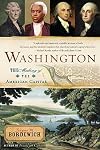
Bordewich’s narrative about the “making” of Washington DC is quite an engaging read. Evidencing a strong critical demeanor – occasionally bordering on angst – the author covers the agendas and foibles of such figures as L’Enfant, the commissioners, the speculators, and the Founding Fathers as the Potomac deal developed. Also significant is the laudable focus on the central role of African Americans – free and enslaved – in the building of the city. There’s such an emphasis, show more in fact, that I’m surprised this doesn’t at least inform the book's subtitle. The inclusion of a Benjamin Banneker portrait – Mt Rushmore-like – alongside three of the white dudes that show up on our currency is the only tell-tale sign of Bordewich’s serious presentation of the issues around slavery, Philadelphia’s abolitionist milieu, and the impossibility of DC’s realization without such forced labor.
To balance his focus on this oft-ignored contribution (which, unfortunately must cope with an obvious dearth of archival documentation), Bordewich openly portrays the bumbling incompetence, graft, and/or self-interest that tended to undermine the supposed noble intentions granted to many of the original movers, shakers, and (literally) Big Wigs involved. It’s very entertaining - I could easily imagine our contemporary political elite repeating this near-fiasco today (if only they could figure out how to collect taxes from billionaires).
My only disappointment (as is typical, through not reading the book jacket description) is that – after recently reading a biography about L’Enfant – I had hoped that this book would cover a longer period of Washington’s development. I somehow thought that Bordewich would conclude with Marion Barry’s pipe or something. But alas, the timeline is exactly the same; tons of attention to the first 10 ill-fated years with a quick segue to Grant’s decision to finally fund this damn thing once and for all. Nonetheless, this is certainly a terrific story of our Capital’s origins. show less
To balance his focus on this oft-ignored contribution (which, unfortunately must cope with an obvious dearth of archival documentation), Bordewich openly portrays the bumbling incompetence, graft, and/or self-interest that tended to undermine the supposed noble intentions granted to many of the original movers, shakers, and (literally) Big Wigs involved. It’s very entertaining - I could easily imagine our contemporary political elite repeating this near-fiasco today (if only they could figure out how to collect taxes from billionaires).
My only disappointment (as is typical, through not reading the book jacket description) is that – after recently reading a biography about L’Enfant – I had hoped that this book would cover a longer period of Washington’s development. I somehow thought that Bordewich would conclude with Marion Barry’s pipe or something. But alas, the timeline is exactly the same; tons of attention to the first 10 ill-fated years with a quick segue to Grant’s decision to finally fund this damn thing once and for all. Nonetheless, this is certainly a terrific story of our Capital’s origins. show less
Congress at War: How Republican Reformers Fought the Civil War, Defied Lincoln, Ended Slavery, and Remade America by Fergus M. Bordewich
I pulled this off the new books shelf because we really tend to overestimate the presidential effect on our law-making system and there aren't a lot of available books on this subject and era.
For good reason.
It's really a lot to cover and it's hard to make it all interesting. Not that this didn't have it's good moments and figures, Thaddeus Stevens at the forefront. But it also wasn't an easy read and you don't feel the attachment for the people as you would in, say, a book from McCullough show more or Doris Goodwin. Being history instead of fiction, the concluding ascension of Johnson to the role of president is rather anti-climactic and slightly depressing.
I was highly amused to recognize 18th-century versions of "Fake News," "Voter Fraud," and "President is overstepping boundaries." Some things about politics manage to stay the same.
Final note: the exchange of party beliefs and values between the past and the future is glaring. It is only too obvious that groups are influenced by individuals and that none is immune from past errors. Nor are they all incapable of laudable decisions. show less
For good reason.
It's really a lot to cover and it's hard to make it all interesting. Not that this didn't have it's good moments and figures, Thaddeus Stevens at the forefront. But it also wasn't an easy read and you don't feel the attachment for the people as you would in, say, a book from McCullough show more or Doris Goodwin. Being history instead of fiction, the concluding ascension of Johnson to the role of president is rather anti-climactic and slightly depressing.
I was highly amused to recognize 18th-century versions of "Fake News," "Voter Fraud," and "President is overstepping boundaries." Some things about politics manage to stay the same.
Final note: the exchange of party beliefs and values between the past and the future is glaring. It is only too obvious that groups are influenced by individuals and that none is immune from past errors. Nor are they all incapable of laudable decisions. show less
Lists
Awards


You May Also Like


Statistics
- Works
- 16
- Members
- 1,895
- Popularity
- #13,580
- Rating
- 4.1
- Reviews
- 38
- ISBNs
- 60
- Favorited
- 3
