

Victor Segalen (1878–1919)
Author of René Leys
About the Author
Series
Works by Victor Segalen
Thibet 5 copies
Ziegel & Schindeln: Von einer Reise durch China und Japan 1909/10 (Französische Bibliothek) (2017) 3 copies
Siddhârtha 2 copies
Entretiens avec Debussy 2 copies
Nezapamćeni svet 1 copy
Steles, Vol. I 1 copy
セガレン著作集〈4〉天子 1 copy
セガレン著作集〈8〉煉瓦と瓦 1 copy
セガレン著作集 2 ゴーガンを讃えて/異教の思考 1 copy
記憶なき人々 1 copy
La Marche du feu 1 copy
Feuilles de route 1 copy
Essai sur le mystérieux 1 copy
Reneys 1 copy
Voix mortes. Musiques Maori 1 copy
Zabranjeni ljubičasti grad 1 copy
Oeuvres majeures: Les Immémoriaux, Stèles, René Leys, Le Double Rimbaud, Peintures, Orphée-Roi, ... (Illustré) (2018) 1 copy
Repères 1 copy
方位なき方位 底なき井戸 — Author — 1 copy
Associated Works
青銅時代 第14号 1971秋 — Contributor — 1 copy
Tagged
Common Knowledge
- Canonical name
- Segalen, Victor
- Legal name
- Segalen, Victor Joseph Ambroise Désiré
- Other names
- Anély, Max (Pseudonym)
- Birthdate
- 1878-01-14
- Date of death
- 1919-05-21
- Gender
- male
- Education
- École principale du service de santé de la marine de Bordeaux (1902)
- Occupations
- physician
ethnographer
archaeologist
poet
explorer
linguist (show all 8)
literary critic
art theorist - Organizations
- Armée française (Médecin)
Imperial Medical College, Tianjin (Médecin-major, 19 11
Centre d'instruction naval de Saint-Mandrier (Médecin, 19 02)
Le Mercure de France (Rédacteur, 18 99) - Awards and honors
- Panthéon (1934)
- Relationships
- Chavannes, Edouard, (Professeur)
- Cause of death
- accident
- Nationality
- France
- Birthplace
- Brest, Finistère, Bretagne, France
- Place of death
- Huelgoat, Finistère, Bretagne, France
- Burial location
- Cimetière communal, Huelgoat, Finistère, Bretagne, France
- Associated Place (for map)
- Bretagne, France
Members
Discussions
Victor Segalen “les Immemoriaux” in Le Salon Littéraire du Peuple pour le Peuple (April 2013)
Reviews

The poet as archaeologist
Segalen taught himself Mandarin in order to follow-up on the pioneering work of a mentor, the early sinologist Edouard Chavannes. Over the course of three missions (1909, 1914, 1917), following a roughly westward-arcing track from Hunan through Szechuan to Yunnan, Segalen consulted the local archives, took photographs and made sketches of the stone statues he found. This book is made up of reports he wrote for Journal asiatique in 1915 and 1916 and the completed show more notes for a manuscript he finished in 1918. The Great Statuary of China was conceived as the first of seven chapters in a larger work to also include paintings, ceramics, silks, etc., but remained unpublished at the time of Segalen’s bewildering death in the woodlands of Huelgoat in 1919. The first edition (French) was finally published in 1972.
Segalen was guided in his exploration by quasi-legendary dynastic accounts and scrupulously maintained local chronicles that had been compiled over hundreds of years, wherein tigers were always called ‘lions’ and all other quadrupeds (cows, rams, palfreys) were ‘horses,’ but various turtles were elaborately distinguished, and dragons had carefully detailed family trees. Under headings like “Ancient Vestiges,” “Stones and Metals” and “Walls and Ditches”, Segalen discovered clues as to the locations of monuments and statues previously unknown to the West and mostly forgotten by locals. The statues he found—hidden in rice paddies or broken into pieces among tall wheat stalks, buried up to the shoulders in a heap of rubble or overturned in muddy ditches ‘struggling against submersion for fifteen hundred years’—and the way that he wrote about them—the spell he wove in describing the intricate stone work, the evocation of the surrounding countryside or village and the sensation of coming upon such scenes—make The Great Statuary of China more a literary incantation than an art-history guide book.
Segalen travels down atavistic valleys, over hermaphrodite soil. He finds early Han pillars that mimic the eternal Chinese palace, the t’ing (‘tall house’), a wooden framework with rafters and roof treated in stone, and fabulously elaborate late Han pillars combining stylized architectural elements and decorative animal motifs: ‘combat of the felines,’ and entwined hydras, and a great horned head with eyebrows like hard little wings that seems to actually push its way through the stone from one side of a pillar to the other. Elsewhere a phoenix, scaly like a serpent, with the claw of a fighting cock, carved into a pillar in shallow relief, 'composed on the borderline between chisel and brush'; chimeras comical and ridiculous, like a stone-carver’s plaything, contrasted with the imposing elegance of the great winged lion of the Liang—graceful, robust and supple, ‘an animal moment petrified by the personal human gesture that carved it.’ At the tomb of Hsiao Hsui, embedded in a little village: a procession of stelae-bearing tortoises, fluted columns topped by a stone lotus in full bloom surmounted by obese seal-lions, another column mounted on a torus of two entwined beasts like crocodiles with bulldog heads fertilized by a long, winged leopard. The beautiful wings of a stone unicorn (a 'horse-dragon' in the chronicles) represent for Segalen a specific moment of Chinese statuary, in which ‘the suppleness becomes disturbing.’
Part of the enchantment is to imagine how incongruous such statuary was, even in early 20th c. rural China. Anonymous mounds and ruins and debris in the commonplace mundane picayune of life are for Segalen fantastical evidence of human artistic skill and imagination, redolent with symbolic weight. The Great Statuary of China is like the sweet spot of a tri-partite Venn diagram, at the intersection of passionate exploration by a curious and open mind, language formulated to suggest the inscrutable aspects of artistic sensibility, and a deep, rich historical-cultural wellspring. Across six centuries of Chinese statuary Segalen saw not evolution but mutation. He had little regard for the monotonous, motionless bas-relief Bodhisattvas in the Buddhist lodes at Yün-kang; the Greco-Buddhic style, a strange hybrid of pure Indian thought and vagabond Hellenism, was for him a kind of heresy. He had a grudging respect for the nomadic ferocity of the Mongols, who trampled the graves of their emperors so as to leave no trace; the Khans did not have to fear posthumous visitors. The T’ang period was a pinnacle, but also a harbinger of decline. The Sung and Ming were decadent: the statuary of the former a clumsy aggregate of overfamiliar forms, ‘the transformation of appanages already used by earlier masters into clichés, stigmata,’ that of the latter ‘guilty, lamentable, base.’
Subsequent findings and reevaluations have shown Segalen’s history to be distorted and incomplete, but an afterword by the Director of the Musée Cernuschi cites the valuable contributions made by Segalen’s discoveries, the insight of his conclusions from before the great period of excavation in China, and the influence of his aesthetic sensibilities. The Director also asks if Segalen would have tempered some of his franker judgments had he a chance at a final edit before publication, but it’s hard to imagine that he could have improved any on the work as it is. show less
Segalen taught himself Mandarin in order to follow-up on the pioneering work of a mentor, the early sinologist Edouard Chavannes. Over the course of three missions (1909, 1914, 1917), following a roughly westward-arcing track from Hunan through Szechuan to Yunnan, Segalen consulted the local archives, took photographs and made sketches of the stone statues he found. This book is made up of reports he wrote for Journal asiatique in 1915 and 1916 and the completed show more notes for a manuscript he finished in 1918. The Great Statuary of China was conceived as the first of seven chapters in a larger work to also include paintings, ceramics, silks, etc., but remained unpublished at the time of Segalen’s bewildering death in the woodlands of Huelgoat in 1919. The first edition (French) was finally published in 1972.
Segalen was guided in his exploration by quasi-legendary dynastic accounts and scrupulously maintained local chronicles that had been compiled over hundreds of years, wherein tigers were always called ‘lions’ and all other quadrupeds (cows, rams, palfreys) were ‘horses,’ but various turtles were elaborately distinguished, and dragons had carefully detailed family trees. Under headings like “Ancient Vestiges,” “Stones and Metals” and “Walls and Ditches”, Segalen discovered clues as to the locations of monuments and statues previously unknown to the West and mostly forgotten by locals. The statues he found—hidden in rice paddies or broken into pieces among tall wheat stalks, buried up to the shoulders in a heap of rubble or overturned in muddy ditches ‘struggling against submersion for fifteen hundred years’—and the way that he wrote about them—the spell he wove in describing the intricate stone work, the evocation of the surrounding countryside or village and the sensation of coming upon such scenes—make The Great Statuary of China more a literary incantation than an art-history guide book.
Segalen travels down atavistic valleys, over hermaphrodite soil. He finds early Han pillars that mimic the eternal Chinese palace, the t’ing (‘tall house’), a wooden framework with rafters and roof treated in stone, and fabulously elaborate late Han pillars combining stylized architectural elements and decorative animal motifs: ‘combat of the felines,’ and entwined hydras, and a great horned head with eyebrows like hard little wings that seems to actually push its way through the stone from one side of a pillar to the other. Elsewhere a phoenix, scaly like a serpent, with the claw of a fighting cock, carved into a pillar in shallow relief, 'composed on the borderline between chisel and brush'; chimeras comical and ridiculous, like a stone-carver’s plaything, contrasted with the imposing elegance of the great winged lion of the Liang—graceful, robust and supple, ‘an animal moment petrified by the personal human gesture that carved it.’ At the tomb of Hsiao Hsui, embedded in a little village: a procession of stelae-bearing tortoises, fluted columns topped by a stone lotus in full bloom surmounted by obese seal-lions, another column mounted on a torus of two entwined beasts like crocodiles with bulldog heads fertilized by a long, winged leopard. The beautiful wings of a stone unicorn (a 'horse-dragon' in the chronicles) represent for Segalen a specific moment of Chinese statuary, in which ‘the suppleness becomes disturbing.’
Part of the enchantment is to imagine how incongruous such statuary was, even in early 20th c. rural China. Anonymous mounds and ruins and debris in the commonplace mundane picayune of life are for Segalen fantastical evidence of human artistic skill and imagination, redolent with symbolic weight. The Great Statuary of China is like the sweet spot of a tri-partite Venn diagram, at the intersection of passionate exploration by a curious and open mind, language formulated to suggest the inscrutable aspects of artistic sensibility, and a deep, rich historical-cultural wellspring. Across six centuries of Chinese statuary Segalen saw not evolution but mutation. He had little regard for the monotonous, motionless bas-relief Bodhisattvas in the Buddhist lodes at Yün-kang; the Greco-Buddhic style, a strange hybrid of pure Indian thought and vagabond Hellenism, was for him a kind of heresy. He had a grudging respect for the nomadic ferocity of the Mongols, who trampled the graves of their emperors so as to leave no trace; the Khans did not have to fear posthumous visitors. The T’ang period was a pinnacle, but also a harbinger of decline. The Sung and Ming were decadent: the statuary of the former a clumsy aggregate of overfamiliar forms, ‘the transformation of appanages already used by earlier masters into clichés, stigmata,’ that of the latter ‘guilty, lamentable, base.’
Subsequent findings and reevaluations have shown Segalen’s history to be distorted and incomplete, but an afterword by the Director of the Musée Cernuschi cites the valuable contributions made by Segalen’s discoveries, the insight of his conclusions from before the great period of excavation in China, and the influence of his aesthetic sensibilities. The Director also asks if Segalen would have tempered some of his franker judgments had he a chance at a final edit before publication, but it’s hard to imagine that he could have improved any on the work as it is. show less
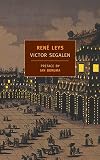
My edition of this book, an old 'Quartet Encounters' (they specialized in Euro lit that wasn't published in the U.S. or U.K., and many of their titles are now published by NYRB), features a blurb from Publishers Weekly on how the novel "probes the frustrations of man's inability to grasp the unknown." But I must disrespectfully disagree, because if the book was that, I would have been bored stupid, and also not able to concentrate, because quotes from every important philosopher since Kant show more would have constantly been passing through my head, to the effect that we can grasp the unknown just fine provided we don't assume to begin with that the unknown can't be grasped.
Thankfully, RL is much less than a meditation on epistemological agony and the deep, deep profundities of the abyss: it is a story about the way Europeans look at and think about The Mystical Orient, or, in this case, China. Now, I'm very sensitive to issues surrounding Yellow Fever. I have a friend who's dated east Asian women, and he knows men who openly say that they would never date a non-Asian woman because they fantasize about the Orient and traditional gender roles and submissive little Asian women with tiny feet. That makes me uncomfortable because my wife happens to come from a Korean family. Luckily my wife's about as submissive as a lioness, so I don't feel too guilty. But the point is, I'm predisposed to read this book as a kind of satire on the narrator, and men (and women) like him, who are so obsessed with the Mysteries and Inscrutability of Orientals that they can't see the blitheringly obvious: that most people from China/Japan/Korea etc are just like most people from everywhere else, i.e., stupid, violent, arrogant, hidebound and greedy as heck.
Taken as such a satire, the book is excellent: the narrator's mind, such as it is, is on full display in his style, and though Segalen is supposed to have written the book to prove that you can write a novel without a plot, he's only half-succeeded. Nothing much happens to the narrator, it's true, but the plot is just kind of outsourced onto his friend, Rene Leys, and the nation of China. Plenty happens to both of them.
As a philosophical allegory of epistemological uncertainties, however, the book stinks. I prefer to think that was the furthest thing from Segalen's mind. show less
Thankfully, RL is much less than a meditation on epistemological agony and the deep, deep profundities of the abyss: it is a story about the way Europeans look at and think about The Mystical Orient, or, in this case, China. Now, I'm very sensitive to issues surrounding Yellow Fever. I have a friend who's dated east Asian women, and he knows men who openly say that they would never date a non-Asian woman because they fantasize about the Orient and traditional gender roles and submissive little Asian women with tiny feet. That makes me uncomfortable because my wife happens to come from a Korean family. Luckily my wife's about as submissive as a lioness, so I don't feel too guilty. But the point is, I'm predisposed to read this book as a kind of satire on the narrator, and men (and women) like him, who are so obsessed with the Mysteries and Inscrutability of Orientals that they can't see the blitheringly obvious: that most people from China/Japan/Korea etc are just like most people from everywhere else, i.e., stupid, violent, arrogant, hidebound and greedy as heck.
Taken as such a satire, the book is excellent: the narrator's mind, such as it is, is on full display in his style, and though Segalen is supposed to have written the book to prove that you can write a novel without a plot, he's only half-succeeded. Nothing much happens to the narrator, it's true, but the plot is just kind of outsourced onto his friend, Rene Leys, and the nation of China. Plenty happens to both of them.
As a philosophical allegory of epistemological uncertainties, however, the book stinks. I prefer to think that was the furthest thing from Segalen's mind. show less
Beijing 1911. A 34 year-old French resident in Beijing by the name of 'Victor Segalen' (by no means to be confused with the real Victor Segalen, the author) is trying to learn Chinese. His aim in learning Chinese is to penetrate the mystery of the life and death of the Kuang Hsu Emperor, with whom he has an obsession, and to write a book, probably a novel, about him. He trawls Beijing looking for informants, and a way in to the Forbidden City, where he hopes to interview some of those who show more had known the Emperor. He engages two teachers: one Chinese, Master Wang, a teacher known to the expat community; and the other, a young European lad of 18 or thereabouts, the preternaturally gifted son of a Belgian resident of Beijing, Rene Leys. Rene Leys has been educated in Europe, and has only been in Beijing for about three years, but already he is fluent in Shanghaiese, Mandarin, and Manchu, is an expert in Chinese life and culture, and has secured the post of professor of political economy in the College of Nobles, an exalted position for a foreigner of his age and circumstances, but one that it was not unusual for foreigners to hold in that time and place.
Segalen gradually befriends the lad, and when Leys pere decides to return to Europe, Rene moves into Segalen's house, where their lessons continue. Over the course of the summer, Rene Leys reveals to Segalen that he is an intimate of the Royal Family. He was the only friend of the Kuang Hsu Emperor, and is now the advisor to the Regent, who has awarded him a concubine for his services. He further reveals, after swearing Segalen to secrecy, that he is the chief of a Secret Police force; that he runs a network of spies and informants among the sing-song girls and prostitutes of the red light district, the Chien Men Wai; and that he has constant but secret access to the Forbidden Palace on payment of large sums to the eunuchs who guard the place. He further reveals that he is the lover of the Empress Dowager, Princess Long Yu; and that she is the instigator of several assassination attempts on the Regent, all of which have been foiled by Rene and his police force. Rene is tormented by divided loyalties, to the Regent, and to the Empress Dowager. In other words, Rene Leys is deeply embroiled in Palace intrigues, his ultimate loyalty is to the Manchus, and he is heavily invested in their continuing to rule China.
The summer turns to autumn. When the revolution breaks out in October, Rene Leys and his Manchu employers are caught off guard. Faced with the prospect of the defeat of the Manchus, and the installation of Yuen Xi Kai as first (provisional) President of a new Republic of China, Rene Leys, afraid of reprisals, and stunned with anguish at the collapse of his world, commits suicide. Segalen decides to leave Beijing, his book about the Kuang Hsu Emperor unstarted, unfinished.
The novel is presented in the form of a diary kept by Segalen, charting his attempts to learn Chinese, his relationships with other expatriates, his trips around the city on horseback in the company of his young teacher, conversations, trips to the brothels and theatres of Chien Men Wai, daily life, the weather. It starts on the 28 February, and ends on the 22 November.
The prose is gorgeous, and is one of the chief pleasures of reading the novel. The descriptions of Beijing in the last days of the Qing are miraculously evocative, poetic, and laden with colour. Segalen is a thoughtful, witty and observant diarist, and writes like a dream, capturing details of his experiences and conversations almost as they occur.
On the other hand, his diary is also laced with sardonic asides at the stupidity of his hosts and the other expatriates. (These are the kind of comments one is still likely to hear in expatriate bars all over the Far East): I am making progress with my Chinese (such a practical language it is: it does away with syntax by reducing all the rules to three) Segalen notes on his linguistic efforts, and he sneeringly calls the White Tower - a Nepalese stupa in the heart of the Forbidden City- an example of art nouveau.
The discourse is not burdened with historical hindsight - the Wuhan uprising on October 10 which leads to the Revolution is related in the diary on the 11 October as an interesting but insignificant item in the newspaper- and has all the freshness and roughness of lived experience rather than the finished polish of a novel. It is a fictional, eyewitness account of the fall of the Qing.
Colonial literature of this type articulates to a more or less conscious degree one major fantasy, and one major fear. (This remark is no less true of long term expatriates in real life than it is of literature.) The fantasy is that.....
Read the full review on The Lectern. show less
Segalen gradually befriends the lad, and when Leys pere decides to return to Europe, Rene moves into Segalen's house, where their lessons continue. Over the course of the summer, Rene Leys reveals to Segalen that he is an intimate of the Royal Family. He was the only friend of the Kuang Hsu Emperor, and is now the advisor to the Regent, who has awarded him a concubine for his services. He further reveals, after swearing Segalen to secrecy, that he is the chief of a Secret Police force; that he runs a network of spies and informants among the sing-song girls and prostitutes of the red light district, the Chien Men Wai; and that he has constant but secret access to the Forbidden Palace on payment of large sums to the eunuchs who guard the place. He further reveals that he is the lover of the Empress Dowager, Princess Long Yu; and that she is the instigator of several assassination attempts on the Regent, all of which have been foiled by Rene and his police force. Rene is tormented by divided loyalties, to the Regent, and to the Empress Dowager. In other words, Rene Leys is deeply embroiled in Palace intrigues, his ultimate loyalty is to the Manchus, and he is heavily invested in their continuing to rule China.
The summer turns to autumn. When the revolution breaks out in October, Rene Leys and his Manchu employers are caught off guard. Faced with the prospect of the defeat of the Manchus, and the installation of Yuen Xi Kai as first (provisional) President of a new Republic of China, Rene Leys, afraid of reprisals, and stunned with anguish at the collapse of his world, commits suicide. Segalen decides to leave Beijing, his book about the Kuang Hsu Emperor unstarted, unfinished.
The novel is presented in the form of a diary kept by Segalen, charting his attempts to learn Chinese, his relationships with other expatriates, his trips around the city on horseback in the company of his young teacher, conversations, trips to the brothels and theatres of Chien Men Wai, daily life, the weather. It starts on the 28 February, and ends on the 22 November.
The prose is gorgeous, and is one of the chief pleasures of reading the novel. The descriptions of Beijing in the last days of the Qing are miraculously evocative, poetic, and laden with colour. Segalen is a thoughtful, witty and observant diarist, and writes like a dream, capturing details of his experiences and conversations almost as they occur.
On the other hand, his diary is also laced with sardonic asides at the stupidity of his hosts and the other expatriates. (These are the kind of comments one is still likely to hear in expatriate bars all over the Far East): I am making progress with my Chinese (such a practical language it is: it does away with syntax by reducing all the rules to three) Segalen notes on his linguistic efforts, and he sneeringly calls the White Tower - a Nepalese stupa in the heart of the Forbidden City- an example of art nouveau.
The discourse is not burdened with historical hindsight - the Wuhan uprising on October 10 which leads to the Revolution is related in the diary on the 11 October as an interesting but insignificant item in the newspaper- and has all the freshness and roughness of lived experience rather than the finished polish of a novel. It is a fictional, eyewitness account of the fall of the Qing.
Colonial literature of this type articulates to a more or less conscious degree one major fantasy, and one major fear. (This remark is no less true of long term expatriates in real life than it is of literature.) The fantasy is that.....
Read the full review on The Lectern. show less
Pierre Ryckmans, whom I admire more day by day as I read his essays collected as The Hall of Uselessness, took his pen name of Simon Leys from the title character of this book, and one wondered why, and who Victor Segalen is.
Rene Leys is a well-wrought, innovative, and consistently compelling novel about the way China can capture a westerner's imagination, a certain kind of westerner, open to the culture and history of the ancient kingdom, and with a touch of romance to the soul.
The novel show more immerses its readers in the world –- and it is truly a world of its own -- of early 20th-century "Pei-King" at the end of the imperial rule, arriving at a surprising and somewhat disconcerting denouement. It's impossible to say much more about the plot without saying too much; at least in part it's a sort of mystery.
The translation by J. A. Underwood is effortless and attractive, and you should not read either of the two prefaces, by the translator and by Ian Buruma, in advance, or the book will not be able to operate as it was designed to –- go directly to the novel itself.
Rene Leys has been reissued in a beautiful new NY Books edition, so well designed and of such quality materials that, after so many novels on near-newsprint, it's a small separate pleasure. But not on the scale of the work itself –- highly recommended, and the internet will provide useful and enjoyable images, including diagrams of the Beijing imperial palace at the time. show less
Awards

You May Also Like


Associated Authors
Statistics
- Works
- 83
- Also by
- 4
- Members
- 852
- Popularity
- #30,031
- Rating
- 3.9
- Reviews
- 16
- ISBNs
- 126
- Languages
- 11
- Favorited
- 4


