
Mary Roberts Rinehart (1876–1958)
Author of The Circular Staircase
About the Author
Mary Roberts Rinehart was born in the City of Allegheny, Pennsylvania on August 12, 1876. While attending Allegheny High School, she received $1 each for three short stories from a Pittsburgh newspaper. After receiving inspiration from a town doctor who happened to be a woman, she developed a show more curiosity for medicine. She went on to study nursing at the Pittsburgh Training School for Nurses at Homeopathic Hospital. After graduating in 1896, she began her writing career. The first of her many mystery stories, The Circular Staircase (1908), established her as a leading writer of the genre; Rinehart and Avery Hopwood successfully dramatized the novel as The Bat (1920). Her other mystery novels include The Man in Lower Ten (1909), The Case of Jennie Brice (1914), The Red Lamp (1925), The Door (1930), The Yellow Room (1945), and The Swimming Pool (1952). Stories about Tish, a self-reliant spinster, first appeared in the Saturday Evening Post and were collected into The Best of Tish (1955). She wrote more than 50 books, eight plays, hundreds of short stories, poems, travelogues and special articles. Three of her plays were running on Broadway at one time. During World War I, she was the first woman war correspondent at the Belgian front. She died September 22, 1958 at the age of 82. (Bowker Author Biography) show less
Image credit: George Grantham Bain Collection (Library of Congress)
Series
Works by Mary Roberts Rinehart
Best Mysteries of Mary Roberts Rinehart: Four Complete Novels by America's First Lady of Mystery (2002) 67 copies, 2 reviews
The Man in Lower Ten / The Circular Staircase / The Case of Jennie Brice (1947) 54 copies, 2 reviews
Mary Roberts Rinehart's Collected Works: The Bat, The Man in Lower Ten, Tish, and More! (26 Works) (2014) 3 copies
The Hilda Adams Mysteries: Miss Pinkerton, The Haunted Lady, and Episode of the Wandering Knife (2022) 2 copies
Alibi for Isobel 1 copy
TISH: The Adventures & Mystery Cases of Letitia Carberry, Tish: The Chronicle of Her Escapades and Excursions & More Tish (2018) 1 copy
Βίπερ 280: Η νυχτερίδα 1 copy
The Altar of Freedom. [1917] 1 copy
Altar of Freedom 1 copy
Io ti difendo| 1 copy
Twenty-Two 1 copy
The Door. Illustrated 1 copy
Seven Days 1 copy
Miss Cornelia Van Gorden Trilogy (The Man in Lower Ten / The Circular Staircase / The Bat) (2014) 1 copy
Marie Roberts Rinehart: Thriller Novels, Murder Mysteries, Detective Stories, Travelogues, Essays & Autobiography (2018) 1 copy
The After House / The Buckled Bag / Locked Doors / The Red Lamp / The Window at the White Cat (1925) 1 copy
Mary Rhinehart's Mysteries 1 copy
Associated Works
101 Years' Entertainment: The Great Detective Stories 1841-1941 (1941) — Contributor — 111 copies, 1 review
The Web She Weaves: An Anthology of Mystery and Suspense Stories by Women (1983) — Contributor — 60 copies, 2 reviews
Modern Classics of Suspense: Rebecca, Death and the Sky Above, The Thin Man, The Circular Staircase, Above Suspicion, A Coffin for Dimitrios (1968) — Contributor — 21 copies
Famous Plays of Crime and Detection, from Sherlock Holmes to Angel Street (1977) — Contributor — 17 copies, 1 review
Adventures in Two Worlds / The Bridges at Toko-ri / Kiss Me Again, Stranger / Rivets / The Silent World / Story of Aviation / The Swimming Pool / 7 Short Stories of De Maupassant (1953) — Contributor — 12 copies
The Second Christmas Megapack: 29 Modern and Classic Christmas Stories (2012) — Contributor — 3 copies
Tish: Mary Roberts Rinehart's Most Popular Stories Made into a Gay and Exciting Comedy in Three Acts (1939) 2 copies
Avon Modern Short Story Monthly No. 7 (14 Great stories by 14 Great Authors) (1943) — Contributor — 1 copy
Trumps: A Collection of Short Stories — Contributor — 1 copy
Tagged
Common Knowledge
- Legal name
- Roberts, Mary Ella (born)
- Other names
- Roberts, Mary R.
- Birthdate
- 1876-08-12
- Date of death
- 1958-09-22
- Gender
- female
- Education
- Pittsburgh Training School for Nurses (1896)
- Occupations
- playwright
mystery novelist
war correspondent
travel writer
short story writer - Awards and honors
- Honorary Doctorate (Literature | George Washington University | 1923)
Mystery Writers of America Special Award (1954) - Relationships
- Rinehart, Stanley Marshall, Jr. (son)
Rinehart, Alan Gillespie (son)
Rinehart, Frederick Roberts (son) - Short biography
- Mary Roberts Rinehart was a best-selling mystery writer of the "Golden Age" who was as well-known (if not better known) than Agatha Christie, to whom she's often compared. Critics praised the careful plotting of her novels. She's credited with originating the "had-I-but-known" literary school of mystery writing. Typically, the narrator digresses over the things she might have done to prevent the novel’s numerous murders, had she only been able to see the dire consequences of her inaction or failure to report information to the police. Dorothy B. Hughes, crime critic and novelist, says Rinehart "has been and continues to be the most important American woman mystery writer." She was born Mary Ella Roberts in Allegheny City, Pennsylvania, which has been a part of the city of Pittsburgh since 1907. She attended public schools and graduated at the age of 16, then enrolling at the Pittsburgh Training School for Nurses at Homeopathic Hospital, where she graduated in 1896. She married Stanley Marshall Rinehart, a physician with whom she had four children. During the stock market crash of 1903, Rinehart and her husband lost their savings, and this spurred her efforts at writing to earn income. In 1907, she wrote The Circular Staircase, the novel that launched her to national fame. She wrote hundreds of short stories, poems, travelogues and special articles. Many of her books and plays were adapted for movies. Her regular contributions to the Saturday Evening Post were immensely popular and helped the magazine mold American middle-class taste and manners. She often pursued adventure, including taking a job as the first woman war correspondent at the Belgian front during World War I. While many of her books were best-sellers, critics were most appreciative of her murder mysteries. She also coined the famous phrase, "The butler did it." (retrieved from Amazon 1/30/2011).
- Nationality
- USA
- Birthplace
- Allegheny City, Pennsylvania, USA
- Places of residence
- Washington, D.C., USA
Bar Harbor, Maine, USA
New York, New York, USA - Place of death
- New York, New York, USA
- Burial location
- Arlington National Cemetery, Arlington, Virginia, USA
- Map Location
- Pennsylvania, USA
Members
Reviews

Amusing as an early example of the classic type of detective story that would reach its most finished form with Christie and Sayers a couple of decades later. But rather slow-moving, even ponderous, by later standards, not only in its jokes but also in the technical development of the plot, both of which the experienced mystery reader will see coming several chapters ahead of where the author is trying to reveal them.
Surprisingly, I found that the thing that interested me about it more than show more anything else was the use of the wealthy spinster, Miss Innes, as the viewpoint character. She's the sort of lady who would appear as a minor figure in inter-war novels, endlessly sparring with her elderly lady's-maid and fretting about the Servant Problem and mocked as a quaint survival of an earlier age. But here we see the world through her social attitudes, in which doctors, policemen and public officials are all treated as slightly superior sorts of tradesmen, who might exceptionally be permitted to use the front door... show less
Surprisingly, I found that the thing that interested me about it more than show more anything else was the use of the wealthy spinster, Miss Innes, as the viewpoint character. She's the sort of lady who would appear as a minor figure in inter-war novels, endlessly sparring with her elderly lady's-maid and fretting about the Servant Problem and mocked as a quaint survival of an earlier age. But here we see the world through her social attitudes, in which doctors, policemen and public officials are all treated as slightly superior sorts of tradesmen, who might exceptionally be permitted to use the front door... show less
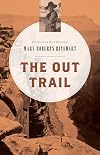
“Generally speaking, both sexes are at their best or their worst on the trail. The wilderness is no half-way ground. Either one belongs or one does not, and one person of either sex who does not can ruin a trip, spread dissension in camp, lose the cook, and fill otherwise peaceful individuals with murderous thoughts.” — Mary Roberts Rinehart
Famous today for her tremendous contribution to the mystery genre, the woman most often identified with the “Had I but Known” foreshadowing, show more and old-fashioned heroines whose families had once been wealthy and part of high-society, but who had fallen on hard financial times, only to become involved in murder mysteries which were as intricately plotted as they were slowly evolving and atmospheric of time and place, there was another side to Rinehart, one that was funny and adventurous and self-deprecating.
The stories in The Out Trail paint a portrait of that side of Rinehart in a wonderful way. I do wish that the publisher had been a bit more careful in transferring these wonderful stories, because typos do occasionally — but not often — creep into these stories that likely weren’t in there originally. It is ticky-tack stuff however, and barely a blip on the radar. The stories are splendid, and here is an overview of them :
ROUGHING IT WITH THE MEN :
After listing her extensive resumé of rough travels and adventures, some more than a little dangerous, Rinehart states:
“I submit modestly that while there is nothing heroic about this record, I am entitled to a silver cup for variety and endurance. And the men who have accompanied me are entitled to a gold one.”
There is much humor laced within this particular piece, some of it self-deprecating, some of it wickedly biting.
Rinehart pretends on every excursion to be oblivious in regard to the making of hot biscuits on the trail, lest she be lassoed into doing so constantly, as she’s witnessed of others, and be unable to enjoy the other adventures of the party.
One thing that becomes very clear is that Rinehart, though independent and successful, was no radical feminist man-hater. She would likely be appalled at the modern radicalization of feminism which is so filled with hostility and unreasonableness. She seems much more likely to have agreed with Catherine Deneuve and the other 100 women who wrote that open letter slamming the MeToo movement, alluding to it being steeped in misandry.
Before expounding on the reasons men often go off alone on these rugged journeys, rather than bring the women they so miss, which is quite interesting, she states:
“Everything else being equal, superior physical strength always gives man the advantage.”
Rinehart is in no way slighting her own sex here, she applauds them in fact, but she was able and willing to make an honest observation based on her many times on the trail. It is very refreshing.
A 17 page story.
THE DUDE RANCH :
Wonderful reminiscences of the Bighorn Wyoming ranch. Rinehart once again is a hoot, her observations wonderful. So was she, as in the time she used pure ingenuity to create costume for many in her family for a shindig.
She expounds on the Dude Ranch, and why some will always be considered dudes, and the reason. She tells of the banker who formed a tender bond with a horse named Sowbelly, and is at her most tongue-in-cheek when talking about the fishing:
“Now, any fisherman will know that the only way to catch trout is to surprise them. To startle no birds. To frighten no butterflies. To stalk the stream like an Indian stalking his prey. Crawling, creeping, hiding, the true fisherman at last takes up his stand behind a rock, and there, unseen and unsuspected, drops his brilliant colored fly on the surface in such a manner that the fish below will think the fly is committing suicide.”
Another great example of her humor :
“The reason for the food was this: One member of our party was sure to know a short cut. It is my invariable rule, when anyone knows a short cut, to take food along.”
There are plenty of examples of lovely passages as well:
“Back into the wilderness we pushed, through green valleys rimmed with gray cliff walls, fording streams, surprising a deer, losing the tiny trail in some creek bed or valley and finding it again. Now and then I stopped, ostensibly to look at the view, but, really, to rest. For the slow gait of a horse on a dangerous trail is a racking one, and every twist of a climbing animal is a twist for its rider.”
29 pages on this one.
DESERT CARAVANERS :
As a family trip to the deserts of Arizona and New Mexico appears imminent, Rinehart has reservations:
“And about this time, too, the Head of the family came across and read aloud an article on Death Valley. There were temperatures which sounded like the instructions for baking a cake. No birds were there; no life whatever. Of course we were not going to Death Valley, but the article considerably undermined our morale.”
Once again, of course, she proves to be a hoot:
“I sat down and wrote to Howard, whose enthusiasm for unknown places was behind the trip, explaining that I felt that I had, under normal conditions, a long and useful career before me, and why cut it short.”
But of course she goes, and it’s as difficult as she imagined and as rewarding as Howard Eaton imagined.
Her descriptions are wonderful, as are her observations about the Navajo, Oraibi, Hotevila, and especially the Hopi. Witnessing the Snake Dance is a particular highlight, as is the difficulty of crossing rivers with vehicles, and the setting up of the various big tents for a large group, and the amount of trading between the tribes and those venturing into the desert.
She points out that experts from the Agricultural College were sent to teach dry farming to the Native American tribes, and ended up learning from them, because the desert tribes knew far more than they how to survive in the desert.
An enjoyable 30 pages for this one, but it ends in a manner that makes you wish for the rest of the story going forward. Fortunately we get it in the next one up.
THE SPIRIT OF THE SIGHTSEER :
A continuation of the previous entry, there is a lot of great stuff in this account. Stranded because of a broken axle and constant worries with the trucks; the magnificence of the Walpi once they get going, with Rinehart making note that it is older than the fortress castles of the Rhine, yet there is such difficulty in getting there only a few souls, mostly artists, make it there each year; the White House of Cañon de Chelly; a stuttering driver; sand paintings done for a fee; the joy of reaching Gallup, where there are rooms and baths after weeks; and a great deal about the Navajo and Hopi.
Of the two tribes, Rinehart found the Hopi much friendlier and more amenable. The Hopi were farmers, cultivators of the land, but the Navajo of the time were still closer to the mindset of their ancestors, who were much like the Apache. Rinehart describes them as a fierce and lawless tribe, predatory and acquisitive, nomads with an Arab aquilinity and gravity, and tremendous stock breeders with fine horses.
Both tribes by this time in history had had Christian beliefs thrust upon them. Rinehart noted that the Navajo seemed to gravitate toward the Catholic, while the Hopi the Protestant. Yet in both cases they basically stuck to their own religion and beliefs, while not shunning the other, figuring that two ways to God were better than one.
Perhaps the most moving moment so far is Rinehart’s observation of the palpable grief among Hopi and Navajo families as 21 children were gathered to be sent far away to California to school:
“Sad-faced victims of civilization, unable to grasp what lay beyond this enforced separation, seeing it only something akin to the slaughter of the first-born, they neither moved nor spoke. To our caravan, usually a matter of eager interest, they scarcely lifted their eyes. Men and women, they crouched and waited, as one waits for a death in the house.”
21 pages for this one, but one of the most informative.
ADVENTURING DE LUXE :
The trucks are ahead for a change, so Rinehart and her fellow travelers don’t have to search behind them for hours or days and fret about breakdowns as they head for Zuni country in New Mexico.
The rock cliff inscriptions dating back hundreds of years is a highlight, with Rinehart’s take on one such inscription from 1629, boasting of putting the Zunis at peace and their request to be among his vassals, being quite pointed :
“I hope he did not carve that himself. And I am dubious, too, as to his methods of persuasiveness as to how he put the Zunis into peace. There is a peace called death. I rather think he conquered them first and then made them vassals at their request at the end of a sword.”
Following a paragraph full of Rinehart’s wonderful description of what she saw, we get this gem:
“Such is Zuni. Such, too, was Zuni, before it was put to peace three hundred years ago. The Indian of the Southwest has not changed. His towns are the same. He is the same. Only — he has remained a vassal.”
Her account of a young man in St. Johns sure to one day become its mayor is very amusing.
She has a great deal to say about traversing the trails of the Grand Cañon as well, and you get a sense of how rugged things were at this time in history.
Only 15 pages for this one, but really full.
BELOW THE BORDER IN WARTIME :
Rinehart and her friend Mary Elizabeth journey to Mexico during the time of Villa and this proves to be both colorful and adventurous; and, at times, quite dangerous, beyond the perils of the trail and towns and bandits and soldiers.
Rinehart expounds on the difficulty of bathing in the open country when there are but two women among eleven men, and very serious bandits are nearby. There is also weather to contend with, when a rain lasting 36 hours, accompanied by terrible winds, attacks the camp :
“Soon our boudoir was a lake with two islands in the center, said islands being Mary Elizabeth and myself. At each onslaught of the gale some treasured and intimate article of wearing apparel took wings and departed into the night.”
Mary Elizabeth’s horse falls and her friend is banged up and bruised among the boulders, but still they persevere.
An unexpected lake in the woods — they were in constant search of water on every journey — provides a memorable moment because the lake is covered in tiny black specks…
And of course, down Mexico way, no matter how dangerous, two pretty American girls would be serenaded outside their tent,the men doing the serenading hoping for a response.
Even as they return to American soil, the stark reality of where they’d been was evident :
“Somewhere out in the Pacific that night, was a gun boat looking for us. Somewhere back along the trail, was our pack outfit, heading unsteadily for us. But somewhere to the north was a wire fence, and a little customs house set in a desert field, and beyond that was home.”
38 pages for this one, and a wonderful read.
A HOUSEBOAT ON THE KEYS :
Florida and the innate desire to own a boat, specifically a houseboat from which to travel on the water and fish and explore is made humorous and entertaining by Rinehart’s biting humor as she keeps getting sidetracked in telling about the houseboat.
She tells of sea creatures and boats and trying to reel in catches. Her amusing take on bonefishing :
“Joe is a bonefisherman. For six years at one time he and the banker, who was growing old, had to be lifted in and out of the canoe, and only stopped when that ceased to be possible. Bonefishing, one perceives, may be the strongest passion in life, surviving everything else.”
There are, in fact, enough tales of fishing here to satisfy any angler, some very funny. But, as Rinehart would say, back to the boat!
“The way to enjoy a house-boat is to be a visitor on one. It costs rather less to run than an orphan asylum, but with this difference, that a good orphan asylum works all year, and the house-boat does not.”
The amount of gasoline it guzzles, the constant repairs needed, the crew needed to run and maintain it, the food needed to feed them all and the guests, are all fodder for Rinehart’s splendid sense of humor.
27 pages for this final story, from one of the greatest of mystery writers.
Summation :
Though I’ve used a few more quotes than usual in a review, they are but drops of water in a lake when compared to the wealth of nice moments and observations by Rinehart in this story. Why more people aren’t reading this, is in itself a mystery worthy of Mary Roberts Rinehart.
Mary Roberts Rinehart was much more than a great mystery writer, but as Rick Rinehart states in his affectionate, can’t miss mini-bio of her in his introduction :
“She was a feminine version of a Horatio Alger character and lived a live a life that Jan Cohn has described as ‘improbable fiction.’”
Very highly recommended !! show less
Famous today for her tremendous contribution to the mystery genre, the woman most often identified with the “Had I but Known” foreshadowing, show more and old-fashioned heroines whose families had once been wealthy and part of high-society, but who had fallen on hard financial times, only to become involved in murder mysteries which were as intricately plotted as they were slowly evolving and atmospheric of time and place, there was another side to Rinehart, one that was funny and adventurous and self-deprecating.
The stories in The Out Trail paint a portrait of that side of Rinehart in a wonderful way. I do wish that the publisher had been a bit more careful in transferring these wonderful stories, because typos do occasionally — but not often — creep into these stories that likely weren’t in there originally. It is ticky-tack stuff however, and barely a blip on the radar. The stories are splendid, and here is an overview of them :
ROUGHING IT WITH THE MEN :
After listing her extensive resumé of rough travels and adventures, some more than a little dangerous, Rinehart states:
“I submit modestly that while there is nothing heroic about this record, I am entitled to a silver cup for variety and endurance. And the men who have accompanied me are entitled to a gold one.”
There is much humor laced within this particular piece, some of it self-deprecating, some of it wickedly biting.
Rinehart pretends on every excursion to be oblivious in regard to the making of hot biscuits on the trail, lest she be lassoed into doing so constantly, as she’s witnessed of others, and be unable to enjoy the other adventures of the party.
One thing that becomes very clear is that Rinehart, though independent and successful, was no radical feminist man-hater. She would likely be appalled at the modern radicalization of feminism which is so filled with hostility and unreasonableness. She seems much more likely to have agreed with Catherine Deneuve and the other 100 women who wrote that open letter slamming the MeToo movement, alluding to it being steeped in misandry.
Before expounding on the reasons men often go off alone on these rugged journeys, rather than bring the women they so miss, which is quite interesting, she states:
“Everything else being equal, superior physical strength always gives man the advantage.”
Rinehart is in no way slighting her own sex here, she applauds them in fact, but she was able and willing to make an honest observation based on her many times on the trail. It is very refreshing.
A 17 page story.
THE DUDE RANCH :
Wonderful reminiscences of the Bighorn Wyoming ranch. Rinehart once again is a hoot, her observations wonderful. So was she, as in the time she used pure ingenuity to create costume for many in her family for a shindig.
She expounds on the Dude Ranch, and why some will always be considered dudes, and the reason. She tells of the banker who formed a tender bond with a horse named Sowbelly, and is at her most tongue-in-cheek when talking about the fishing:
“Now, any fisherman will know that the only way to catch trout is to surprise them. To startle no birds. To frighten no butterflies. To stalk the stream like an Indian stalking his prey. Crawling, creeping, hiding, the true fisherman at last takes up his stand behind a rock, and there, unseen and unsuspected, drops his brilliant colored fly on the surface in such a manner that the fish below will think the fly is committing suicide.”
Another great example of her humor :
“The reason for the food was this: One member of our party was sure to know a short cut. It is my invariable rule, when anyone knows a short cut, to take food along.”
There are plenty of examples of lovely passages as well:
“Back into the wilderness we pushed, through green valleys rimmed with gray cliff walls, fording streams, surprising a deer, losing the tiny trail in some creek bed or valley and finding it again. Now and then I stopped, ostensibly to look at the view, but, really, to rest. For the slow gait of a horse on a dangerous trail is a racking one, and every twist of a climbing animal is a twist for its rider.”
29 pages on this one.
DESERT CARAVANERS :
As a family trip to the deserts of Arizona and New Mexico appears imminent, Rinehart has reservations:
“And about this time, too, the Head of the family came across and read aloud an article on Death Valley. There were temperatures which sounded like the instructions for baking a cake. No birds were there; no life whatever. Of course we were not going to Death Valley, but the article considerably undermined our morale.”
Once again, of course, she proves to be a hoot:
“I sat down and wrote to Howard, whose enthusiasm for unknown places was behind the trip, explaining that I felt that I had, under normal conditions, a long and useful career before me, and why cut it short.”
But of course she goes, and it’s as difficult as she imagined and as rewarding as Howard Eaton imagined.
Her descriptions are wonderful, as are her observations about the Navajo, Oraibi, Hotevila, and especially the Hopi. Witnessing the Snake Dance is a particular highlight, as is the difficulty of crossing rivers with vehicles, and the setting up of the various big tents for a large group, and the amount of trading between the tribes and those venturing into the desert.
She points out that experts from the Agricultural College were sent to teach dry farming to the Native American tribes, and ended up learning from them, because the desert tribes knew far more than they how to survive in the desert.
An enjoyable 30 pages for this one, but it ends in a manner that makes you wish for the rest of the story going forward. Fortunately we get it in the next one up.
THE SPIRIT OF THE SIGHTSEER :
A continuation of the previous entry, there is a lot of great stuff in this account. Stranded because of a broken axle and constant worries with the trucks; the magnificence of the Walpi once they get going, with Rinehart making note that it is older than the fortress castles of the Rhine, yet there is such difficulty in getting there only a few souls, mostly artists, make it there each year; the White House of Cañon de Chelly; a stuttering driver; sand paintings done for a fee; the joy of reaching Gallup, where there are rooms and baths after weeks; and a great deal about the Navajo and Hopi.
Of the two tribes, Rinehart found the Hopi much friendlier and more amenable. The Hopi were farmers, cultivators of the land, but the Navajo of the time were still closer to the mindset of their ancestors, who were much like the Apache. Rinehart describes them as a fierce and lawless tribe, predatory and acquisitive, nomads with an Arab aquilinity and gravity, and tremendous stock breeders with fine horses.
Both tribes by this time in history had had Christian beliefs thrust upon them. Rinehart noted that the Navajo seemed to gravitate toward the Catholic, while the Hopi the Protestant. Yet in both cases they basically stuck to their own religion and beliefs, while not shunning the other, figuring that two ways to God were better than one.
Perhaps the most moving moment so far is Rinehart’s observation of the palpable grief among Hopi and Navajo families as 21 children were gathered to be sent far away to California to school:
“Sad-faced victims of civilization, unable to grasp what lay beyond this enforced separation, seeing it only something akin to the slaughter of the first-born, they neither moved nor spoke. To our caravan, usually a matter of eager interest, they scarcely lifted their eyes. Men and women, they crouched and waited, as one waits for a death in the house.”
21 pages for this one, but one of the most informative.
ADVENTURING DE LUXE :
The trucks are ahead for a change, so Rinehart and her fellow travelers don’t have to search behind them for hours or days and fret about breakdowns as they head for Zuni country in New Mexico.
The rock cliff inscriptions dating back hundreds of years is a highlight, with Rinehart’s take on one such inscription from 1629, boasting of putting the Zunis at peace and their request to be among his vassals, being quite pointed :
“I hope he did not carve that himself. And I am dubious, too, as to his methods of persuasiveness as to how he put the Zunis into peace. There is a peace called death. I rather think he conquered them first and then made them vassals at their request at the end of a sword.”
Following a paragraph full of Rinehart’s wonderful description of what she saw, we get this gem:
“Such is Zuni. Such, too, was Zuni, before it was put to peace three hundred years ago. The Indian of the Southwest has not changed. His towns are the same. He is the same. Only — he has remained a vassal.”
Her account of a young man in St. Johns sure to one day become its mayor is very amusing.
She has a great deal to say about traversing the trails of the Grand Cañon as well, and you get a sense of how rugged things were at this time in history.
Only 15 pages for this one, but really full.
BELOW THE BORDER IN WARTIME :
Rinehart and her friend Mary Elizabeth journey to Mexico during the time of Villa and this proves to be both colorful and adventurous; and, at times, quite dangerous, beyond the perils of the trail and towns and bandits and soldiers.
Rinehart expounds on the difficulty of bathing in the open country when there are but two women among eleven men, and very serious bandits are nearby. There is also weather to contend with, when a rain lasting 36 hours, accompanied by terrible winds, attacks the camp :
“Soon our boudoir was a lake with two islands in the center, said islands being Mary Elizabeth and myself. At each onslaught of the gale some treasured and intimate article of wearing apparel took wings and departed into the night.”
Mary Elizabeth’s horse falls and her friend is banged up and bruised among the boulders, but still they persevere.
An unexpected lake in the woods — they were in constant search of water on every journey — provides a memorable moment because the lake is covered in tiny black specks…
And of course, down Mexico way, no matter how dangerous, two pretty American girls would be serenaded outside their tent,the men doing the serenading hoping for a response.
Even as they return to American soil, the stark reality of where they’d been was evident :
“Somewhere out in the Pacific that night, was a gun boat looking for us. Somewhere back along the trail, was our pack outfit, heading unsteadily for us. But somewhere to the north was a wire fence, and a little customs house set in a desert field, and beyond that was home.”
38 pages for this one, and a wonderful read.
A HOUSEBOAT ON THE KEYS :
Florida and the innate desire to own a boat, specifically a houseboat from which to travel on the water and fish and explore is made humorous and entertaining by Rinehart’s biting humor as she keeps getting sidetracked in telling about the houseboat.
She tells of sea creatures and boats and trying to reel in catches. Her amusing take on bonefishing :
“Joe is a bonefisherman. For six years at one time he and the banker, who was growing old, had to be lifted in and out of the canoe, and only stopped when that ceased to be possible. Bonefishing, one perceives, may be the strongest passion in life, surviving everything else.”
There are, in fact, enough tales of fishing here to satisfy any angler, some very funny. But, as Rinehart would say, back to the boat!
“The way to enjoy a house-boat is to be a visitor on one. It costs rather less to run than an orphan asylum, but with this difference, that a good orphan asylum works all year, and the house-boat does not.”
The amount of gasoline it guzzles, the constant repairs needed, the crew needed to run and maintain it, the food needed to feed them all and the guests, are all fodder for Rinehart’s splendid sense of humor.
27 pages for this final story, from one of the greatest of mystery writers.
Summation :
Though I’ve used a few more quotes than usual in a review, they are but drops of water in a lake when compared to the wealth of nice moments and observations by Rinehart in this story. Why more people aren’t reading this, is in itself a mystery worthy of Mary Roberts Rinehart.
Mary Roberts Rinehart was much more than a great mystery writer, but as Rick Rinehart states in his affectionate, can’t miss mini-bio of her in his introduction :
“She was a feminine version of a Horatio Alger character and lived a live a life that Jan Cohn has described as ‘improbable fiction.’”
Very highly recommended !! show less

“Weeks afterwards I was to remember that conversation: to see Mrs. Curtis standing uneasily by the door, and to know she had told me something that day which was vitally important. But it was too late then. The thing was done.”
Pastoral in its evocative depiction of another time and place, imbued with an involving murder mystery that deepens as the disappearances and bodies begin to pile up, and with a feminine young woman of class fallen on hard times, Mary Roberts Rinehart’s The Wall, show more released in 1938, might be the zenith of the more than considerable mark she left on the genre.
Often touted as the American Agatha Christie, their styles and approach to the form is so very different it is a disservice to both Rinehart and Christie to compare them. Both writers at their best can be wonderful, but they are not similar in any way other than genre. It is sad that since her passing, Rinehart, who was tops in sales and popularity for decades, has become more obscure, while Christie’s reputation has only grown, keeping her in print.
Not in style or form certainly, but in her post-passing reputation, Rinehart has more similarities to the great master of noir suspense, Cornell Woolrich. He suffers the same “modern-day” literary comparisons to Chandler and Hammett and Spillane, as Rinehart does to Christie. The reason is obvious. Like Woolrich, Rinehart never relied on a true series, Fill-in-the-Blank detective; there was her nurse, Hilda Adams, a.k.a. Miss Pinkerton, in a few mysteries, but there is not a single series character of longevity for which Rinehart is remembered, such as Christie with Poirot, or Wentworth with Miss Silver, or Raymond Chandler with Philip Marlowe.
Rinehart’s mysteries weren’t all great, just as Christie’s weren’t all cracker jacks, but at her absolute best she crafted wonderfully atmospheric mysteries where the people involved were left to figure out what had happened and why, sometimes aided by a sheriff or local policeman, as in The Wall. Usually there was a dash of romance in the mix as well, and The Wall is no exception.
Rinehart used foreshadowing in so brilliant a manner that it became associated with her name. Most mystery lovers will find it wonderful, but it has also become a very unfair knock on her in “modern” times. Perhaps that says more about today’s reading public however, than it does her excellent skill and value as a writer, and her well-deserved lofty place in the history of the genre.
One doesn’t think of The Yellow Room or The Wall and get excited at another Archibald Whatshisname detective story! No, it’s more a fond memory of a time and place, and mystery and romance. Reading one of Rinehart’s best mysteries — and The Wall is most assuredly that! — is like standing under a cool waterfall in the blistering heat of summer, and recalling afterward how refreshing it felt. I can think of no better way to describe The Wall than that.
Marcia Lloyd returns to Sunset House at the summer colony long after the events as this novel begins, and it makes for a wonderful mystery full of hindsight and foreshadowing, allowing Marcia to recall all the momentous events before and after the murder. Rinehart magically turns the expansive summer playground of the well-to-do into a claustrophobic Petri dish where all the ingredients combine for murder. There is even a touch of something otherworldly at Sunset, as bells ring in unoccupied rooms of this grand summer house, with no natural explanation.
“It would be idiotic,” he observed, “to think we know all about this universe of ours.”
But the weightier problem is the very real danger that Marcia’s brother Arthur might be arrested and charged with the murder of his former wife, who has returned to Sunset. Juliette was a beautiful leech who affected more than one male among the wealthier set who summer on those New England shores. Why had Juliette returned to Sunset of all places? Why was she so desperate to renegotiate the exorbitant alimony which had already drained both Arthur’s and his sister Marcia’s funds? Was it the reason for her murder?
The foreshadowing is expertly done as Marcia recalls the events in detail, painting a picture of that time and place, and the people of the colony Julia’s disappearance affects in startling ways. There is suspicion and quiet resentment among some, but hardly anyone seems truly sorry that Juliette is gone — at least none of the women. Juliette was awful, yet through Marcia, Rinehart hints at something more to Juliette and her callous, nary a care for anyone other than herself. And what of her servant, Jordan? She seems frightened even after Juliette is murdered. What does she know? Then she too disappears…
“In a way, the island at the time was divided into three schools of thought, as old Mrs. Pendexter put it: those who believed Arthur guilty of the murders, those who suspected Lucy, and those who never had an idea in their heads anyhow.”
Love has passed Marcia by in the past but Tony, who dropped her and is now regretful, is still around. But it is someone new to the island Marcia begins to take into her heart, hoping the charming but mysterious Allen Pell can help in some way. But Marcia is also suspicious of his motives, and his vaguely suggested prior connection to Juliette. Her quiet and old-fashioned romantic feelings intermingle with the mystery, and they are artfully and skillfully captured by Rinehart in a naturally flowing way that is unobtrusive to the solving of the crime. It is in fact, a very important element to the story.
“This is not a love story. In a way it is the story of a story, hidden from us at the time but underlying everything that happened.”
As the mystery deepens, new motives emerge, widening the pool of suspects. Even once someone is finally arrested, neither Marcia, nor other members of the summer colony are anywhere near certain that it could be true —
“There was only one question I could not answer. Had he hated her enough to kill her?”
The unraveling of the murders is both complex and exciting, as well as logical, with nearly everyone obscuring the facts for personal reasons which have nothing to do with justice; but rather protecting someone they believe to be innocent, or self-sacrifice and empathy. The last few chapters of this brilliant novel are about as riveting as it gets, the reader unable to turn pages fast enough.
Though in the end it is wily and kindly old sheriff, Russell Shand, who finally puts all the pieces together, it feels like Rinehart’s wonderful and relatable heroine Marcia Lloyd is the impetus for his determination to protect those who look guilty yet are innocent. He doggedly gets to the bottom of everything, despite, as he laments, having too many leads and not enough clues.
This is a masterwork of mystery fiction as fine as any you will ever come across. Rinehart paints a rich and vibrant world not only vividly, but so intimately that the reader feels a part of it, as though we’re right there by Marcia’s side as she stands looking out at the bay, with her little dog Chu-Chu by her side:
“I came back home, to this porch, to the monotony of high tide and low tide, dawn and sunset. It seemed as though the world had suddenly stood still; that everything had stopped and my mind went on, feverishly active.”
I can’t overstate the pleasurable experience of reading this wonderful mystery novel. The ending is as satisfying as any in mystery fiction. I place Mary Roberts Rinehart’s The Wall in the lofty stratosphere of Vera Caspary’s Laura, Dorothy Macardle’s The Uninvited, and Robert Nathan’s Portrait of Jennie; they are on a mental shelf containing stories so good they transcend genre, and are simply classics.
If you only read one Mary Robert’s Rinehart novel in your lifetime, make it The Wall, from 1938. Magnificent. show less
Pastoral in its evocative depiction of another time and place, imbued with an involving murder mystery that deepens as the disappearances and bodies begin to pile up, and with a feminine young woman of class fallen on hard times, Mary Roberts Rinehart’s The Wall, show more released in 1938, might be the zenith of the more than considerable mark she left on the genre.
Often touted as the American Agatha Christie, their styles and approach to the form is so very different it is a disservice to both Rinehart and Christie to compare them. Both writers at their best can be wonderful, but they are not similar in any way other than genre. It is sad that since her passing, Rinehart, who was tops in sales and popularity for decades, has become more obscure, while Christie’s reputation has only grown, keeping her in print.
Not in style or form certainly, but in her post-passing reputation, Rinehart has more similarities to the great master of noir suspense, Cornell Woolrich. He suffers the same “modern-day” literary comparisons to Chandler and Hammett and Spillane, as Rinehart does to Christie. The reason is obvious. Like Woolrich, Rinehart never relied on a true series, Fill-in-the-Blank detective; there was her nurse, Hilda Adams, a.k.a. Miss Pinkerton, in a few mysteries, but there is not a single series character of longevity for which Rinehart is remembered, such as Christie with Poirot, or Wentworth with Miss Silver, or Raymond Chandler with Philip Marlowe.
Rinehart’s mysteries weren’t all great, just as Christie’s weren’t all cracker jacks, but at her absolute best she crafted wonderfully atmospheric mysteries where the people involved were left to figure out what had happened and why, sometimes aided by a sheriff or local policeman, as in The Wall. Usually there was a dash of romance in the mix as well, and The Wall is no exception.
Rinehart used foreshadowing in so brilliant a manner that it became associated with her name. Most mystery lovers will find it wonderful, but it has also become a very unfair knock on her in “modern” times. Perhaps that says more about today’s reading public however, than it does her excellent skill and value as a writer, and her well-deserved lofty place in the history of the genre.
One doesn’t think of The Yellow Room or The Wall and get excited at another Archibald Whatshisname detective story! No, it’s more a fond memory of a time and place, and mystery and romance. Reading one of Rinehart’s best mysteries — and The Wall is most assuredly that! — is like standing under a cool waterfall in the blistering heat of summer, and recalling afterward how refreshing it felt. I can think of no better way to describe The Wall than that.
Marcia Lloyd returns to Sunset House at the summer colony long after the events as this novel begins, and it makes for a wonderful mystery full of hindsight and foreshadowing, allowing Marcia to recall all the momentous events before and after the murder. Rinehart magically turns the expansive summer playground of the well-to-do into a claustrophobic Petri dish where all the ingredients combine for murder. There is even a touch of something otherworldly at Sunset, as bells ring in unoccupied rooms of this grand summer house, with no natural explanation.
“It would be idiotic,” he observed, “to think we know all about this universe of ours.”
But the weightier problem is the very real danger that Marcia’s brother Arthur might be arrested and charged with the murder of his former wife, who has returned to Sunset. Juliette was a beautiful leech who affected more than one male among the wealthier set who summer on those New England shores. Why had Juliette returned to Sunset of all places? Why was she so desperate to renegotiate the exorbitant alimony which had already drained both Arthur’s and his sister Marcia’s funds? Was it the reason for her murder?
The foreshadowing is expertly done as Marcia recalls the events in detail, painting a picture of that time and place, and the people of the colony Julia’s disappearance affects in startling ways. There is suspicion and quiet resentment among some, but hardly anyone seems truly sorry that Juliette is gone — at least none of the women. Juliette was awful, yet through Marcia, Rinehart hints at something more to Juliette and her callous, nary a care for anyone other than herself. And what of her servant, Jordan? She seems frightened even after Juliette is murdered. What does she know? Then she too disappears…
“In a way, the island at the time was divided into three schools of thought, as old Mrs. Pendexter put it: those who believed Arthur guilty of the murders, those who suspected Lucy, and those who never had an idea in their heads anyhow.”
Love has passed Marcia by in the past but Tony, who dropped her and is now regretful, is still around. But it is someone new to the island Marcia begins to take into her heart, hoping the charming but mysterious Allen Pell can help in some way. But Marcia is also suspicious of his motives, and his vaguely suggested prior connection to Juliette. Her quiet and old-fashioned romantic feelings intermingle with the mystery, and they are artfully and skillfully captured by Rinehart in a naturally flowing way that is unobtrusive to the solving of the crime. It is in fact, a very important element to the story.
“This is not a love story. In a way it is the story of a story, hidden from us at the time but underlying everything that happened.”
As the mystery deepens, new motives emerge, widening the pool of suspects. Even once someone is finally arrested, neither Marcia, nor other members of the summer colony are anywhere near certain that it could be true —
“There was only one question I could not answer. Had he hated her enough to kill her?”
The unraveling of the murders is both complex and exciting, as well as logical, with nearly everyone obscuring the facts for personal reasons which have nothing to do with justice; but rather protecting someone they believe to be innocent, or self-sacrifice and empathy. The last few chapters of this brilliant novel are about as riveting as it gets, the reader unable to turn pages fast enough.
Though in the end it is wily and kindly old sheriff, Russell Shand, who finally puts all the pieces together, it feels like Rinehart’s wonderful and relatable heroine Marcia Lloyd is the impetus for his determination to protect those who look guilty yet are innocent. He doggedly gets to the bottom of everything, despite, as he laments, having too many leads and not enough clues.
This is a masterwork of mystery fiction as fine as any you will ever come across. Rinehart paints a rich and vibrant world not only vividly, but so intimately that the reader feels a part of it, as though we’re right there by Marcia’s side as she stands looking out at the bay, with her little dog Chu-Chu by her side:
“I came back home, to this porch, to the monotony of high tide and low tide, dawn and sunset. It seemed as though the world had suddenly stood still; that everything had stopped and my mind went on, feverishly active.”
I can’t overstate the pleasurable experience of reading this wonderful mystery novel. The ending is as satisfying as any in mystery fiction. I place Mary Roberts Rinehart’s The Wall in the lofty stratosphere of Vera Caspary’s Laura, Dorothy Macardle’s The Uninvited, and Robert Nathan’s Portrait of Jennie; they are on a mental shelf containing stories so good they transcend genre, and are simply classics.
If you only read one Mary Robert’s Rinehart novel in your lifetime, make it The Wall, from 1938. Magnificent. show less

“Interesting, isn’t it?” commented Mr. Patton. “Did she write it or didn’t she? If she’s all right, why isn’t she home? Why do all our little communications arrive in lavender envelopes? Who’s the old lady? What was she doing in the house that night? What’s the answer?”
Published in 1914, Mary Roberts Rinehart’s, The Buckled Bag, is the first of her Nurse Hilda Adams stories; Nurse Adams is the closest Rinehart ever came to creating a series character, preferring to show more write stand-alone mysteries. Mary Roberts Rinehart was a wonderful storyteller from the very beginning, and that is very evident here, the narrative being fun and exciting and fast-flowing. But for a rare antiquated turn of phrase, or word usage perhaps long out of style, The Buckled Bag is so well done that it might have been written yesterday, by someone simply setting an old-fashioned mystery during the period. Even at this early juncture of Rinehart’s career, she had begun to use the foreshadowing for which she became legendary in mystery circles:
“I drew back, like a fool, and lost a clue that we did not find until weeks later.”
Being the first of the Nurse Hilda Adams stories, the template for her adventures is set in place here, with the introduction of Mr. Patton, who knows a nurse hears and sees things, and is privy to information that would never be given the police on direct questioning. Clare is a debutante gone missing, vanished without a trace despite an impending marriage. It has made her mother ill with worry, her father perplexed, and her betrothed totally confused. It is Patton’s foot in the door, having Hilda enter the house for the very valid purpose of caring for the mother who is sick with apprehension.
A buckled bag carried by an old woman Hilda views entering the house, a young blonde man who comes to call and insists on seeing the departed Clare, and a mysterious note from Clare does nothing to clear up where Clare is or why she has disappeared, nor what has happened to her. Things take a startling turn when Clare returns, in deplorable condition, and is obviously telling only a partial truth.
Not all mysteries were murder mysteries, and this is one of those. At only 112 pages in the small but excellent quality Blackbird Books edition I own, it is a fun and thrilling page-turner. Hilda Adams has more than one atmospheric and suspenseful scene, and the solution to the mystery is quite satisfying. The set piece of the house is augmented tremendously by an even darker, more mysterious house which may hold the key to the entire mystery.
All in all The Buckled Bag is a fun and satisfying mystery novella; it is very much in the old-fashioned style, but several cuts above others from this era because Rinehart, even at this point, was showing signs of the wildly popular and even more influential writer she would become, putting her stamp on the genre in such a way that she is still beloved by many today. The Buckled Bag is highly recommended, great for times when you need something quick and tremendously enjoyable. show less
Published in 1914, Mary Roberts Rinehart’s, The Buckled Bag, is the first of her Nurse Hilda Adams stories; Nurse Adams is the closest Rinehart ever came to creating a series character, preferring to show more write stand-alone mysteries. Mary Roberts Rinehart was a wonderful storyteller from the very beginning, and that is very evident here, the narrative being fun and exciting and fast-flowing. But for a rare antiquated turn of phrase, or word usage perhaps long out of style, The Buckled Bag is so well done that it might have been written yesterday, by someone simply setting an old-fashioned mystery during the period. Even at this early juncture of Rinehart’s career, she had begun to use the foreshadowing for which she became legendary in mystery circles:
“I drew back, like a fool, and lost a clue that we did not find until weeks later.”
Being the first of the Nurse Hilda Adams stories, the template for her adventures is set in place here, with the introduction of Mr. Patton, who knows a nurse hears and sees things, and is privy to information that would never be given the police on direct questioning. Clare is a debutante gone missing, vanished without a trace despite an impending marriage. It has made her mother ill with worry, her father perplexed, and her betrothed totally confused. It is Patton’s foot in the door, having Hilda enter the house for the very valid purpose of caring for the mother who is sick with apprehension.
A buckled bag carried by an old woman Hilda views entering the house, a young blonde man who comes to call and insists on seeing the departed Clare, and a mysterious note from Clare does nothing to clear up where Clare is or why she has disappeared, nor what has happened to her. Things take a startling turn when Clare returns, in deplorable condition, and is obviously telling only a partial truth.
Not all mysteries were murder mysteries, and this is one of those. At only 112 pages in the small but excellent quality Blackbird Books edition I own, it is a fun and thrilling page-turner. Hilda Adams has more than one atmospheric and suspenseful scene, and the solution to the mystery is quite satisfying. The set piece of the house is augmented tremendously by an even darker, more mysterious house which may hold the key to the entire mystery.
All in all The Buckled Bag is a fun and satisfying mystery novella; it is very much in the old-fashioned style, but several cuts above others from this era because Rinehart, even at this point, was showing signs of the wildly popular and even more influential writer she would become, putting her stamp on the genre in such a way that she is still beloved by many today. The Buckled Bag is highly recommended, great for times when you need something quick and tremendously enjoyable. show less
Lists
Awards


You May Also Like


Associated Authors
Statistics
- Works
- 142
- Also by
- 42
- Members
- 8,212
- Popularity
- #2,945
- Rating
- 3.5
- Reviews
- 218
- ISBNs
- 1,369
- Languages
- 13
- Favorited
- 17
