
Jason Burke
Author of Al-Qaeda: The True Story of Radical Islam
About the Author
Jason Burke is currently the South Asia correspondent for the Guardian. He has reporter around the world for both the Guardian and the Observer on many of the key events across the Middle East and South Asia throughout the 9/11 Wars. He is the author of two other widely praised books, both show more published by Penguin: Al-Qaeda: The Trite Story of Radical Islam and On the Road to Kandahar: Travels through Conflict in the Islamic World. He lives in New Delhi. show less
Works by Jason Burke
Tagged
Common Knowledge
- Birthdate
- 1970
- Gender
- male
- Occupations
- journalist
- Nationality
- England
UK
Members
Reviews
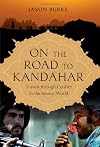
This is quite an excellent book, one that I would not ordinarily have picked up. However, what I like, is that Jason shows a rare sensitivity when writing this book. He displays no antagonism to the people he meets on the road.
His interpretations of what he sees, is subtle. He also takes the time to try and understand the people, and have real conversations with them. In doing so, he shows us a real glimpse of what is actually happening in the region.
When he says, for instance, that Iraqis show more just want to put food on the table, we are suddenly reminded that we are all the same under the skin.
We often look at people through the eyes of religion, not through the eyes of humanity. He brings this to the fore.
A very good book, one well worth the read. show less
His interpretations of what he sees, is subtle. He also takes the time to try and understand the people, and have real conversations with them. In doing so, he shows us a real glimpse of what is actually happening in the region.
When he says, for instance, that Iraqis show more just want to put food on the table, we are suddenly reminded that we are all the same under the skin.
We often look at people through the eyes of religion, not through the eyes of humanity. He brings this to the fore.
A very good book, one well worth the read. show less
Clear, well-informed, sober analysis of just what the threat really is. Perhaps the title is again over-dramatic since his conclusion is that Islamic violence is more a problem for the Islamic world than for the West. Horrors have happened and will almost certainly continue, but the scale is in all reality tiny. Centrally coordinated sophisticated attacks like 9/11 are at the far range of probability given greater vigilance and the constraints on the militants. Islamic State is a new show more phenomenon in that it controls substantial territory and significant income, but its focus is local: "the Near Enemy". The so-called "lone wolves" are a misnomer in that they are integrated in what Burke calls a "movement": a culture, a belief system and a communication network, but not in an operational executive structure and they have limited resources. 9/11 was also a different thing from most such events in that it was highly organised and expensive but even there the weaponry was absurdly simple - box-cutters.
I shall sleep a bit easier in my bed after reading this. show less
I shall sleep a bit easier in my bed after reading this. show less
If I had one book to give someone interested in understanding ISIS and the threats we now face from Islamic militancy, it would be this one. Published in August 2015, this book includes material through the summer of that year, but also digests and explains some of the earlier reports coming out of Syria, the Middle East, and South Asia. Burke also addresses the threat of home-grown terrorism that is most real to Western communities and governments.
Burke began reporting on events relating to show more the change in the Islamic character of the Middle East and South Asia as a journalist in the 1990s and he has refined his understanding of the changes in those regions ever since. His grasp is both deep and wide—he wishes he could have included more about the movement in South and Southeast Asia because, in his conclusions at the end, he believes that could be the next area to source individuals committed to jihad.
Burke reiterates over the course of his narrative that terrorism is meant to force leaders to act quickly, make mistakes, and take action they ordinarily would not do, destabilizing their governments. Terror is meant to make individuals disrupt their daily routines, causing follow-on economic repercussions. And terror is meant to cause the populace to polarize: people to question their relationships, fear their neighbors, challenge their government, and consider violence. One might argue terror has already caused irremediable changes in the fabric of world society. Burke replies that we must become resilient, savvy, and knowledgeable. Terrorism in the Middle East may have already run its course, but the seeds are everywhere.
The book is not long, and those of you already well-schooled in the history of ISIS may not feel you need to reread the beginning, though I found Burke’s finesse added a depth to my own understanding of the region, besides being the tightest, clearest history I’ve yet seen. Burke adds to the work done previously by making cogent comment on others’ conclusions. For years I’d been wondering about the families of suicide bombers, their apparent acquiescence causing me to question my own understanding of family ties. Burke addresses this directly:
"Suicide bombing is neither a cheap weapon, as often said, nor the spontaneous, organic expression of the inchoate rage of a people. It is a tactic, adopted for specific strategic reasons by terrorists, and which involves the commitment of significant resources if it is going to be successful. The extremist organizations that pioneered the use of the tactic—such as Hamas, Hezbollah and the Sri Lankan Tamil Tigers—rapidly learned that few communities naturally accept the voluntary death of their teenagers. The individual who becomes a human bomb may cost an organization less than a missile but any militant hoping to reply suicide attackers needs to invest heavily and systematically in propaganda designed to build and then maintain a ‘cult of the martyr’ if they are avoid a backlash from relatives, friends and their wider circle. It is not natural for a mother or a father to celebrate the death of a child, and the idea that young men, or increasingly women, should kill themselves in order to kill others, often civilians, has to be normalized…in practical terms, meanwhile, the families of ‘martyrs’ need to be looked after; funerals organized and paid for, valedictory films produced and broadcast; a dedicated infrastructure to find, isolate and condition ‘martyrs’ set up and run. This effort must be constant and places a considerable strain on a groups’ resources. Many Islamic extremist organizations, including IS, make disproportionate use of foreign volunteers as suicide attackers. One reason may well be to make a powerful statement about the extent of their support around the globe. But another may simply be that foreigners are cheaper."
Burke briefly traces the history and methods of Al-Qaeda and ISIS, their differences and similarities, and their current state of play, including their affiliates around the world. He then discusses the threat to the West, drawing on the most important conclusions of Western analysts regarding what has been called home-grown terror or “lone wolves.” He first focuses on terror incidents in Britain and Europe, which I found particularly enlightening. With regards to America, Burke focuses most intensely on the Marathon Bombers in Boston.
Burke takes issue with the notion of ‘lone wolf,’ arguing that the similarities of the public statements of those with wearing this label use many of the same words and concepts, implying an underlying global community that extends far beyond their individual actions. “These men were formed, conditioned and prepared for their ultimate acts over years, if not decades, by an entire culture of extremist activism.”
An interesting outcome of the Arab Spring, Burke notes, is that several relatively Westernized pro-democracy activists turned to Islamic militancy when they were disillusioned during the fifty months from 2011 to 2015 when regimes collapsed, governments failed, and the international community did little to stave off deprivation for citizens facing war or displacement. He speaks of the gangland ethos among converts to Islamic militancy, the ‘jihadi cool,’ and 'jihad meets The Sweeney meets the gangsta.’ There is exploitable weakness there, for both the converts and for the main terror group.
In the final chapter on the future of terror, Burke discusses several completely fascinating long-term surveys or polls done in huge swathes of Islamic territory. The U.S.-based Pew Center published one in 2013 which revealed that support for suicide bombing remains limited, concerns about extremism are high, and levels of support for Al Qaeda remain low, but that perceptions of Western society are are increasingly negative, including views of Christians and Jews. On the Western side, we don't need to go further than our newspapers and TV reports to know that perceptions of Muslims are tanking.
Burke’s final chapter is one readers will not want to miss. In it Burke describes the outcomes of this history of terror—the divisions we see in our societies, the retrenchments in rights, the fear, the polarity—despite the relative lack of physical impact of terror on Western communities. “The real impact of Islamic militancy…is in the Islamic world where the monthly death toll frequently exceeds the total in the West over the past decade.” But the West has had costs: by focusing on terror we did not focus on climate change, the relationships between the West and Arab or Islamic populations have become poisonous, and our own communities have divisions that are destroying us from within. How we deal with the threats we face will define us long into the future.
This book has been shortlisted for the Orwell Prize 2016. show less
Burke began reporting on events relating to show more the change in the Islamic character of the Middle East and South Asia as a journalist in the 1990s and he has refined his understanding of the changes in those regions ever since. His grasp is both deep and wide—he wishes he could have included more about the movement in South and Southeast Asia because, in his conclusions at the end, he believes that could be the next area to source individuals committed to jihad.
Burke reiterates over the course of his narrative that terrorism is meant to force leaders to act quickly, make mistakes, and take action they ordinarily would not do, destabilizing their governments. Terror is meant to make individuals disrupt their daily routines, causing follow-on economic repercussions. And terror is meant to cause the populace to polarize: people to question their relationships, fear their neighbors, challenge their government, and consider violence. One might argue terror has already caused irremediable changes in the fabric of world society. Burke replies that we must become resilient, savvy, and knowledgeable. Terrorism in the Middle East may have already run its course, but the seeds are everywhere.
The book is not long, and those of you already well-schooled in the history of ISIS may not feel you need to reread the beginning, though I found Burke’s finesse added a depth to my own understanding of the region, besides being the tightest, clearest history I’ve yet seen. Burke adds to the work done previously by making cogent comment on others’ conclusions. For years I’d been wondering about the families of suicide bombers, their apparent acquiescence causing me to question my own understanding of family ties. Burke addresses this directly:
"Suicide bombing is neither a cheap weapon, as often said, nor the spontaneous, organic expression of the inchoate rage of a people. It is a tactic, adopted for specific strategic reasons by terrorists, and which involves the commitment of significant resources if it is going to be successful. The extremist organizations that pioneered the use of the tactic—such as Hamas, Hezbollah and the Sri Lankan Tamil Tigers—rapidly learned that few communities naturally accept the voluntary death of their teenagers. The individual who becomes a human bomb may cost an organization less than a missile but any militant hoping to reply suicide attackers needs to invest heavily and systematically in propaganda designed to build and then maintain a ‘cult of the martyr’ if they are avoid a backlash from relatives, friends and their wider circle. It is not natural for a mother or a father to celebrate the death of a child, and the idea that young men, or increasingly women, should kill themselves in order to kill others, often civilians, has to be normalized…in practical terms, meanwhile, the families of ‘martyrs’ need to be looked after; funerals organized and paid for, valedictory films produced and broadcast; a dedicated infrastructure to find, isolate and condition ‘martyrs’ set up and run. This effort must be constant and places a considerable strain on a groups’ resources. Many Islamic extremist organizations, including IS, make disproportionate use of foreign volunteers as suicide attackers. One reason may well be to make a powerful statement about the extent of their support around the globe. But another may simply be that foreigners are cheaper."
Burke briefly traces the history and methods of Al-Qaeda and ISIS, their differences and similarities, and their current state of play, including their affiliates around the world. He then discusses the threat to the West, drawing on the most important conclusions of Western analysts regarding what has been called home-grown terror or “lone wolves.” He first focuses on terror incidents in Britain and Europe, which I found particularly enlightening. With regards to America, Burke focuses most intensely on the Marathon Bombers in Boston.
Burke takes issue with the notion of ‘lone wolf,’ arguing that the similarities of the public statements of those with wearing this label use many of the same words and concepts, implying an underlying global community that extends far beyond their individual actions. “These men were formed, conditioned and prepared for their ultimate acts over years, if not decades, by an entire culture of extremist activism.”
An interesting outcome of the Arab Spring, Burke notes, is that several relatively Westernized pro-democracy activists turned to Islamic militancy when they were disillusioned during the fifty months from 2011 to 2015 when regimes collapsed, governments failed, and the international community did little to stave off deprivation for citizens facing war or displacement. He speaks of the gangland ethos among converts to Islamic militancy, the ‘jihadi cool,’ and 'jihad meets The Sweeney meets the gangsta.’ There is exploitable weakness there, for both the converts and for the main terror group.
In the final chapter on the future of terror, Burke discusses several completely fascinating long-term surveys or polls done in huge swathes of Islamic territory. The U.S.-based Pew Center published one in 2013 which revealed that support for suicide bombing remains limited, concerns about extremism are high, and levels of support for Al Qaeda remain low, but that perceptions of Western society are are increasingly negative, including views of Christians and Jews. On the Western side, we don't need to go further than our newspapers and TV reports to know that perceptions of Muslims are tanking.
Burke’s final chapter is one readers will not want to miss. In it Burke describes the outcomes of this history of terror—the divisions we see in our societies, the retrenchments in rights, the fear, the polarity—despite the relative lack of physical impact of terror on Western communities. “The real impact of Islamic militancy…is in the Islamic world where the monthly death toll frequently exceeds the total in the West over the past decade.” But the West has had costs: by focusing on terror we did not focus on climate change, the relationships between the West and Arab or Islamic populations have become poisonous, and our own communities have divisions that are destroying us from within. How we deal with the threats we face will define us long into the future.
This book has been shortlisted for the Orwell Prize 2016. show less
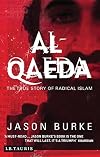
London Observer Chief Reporter Jason Burke was featured in the recent BBC2 documentary "The Power of Nightmares" which compared the rise of Islamic militancy with the corresponding (and equally unnerving) rise of the religious right in US politics. The rather silly cover of his book on the subject belies what is in fact a thorough, erudite, dispassionate and compelling account of the rise of Radical Islam, of which "Al Qaeda" - in its strict sense - is really only a small part.
Burke has show more spent a number of years in various Islamic hot spots (Saudi, Afghanistan, Kurdish Iraq) and has apparently the spent the most of the last four years doing his homework. The account he sets out (which really ought not to be a surprise to anyone but the Neo-Conservatives) is that Islamic militancy is not centrally controlled; there is no "head of the snake" except the one Western foreign policy has created in Osama bin Laden. For nothing has assisted fundamentalism as a rallying point for (the in reality mostly social and political) discontent in the Islamic word than his vilification by Messrs Rumsfeld, Wolfowitz and their friends. Indeed, Burke's case is that before the Western Hawks began targeting it, Islamic militancy was, amongst its own constituents, all but dead in the water.
Burke is convincing in his arguments that Al-Qaeda *the actual organisation* was never more than a hard-core of twenty or thirty militants, was not more than indirectly associated with many of the terrorist acts attributed to them, and was dispersed, incapacitated and in large part eliminated after the war in Afghanistan. But Al Qaeda *the idea* - which is the creation of western conservative political classes - has spread virus-like amongst the Islamic world, and is a much more threatening spectacle. Ideas are a whole lot harder to kill off than individuals.
In laying the groundwork for his thesis Burke is obliged to engage with a lot of minutiae of the history of Islamic dissent (every bit-player in the last twenty years gets a mention), and this part of the book is somewhat heavy going, though it certainly leads gravitas: without it, Burke would be open to criticism for a lack of thoroughness. But otherwise, this is a stimulating and important book. show less
Burke has show more spent a number of years in various Islamic hot spots (Saudi, Afghanistan, Kurdish Iraq) and has apparently the spent the most of the last four years doing his homework. The account he sets out (which really ought not to be a surprise to anyone but the Neo-Conservatives) is that Islamic militancy is not centrally controlled; there is no "head of the snake" except the one Western foreign policy has created in Osama bin Laden. For nothing has assisted fundamentalism as a rallying point for (the in reality mostly social and political) discontent in the Islamic word than his vilification by Messrs Rumsfeld, Wolfowitz and their friends. Indeed, Burke's case is that before the Western Hawks began targeting it, Islamic militancy was, amongst its own constituents, all but dead in the water.
Burke is convincing in his arguments that Al-Qaeda *the actual organisation* was never more than a hard-core of twenty or thirty militants, was not more than indirectly associated with many of the terrorist acts attributed to them, and was dispersed, incapacitated and in large part eliminated after the war in Afghanistan. But Al Qaeda *the idea* - which is the creation of western conservative political classes - has spread virus-like amongst the Islamic world, and is a much more threatening spectacle. Ideas are a whole lot harder to kill off than individuals.
In laying the groundwork for his thesis Burke is obliged to engage with a lot of minutiae of the history of Islamic dissent (every bit-player in the last twenty years gets a mention), and this part of the book is somewhat heavy going, though it certainly leads gravitas: without it, Burke would be open to criticism for a lack of thoroughness. But otherwise, this is a stimulating and important book. show less
Lists
Awards


You May Also Like


Statistics
- Works
- 6
- Members
- 743
- Popularity
- #34,184
- Rating
- 3.9
- Reviews
- 18
- ISBNs
- 49
- Languages
- 8