
Marlen Haushofer (1920–1970)
Author of The Wall
About the Author
Works by Marlen Haushofer
2004 1 copy
Haushofer Marlen 1 copy
Associated Works
Tagged
Common Knowledge
- Legal name
- Frauendorfer, Marie Helene
- Birthdate
- 1920-04-11
- Date of death
- 1970-03-21
- Gender
- female
- Occupations
- novelist
- Awards and honors
- Österreichischer Staatspreis für Literatur (1968)
- Cause of death
- bone cancer
- Nationality
- Austria
- Birthplace
- Frauenstein, Austria
- Places of residence
- Vienna, Austria
Steyr, Austria - Place of death
- Vienna, Austria
- Burial location
- Taborfriedhof, Steyr, Upper Austria, Austria
- Associated Place (for map)
- Austria
Members
Reviews

A simple, unadorned, matter-of-fact journal about living in the forest with a handful of animals after the end of the world. Told in the first person, it is simply a record of the day-to-day practicalities of a woman who may be the last human on earth: finding a few vegetables to plant, chopping wood, harvesting hay for the cow, mending clothes. There is surprisingly little overt philosophizing, though these thoughts stood out for me:
“I can allow myself to write the truth; all the people show more for whom I have lied throughout my life are dead.”
“I have never held the shortcomings of the unimaginative against them, sometimes I’ve even envied them. They had an easier and more pleasant life than everyone else.”
“I pity animals, and I pity people, because they’re thrown into this life without being consulted. Maybe people are more deserving of pity, because they have just enough intelligence to resist the natural course of things. It has made them wicked and desperate, and not very lovable. All the same, life could have been lived differently. There is no impulse more rational than love. It makes life more bearable for the lover and the loved one. We should have recognized in time that this was our only chance, our only hope for a better life. For an endless army of the dead, mankind’s only chance has vanished for ever. I keep thinking about that. I can’t understand why we had to take the wrong path. I only know it’s too late.”
It is quietly devastating. show less
“I can allow myself to write the truth; all the people show more for whom I have lied throughout my life are dead.”
“I have never held the shortcomings of the unimaginative against them, sometimes I’ve even envied them. They had an easier and more pleasant life than everyone else.”
“I pity animals, and I pity people, because they’re thrown into this life without being consulted. Maybe people are more deserving of pity, because they have just enough intelligence to resist the natural course of things. It has made them wicked and desperate, and not very lovable. All the same, life could have been lived differently. There is no impulse more rational than love. It makes life more bearable for the lover and the loved one. We should have recognized in time that this was our only chance, our only hope for a better life. For an endless army of the dead, mankind’s only chance has vanished for ever. I keep thinking about that. I can’t understand why we had to take the wrong path. I only know it’s too late.”
It is quietly devastating. show less
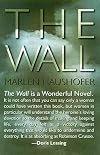
[3.25 stars] Fans of dystopian fiction who expect a heart-pounding adventure will likely be disappointed by Haushofer’s work. First published in the early 1960s and reissued decades later, “The Wall” unfolds at a maddeningly slow pace to explore themes such as isolation, disenchantment and the concept of time. One summary aptly describes the plot as “largely uneventful.” Indeed, about 90 percent of the book involves the protagonist foraging for food and performing routine tasks for show more a menagerie that includes cats, dogs and cows. But the author embraces the sluggish pace with purpose. The narrator realizes that in slowing down her pace, she has truly connected with the forest. It’s an important message to those who live frenzied lives and fail to observe and appreciate their surroundings in the rush-rush of life. show less
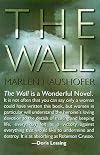
A dystopic "Walden," narrated by the last woman alive and starring a cat, a dog, a cow, and some other animals. I keep thinking about this book & I don't know why it's not taught in schools; it's so elegant & precise. It ends so swiftly. It's so well-written it should be required reading. There isn't an excess word in this book & I loved it, I hope all my friends read it.
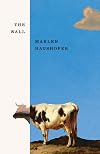
Marlen Haushofer’s 1963 Austrian novel The Wall is a hauntingly claustrophobic feminist sci-fi masterpiece that subverts traditional survival narratives. It tells the story of an unnamed 40-year-old woman who is on holiday at a hunting lodge in the Austrian mountains and wakes to find herself completely cut off from civilization by a mysterious, transparent, impassable wall. On the other side of the barrier, all life seems instantly petrified and dead. Her life is isolated forever, turned show more into a brutal series of alpine survival routines with a small menagerie of animals: a loyal dog (Lynx), a pregnant cow (Bella), and a cat. And yet the story is profoundly meditative. I enjoyed the eerie environment and moments of poetic reverie that the author created. show less
Lists
Walls (1)
Female Author (1)
Awards


You May Also Like


Associated Authors
Statistics
- Works
- 31
- Also by
- 2
- Members
- 2,557
- Popularity
- #10,042
- Rating
- 4.1
- Reviews
- 107
- ISBNs
- 216
- Languages
- 18
- Favorited
- 8
