
Boris Strugatsky (1933–2012)
Author of Roadside Picnic
About the Author
Popular science-fiction writers, the Strugatsky brothers have used the genre since the 1960s to comment on contemporary society, at times provoking major controversy. It's Hard to Be a God (1964) is a dysutopia with commentary on historical theories. The Snail on the Slope (1966--68) features a show more KGB-like organization and an extraordinarily oppressive atmosphere. Pre-glasnost, glasnost, some of the Strugatskys' major works had to be circulated in samizdat, but the brothers' situation is now dramatically better. (Bowker Author Biography) show less
Series
Works by Boris Strugatsky
The Final Circle of Paradise (1965) — Author, some editions; Author, some editions — 166 copies, 2 reviews
Strugatzki Gesammelte Werke 1: Drei Romane in einem Band: Die bewohnte Insel; Ein Käfer im Ameisenhaufen; Die Wellen ersticken den Wind (2010) 51 copies
Strugatzki Gesammelte Werke 2: Drei Romane in einem Band: Picknick am Wegesrand; Eine Milliarde Jahre vor dem Weltuntergang; Das Experiment (2010) — Author — 41 copies
Gesammelte Werke 6: Vier Romane in einem Band: Der Montag fängt am Samstag an; Das Märchen von der Troika; Das lahme Schicksal; Fünf Löffel Elixier (2014) — Author — 23 copies
Отягощенные злом 6 copies
Paren' iz preispodnej. Bespokojstvo. Zhuk v muravejnike. Volny gasyat veter (1999) 5 copies, 1 review
VIERAS AVARUUDESTA — Author — 5 copies
Poor Cruel Folk 4 copies
Парень из преисподней 3 copies
The Molecular Cafe 3 copies
Tachmasib letí k Saturnu 1 copy
Poledne XXII. století 1 copy
Napříč nekonečnem 1 copy
Scarabeul din musuroi 1 copy
Short Stories 1 copy
Обитаемый остров 1 copy
Fuga nel futuro 1 copy
Пять ложек эликсира 1 copy
Повесть о дружбе и недружбе 1 copy
Associated Works
The Big Book of Science Fiction: The Ultimate Collection (2016) — Contributor — 522 copies, 8 reviews
Twenty Houses of the Zodiac: Anthology of International Science Fiction (1979) — Contributor — 47 copies, 1 review
Maailma mielen mukaan : yksitoista tieteisnovellia kolmeltatoista sci-fi -sarjan kirjailijalta (1986) — Contributor — 24 copies, 1 review
Last Door to Aiya: A Selection of the Best New Science Fiction from the Soviet Union (1968) — Contributor — 18 copies
Hva' nu hvis -? : science fiction - fremtidstænkning (1989) — Author, some editions — 1 copy, 1 review
Tagged
Common Knowledge
- Legal name
- Strugatsky, Boris Natanovich
Стругацкий, Борис Натанович - Other names
- Vititsky, S.
Витицкий, C. (pseudonym)
Strugackij, Boris
Strugazki, Boris Natanowitsch
Strugackij, Boris Natanovič
Стругацкий, Борис - Birthdate
- 1933-04-15
- Date of death
- 2012-11-19
- Gender
- male
- Education
- Leningrad State University
- Occupations
- astronomer
science fiction writer
computer engineer - Relationships
- Strugatsky, Arkady (brother)
- Nationality
- Russia
- Birthplace
- Leningrad, Russia, USSR
- Places of residence
- Leningrad, Russia, USSR
Saint Petersburg, Russia - Place of death
- Saint Petersburg, Russia
- Associated Place (for map)
- Saint Petersburg, Russia
Members
Discussions
LE: Roadside Picnic in Folio Society Devotees (April 2024)
Strugatsky in Fans of Russian authors (February 2020)
Reviews

I had encountered enough references to Roadside Picnic for it to have been on my wishlist for years. It was clearly an influence on some of my favorite 21st-century sf, notably VanderMeer's Annihilation* and Harrison's Nova Swing.
The version I read was the 2012 "new translation" which freed the original Russian text from hostile Soviet publisher's edits. An afterword by Boris Strugatsky provides a partial account of the authors' struggle with publishing authorities. It wasn't Soviet show more political ideology they ran afoul of. LeGuin in her 2012 foreword (drawing on a 1977 review) calls the story "indifferent to ideology" (vi), and it is in fact rather hostile to liberal economics and bourgeois morality. Surprisingly, it was a blinkered escapist editorial aesthetic that interfered with the Strugatskys' work in the publishing environment of 1970s Soviet sf.
On the whole, I read the book's philosophy to be one of cosmic indifferentism verging on existentialism. The "stalker" protagonist Red isn't really an anti-hero, although he is a criminal without revolutionary aspirations. A "stalker" in this book is a freelance looter of artifacts resulting from the Visit by some inscrutable extraterrestrial power. The book is short and reads quickly, with a prologue for some background and four longish chapters set over a twelve-year span in the town of Harmont, which has been partly absorbed by one of the Zones of alien effects and residues.
I haven't seen the Tartovsky film Stalker (1979) based on this book, but I am now curious to do so. To no small degree, the story strikes me as what you'd get if Eugene O'Neill wrote a science fiction novel.
* Edited to add: I gather that VanderMeer has disavowed familiarity with Roadside Picnic when writing Annihilation. In any case, the resonance is strong enough to have been remarked by multiple reviewers. show less
The version I read was the 2012 "new translation" which freed the original Russian text from hostile Soviet publisher's edits. An afterword by Boris Strugatsky provides a partial account of the authors' struggle with publishing authorities. It wasn't Soviet show more political ideology they ran afoul of. LeGuin in her 2012 foreword (drawing on a 1977 review) calls the story "indifferent to ideology" (vi), and it is in fact rather hostile to liberal economics and bourgeois morality. Surprisingly, it was a blinkered escapist editorial aesthetic that interfered with the Strugatskys' work in the publishing environment of 1970s Soviet sf.
On the whole, I read the book's philosophy to be one of cosmic indifferentism verging on existentialism. The "stalker" protagonist Red isn't really an anti-hero, although he is a criminal without revolutionary aspirations. A "stalker" in this book is a freelance looter of artifacts resulting from the Visit by some inscrutable extraterrestrial power. The book is short and reads quickly, with a prologue for some background and four longish chapters set over a twelve-year span in the town of Harmont, which has been partly absorbed by one of the Zones of alien effects and residues.
I haven't seen the Tartovsky film Stalker (1979) based on this book, but I am now curious to do so. To no small degree, the story strikes me as what you'd get if Eugene O'Neill wrote a science fiction novel.
* Edited to add: I gather that VanderMeer has disavowed familiarity with Roadside Picnic when writing Annihilation. In any case, the resonance is strong enough to have been remarked by multiple reviewers. show less
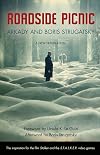
I went into this totally unfamiliar with STALKER as a videogame or film. I also went into this with no prior exposure to the Strugatsky's, though I've read some other russian science fiction and fantasy translated to English. Unfortunately by folks with much more objectionable politics than the Strugatskys. A dear friend, intimately familiar with my reading preferences over the last two and a half decades, sent this to me thinking I would like it.
And they were not wrong. Its steeped in that show more unique blend of fatalistic optimism that oozes from certain aspects of soviet society. The characters aren't likable as heroes, but likable as real human being behaving in ways consistent with their backgrounds and environments. The treatment of the alien visitors that could care less about humans, our world, or our resources is visionary for the time, and humanity's response to the event feels all too accurate. The fact that they were writing and getting some of the underlying themes and ideas here past the soviet era censors is inspirational, and the fact that other than Ursula K. Leguin and a few others the giants of the genre at the time in the West ignored them feels criminal. Almost as criminal as many of the characters!
I've already picked up several more novels by the Strugatsky's and can't recommend this highly enough to anyone looking for a bit more cerebral, more literary scifi. show less
And they were not wrong. Its steeped in that show more unique blend of fatalistic optimism that oozes from certain aspects of soviet society. The characters aren't likable as heroes, but likable as real human being behaving in ways consistent with their backgrounds and environments. The treatment of the alien visitors that could care less about humans, our world, or our resources is visionary for the time, and humanity's response to the event feels all too accurate. The fact that they were writing and getting some of the underlying themes and ideas here past the soviet era censors is inspirational, and the fact that other than Ursula K. Leguin and a few others the giants of the genre at the time in the West ignored them feels criminal. Almost as criminal as many of the characters!
I've already picked up several more novels by the Strugatsky's and can't recommend this highly enough to anyone looking for a bit more cerebral, more literary scifi. show less
This is a really interesting and humbling take on alien visitation. And it’s a good, old fashioned story of life on the edge of desperation, to boot.
The term “roadside picnic” refers to one scientist’s interpretation of what the visitation really was — a stop-off by alien travelers with no more interest in us than we would have in the ants showing up for our own picnic. Maybe even less, since they didn’t even give us the attention that pests get. They came, they left scraps of show more their technology lying around, and they never showed any interest in us, never tried to communicate.
I’ve always thought that disinterest may well be the likely attitude of any aliens who really did visit our planet. With completely different biological paths, very different types of intelligence, and likely very different types of technology, why would such aliens regard us as their like? Notwithstanding our obvious technological footprint on the Earth, might they not regard us as just another of the species living on this planet, among many other planets they probably have visited? Why do we think we are so special that they would make it a priority to contact us or show any special interest in us at all?
Well, these aliens didn’t. When the story starts, they have come and gone. They left behind scraps of their technology, all now contained within an area called “the Zone.” The Zone is maintained by the International Institute of Extraterrestrial Cultures. They study the alien technology and restrict access to the Zone, both for exclusive access and because the artifacts within it are extremely and unpredictably dangerous to anyone who goes near them.
Redrick Schuhart is one of a small number of “stalkers” who sneak into the Zone, take artifacts and sell them on the black market. One reason there is only a small number of stalkers is that most die (or are horribly injured) on the job.
The story of Redrick (Red), his fringy life near the Zone, and the small community of stalkers is engrossing all on its own. It has a desperate feel. Stalking is like the gold rush, but with alien booby traps. You can be squashed flat by an invisible field of concentrated gravity. You can be eaten by burning “hell slime.” Your children will be mutants, your genetic endowment having been twisted by your exposure to the Zone. And it’s pretty much just a matter of time before something in there gets you.
But there is also the “Golden Sphere.” Maybe only a myth, maybe something other than what everybody thinks it is, but it’s top prize in the Zone. It grants wishes, like an Aladdin’s Lamp. Red’s cohort, Burbridge has been to it, and he even has a map to get back to it.
The story carries itself well. Red is a noirish character, if not doomed himself then likely doom for anybody around him. Despite the awkwardness of translation from the Russian, the writing is fluid and engaging — I know I can’t appreciate the Strugatsky brothers’ writing in their own language, but, if the English translation is any indication, they are masterful writers.
And over the whole story looms this humbling perspective — this is a trash heap that Red, the other stalkers, and the Institute are poking through. They are all scavenging the discards of an unimaginable intelligence, like ants scavenging trash in a picnic ground. show less
The term “roadside picnic” refers to one scientist’s interpretation of what the visitation really was — a stop-off by alien travelers with no more interest in us than we would have in the ants showing up for our own picnic. Maybe even less, since they didn’t even give us the attention that pests get. They came, they left scraps of show more their technology lying around, and they never showed any interest in us, never tried to communicate.
I’ve always thought that disinterest may well be the likely attitude of any aliens who really did visit our planet. With completely different biological paths, very different types of intelligence, and likely very different types of technology, why would such aliens regard us as their like? Notwithstanding our obvious technological footprint on the Earth, might they not regard us as just another of the species living on this planet, among many other planets they probably have visited? Why do we think we are so special that they would make it a priority to contact us or show any special interest in us at all?
Well, these aliens didn’t. When the story starts, they have come and gone. They left behind scraps of their technology, all now contained within an area called “the Zone.” The Zone is maintained by the International Institute of Extraterrestrial Cultures. They study the alien technology and restrict access to the Zone, both for exclusive access and because the artifacts within it are extremely and unpredictably dangerous to anyone who goes near them.
Redrick Schuhart is one of a small number of “stalkers” who sneak into the Zone, take artifacts and sell them on the black market. One reason there is only a small number of stalkers is that most die (or are horribly injured) on the job.
The story of Redrick (Red), his fringy life near the Zone, and the small community of stalkers is engrossing all on its own. It has a desperate feel. Stalking is like the gold rush, but with alien booby traps. You can be squashed flat by an invisible field of concentrated gravity. You can be eaten by burning “hell slime.” Your children will be mutants, your genetic endowment having been twisted by your exposure to the Zone. And it’s pretty much just a matter of time before something in there gets you.
But there is also the “Golden Sphere.” Maybe only a myth, maybe something other than what everybody thinks it is, but it’s top prize in the Zone. It grants wishes, like an Aladdin’s Lamp. Red’s cohort, Burbridge has been to it, and he even has a map to get back to it.
The story carries itself well. Red is a noirish character, if not doomed himself then likely doom for anybody around him. Despite the awkwardness of translation from the Russian, the writing is fluid and engaging — I know I can’t appreciate the Strugatsky brothers’ writing in their own language, but, if the English translation is any indication, they are masterful writers.
And over the whole story looms this humbling perspective — this is a trash heap that Red, the other stalkers, and the Institute are poking through. They are all scavenging the discards of an unimaginable intelligence, like ants scavenging trash in a picnic ground. show less
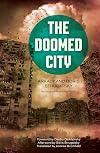
I'll say this about the Strugatsky Brothers: They had *fearless* imaginations, tempered by fearful souls that quailed before publishing this nihilistic, absurdist, deeply subversive book in Soviet Russia. Completed in 1972, shelved until 1989, and published in a professional English translation only in 2016, this stateless satirical look at the amoral roots of True Belief in a System reads as well in 45's Amurruhkuh as it did in Brezhnev's USSR.
Voronin, our astronomer-turned-state-official, show more is an ideal. He is every system's beloved child, the True Believer who makes excuses and finds reasons instead of asking, "...the fuck...? Are they kidding with this?" As experience teaches him to question, he sidesteps. He changes his beliefs without batting an eyelash, a clue to his essential hollowness. For all that he is an eager participant in all the City's shifts of philosophical direction, the reason he can do so remains unexamined: He's complicit in the acts of the State, not driven by a desire to enact a Vision. His lack of an inner compass is rather amusing given that almost the entire novel is an internal monologue. I myownself found this a delightful twist, enjoying the musings of a centerless man as irony. Others might find that conceit wearing.
The things I found wearing were the astoundingly sexist and anti-Semitic attitudes of the characters (and, I suspect, the authors as well). There are horrible words used in connection with the two women I can recall at all...they might indeed have been the only two women mentioned, for I can summon no other woman to mind...and Katzman's presence in stereotypical fashion was not obviously played for ironic effect.
Given my track record for objecting to these facets of other older books, why am I giving this one the Full Five? Because, my friends, the story of a city between an unscalable wall and an endless abyss recommends itself to me as a parable for all of human life, and the awful attitudes of the PoV character are part and parcel of the falling, failing world that the Strugatskys were lampooning, dissecting, parodying, itemizing. These facets seem to me, even though I suspect and believe they were presented unironically, to be so much of a piece with the Experiment being ridiculed that I could easily make them objects of fun. Nonetheless they are there and merit mention lest an unsuspecting reader trip over them and feel blindsided.
Boris Strugatsky, in his Afterword, says it all and best:
Voronin, our astronomer-turned-state-official, show more is an ideal. He is every system's beloved child, the True Believer who makes excuses and finds reasons instead of asking, "...the fuck...? Are they kidding with this?" As experience teaches him to question, he sidesteps. He changes his beliefs without batting an eyelash, a clue to his essential hollowness. For all that he is an eager participant in all the City's shifts of philosophical direction, the reason he can do so remains unexamined: He's complicit in the acts of the State, not driven by a desire to enact a Vision. His lack of an inner compass is rather amusing given that almost the entire novel is an internal monologue. I myownself found this a delightful twist, enjoying the musings of a centerless man as irony. Others might find that conceit wearing.
The things I found wearing were the astoundingly sexist and anti-Semitic attitudes of the characters (and, I suspect, the authors as well). There are horrible words used in connection with the two women I can recall at all...they might indeed have been the only two women mentioned, for I can summon no other woman to mind...and Katzman's presence in stereotypical fashion was not obviously played for ironic effect.
Given my track record for objecting to these facets of other older books, why am I giving this one the Full Five? Because, my friends, the story of a city between an unscalable wall and an endless abyss recommends itself to me as a parable for all of human life, and the awful attitudes of the PoV character are part and parcel of the falling, failing world that the Strugatskys were lampooning, dissecting, parodying, itemizing. These facets seem to me, even though I suspect and believe they were presented unironically, to be so much of a piece with the Experiment being ridiculed that I could easily make them objects of fun. Nonetheless they are there and merit mention lest an unsuspecting reader trip over them and feel blindsided.
Boris Strugatsky, in his Afterword, says it all and best:
How to live in conditions of ideological vacuum? How and what for? In my opinion this question remains highly relevant even today—which is why City, despite being so vehemently politicized and so categorically of its own time, potentially remains of interest to the present-day reader—provided that this reader has any interest at all in problems of this kind.show less
Lists
SF Masterworks (6)
Reading LIst (1)
To be read (1)
Overdue Podcast (1)
Best Beach Reads (1)
Finished in 2024 (1)
1970s (1)
current (1)
science fiction (1)
Bureaucracies (2)
philosophy (1)
Five star books (1)
Disco Elysium (1)
mom (1)
Awards


You May Also Like


Associated Authors
Statistics
- Works
- 90
- Also by
- 16
- Members
- 11,525
- Popularity
- #2,040
- Rating
- 3.9
- Reviews
- 327
- ISBNs
- 566
- Languages
- 29
- Favorited
- 5
