
Olaf Olafsson
Author of The Journey Home
About the Author
Olaf Olafsson is vice chairman of Time Warner Digital Media. He is the author of a previous novel, Absolution. He lives in New York City. (Bowker Author Biography)
Image credit: (c) Einar Falur Ingolfsson
Works by Olaf Olafsson
Níu lyklar 4 copies
Innflytjandinn 3 copies
Berührung: Roman | Eine isländischer Liebesroman - die Romanvorlage zum Film „Touch" (2024) 2 copies
Játning 2 copies
Snjór í paradís 2 copies
Samo jedan korak od sna 1 copy
Endurkoman 1 copy
Odlazak u noć 1 copy
Associated Works
Tagged
Common Knowledge
- Legal name
- Ólafur Jóhann Ólafsson
- Birthdate
- 1962-09-26
- Gender
- male
- Education
- Brandeis University (B.S., physics)
- Occupations
- business executive
- Organizations
- Time Warner (v.p.)
- Awards and honors
- Icelandic Literary Award
- Nationality
- Iceland (birth)
- Birthplace
- Reykjavik, Iceland
- Places of residence
- Raykjavik, Iceland (birth)
New York, New York, USA (current) - Associated Place (for map)
- Iceland
Members
Reviews
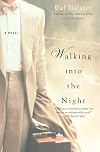
Olaf Olafsson's Walking into the Night will draw inevitable comparisons to Kazuo Ishiguro's The Remains of the Day, both of which have butlers as their protagonists. While both deal with conflicted manservants' inner anxieties and failures in the midst of a changing global crisis—Ishiguro's novel focuses on the build up to the Second World War in Britain whereas Olafsson's focuses on the years just prior to this in America, emphasizing more the Depression's impact on celebrities—they are show more very different in their treatment of their protagonists' inner lives.
Stevens, in The Remains of the Day, has reflections about his childhood, but his anxieties and stalemates are located uncannily in his place of work. By contrast, Kristjan's reflections are of a lost world that is no longer available to him geographically or emotionally, except in dreams and memories. I could say more about the two novels' similarities and differences, but I suppose that would then see me repeated the critical move of joining the two so simply and irrevocably. I think that any novel that has a male butler as its protagonist, especially given the brilliant portrayal of Stevens's conflict by Ishiguro, will always be compared to The Remains of the Day. Ishiguro has, in essence, created a subgenre all his own, then.
To return to Olafsson:
Kristjan is unfailing at his duties as Chief Hearst's butler, but his nagging conscience, the mistakes that he has made in the past, his regrets and his isolation (not least of which is underscored by his choice to move from Iceland to California, from a job of power to a job of service) soon interfere with his typically by-rote existence at the San Simeon castle.
In stark, spare, and unrelentingly gutting prose, Olafsson shifts the point of view here in a way that gives the reader increasing glimpses into the interior life of his main character, and then by turns to Elisabet, the woman whom he has left behind and to whom he writes letters he will never send. The idea of confession is very intriguing here: how the person to whom Kristjan feels he must confess is the one person he will never see again.
Bleak but beautifully imagined, Walking into the Night is a meditation on love, loss, and the myriad regrets we make as we go on about our lives. Olafsson is a master at rendering place, especially outdoor scenes, and also in insisting on how tiny gestures (the closing of a door, the gathering of blossoms, a finger tracing a lover's spine) can convey the emotional and psychological states of people more succinctly and accurately than words can. show less
Stevens, in The Remains of the Day, has reflections about his childhood, but his anxieties and stalemates are located uncannily in his place of work. By contrast, Kristjan's reflections are of a lost world that is no longer available to him geographically or emotionally, except in dreams and memories. I could say more about the two novels' similarities and differences, but I suppose that would then see me repeated the critical move of joining the two so simply and irrevocably. I think that any novel that has a male butler as its protagonist, especially given the brilliant portrayal of Stevens's conflict by Ishiguro, will always be compared to The Remains of the Day. Ishiguro has, in essence, created a subgenre all his own, then.
To return to Olafsson:
Kristjan is unfailing at his duties as Chief Hearst's butler, but his nagging conscience, the mistakes that he has made in the past, his regrets and his isolation (not least of which is underscored by his choice to move from Iceland to California, from a job of power to a job of service) soon interfere with his typically by-rote existence at the San Simeon castle.
In stark, spare, and unrelentingly gutting prose, Olafsson shifts the point of view here in a way that gives the reader increasing glimpses into the interior life of his main character, and then by turns to Elisabet, the woman whom he has left behind and to whom he writes letters he will never send. The idea of confession is very intriguing here: how the person to whom Kristjan feels he must confess is the one person he will never see again.
Bleak but beautifully imagined, Walking into the Night is a meditation on love, loss, and the myriad regrets we make as we go on about our lives. Olafsson is a master at rendering place, especially outdoor scenes, and also in insisting on how tiny gestures (the closing of a door, the gathering of blossoms, a finger tracing a lover's spine) can convey the emotional and psychological states of people more succinctly and accurately than words can. show less
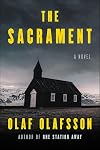
Getting older, learning to live with the past, standing on the rocks of the walls you've crashed through and those you've tried to build, is a bear. You can't tell anyone younger what it means and anyone you know your own age not only knows but is busily trying to tidy the dust off their scratched, bloody feet.
When what you've seen, felt, done no longer matters to anyone but you...polite avowals of interest are never to be presumed upon...then Life can't take anything else from you and your show more fears just melt. Sad, isn't it, that the murder hornets whose wings only flap when they have a head of rage built up, never just...leave it. Their stings don't land; their rage grows. The worst has already happened, and a surprising number of people have learned from their own lives that the loud, angry buzz of Being Right heralds nothing but unpleasant tasting and smelling poison.
There is an amazing sweetness in indifference. Court it.
Favorite quotes:
When what you've seen, felt, done no longer matters to anyone but you...polite avowals of interest are never to be presumed upon...then Life can't take anything else from you and your show more fears just melt. Sad, isn't it, that the murder hornets whose wings only flap when they have a head of rage built up, never just...leave it. Their stings don't land; their rage grows. The worst has already happened, and a surprising number of people have learned from their own lives that the loud, angry buzz of Being Right heralds nothing but unpleasant tasting and smelling poison.
There is an amazing sweetness in indifference. Court it.
Favorite quotes:
The path to truth lies amid the long winding passageways of the soul, where fear and hope do battle with each other.show less
–and–
It is not difficult to show kindness to those we love, or even to strangers who might be in distress; it is easy to show relative consideration. The real test comes when we must forgive those who have done us harm, show love to our enemy. It is a test of our faith, our strength of mind.
–and–
I regret nothing. Was I talking to her or to myself—or to you, who watch over us without mercy, waiting for us to sin? Was I comforting myself or declaring war on you? Who knows? And nor should you, I said, and walked out.

It should be said that Olafsson is one of my favorite authors and I have read everything he has written that is in English. He writes intimate, empathetic stories which plumb the depths of the human soul (while keeping the books relatively short).
Touch is a mere 259 pages and sells the story of an older man, Kristofer, whose memory is failing. While attempting to deal with his health issues, he receives a communication from Japan – an old girlfriend he dated back in the 60s when they were show more both students in London. He has mixed of feelings but decides to fly to Japan to see her….
This is a story of the past, the present, love, regret, and myster show less
Touch is a mere 259 pages and sells the story of an older man, Kristofer, whose memory is failing. While attempting to deal with his health issues, he receives a communication from Japan – an old girlfriend he dated back in the 60s when they were show more both students in London. He has mixed of feelings but decides to fly to Japan to see her….
This is a story of the past, the present, love, regret, and myster show less

Covid, which practically brought the entire world to a standstill for a couple of years, has been all but ignored by novelists. It is as if it never happened. That is not the case with “Touch” by Olaf Olafsson (2022).
Olafsson bookends his wonderful novel with two events, Hiroshima and Covid, in which human existence was threatened by human technology. Life is precious, the author tells us with his beautiful prose. Don't waste it.
Kristofer, our narrator, closes his Reykjavik restaurant in show more the middle of the pandemic. He is of retirement age and has money saved. More importantly he has received a cryptic Facebook message from Miko, a Japanese woman he met and fell in love with while working in her father's restaurant in London back in the 1960s. He decides to fly to Japan to find her, Covid or no Covid.
Miko's mother died because of radiation from the Hiroshima bombing. Those exposed to radiation, as Miko was as a baby and her father was, were ostracized in Japan. So she and her father moved to London. The two lovers work side by side in the restaurant, all the while keeping their relationship a secret from her father for reasons Kristofer doesn't fully understand.
Then one day Miko and her father disappear. After a long and fruitless search, Kristofer gradually accepts the truth. He marries another woman he never truly loves and raises a stepdaughter who never loves him. He buys a restaurant and lets the decades pass. Now widowed and 75 years old, he gets the message from Miko, and his heart catches fire again.
Olafsson builds his story with agonizing slowness, a little bit about the present followed by a little bit about the past. And this pace works to perfection. The ending may or may not surprise you, but either way you will love it. show less
Olafsson bookends his wonderful novel with two events, Hiroshima and Covid, in which human existence was threatened by human technology. Life is precious, the author tells us with his beautiful prose. Don't waste it.
Kristofer, our narrator, closes his Reykjavik restaurant in show more the middle of the pandemic. He is of retirement age and has money saved. More importantly he has received a cryptic Facebook message from Miko, a Japanese woman he met and fell in love with while working in her father's restaurant in London back in the 1960s. He decides to fly to Japan to find her, Covid or no Covid.
Miko's mother died because of radiation from the Hiroshima bombing. Those exposed to radiation, as Miko was as a baby and her father was, were ostracized in Japan. So she and her father moved to London. The two lovers work side by side in the restaurant, all the while keeping their relationship a secret from her father for reasons Kristofer doesn't fully understand.
Then one day Miko and her father disappear. After a long and fruitless search, Kristofer gradually accepts the truth. He marries another woman he never truly loves and raises a stepdaughter who never loves him. He buys a restaurant and lets the decades pass. Now widowed and 75 years old, he gets the message from Miko, and his heart catches fire again.
Olafsson builds his story with agonizing slowness, a little bit about the present followed by a little bit about the past. And this pace works to perfection. The ending may or may not surprise you, but either way you will love it. show less
Lists
Awards


You May Also Like


Associated Authors
Statistics
- Works
- 26
- Also by
- 1
- Members
- 1,157
- Popularity
- #22,207
- Rating
- 3.7
- Reviews
- 78
- ISBNs
- 78
- Languages
- 11
- Favorited
- 4