
Colin G. Calloway
Author of The Scratch of a Pen: 1763 and the Transformation of North America
About the Author
Colin G. Calloway is John Kimball Jr. 1943 Professor of History and Native American Studies at Dartmouth College. His previous books include A Scratch of the Pen and The Victory with No Name.
Image credit: Callaway Family Association
Works by Colin G. Calloway
The American Revolution in Indian Country : Crisis and Diversity in Native American Communities (1995) 291 copies, 3 reviews
The Indian World of George Washington: The First President, the First Americans, and the Birth of the Nation (2018) 202 copies, 3 reviews
The Victory with No Name: The Native American Defeat of the First American Army (2014) 107 copies, 4 reviews
The Western Abenakis of Vermont, 1600-1800 : war, migration, and the survival of an Indian people (1990) 53 copies, 1 review
White People, Indians, and Highlanders: Tribal People and Colonial Encounters in Scotland and America (2008) 47 copies, 1 review
North Country Captives: Selected Narratives of Indian Captivity from Vermont and New Hampshire (1992) 31 copies, 2 reviews
The Chiefs Now in This City: Indians and the Urban Frontier in Early America (2021) 29 copies, 1 review
Reinterpreting New England Indians and the Colonial Experience (Publications of the Colonial Society of Massachusetts) (2004) 21 copies
Hard Neighbors: The Scotch-Irish Invasion of Native America and the Making of an American Identity (2024) 15 copies
World Turned Upside Down 2 copies
Revolution and Confederation. Early American Indian Documents: Treaties and Laws, 1607-1789, Volume XVIII (1994) 1 copy
Associated Works
The Cherokee Nation and the Trail of Tears (2007) — Introduction, some editions — 230 copies, 5 reviews
Tagged
Common Knowledge
- Legal name
- Calloway, Colin Gordon
- Birthdate
- 1953-02-10
- Gender
- male
- Education
- University of Leeds (BA)
University of Leeds (PnD) - Occupations
- Professor of History, Dartmouth University
historian - Awards and honors
- Samson Occom Professor of Native American Studies, Dartmouth College
- Nationality
- USA
- Birthplace
- Keighley, West Yorkshire, England, UK
- Associated Place (for map)
- Keighley, West Yorkshire, England, UK
Members
Reviews
The Indian World of George Washington: The First President, the First Americans, and the Birth of the Nation by Colin G. Calloway

In The Indian World of George Washington: The First President, the First Americans, and the Birth of the Nation, Colin G. Calloway argues, “Indian nations figured alongside European nations in the founding fathers’ thinking about the current and future state of the union. Indian leaders were adept at playing on American fears of British and Spanish backing for Indian resistance. Debates over the sovereignty of the United States and struggles over the extent and limits of federal show more authority and states’ rights centered on Indian treaties, and Indian issues, wars, and land policies were critical in developing a strong central government” (pg. 4). Calloway works to counter a gap in the historiography, which primarily overlooks the role of Native Americans in Washington’s affairs due to the historical and cultural blinders of manifest destiny, which cast Indian lands as western lands. In this, he argues, “Restoring Indian people and Indian lands to the story of Washington goes a long way toward restoring them to their proper place in America’s story” (pg. 14). He also works to portray the role of diplomacy with Native American tribes, regarded as sovereign nations on a continent with multiple claims to sovereignty by American Indians, Americans, the Spanish, the French, and the English. Calloway also engages with the contradictions inherent in Washington’s legacy, writing, “Washington’s dealings with Indian people and their land do him letter credit, but on the other hand his achievement is creating a nation from a fragile union of states is more impressive when we appreciate the power and challenges his Indian world presented” (pg. 13). Calloway’s work is not a biography of Washington, but rather of his time and world. He plays a vital role in correcting an oversight in the historiography, much like Pekka Hämäläinen’s The Comanche Empire recast the historiography of western expansion to examine the Comanche as a political force in the West. show less
The Western Abenakis of Vermont, 1600-1800: War, Migration, and the Survival of an Indian People (The Civilization of the American Indian Series) by Colin G. Calloway
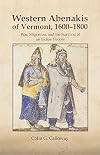
Anyone out there who has subscribed to the myth that Native Americans lived 'only seasonally to hunt' in Vermont, disabuse yourselves of it immediately and forever. For the Western tribes of the Abenaki Vermont was home for millenia. Although I have known (somewhat) better for twenty or thirty years I've never read the story of the dispossession of these tribal people from their lands, and it is a sorry one indeed - of betrayal, genocide and woe. I had underestimated the extent of the show more struggle, in Vermont, often violent and ugly, of the white people to take the land for themselves and ignore the native claims. This is 'history' in its traditional form and, to paraphrase what a character says in a novel I've been reading: history is the story of people killing each other in various ways. It is a necessary part of the story to tell and it doesn't make for comfortable or easy reading. Calloway carefully builds the picture of the incidents, battles, confrontations, withdrawals and returns, putting together the information that he has gleaned out of British, American and French documents, mostly military. He is adamant in his descriptions of the bewilderment and confusion and heartbreak of the Abenaki as, no matter what choices they make or who they ally themselves with promises are broken outright or ignored once the desired outcome is achieved. After the formation of the United States and the entry of Vermont as the 14th state, the 'red men' claims to lands for their own are dismissed. They are called vagrants and gypsies and the myth of their seasonal use of Vermont was born. In truth they did move around seasonally, but not over large areas. Family bands lived on hunting lands that were traditionally theirs and did so for a thousand years and more. And yet the pressures of immigration from a restless population in Europe and the explosive burst of growth in population already here, doomed the Eastern tribes ultimately. It was never going to be fair, and Calloway doesn't have to say it. His goal is to outline how it came about. Many many Abenaki have never left, but quietly live and lived in communities they may be aware of as 'theirs' but do not make themselves known. Like the Spanish marrano, they have learned to live one way, while cherishing another way in their hearts. I can't in good conscience give more stars as it is dry dry reading, but it is 5 star scholarship. **** show less
North Country Captives: Selected Narratives of Indian Captivity from Vermont and New Hampshire by Colin G. Calloway
North Country Captives
Colin Calloway has contributed so much to the understanding of the Abenaki people and one of the best examples is North Country Captives, his collection of Selected Narratives of Indian Captivity from Vermont and New Hampshire. He has put a spotlight on the clash of multiple cultures from different continents during one critical but nearly-forgotten part of our history. He has collected not one story, but eight stories as told by the people involved. This last part is show more the most important and the most informative. Calloway further organized them in chronological order which is also telling, as we see the progression through the French and Indian Wars moving through the eventual start of the American Revolution. The first stories are about abductions by the Abenaki, aligned with the French, and the last two by the Caughnawaga (Mohawk), allied with the British.
Indian raids had been conducted since at least fifty years previous to the first story, when my two relatives (that I know of) were involved in raids. One of them, Mary Neff, survived, but Daniel Hudson did not. It is important to understand the back story, that the Native Americans were manipulated by both colonial forces, the French and the British, to fight their battles for them, bribing them and rewarding them for driving the interlopers off their claimed territories, requesting scalps as proof when they doubted the numbers allegedly killed. The Natives were on board with this fight as the new settlers had already proved their savagery during the previous century, driven them off or tricked them out of their ancestral lands, and taken them as slaves before enough African imports were available. Third party storytellers used some facts and some embellishments to justify their actions across the new continent for the next 300 years. Cotton Mather, firebrand preacher, was only one who framed the struggle for the land as a battle between good and evil, between God and the devil(s), finding new and creative epithets to drive home his point and incite retaliation. The Natives already had a tradition of adopting captives when one of their own had been killed. This was viewed as a horrific thing to the colonials who could see nothing of value in the native culture, but Native American grief at having to give up their adoptees after negotiation and the reluctance of many captives to rejoin their “white” families gives us an indication of some different realities. This relinquishment of adoptees is sometimes played out in our courts today, usually without the racial overtones.
But back to the book. Calloway starts each narrative with a short summary of events and background and allows the narrator to tell his or her own story in their own words. I found them all to be compelling with several facts being obvious: The captors did their best to care for their prizes, perhaps because they were kind, as is mentioned in some of the narratives, but also because they might be used in prisoner exchanges between the French and English. One captive was taken from New England to Canada, to England and back to New England again. The victims who were killed on the spot seemed to be those who offered the most resistance or who might slow them down or cause them to be discovered by pursuing family members: the men, the sick, the elderly or infants, as captives were reminded that they would be killed if they made any noise to alert those who sought to rescue them. One woman even gave birth in the first few days of the retreat northward and the child survived to adulthood. The captives were given more food and the best food although they deemed the Indian food disgusting. We don’t have written records as to what the Indians thought of colonial settlers’ food. What is most striking in the book is the much worse treatment captives usually received when they were turned over to the European governors and confined in their jails, awaiting prisoner exchange or ransom. It is important to remind ourselves that food, warmth and sanitation were luxuries that were usually not provided in prisons at that time, even to “their own kind”. Days were consumed with finding enough food, creature comfort of any sort, and finding ways to escape. If their journal entries are boring, it is because their lives were not exciting, as many who have been incarcerated or quarantined can affirm. A notation of the weather was not just an entry; it was a declaration that you were still alive and still fighting for survival. One man tells of his plot to escape, as intriguing as any World War II narrative. Unsung heroes in these stories are Nehemiah How, Phineas Stevens and Colonel Pieter Schuyler.
The story ends with mixed results for the captives, some of whom went on to live long lives and others who had less happy endings. It is a somewhat sad ending for the Abenaki, though. I have been to The Village and to Trois Rivieres in Canada where captives were taken. The Abenaki have not been recognized as a sovereign nation by the US government due in part to their being more nomadic in nature than the Iroquois and unable to point to a single location in the US as their ancestral land. Their alliance with the French went against them too, since they had never forgotten their friendship with and loyalty to Samuel De Champlain 150 years before these narratives. Coming back from the brink of cultural extinction, they are now renewing their language and traditions and are now recognized as one of the First Nations (Premieres Nations) in Canada. If you have an interest in reading modern stories of personal tragedy and triumph from the people who survived (“In my own words…”, “My story…” etc), especially if you are able to put yourself into that long-ago time and foreign context, this is both spellbinding and enlightening. As for my own family, the aftermath of the American Revolution brought like-minded people from every background together and today I am proud to claim English, French and Abenaki ancestry as many of my North Country neighbors do. show less
Colin Calloway has contributed so much to the understanding of the Abenaki people and one of the best examples is North Country Captives, his collection of Selected Narratives of Indian Captivity from Vermont and New Hampshire. He has put a spotlight on the clash of multiple cultures from different continents during one critical but nearly-forgotten part of our history. He has collected not one story, but eight stories as told by the people involved. This last part is show more the most important and the most informative. Calloway further organized them in chronological order which is also telling, as we see the progression through the French and Indian Wars moving through the eventual start of the American Revolution. The first stories are about abductions by the Abenaki, aligned with the French, and the last two by the Caughnawaga (Mohawk), allied with the British.
Indian raids had been conducted since at least fifty years previous to the first story, when my two relatives (that I know of) were involved in raids. One of them, Mary Neff, survived, but Daniel Hudson did not. It is important to understand the back story, that the Native Americans were manipulated by both colonial forces, the French and the British, to fight their battles for them, bribing them and rewarding them for driving the interlopers off their claimed territories, requesting scalps as proof when they doubted the numbers allegedly killed. The Natives were on board with this fight as the new settlers had already proved their savagery during the previous century, driven them off or tricked them out of their ancestral lands, and taken them as slaves before enough African imports were available. Third party storytellers used some facts and some embellishments to justify their actions across the new continent for the next 300 years. Cotton Mather, firebrand preacher, was only one who framed the struggle for the land as a battle between good and evil, between God and the devil(s), finding new and creative epithets to drive home his point and incite retaliation. The Natives already had a tradition of adopting captives when one of their own had been killed. This was viewed as a horrific thing to the colonials who could see nothing of value in the native culture, but Native American grief at having to give up their adoptees after negotiation and the reluctance of many captives to rejoin their “white” families gives us an indication of some different realities. This relinquishment of adoptees is sometimes played out in our courts today, usually without the racial overtones.
But back to the book. Calloway starts each narrative with a short summary of events and background and allows the narrator to tell his or her own story in their own words. I found them all to be compelling with several facts being obvious: The captors did their best to care for their prizes, perhaps because they were kind, as is mentioned in some of the narratives, but also because they might be used in prisoner exchanges between the French and English. One captive was taken from New England to Canada, to England and back to New England again. The victims who were killed on the spot seemed to be those who offered the most resistance or who might slow them down or cause them to be discovered by pursuing family members: the men, the sick, the elderly or infants, as captives were reminded that they would be killed if they made any noise to alert those who sought to rescue them. One woman even gave birth in the first few days of the retreat northward and the child survived to adulthood. The captives were given more food and the best food although they deemed the Indian food disgusting. We don’t have written records as to what the Indians thought of colonial settlers’ food. What is most striking in the book is the much worse treatment captives usually received when they were turned over to the European governors and confined in their jails, awaiting prisoner exchange or ransom. It is important to remind ourselves that food, warmth and sanitation were luxuries that were usually not provided in prisons at that time, even to “their own kind”. Days were consumed with finding enough food, creature comfort of any sort, and finding ways to escape. If their journal entries are boring, it is because their lives were not exciting, as many who have been incarcerated or quarantined can affirm. A notation of the weather was not just an entry; it was a declaration that you were still alive and still fighting for survival. One man tells of his plot to escape, as intriguing as any World War II narrative. Unsung heroes in these stories are Nehemiah How, Phineas Stevens and Colonel Pieter Schuyler.
The story ends with mixed results for the captives, some of whom went on to live long lives and others who had less happy endings. It is a somewhat sad ending for the Abenaki, though. I have been to The Village and to Trois Rivieres in Canada where captives were taken. The Abenaki have not been recognized as a sovereign nation by the US government due in part to their being more nomadic in nature than the Iroquois and unable to point to a single location in the US as their ancestral land. Their alliance with the French went against them too, since they had never forgotten their friendship with and loyalty to Samuel De Champlain 150 years before these narratives. Coming back from the brink of cultural extinction, they are now renewing their language and traditions and are now recognized as one of the First Nations (Premieres Nations) in Canada. If you have an interest in reading modern stories of personal tragedy and triumph from the people who survived (“In my own words…”, “My story…” etc), especially if you are able to put yourself into that long-ago time and foreign context, this is both spellbinding and enlightening. As for my own family, the aftermath of the American Revolution brought like-minded people from every background together and today I am proud to claim English, French and Abenaki ancestry as many of my North Country neighbors do. show less
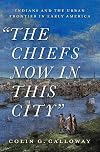
The point of this book is to demonstrate that Native American tribes and European settlers in the 13 colonies had much more extensive interactions than has been traditionally depicted. The author piles up enormous records of trade, treaty negotiations, and other delegations that visited major cities (New York, Albany, Charleston, and especially Philadelphia) throughout the 18th century. THe book is amply rupposted by scholarly research as accounts are drawn from diaries, popular press, show more official government documents and other sources. Details emerge reflecting the very different expectations the two groups had of each other and the conflicting motives they may have had for engaging in these interactions. The account seems to be even handed, at least as far as I can determine. Neither the colonists nor the natives are either villified nor are any groups entirely immune from criticism. It is a picture of cultures clashing with different economic needs, different legal traditions, and different relational concerns. It has been a very useful read in regard to the political issues but it is also very rich in details that illuminate some of the social history of the groups involved. show less
Lists
Awards


You May Also Like


Associated Authors
Statistics
- Works
- 35
- Also by
- 3
- Members
- 2,982
- Rating
- 3.9
- Reviews
- 27
- ISBNs
- 120
- Favorited
- 3
