
Mary Ann Glendon
Author of A World Made New: Eleanor Roosevelt and the Universal Declaration of Human Rights
About the Author
Mary Ann Glendon was born on October 7, 1938, in Pittsfield, Mass. and graduated from the University of Chicago with both J.D. and Master of Comparative Law degrees. She has worked as a criminal defender, a civil rights attorney, and is the Learned Hand Professor of Law at Harvard University. show more Glendon writes frequently on scholarly matters of the law. In Rights Talk: The Impoverishment of Political Discourse, she presents examples of the talk behind laws and rights of citizens, and the actual actions. Hot topics such as flag burning, Indian lands, homosexual acts, and social welfare are covered in-depth in this book, and the difference of opinions versus deeds concerning these topics are discussed as representing a distortion of our true culture and values. (Bowker Author Biography) show less
Works by Mary Ann Glendon
A World Made New: Eleanor Roosevelt and the Universal Declaration of Human Rights (2001) 202 copies, 3 reviews
The Forum and the Tower: How Scholars and Politicians Have Imagined the World, from Plato to Eleanor Roosevelt (2011) 48 copies, 1 review
A Nation Under Lawyers: How the Crisis in the Legal Profession Is Transforming American Society (1994) 47 copies
Seedbeds of Virtue: Sources of Competence, Character, and Citizenship in American Society (1995) 18 copies
In the Courts of Three Popes: An American Lawyer and Diplomat in the Last Absolute Monarchy of the West (2024) 14 copies
The Transformation of Family Law: State, Law, and Family in the United States and Western Europe (1989) 14 copies
Universal rights in a world of diversity: the case of religious freedom: Proceedings of the 17. plenary session, 29 April-3 May 2011 (2012) 3 copies
En la corte de tres papas: Una jurista y diplomática americana en la última monarquía absoluta de Occidente (2024) 2 copies, 1 review
Atti del convegno su la religione e la liberta; Stati Uniti ed Europa / Centro di orientamento politico — Author — 2 copies
Catholicism and Human Rights 1 copy
Associated Works
A World of Ideas : Conversations With Thoughtful Men and Women About American Life Today and the Ideas Shaping Our Future (1989) — Interviewee — 602 copies, 1 review
Conscience and Its Enemies: Confronting the Dogmas of Liberal Secularism (2013) — Foreword, some editions — 148 copies, 1 review
Tagged
Common Knowledge
- Legal name
- Glendon, Mary Ann
- Birthdate
- 1938-10-07
- Gender
- female
- Education
- University of Chicago (BA)
University of Chicago (JD)
University of Chicago (LL.M) - Occupations
- lawyer
professor
diplomat - Organizations
- U.S. State Department
First Things
Harvard Law School
Pontifical Academy of Social Sciences - Awards and honors
- National Humanities Medal (2005)
Laetare Medal (2009, declined)
First female President of the Roman Catholic Church's Pontifical Academy of Social Sciences - Relationships
- Lev, Elizabeth (daughter)
- Nationality
- USA
- Birthplace
- Pittsfield, Massachusetts, USA
- Associated Place (for map)
- Massachusetts, USA
Members
Reviews
The Forum and the Tower: How Scholars and Politicians Have Imagined the World, from Plato to Eleanor Roosevelt by Mary Ann Glendon
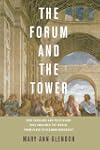
A great collection of short biographies on political theorists (the tower) who attempted to enter the fray (the forum) of practical politics and vice versa along with observations on their various successes and failures (mostly failures). I found the collection very personally relevant (I say this in recognition that such a statement particularly calls forth lightning to punish me for my hubris). The collection generally gives a brief sketch of the person's life before moving onto the show more general theme of the scholarly contemplative life versus the rough and tumble life of action. A wide variety of personalities from Plato to Eleanor Roosevelt (broadly mostly "western" whatever that nebulous term seems to mean our days). The style of the book is simple and clean, and never not entertaining. I was particularly amused by the spectacular failure of Plato to become a "man of action" twice before two different tyrants of Syracuse. In the end, Plato said something along the lines that people should always try to act, but under certain circumstances a good man could only keep his head low and pray for himself and the state (however, the author optimistically concludes that without these awful experiences Plato would not have written his mature work The Laws, a reflections on the imperfections of man and how that impacts orderly rule). Unsurprisingly, academics often fail to enter the field. Both Weber and Tocqueville prepared their entire lives in expectation of a political career. Both were by characteristics entirely unsuited for the political vocation. Both were too independent to join existing political factions (Weber refusing to take an offer from the Liberals [not imperialist or progressive enough {Weber died before the raise of Hitler, but mourned the lack of charismatic leaders in Germany, who he thought were ruled by passionless bureaucrats}] and Tocqueville trying to run as an independent candidate [and failing]). Weber seemed to lack the desire for fame, while Tocqueville desired it too much (in addition to being aristocratically standoffish). Machiavelli makes an appearance, though brilliant, he was sidelined by the political circumstances (too closely associated with a prior regime). There are some interesting (what I thought) original points discussing various luminaries. The author argues that Locke's second treatise only makes sense as a political document, not a philosophical one (for example, he uses property as a shorthand for life, liberty and property to appeal to the propertied class to support the glorious revolution, and ignores the traditional english rights in the work). The sketch of Oliver Wendell Holmes is rather well-trod but the author argues that he ignored and did not even mention the classical sources his skepticism arose from. I found the chapter on the struggle between Lord Coke and Hobbes fascinating (the two were even romantic rivals, though it seemed to be an example of winner's curse as Coke's second marriage was considered awful). Personality wise and in terms of the ideas, the two are presented as polar opposites. Lord Coke was very personally brave, once being imprisoned for standing up for the independence of the courts and rule of law against the prerogatives of the crown, while Hobbes admitted that he was easily physically anxious and fled several times from violent revolution. Coke grounded his philosophy in the traditional rights of englishmen and the common law, while Hobbes found the command of the sovereign (to prevent the anarchy that is the state of nature) and right to self-preservation as the source of law and order (preventing his ideas from being adopted seriously by the english legal profession).
Perhaps more useful are the examples of successes (at least in the eyes of the author). Two main themes that emerge are the useful collaborations between power and scholars and the lucky few who are able to leave both political and scholarly legacy. The two examples cited as an example of the first, are the Justinian code (between emperor Justinian and his advisor Tribonian [later Napoleon consciously modeled the Napoleonic Code after the corpus juris civilis even down to the scholarly input from Portalis]) and the UN Declaration of Human Rights (between Eleanor Roosevelt and Charles Malik (a diplomat who yearned for the scholarly life but in spite of himself was a master diplomat who shepherded the declaration through four committees during a very delicate time [the start of the cold war]). The author sees Cicero and Burke as examples of the rare few who soar in both the tower and the forum (though, personally I thought this was arguable, since Cicero ended up killed and his hands nailed to the forum while Burke spent most of his political career in the minority government). Both were outsiders, Cicero was a novus homo from a provincial equites family, while Burke was from an Irish family at a time of profound anti-Catholic sentiment. Cicero like most romans of his day thought civic duty was the priority of any citizen. Cicero discussed the virtues of being tested at the forum by those who are evil and preventing bad men from ruling the state as well as necessary to protect the circumstances for philosophy to flourish. In the end, Cicero left behind important scholarly achievements while fighting for the republican values he stood for. The chapter on Burke might be the most interesting, and discusses his brilliance that he took into the political arena rather than pursuing a scholarly life (to the displeasure of some of his friends, including Boswell and Doctor Johnson). Burke is presented as the mind behind the Whig party (though eventually he was sidelined by his own party) in policies regarding granting the US independence, the predictor of the rise of Napoleon, and an early advocate of cosmopolitan human rights (though his speeches regarding Hastings). I particularly found the work on Burke's background original and moving. The author argues that Burke was always very conscious of walking a tightrope, having a catholic mother and wife in an age where anti-catholicism was strong in British politics. One of the most interesting episodes of Burke's life are regarding his relatives asking him to intercede. Burke replied that such intercession would do nothing but imperil himself (and by implication that the other reforms he could be successful in). While Burke was cautious, he was an incrementalist and spoke the truth in a way so that he could keep speaking the truth (he did achieve reform of the harsh anti-Irish and anti-Catholic Penal Laws). However, when pushed, Burke stood for his principles, giving a speech that established trustee theory when he voted for free trade measures over protectionist laws (though this did cost him his seat next election). The chapter changed my view of Burke, whose Irish background is usually swept aside.
Another theme that emerges is the lack of foresight that those in the tower and forum have about their legacies. Tocqueville did not realize until near the end that his legacy would be in the written works he left behind (even democracy in america was intended to improve his political reputation), and Burke mourned until his death about his failure to successfully convict Hastings. Similarly, Cicero thought that his work in trying to preserve the republic was the crowning achievement of his life, but today he is as much remembered for his scholarly works on synthesizing Greco-Roman thought and introducing new latin words. show less
Perhaps more useful are the examples of successes (at least in the eyes of the author). Two main themes that emerge are the useful collaborations between power and scholars and the lucky few who are able to leave both political and scholarly legacy. The two examples cited as an example of the first, are the Justinian code (between emperor Justinian and his advisor Tribonian [later Napoleon consciously modeled the Napoleonic Code after the corpus juris civilis even down to the scholarly input from Portalis]) and the UN Declaration of Human Rights (between Eleanor Roosevelt and Charles Malik (a diplomat who yearned for the scholarly life but in spite of himself was a master diplomat who shepherded the declaration through four committees during a very delicate time [the start of the cold war]). The author sees Cicero and Burke as examples of the rare few who soar in both the tower and the forum (though, personally I thought this was arguable, since Cicero ended up killed and his hands nailed to the forum while Burke spent most of his political career in the minority government). Both were outsiders, Cicero was a novus homo from a provincial equites family, while Burke was from an Irish family at a time of profound anti-Catholic sentiment. Cicero like most romans of his day thought civic duty was the priority of any citizen. Cicero discussed the virtues of being tested at the forum by those who are evil and preventing bad men from ruling the state as well as necessary to protect the circumstances for philosophy to flourish. In the end, Cicero left behind important scholarly achievements while fighting for the republican values he stood for. The chapter on Burke might be the most interesting, and discusses his brilliance that he took into the political arena rather than pursuing a scholarly life (to the displeasure of some of his friends, including Boswell and Doctor Johnson). Burke is presented as the mind behind the Whig party (though eventually he was sidelined by his own party) in policies regarding granting the US independence, the predictor of the rise of Napoleon, and an early advocate of cosmopolitan human rights (though his speeches regarding Hastings). I particularly found the work on Burke's background original and moving. The author argues that Burke was always very conscious of walking a tightrope, having a catholic mother and wife in an age where anti-catholicism was strong in British politics. One of the most interesting episodes of Burke's life are regarding his relatives asking him to intercede. Burke replied that such intercession would do nothing but imperil himself (and by implication that the other reforms he could be successful in). While Burke was cautious, he was an incrementalist and spoke the truth in a way so that he could keep speaking the truth (he did achieve reform of the harsh anti-Irish and anti-Catholic Penal Laws). However, when pushed, Burke stood for his principles, giving a speech that established trustee theory when he voted for free trade measures over protectionist laws (though this did cost him his seat next election). The chapter changed my view of Burke, whose Irish background is usually swept aside.
Another theme that emerges is the lack of foresight that those in the tower and forum have about their legacies. Tocqueville did not realize until near the end that his legacy would be in the written works he left behind (even democracy in america was intended to improve his political reputation), and Burke mourned until his death about his failure to successfully convict Hastings. Similarly, Cicero thought that his work in trying to preserve the republic was the crowning achievement of his life, but today he is as much remembered for his scholarly works on synthesizing Greco-Roman thought and introducing new latin words. show less
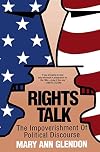
"Unfortunately, American political discourse has become vacuous, hard-edged, and inflexible just when it is called upon to encompass economic, social, and environmental problems of unparalleled difficulty and complexity."
The core claim of this book is that Americans are obsessed with notions of absolute rights which lead to political dysfunction. "A tendency to frame nearly every social controversy in terms of a clash of rights ... impedes compromise, mutual understanding, and the discovery show more of common ground.” This is explored in relation to various issues (abortion, family law, duties to aid) and comparison is made with how those same issues have been handled in Western European nations.
One of the things I find most frustrating about American politics is the way in which abortion can be exploited as a wedge issue; I know many people I have come into contact with could never be persuaded to vote against the GOP due solely to this. As the author notes, “[p]rolife and prochoice advocates alike have overwhelmingly opted for rights talk, a choice that has forced the debate into a seemingly nonnegotiable deadlock between the fetus’s 'right to life' and the pregnant woman’s 'right to choose.’” I don’t know whether or not a change in discourse would be fruitful (or desirable) towards resolving the impasse, but I found the discussion interesting.
Another idea I found especially interesting was that a tendency to have courts decide controversial issues by deducing the answer from constitutional rights leads to a reduced public involvement in the political process. Have liberals jeopardized parts of our agenda by relying too heavily on the courts to protect it? It’s concerning that victories such as the legalization of gay marriage rest only on judicial pronouncement, given that the party opposed to them now controls the presidency, Congress, and most state governments. show less
The core claim of this book is that Americans are obsessed with notions of absolute rights which lead to political dysfunction. "A tendency to frame nearly every social controversy in terms of a clash of rights ... impedes compromise, mutual understanding, and the discovery show more of common ground.” This is explored in relation to various issues (abortion, family law, duties to aid) and comparison is made with how those same issues have been handled in Western European nations.
One of the things I find most frustrating about American politics is the way in which abortion can be exploited as a wedge issue; I know many people I have come into contact with could never be persuaded to vote against the GOP due solely to this. As the author notes, “[p]rolife and prochoice advocates alike have overwhelmingly opted for rights talk, a choice that has forced the debate into a seemingly nonnegotiable deadlock between the fetus’s 'right to life' and the pregnant woman’s 'right to choose.’” I don’t know whether or not a change in discourse would be fruitful (or desirable) towards resolving the impasse, but I found the discussion interesting.
Another idea I found especially interesting was that a tendency to have courts decide controversial issues by deducing the answer from constitutional rights leads to a reduced public involvement in the political process. Have liberals jeopardized parts of our agenda by relying too heavily on the courts to protect it? It’s concerning that victories such as the legalization of gay marriage rest only on judicial pronouncement, given that the party opposed to them now controls the presidency, Congress, and most state governments. show less
A World Made New: Eleanor Roosevelt and the Universal Declaration of Human Rights by Mary Ann Glendon
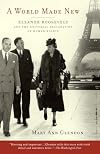
Strong account of the drafting of the UDHR. Glendon is not by training an historian, so at moments she drops the necessary tone and perspective with jarring asides, but otherwise it is a consistently methodical description. Readable, informative, well documented. Highly recommended.
A World Made New : Eleanor Roosevelt and the Universal Declaration of Human Rights by Mary Ann Glendon
Library Journal
When it was adopted by the United Nations General Assembly in 1948, the Universal Declaration of Human Rights was the first formal statement of what the phrase human rights actually entailed. Glendon (law, Harvard) has written a legislative history of the Declaration covering both the negotiation process and the ratification debates and process during the years 1946-52. The book is based on extensive access to the diaries and unpublished memoirs of many of the participants as show more they worked with the horrors of World War II fresh in their minds and against the backdrop of the rapidly chilling Cold War. While the content and phrasing of the Declaration are the product of the many fine minds and strong personalities who worked on it, Eleanor Roosevelt is here given full credit for facilitating the process and steering the group to a final agreement that incorporated the best from many cultural and religious traditions. Recommended for academic libraries and broad Roosevelt collections.--Marcia L. Sprules, Council on Foreign Relations Lib., New York Copyright 2001 Cahners Business Information. show less
When it was adopted by the United Nations General Assembly in 1948, the Universal Declaration of Human Rights was the first formal statement of what the phrase human rights actually entailed. Glendon (law, Harvard) has written a legislative history of the Declaration covering both the negotiation process and the ratification debates and process during the years 1946-52. The book is based on extensive access to the diaries and unpublished memoirs of many of the participants as show more they worked with the horrors of World War II fresh in their minds and against the backdrop of the rapidly chilling Cold War. While the content and phrasing of the Declaration are the product of the many fine minds and strong personalities who worked on it, Eleanor Roosevelt is here given full credit for facilitating the process and steering the group to a final agreement that incorporated the best from many cultural and religious traditions. Recommended for academic libraries and broad Roosevelt collections.--Marcia L. Sprules, Council on Foreign Relations Lib., New York Copyright 2001 Cahners Business Information. show less
Awards


You May Also Like


Associated Authors
Statistics
- Works
- 21
- Also by
- 3
- Members
- 678
- Popularity
- #37,271
- Rating
- 4.1
- Reviews
- 7
- ISBNs
- 43
- Languages
- 2
