
James L. Cambias
Author of A Darkling Sea: A Novel
About the Author
Series
Works by James L. Cambias
Planets of the Ufp: A Guide to Federation Worlds : Sourcebook (Star Trek, the Next Generation) (1999) — Author — 37 copies
The Ocean of the Blind 7 copies
Train of Events 2 copies
The Dinosaur Train 2 copies
Parsifal (Prix Fixe) 2 copies
GURPS Mars: Grendel 1 copy
Periapsis 1 copy
The Barbary Shore 1 copy
GURPS Mars: Rescue Mission 1 copy
The Alien Abduction 1 copy
A Diagram of Rapture 1 copy
Темное море 1 copy
The Vampire Brief 1 copy
Associated Works
The Year's Best Science Fiction: Twenty-Second Annual Collection (2005) — Contributor — 580 copies, 11 reviews
The Year's Best Science Fiction: Twenty-Sixth Annual Collection (2009) — Contributor — 425 copies, 2 reviews
The Magazine of Fantasy and Science Fiction September 2000, Vol. 99, No. 3 (2000) — Contributor — 19 copies
Tagged
Common Knowledge
- Canonical name
- Cambias, James L.
- Other names
- Cambias, James
Cambias, Jim - Birthdate
- 20th century
- Gender
- male
- Education
- University of Chicago
- Occupations
- game designer
- Nationality
- USA
- Birthplace
- New Orleans, Louisiana, USA
- Associated Place (for map)
- Louisiana, USA
Members
Reviews
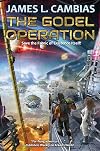
Daslakh is a small spider droid with an ancient mind that has been pared and shoehorned into its current case. Zee, its human mining partner, has no idea what he is hanging out with. When Zee starts showing signs of ennui, Daslakh hires an uplifted penguin to help by implanting false memories of a lost love in Zee’s innocent brain, giving a renewed zest for life. So far, so good, until Zee meets a girl who exactly matches his fictional memory, letting Daslakh know the penguin has its own show more nefarious agenda. Zee’s imagined lover leads them on a quest for a rumored weapon designed to kill digital minds using a logical loop suggested by the mathematician Kurt Gödel. It is a caper that takes them hopping across the solar system from the rings of Uranus to Jupiter and Mars.
Cambias does two things that add to the fun: he lets the feisty little Daslakh narrate the tale and packs his tenth-millennium world with all sorts of bots, AIs, uplifted animals, and a billion habits, on-planet and off. show less
Cambias does two things that add to the fun: he lets the feisty little Daslakh narrate the tale and packs his tenth-millennium world with all sorts of bots, AIs, uplifted animals, and a billion habits, on-planet and off. show less
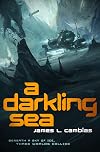
When Robert Sawyer, Gregory Benford and Vernor Vinge give a book rave reviews you bet I'm going to pay attention. Sawyer says "Alien races to rival Larry Niven, world-building to rival Hal Clement and lots of rip-roaring adventure." Vinge says Cambias is in the same league as Hal Clement. Benford calls it "Fast-paced, pure-quill hard science fiction..."
Humans are studying the intelligent inhabitants who live underwater on the plantet Ilmatar. Except they are restricted to studying them from show more afar because the other intelligent race in the universe, the Sholen, would only allow the mission if humans did not disturb the Ilmataran habitat or let the Ilmatarans know they existed. This irks all of the human scientists but none more so than Henri Kerlerec who has a devoted fan base that are used to much more adventure from Henri. So Henri acquires a suit that does not reflect sonar pulses which is how the Ilmatarans "see". He gets right in the middle of a group of Ilmatarans with Rob Freeman shooting video. Unfortunately the Ilmatarans are also scientists and they detect Kerlerec and take him home to dissect him. The Sholen intercept the message sent to Earth about this fiasco and come to investigate. They are not amused.
I thought this was an excellently written book and could see it working as a movie. There haven't been many good underwater movies; maybe this could break the curse.
If you like hard sf combined with a philosophical interstellar conundrum, then this book is for you. show less
Humans are studying the intelligent inhabitants who live underwater on the plantet Ilmatar. Except they are restricted to studying them from show more afar because the other intelligent race in the universe, the Sholen, would only allow the mission if humans did not disturb the Ilmataran habitat or let the Ilmatarans know they existed. This irks all of the human scientists but none more so than Henri Kerlerec who has a devoted fan base that are used to much more adventure from Henri. So Henri acquires a suit that does not reflect sonar pulses which is how the Ilmatarans "see". He gets right in the middle of a group of Ilmatarans with Rob Freeman shooting video. Unfortunately the Ilmatarans are also scientists and they detect Kerlerec and take him home to dissect him. The Sholen intercept the message sent to Earth about this fiasco and come to investigate. They are not amused.
I thought this was an excellently written book and could see it working as a movie. There haven't been many good underwater movies; maybe this could break the curse.
If you like hard sf combined with a philosophical interstellar conundrum, then this book is for you. show less
Really really liked it. First contact, emphasis on the What If and the Sense of Wonder but still interesting characters that we care about, and a dramatic & coherent plot with no actual villains. All that plus gracefully written, complex worldbuilding, respect for individuals of both* genders, even humor.
Totally my kind of book. Almost as good as Longyear's *Enemy Mine.*
The ending, though... hm. Maybe there's a sequel; if there is, I'll gladly reread this before moving on to that to get the show more rest of the story. And I will look for more by the author.
*Yes, all three kinds of beings are apparently straightforwardly binary. And we don't learn enough about the Ilmataran females (though the concept of how the young are raised is well-developed and fascinating). Oh well... there are lots of other imaginative things going on here.
He "doesn't like the idea of starving to death..., but he hates the thought of losing his followers even more."
Apparently this takes place in the relatively near future. Cambias explores human nature, assuming that we'll take our attitudes with us into the future even after meeting real aliens. For example, when one character of this international team is annoyed at another, he expresses the thought that "Europeans have no sense of humor."
One Ilmataran is noting that his work with the humans will probably lead his current mentor to be known in history as colleagues of the great B."... and then he realizes that his apprentice may be having a similar thought, that she might become even more famous and B. will become known as "teacher of the great H."
And then, in what I assume is an homage to Orwell's *Animal Farm,*we have the slogan "four limbs good, six legs bad." I about spilled my tea laughing at that. show less
Totally my kind of book. Almost as good as Longyear's *Enemy Mine.*
The ending, though... hm. Maybe there's a sequel; if there is, I'll gladly reread this before moving on to that to get the show more rest of the story. And I will look for more by the author.
*Yes, all three kinds of beings are apparently straightforwardly binary. And we don't learn enough about the Ilmataran females (though the concept of how the young are raised is well-developed and fascinating). Oh well... there are lots of other imaginative things going on here.
He "doesn't like the idea of starving to death..., but he hates the thought of losing his followers even more."
Apparently this takes place in the relatively near future. Cambias explores human nature, assuming that we'll take our attitudes with us into the future even after meeting real aliens. For example, when one character of this international team is annoyed at another, he expresses the thought that "Europeans have no sense of humor."
And then, in what I assume is an homage to Orwell's *Animal Farm,*
This novel of first contact and inter-species conflict was done from all angles, and it really grabbed me. I know giving the alien perspective as well as the human has been done before, but Cambias did a great job creating two distinct alien cultures. It wasn't just a story of humans meeting aliens; it was humans meeting aliens even though they've agreed with another race of aliens not to make contact. The ethical questions brought up by the resulting conflict makes for a thought-provoking show more read.
It's not a page-turner because it's action-packed from start to finish. It's a page-turner because it's just so darn interesting. It's not my normal fare, but I'm glad I gave it a whirl. show less
It's not a page-turner because it's action-packed from start to finish. It's a page-turner because it's just so darn interesting. It's not my normal fare, but I'm glad I gave it a whirl. show less
Lists
Awards


You May Also Like


Associated Authors
Statistics
- Works
- 41
- Also by
- 20
- Members
- 1,246
- Popularity
- #20,594
- Rating
- 3.7
- Reviews
- 40
- ISBNs
- 51
- Languages
- 2
- Favorited
- 1