
Laurence Tribe
Author of The Invisible Constitution
About the Author
Image credit: Photo by Lilithcat
Works by Laurence Tribe
When Values Conflict: Essays on Environmental Analysis, Discourse, and Decision (1976) — Editor — 7 copies
Liberty For All 1 copy
Associated Works
It is a Constitution We Are Expounding: Collected Writings on Interpreting Our Founding Document (2009) — Foreword — 8 copies
Tagged
Common Knowledge
- Canonical name
- Tribe, Laurence
- Legal name
- Tribe, Laurence Henry
- Birthdate
- 1941-10-10
- Gender
- male
- Education
- Abraham Lincoln High School, San Francisco, California, USA
Harvard College
Harvard Law School - Occupations
- lawyer
law clerk (Potter Stewart ∙ US Supreme Court ∙ 1967-68)
Professor of Law, Harvard University
law clerk (Matthew Tobriner ∙ California Supreme Court ∙ 1966-67) - Organizations
- American Constitution Society (co-founder)
Harvard University - Nationality
- USA
- Birthplace
- Shanghai, China
- Places of residence
- San Francisco, California, USA
Shanghai, China (birthplace) - Associated Place (for map)
- USA
Members
Reviews
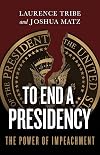
Laurence Tribe is a professor at Harvard Law School who specializes in constitutional law. Among his many publications is the seminal treatise, American Constitutional Law. Joshua Matz, a graduate of Harvard Law School, has collaborated with Tribe in a previous book, Uncertain Justice. Singly and together, they know whereof they speak when they discuss constitutional law.
In To End a Presidency: The Power of Impeachment, Tribe and Matz once again collaborate on an especially important legal show more issue of the day. Or perhaps I should say, “political issue,” because they themselves admit there is very little law governing impeachment, and what there is, is not terribly precise.
This book, published in 2018, treats impeachment from a largely historical perspective. They do not believe the Constitution calls for a simple trial to determine whether “bribery, treason, high crimes or misdemeanors” occurred as a matter of law, followed by a yes-or-no vote which then either acquits or finds the president guilty as charged. Instead, they see the process as one that calls for political rather than legal judgment at every step of the procedure, from the decision of the House of Representatives to charge an impeachment, through the “trial” where the Senate sits in judgement.
They argue that Congress has the responsibility to weigh the potential bad consequences of an impeachment (e.g., will it initiate a civil war?; will it empower an even more incompetent or corrupt vice president?) against the need to remove a bad actor from the highest office of the land. They emphasize the power of Congress to refrain from acting even in the face of technically and legally impeachable acts. Moreover, they stress that impeachment was meant to be a very big deal, not to be undertaken lightly.
Yet, as any regular viewer of MSNBC or CNN knows, currently Tribe is vigorously advocating the impeachment and removal from office of Donald Trump. For one thing, the book was published in 2018, before the details of the Ukraine scandal became known. More importantly, the authors’ historical analysis showed that Trump’s behavior probably merited impeachment even without reference to Ukraine. On Tribe’s twitter feed (@tribelaw) he now says of Trump’s behavior (in particular, firing the national intelligence chief for speaking about Russia’s preference for Trump and interference in our elections on his behalf):
“This truly looks like TREASON in all but the narrowest possible sense. If confirmed, it’s utterly devastating. It points to an enemy of the nation sitting in the White House. This cannot stand if we are to survive as a sovereign constitutional republic.”
Evaluation: To End a Presidency is an excellent, crisply written analysis of the history and state of the law of impeachment in the early 21st Century. It should have been required reading for all the talking heads who covered the proceedings on television.
(JAB) show less
In To End a Presidency: The Power of Impeachment, Tribe and Matz once again collaborate on an especially important legal show more issue of the day. Or perhaps I should say, “political issue,” because they themselves admit there is very little law governing impeachment, and what there is, is not terribly precise.
This book, published in 2018, treats impeachment from a largely historical perspective. They do not believe the Constitution calls for a simple trial to determine whether “bribery, treason, high crimes or misdemeanors” occurred as a matter of law, followed by a yes-or-no vote which then either acquits or finds the president guilty as charged. Instead, they see the process as one that calls for political rather than legal judgment at every step of the procedure, from the decision of the House of Representatives to charge an impeachment, through the “trial” where the Senate sits in judgement.
They argue that Congress has the responsibility to weigh the potential bad consequences of an impeachment (e.g., will it initiate a civil war?; will it empower an even more incompetent or corrupt vice president?) against the need to remove a bad actor from the highest office of the land. They emphasize the power of Congress to refrain from acting even in the face of technically and legally impeachable acts. Moreover, they stress that impeachment was meant to be a very big deal, not to be undertaken lightly.
Yet, as any regular viewer of MSNBC or CNN knows, currently Tribe is vigorously advocating the impeachment and removal from office of Donald Trump. For one thing, the book was published in 2018, before the details of the Ukraine scandal became known. More importantly, the authors’ historical analysis showed that Trump’s behavior probably merited impeachment even without reference to Ukraine. On Tribe’s twitter feed (@tribelaw) he now says of Trump’s behavior (in particular, firing the national intelligence chief for speaking about Russia’s preference for Trump and interference in our elections on his behalf):
“This truly looks like TREASON in all but the narrowest possible sense. If confirmed, it’s utterly devastating. It points to an enemy of the nation sitting in the White House. This cannot stand if we are to survive as a sovereign constitutional republic.”
Evaluation: To End a Presidency is an excellent, crisply written analysis of the history and state of the law of impeachment in the early 21st Century. It should have been required reading for all the talking heads who covered the proceedings on television.
(JAB) show less
Impeaching the president has been a hobby of Americans right from the beginning. George Washington faced the threat of impeachment for having John Jay negotiate a treaty with Britain instead of with France. Barack Obama was threatened with impeachment for pretty much everything he was or did. And when it wasn’t a president, it was a Supreme Court justice. Earl Warren and William O. Douglas were both the targets of Richard Nixon’s attempts at forcible removal.
Americans toss impeachment show more around like it was a common and ordinary process. No big deal. Lawrence Tribe and Joshua Matz are here to tell you it is not. To End A Presidency is a sobering dive into the reality of the process, as dictated by the Framers and as executed by lawmakers.
The book traces the thinking of the Framers, the vagueness of the mandate (Bribery, Treason, or High Crimes and Misdemeanors), and how it has been applied (or not) over the centuries. It appears to be a clever and well-structured tool to keep presidents from taking over totally. It has never been successfully implemented all the way. Richard Nixon resigned before the vote was called. Andrew Johnson avoided the axe by one vote. But this Trump fellow has the lawyers all agitated and wondering if this might be the real thing. (Spoiler alert: the authors’ conclusion is - probably not.)
Impeachment is the most serious act Congress can take – overthrowing the choice of the voters. But talk of impeachment has become so banal that in this century that both the Republicans under Bush and the Democrats under Obama have used it as a fundraising tool – to get or keep control of the House and thereby pre-empt impeachment. And of course in 2016, both candidates declared the other impeachable if elected – for “crimes” committed before they were elected. Impeachment has become trivialized and perverse.
There are details no one talks about, because few know:
-The reason the Senate must vote on conviction is because the Framers thought the Supreme Court was too small a forum. They thought the Senate, being educated elites from across the nation, would be a fairer arbiter. The House wouldn’t be fair because it had already voted by at least two-thirds to proceed.
-Vice presidents can be impeached too. This is because they used to be not so much running mates as the defeated presidential candidate. They were clearly not the choice of the voters, had already been rejected once, and could wreak havoc with whatever the president had accomplished to that point. Andrew Johnson, who stepped up when Lincoln was assassinated, is the poster child for this kind of disaster.
-There is a fallback position for Congress – a resolution of censure whereby the president is not actually removed from office, but humiliated instead. That does not require a two thirds vote by both houses as impeachment does.
-The Senate gets to vote twice – first on the impeachment articles themselves, and if any one of them passes, whether the president is also forever banned from all public office.
-The record for impeachment resolutions is held by Henry Gonzalez (D-Texas), who tried to impeach Reagan twice (Grenada, Iran/Contra) and Bush père once (Kuwait) for a total of three within a decade.
-If the House votes to impeach the president and the Senate fails to convict/carry out the impeachment, the president becomes untouchable. He can be as arrogant and obnoxious as he wants, and as abusive and vulgar as he desires, knowing they won’t try that stunt again.
-And that could lead to others in government thinking – if it’s okay for him, why not for me and us too?
-But then, declining to impeach sends the same message.
Tribe and Matz also dissect the 25th Amendment, which enables a two thirds vote of both houses to remove the president and replace him with the vice-president without impeachment. It is such a complex and fraught process, it is almost certain to fail. And it was never meant to replace impeachment. It was meant to keep the country going if a president became disabled and unable to continue.
This is, of course, all about Trump. He has nearly half the country believing he should be impeached. The list of reasons is endless, and the authors do their best to enumerate them. And he seems to add to them every day. Ironically, the risk is that if his loutish and outlandish behavior continues, Americans will get used to it and they won’t constitute impeachable offenses any more. In lowering American standards of governance, Trump is raising the barriers to impeachment.
The one point missing in Tribe and Matz’s analysis is the insurance policy carried by the president. The vice-president would take over in the case of impeachment. Not as acting president, but as President. The thought of Mike Pence (known behind his back as Mike Dense when he was a congressman) running the country is by itself probably enough to prevent a Trump impeachment.
But then, that’s what Nixon thought when Spiro Agnew was his vice president, and again when Gerald Ford became next in line after Agnew was forced out for blatant corruption. It didn’t quite work out as planned. It never does.
David Wineberg show less
Americans toss impeachment show more around like it was a common and ordinary process. No big deal. Lawrence Tribe and Joshua Matz are here to tell you it is not. To End A Presidency is a sobering dive into the reality of the process, as dictated by the Framers and as executed by lawmakers.
The book traces the thinking of the Framers, the vagueness of the mandate (Bribery, Treason, or High Crimes and Misdemeanors), and how it has been applied (or not) over the centuries. It appears to be a clever and well-structured tool to keep presidents from taking over totally. It has never been successfully implemented all the way. Richard Nixon resigned before the vote was called. Andrew Johnson avoided the axe by one vote. But this Trump fellow has the lawyers all agitated and wondering if this might be the real thing. (Spoiler alert: the authors’ conclusion is - probably not.)
Impeachment is the most serious act Congress can take – overthrowing the choice of the voters. But talk of impeachment has become so banal that in this century that both the Republicans under Bush and the Democrats under Obama have used it as a fundraising tool – to get or keep control of the House and thereby pre-empt impeachment. And of course in 2016, both candidates declared the other impeachable if elected – for “crimes” committed before they were elected. Impeachment has become trivialized and perverse.
There are details no one talks about, because few know:
-The reason the Senate must vote on conviction is because the Framers thought the Supreme Court was too small a forum. They thought the Senate, being educated elites from across the nation, would be a fairer arbiter. The House wouldn’t be fair because it had already voted by at least two-thirds to proceed.
-Vice presidents can be impeached too. This is because they used to be not so much running mates as the defeated presidential candidate. They were clearly not the choice of the voters, had already been rejected once, and could wreak havoc with whatever the president had accomplished to that point. Andrew Johnson, who stepped up when Lincoln was assassinated, is the poster child for this kind of disaster.
-There is a fallback position for Congress – a resolution of censure whereby the president is not actually removed from office, but humiliated instead. That does not require a two thirds vote by both houses as impeachment does.
-The Senate gets to vote twice – first on the impeachment articles themselves, and if any one of them passes, whether the president is also forever banned from all public office.
-The record for impeachment resolutions is held by Henry Gonzalez (D-Texas), who tried to impeach Reagan twice (Grenada, Iran/Contra) and Bush père once (Kuwait) for a total of three within a decade.
-If the House votes to impeach the president and the Senate fails to convict/carry out the impeachment, the president becomes untouchable. He can be as arrogant and obnoxious as he wants, and as abusive and vulgar as he desires, knowing they won’t try that stunt again.
-And that could lead to others in government thinking – if it’s okay for him, why not for me and us too?
-But then, declining to impeach sends the same message.
Tribe and Matz also dissect the 25th Amendment, which enables a two thirds vote of both houses to remove the president and replace him with the vice-president without impeachment. It is such a complex and fraught process, it is almost certain to fail. And it was never meant to replace impeachment. It was meant to keep the country going if a president became disabled and unable to continue.
This is, of course, all about Trump. He has nearly half the country believing he should be impeached. The list of reasons is endless, and the authors do their best to enumerate them. And he seems to add to them every day. Ironically, the risk is that if his loutish and outlandish behavior continues, Americans will get used to it and they won’t constitute impeachable offenses any more. In lowering American standards of governance, Trump is raising the barriers to impeachment.
The one point missing in Tribe and Matz’s analysis is the insurance policy carried by the president. The vice-president would take over in the case of impeachment. Not as acting president, but as President. The thought of Mike Pence (known behind his back as Mike Dense when he was a congressman) running the country is by itself probably enough to prevent a Trump impeachment.
But then, that’s what Nixon thought when Spiro Agnew was his vice president, and again when Gerald Ford became next in line after Agnew was forced out for blatant corruption. It didn’t quite work out as planned. It never does.
David Wineberg show less
I have known of Lawrence Tribe for a long while but only started following him on Twitter for about six months. His voice of reason, on Twitter of all places, a venue not known for reasoned thought, impressed me enough to preorder his book “To end a presidency : the power of impeachment” . Like his posts on Twitter the book is thoughtful and informative. It is also less partisan than I expected. Even a Trump supporter can read this book without suffering a sudden case of the vapors.
I show more was not expecting an in depth look at the history of the development and use of impeachment but is there a better way to understand the concept and its implications? I expected a passionate plea to remove Trump, instead Tribe and his co-author Joshua Matz examine the Framers “intent” the only way possible, by looking at what they wrote and the revisions they made while crafting the Constitution.
The Constitution says that all high civil officers of the United States can be impeached for “Treason, Bribery, or other high Crimes and Misdemeanors”. That starts off very explicitly but as Tribe points out “other high Crimes and Misdemeanors” can cover almost anything. We have never removed a president through impeachment. That could be because the degree of cooperation required is beyond the ability of our legislative branch. It could also be that the members of the legislature understand that removing a president before their term expires could inspire violence from that administration’s supporters.
Tribe repeats that idea throughout the book. A president’s supporters might resort to violence if they feel that politics if the only reason for the impeachment. Which is why Mueller's investigation is so important. Unless the voters understand that there was/is serious wrongdoing we could end up with more violence than in 1968 or 1876. That is also why Trump keeps yelling “FAKE NEWS”, he is trying to assure that his supporters will not believe any incriminating evidence against him.
I doubt that this book would have been written without Trump in the White House but it is definitely not aimed at him. I was less fond of the idea of his impeachment after reading it. The book is a through look at the legal and political history of Article II Section 4 of the Constitution. Whatever your opinion of this President this book is worth your time. show less
I show more was not expecting an in depth look at the history of the development and use of impeachment but is there a better way to understand the concept and its implications? I expected a passionate plea to remove Trump, instead Tribe and his co-author Joshua Matz examine the Framers “intent” the only way possible, by looking at what they wrote and the revisions they made while crafting the Constitution.
The Constitution says that all high civil officers of the United States can be impeached for “Treason, Bribery, or other high Crimes and Misdemeanors”. That starts off very explicitly but as Tribe points out “other high Crimes and Misdemeanors” can cover almost anything. We have never removed a president through impeachment. That could be because the degree of cooperation required is beyond the ability of our legislative branch. It could also be that the members of the legislature understand that removing a president before their term expires could inspire violence from that administration’s supporters.
Tribe repeats that idea throughout the book. A president’s supporters might resort to violence if they feel that politics if the only reason for the impeachment. Which is why Mueller's investigation is so important. Unless the voters understand that there was/is serious wrongdoing we could end up with more violence than in 1968 or 1876. That is also why Trump keeps yelling “FAKE NEWS”, he is trying to assure that his supporters will not believe any incriminating evidence against him.
I doubt that this book would have been written without Trump in the White House but it is definitely not aimed at him. I was less fond of the idea of his impeachment after reading it. The book is a through look at the legal and political history of Article II Section 4 of the Constitution. Whatever your opinion of this President this book is worth your time. show less
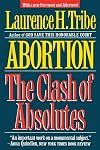
Laurence Tribe is a Yale Law School professor and constitutional scholar. His book does an exemplary job of discussing the history of abortion in the U.S., from a legal perspective, in an impartial manner. He shows holes in logic in both sides, and victories and defeats on both sides. His premise is that it is a clash of absolutes: neither side can have their way absolutely; there must be compromise on both sides.
I was enthralled by this book. It was so clearly written, with so many cogent show more points, that I have note after note of notes of things I wanted to remember. I will need to break one of my cardinal rules, and annotate this book liberally. I am certainly keeping my copy, and will buy many for others to read.
I will better be able to debate my pro-choice views, after reading this. It also caused me to consider what areas as a society are a "clash in absolutes". This book has changed me and my outlook.
I will be unable to post all the "quotes" I appreciated here, as many of them are multiple pages in length. I will, however, copy some which particularly struck me.
What I found most powerful, was his discussion of people who are generally pro-life, but allow abortion in cases of rape and incest. He discusses how this is an argument based on how the woman got pregnant, not about the life of the fetus. The fetus is clearly innocent here, yet abortion is allowed. He quite clearly shows that people who argue along this path, are making moralistic judgments about women and how they should prevent pregnancy. I will use that argument in the future.
I also found the chapter on the history of abortion around the world, to be fascinating. In some cases, I didn't like the pro-choice argument, because of how it was framed, even if I agreed with the outcome. That was new to me.
"Women who are able to control their reproductive destinies gain freedom to pursue personal missions other than the traditional one in the home."
He discusses how the pro-life movement uses photographs of aborted fetuses to gain proponenets. "We would do well to remember and to try to envision the disfigurement, destruction, and death wrought by the butchery of women killed in [back alley abortions] .. That such photographs are rarely seen must not be permitted to obscure the genuine tragedies they reflect."
"Laws restricting abortion so dramatically shape the lives of women, and only women, that their denial of equality hardly needs detailed elaboration. While men retain the right to sexual and reproductive autonomy, restrictions on abortion deny that autonomy to women. Laws restricting access to abortion therefore place a real and substantial burden on women's ability to participate in society as equals. Even a woman who is not pregnant is inevitably affected by her knowledge of the power relationships created by a ban on abortion."
Discussing the post Roe v. Wade republican party platform, "The National Catholic Reporter was even harsher in its headline describing the 1976 Republican platform: Conservative GOP Convention defends rights selectively: Fetuses have them, Hungry don't."
Discussing Bush Senior, and whether there should be federal funded abortions for rape/incest: "Bush supported rape and incest exceptions to strict antiabortion laws; he merely opposed giving this abortion option to poor women who needed public help. While he suggested that this was because there was no way to verify that a rape had occurred, he never spelled out whether he thought the problem of lying about rape was more common among poor women, whether he believed no women could be trusted to tell the truth about such a serious and traumatic event, or what."
"In a representative democracy, the word "always" belongs to the people; those elites that prevail in the courts, sometimes feeling an unwarranted contempt for the less well educated groups they have outflanked, can only lose in the long run if they take the justice of their cause for granted and discount the significance of views they think less enlightened than their own."
"Women who make the choice to end a pregnancy ordinarily recognize the gravity of what they are doing. Compromises that pretend otherwise, that treat each woman as a stranger to her fetus and pit the two against each other, are lacking in human understanding and are not plausible moves toward a world in which people reach out to each other."
"If advocates on both sides of the abortion debate would just pause, they would recognize at least one broadly shared interest, that of working toward a world of only wanted pregnancies. Better education, the provision of contraception, indeed the creation of a society in which the burden of raising a child is lighter, are all achievable goals that are lost in the shouting about abortion. ... Nearly all of us already agree we should strive for a society in which every child a woman conceives is wanted and in which every child born has someone to love and nurture it." show less
I was enthralled by this book. It was so clearly written, with so many cogent show more points, that I have note after note of notes of things I wanted to remember. I will need to break one of my cardinal rules, and annotate this book liberally. I am certainly keeping my copy, and will buy many for others to read.
I will better be able to debate my pro-choice views, after reading this. It also caused me to consider what areas as a society are a "clash in absolutes". This book has changed me and my outlook.
I will be unable to post all the "quotes" I appreciated here, as many of them are multiple pages in length. I will, however, copy some which particularly struck me.
What I found most powerful, was his discussion of people who are generally pro-life, but allow abortion in cases of rape and incest. He discusses how this is an argument based on how the woman got pregnant, not about the life of the fetus. The fetus is clearly innocent here, yet abortion is allowed. He quite clearly shows that people who argue along this path, are making moralistic judgments about women and how they should prevent pregnancy. I will use that argument in the future.
I also found the chapter on the history of abortion around the world, to be fascinating. In some cases, I didn't like the pro-choice argument, because of how it was framed, even if I agreed with the outcome. That was new to me.
"Women who are able to control their reproductive destinies gain freedom to pursue personal missions other than the traditional one in the home."
He discusses how the pro-life movement uses photographs of aborted fetuses to gain proponenets. "We would do well to remember and to try to envision the disfigurement, destruction, and death wrought by the butchery of women killed in [back alley abortions] .. That such photographs are rarely seen must not be permitted to obscure the genuine tragedies they reflect."
"Laws restricting abortion so dramatically shape the lives of women, and only women, that their denial of equality hardly needs detailed elaboration. While men retain the right to sexual and reproductive autonomy, restrictions on abortion deny that autonomy to women. Laws restricting access to abortion therefore place a real and substantial burden on women's ability to participate in society as equals. Even a woman who is not pregnant is inevitably affected by her knowledge of the power relationships created by a ban on abortion."
Discussing the post Roe v. Wade republican party platform, "The National Catholic Reporter was even harsher in its headline describing the 1976 Republican platform: Conservative GOP Convention defends rights selectively: Fetuses have them, Hungry don't."
Discussing Bush Senior, and whether there should be federal funded abortions for rape/incest: "Bush supported rape and incest exceptions to strict antiabortion laws; he merely opposed giving this abortion option to poor women who needed public help. While he suggested that this was because there was no way to verify that a rape had occurred, he never spelled out whether he thought the problem of lying about rape was more common among poor women, whether he believed no women could be trusted to tell the truth about such a serious and traumatic event, or what."
"In a representative democracy, the word "always" belongs to the people; those elites that prevail in the courts, sometimes feeling an unwarranted contempt for the less well educated groups they have outflanked, can only lose in the long run if they take the justice of their cause for granted and discount the significance of views they think less enlightened than their own."
"Women who make the choice to end a pregnancy ordinarily recognize the gravity of what they are doing. Compromises that pretend otherwise, that treat each woman as a stranger to her fetus and pit the two against each other, are lacking in human understanding and are not plausible moves toward a world in which people reach out to each other."
"If advocates on both sides of the abortion debate would just pause, they would recognize at least one broadly shared interest, that of working toward a world of only wanted pregnancies. Better education, the provision of contraception, indeed the creation of a society in which the burden of raising a child is lighter, are all achievable goals that are lost in the shouting about abortion. ... Nearly all of us already agree we should strive for a society in which every child a woman conceives is wanted and in which every child born has someone to love and nurture it." show less
Awards


You May Also Like


Associated Authors
Statistics
- Works
- 20
- Also by
- 5
- Members
- 787
- Popularity
- #32,340
- Rating
- 3.9
- Reviews
- 22
- ISBNs
- 37
- Languages
- 2
- Favorited
- 1
