
Richard Tuck
Author of Hobbes: A Very Short Introduction
About the Author
Richard Tuck is one of the world's greatest historians of political thought. He is Frank G. Thomson Professor of Government at Harvard University.
Series
Works by Richard Tuck
Associated Works
Tagged
Common Knowledge
- Gender
- male
- Education
- University of Cambridge
- Occupations
- professor (Government)
- Organizations
- Harvard University
- Nationality
- USA
- Associated Place (for map)
- USA
Members
Reviews
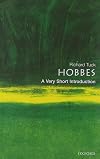
It does what it says on the tin, with a first chapter on Hobbes's life and times putting him in his intellectual context, followed by an exploration of his thought, and then how some other philosophers have reacted to him.
The first chapter was interesting and easy to follow but I did struggle a bit more with the second and third chapters.
The first chapter was interesting and easy to follow but I did struggle a bit more with the second and third chapters.
Okay, to be fair, I already agree with much of Tuck's method. I do think the best way to understand political thought is to pay attention scrupulously to its historical context; that such attention will probably reveal no Immortal, Eternal Wisdom but rather a set of tactical responses to actual political events; that the first interpreters of political books are most likely the best interpreters. So I'm biased.
All that said, this was one of the best VSIs I've read: a massive amount of show more information, a clear and reasonably readable style, a perfect balance between depth and breadth. You get a great summary of Hobbes' context and his biography, a good summary of his thought (including, crucially, his physics, metaphysics, methodology and religious thought as well as the ethics and politics), and a great summary of Hobbes interpretation. It's unclear to me why Goodreads reviewers insist on giving it 3 stars, unless they're all Straussians or are put off by Tuck's unbalanced description of C. B. McPherson's work (which - in 'Possessive Individualism' at least - does not claim, as Tuck suggests, that Hobbes is the defender of the bourgeoisie; it argues quite persuasively that Hobbes took his own social context to provide an eternal picture of human nature).
Highly recommended. show less
All that said, this was one of the best VSIs I've read: a massive amount of show more information, a clear and reasonably readable style, a perfect balance between depth and breadth. You get a great summary of Hobbes' context and his biography, a good summary of his thought (including, crucially, his physics, metaphysics, methodology and religious thought as well as the ethics and politics), and a great summary of Hobbes interpretation. It's unclear to me why Goodreads reviewers insist on giving it 3 stars, unless they're all Straussians or are put off by Tuck's unbalanced description of C. B. McPherson's work (which - in 'Possessive Individualism' at least - does not claim, as Tuck suggests, that Hobbes is the defender of the bourgeoisie; it argues quite persuasively that Hobbes took his own social context to provide an eternal picture of human nature).
Highly recommended. show less

Tomas Hobsi (Thomas Hobs) ishte i pari filozof i madh anglez në lëmin e mendimit politik. Vepra e tij Leviathan ishte me të vërtetë e para ndër veprat e filozofisë moderne. Për një kohë të gjatë ai është vështruar si një ateist pesimist, që e pikturonte natyrën njerëzore si pashmangshmërisht të ligë, çka e shtyu drejt përvijimit të idesë së një shteti totalitar, i cili përmes nënshtrimit do të synonte të shmangte mangësitë apo ligësitë e njeriut të show more vështruar si qenie individuale.
Në këtë studim dritëhedhës, Richard Tuck rreh të zhveshë një e nga një mitet e mësipërme, për të na zbuluar një Hobs të lëshuar, plot pasion, kundër hedhjes poshtë skepticizmit qoftë në shkencë qoftë në etikë. Krahas kësaj autori tregon se si Hobsi lëvroi një teori njohjeje, që për nga rëndësia, në formimin e filozofisë moderne rivalizon ndjeshëm teorinë e lëvruar nga Dekarti. show less
Në këtë studim dritëhedhës, Richard Tuck rreh të zhveshë një e nga një mitet e mësipërme, për të na zbuluar një Hobs të lëshuar, plot pasion, kundër hedhjes poshtë skepticizmit qoftë në shkencë qoftë në etikë. Krahas kësaj autori tregon se si Hobsi lëvroi një teori njohjeje, që për nga rëndësia, në formimin e filozofisë moderne rivalizon ndjeshëm teorinë e lëvruar nga Dekarti. show less
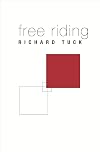
My main interest in this book was the question of voting - I wanted to see his response to the argument that since your vote is extremely unlikely to change the outcome of the election, and voting carries some cost (in time, money, whatever), it’s not rational to vote. As I understood it, the response is that:
1. Your vote does have a high chance of being part of the set of votes that cause the outcome (e.g., if the candidate needs 51% of the vote to win, and actually receives 60%, then if show more you think of the ballots as being counted in some order, there’s a good chance that your ballot is part of the 51% that were necessary rather than the 9% that were superfluous).
2. Each vote in that set should be thought of as fully causing the outcome.
3. It can be rational to want to cause an outcome even though the outcome would still have occurred even if you had not.
I don’t find this fully satisfying, but it is interesting food for thought. The book also contains an illuminating discussion of the similarities, differences, and relationships between various types of problems related to collective action, and a fascinating recounting of the history of such problems. show less
1. Your vote does have a high chance of being part of the set of votes that cause the outcome (e.g., if the candidate needs 51% of the vote to win, and actually receives 60%, then if show more you think of the ballots as being counted in some order, there’s a good chance that your ballot is part of the 51% that were necessary rather than the 9% that were superfluous).
2. Each vote in that set should be thought of as fully causing the outcome.
3. It can be rational to want to cause an outcome even though the outcome would still have occurred even if you had not.
I don’t find this fully satisfying, but it is interesting food for thought. The book also contains an illuminating discussion of the similarities, differences, and relationships between various types of problems related to collective action, and a fascinating recounting of the history of such problems. show less
Lists
You May Also Like


Associated Authors
Statistics
- Works
- 10
- Also by
- 3
- Members
- 671
- Popularity
- #37,613
- Rating
- 3.6
- Reviews
- 10
- ISBNs
- 37
- Languages
- 6