
John Dunn (1) (1940–)
Author of Locke: A Very Short Introduction
For other authors named John Dunn, see the disambiguation page.
About the Author
John Dunn is professor emeritus of political theory at King's College, University of Cambridge.
Image credit: Cambridge University
Works by John Dunn
The Political Thought of John Locke: An Historical Account of the Argument of the 'Two Treatises of Government' (1969) 60 copies
Modern Revolutions: An Introduction to the Analysis of a Political Phenomenon (1972) 47 copies, 2 reviews
The Economic Limits to Modern Politics (Murphy Institute Studies in Political Economy) (1990) 8 copies
West African States: Failure and Promise: A Study in Comparative Politics (African Studies) (1978) 3 copies, 1 review
Associated Works
Two Treatises of Government and A Letter Concerning Toleration (2003) — Contributor, some editions — 412 copies, 4 reviews
The western time of ancient history historiographical encounters with the Greek and Roman pasts (2011) — Contributor — 8 copies
Tagged
Common Knowledge
- Canonical name
- Dunn, John
- Legal name
- Dunn, John Montfort
- Birthdate
- 1940-09-09
- Gender
- male
- Education
- University of Cambridge (King's College)
Millfield School, Somerset, England, UK
Winchester College, Winchester, Hampshire, England, UK - Occupations
- professor emeritus (Political Theory)
- Organizations
- University of Cambridge (King's College)
- Relationships
- Scurr, Ruth (3rd wife, 1997-2013)
- Nationality
- UK
- Associated Place (for map)
- UK
Members
Reviews
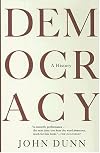
If there is a nearly uncontested basis for legitimate government in the contemporary world, it is goes by the name "democracy." That's a remarkable word we've chosen because for the longest time it was a pejorative and originally it was the name for a form of government that has little resemblance to any today. This book is an historical explanation of how this weird situation came about.
The story begins with the original democracy in Ancient Athens. Unlike their neighbors, Athen's security show more depended on a citizen navy that drew disproportionately from the poor. The leverage that gave them may be the explanation for how their constitution got the anti-aristocratic reforms that made it democratic. The 10% of the populace who were citizens could win offices by lottery; but practically speaking only the rich could afford a role in this hyper-participatory kind of self-rule.
We are not the inheritors of any part of their institutions. It was all wiped out in political defeat 175 years after it started. What we know about it is mostly from Plato, Aristotle, and Thucydides. Commentators called it the rule of betters by their inferiors, a scheme to transfer wealth downward. Democracy becomes mostly a slur.
You see a few dissenters speak out in favor of democracy-like arrangements starting in the 1600s: Spinoza, then later Toland and Milton. Then especially the Levellers with slogans like "No human being comes into the world with a saddle on their back, or any other booted and spurred to ride them." America establishes a form of government that would retrospectively be called democratic, but that shift in interpretation is part of the puzzle here: Madison thought part of the point of republican form of government was "the total exclusion of the people in their collective capacity from any share." Electing people to rule over you was not seen a democracy! Likewise with monarchists in France: the aristocrat D'Argenson wrote in favor of some limited democracy to help the king understand the common good.
Things really change with the French Revolution. France has some war debt that needs to be dealt with, and the ministers of the church and nobility (first and second estates, respectively) are uncooperative. The king tries to break through the log jam by summoning the Estates General. No one really knew how that worked, so parliament had to vote on the arrangements. They decided it would need to involve equal representation for the three estates -- the third estate being commoners. Then things start popping off.
Robespierre is the key figure in the story: more than anyone else he responsible for bringing democracy to life as a possible political allegiance. He was an egalitarian who favored universal franchise, rejecting the distinction between "active citizens" (tax payers, landholders, etc) and "passive citizens" (everyone else). Even so, Robespierre equated democracy with republican form of government. He needed to bring the mayhem of the revolution to a close, and so he explicitly denied the desirability of Athenian-style direct participation of citizens in government.
One way to see the special significance of Robespierre is to contrast him with Babeuf, one of the conspirators who unsuccessfully tried to bring about a second, greater revolution in France. Babeuf deplored the "order of egoism" exemplified by America: equality reduced to recognition, lack of overt political condescension, permitting of economic inequality, emphasis on private interests, Adam Smith. Instead he extolled the "order of equality," which entailed uncompromisingly egalitarian economy. Babeuf's conspiracy came to nothing.
Democratic republics with universal suffrage surprised everyone (other than Babeuf) by showing themselves compatible with the "order of egoism," even helping to keep capitalism on the rails. They granted cheap equality of recognition without redistribution, and somehow that proved enough to prevent popular revolt in many places. The banner of democracy was flown partly due to happenstance during WWII: capitalism was too impersonal to attract allegiance, and democracy (in weaker contemporary sense of popular representation) offered nice contrast with Japan, Germany. When the Soviet Union collapsed, US-style "democracy" was simply all that was left.
Dunn's story strikes an ambivalent note at the end. He takes seriously leftist critiques of contemporary so-called democracy as basically serving capital, permitting just so much economic redistribution as needed to forestall revolt. Representative democracy is not self-rule, really; not in the Athenian sense of popular participation, and not in the Babeufian sense of egalitarianism. The best that can be said for it is that it provides a modicum of political accountability, allowing us to throw the more egregious rascals out of office.
I'm not entirely sure how to evaluate this book. Certainly the first three chapters are interesting history, even if the telling is a little ornate for my taste. The fourth chapter, bringing us up to the present, is insightful on wartime propaganda; but it delves into more evaluative and speculative matters like the (in his view) poor prospects for deliberative democracy and leftist attempts to democratize the family. I don't mind a bracing splash of cold water and would be interested to read Dunn's criticisms at greater length elsewhere; they just didn't belong at the end of this book. show less
The story begins with the original democracy in Ancient Athens. Unlike their neighbors, Athen's security show more depended on a citizen navy that drew disproportionately from the poor. The leverage that gave them may be the explanation for how their constitution got the anti-aristocratic reforms that made it democratic. The 10% of the populace who were citizens could win offices by lottery; but practically speaking only the rich could afford a role in this hyper-participatory kind of self-rule.
We are not the inheritors of any part of their institutions. It was all wiped out in political defeat 175 years after it started. What we know about it is mostly from Plato, Aristotle, and Thucydides. Commentators called it the rule of betters by their inferiors, a scheme to transfer wealth downward. Democracy becomes mostly a slur.
You see a few dissenters speak out in favor of democracy-like arrangements starting in the 1600s: Spinoza, then later Toland and Milton. Then especially the Levellers with slogans like "No human being comes into the world with a saddle on their back, or any other booted and spurred to ride them." America establishes a form of government that would retrospectively be called democratic, but that shift in interpretation is part of the puzzle here: Madison thought part of the point of republican form of government was "the total exclusion of the people in their collective capacity from any share." Electing people to rule over you was not seen a democracy! Likewise with monarchists in France: the aristocrat D'Argenson wrote in favor of some limited democracy to help the king understand the common good.
Things really change with the French Revolution. France has some war debt that needs to be dealt with, and the ministers of the church and nobility (first and second estates, respectively) are uncooperative. The king tries to break through the log jam by summoning the Estates General. No one really knew how that worked, so parliament had to vote on the arrangements. They decided it would need to involve equal representation for the three estates -- the third estate being commoners. Then things start popping off.
Robespierre is the key figure in the story: more than anyone else he responsible for bringing democracy to life as a possible political allegiance. He was an egalitarian who favored universal franchise, rejecting the distinction between "active citizens" (tax payers, landholders, etc) and "passive citizens" (everyone else). Even so, Robespierre equated democracy with republican form of government. He needed to bring the mayhem of the revolution to a close, and so he explicitly denied the desirability of Athenian-style direct participation of citizens in government.
One way to see the special significance of Robespierre is to contrast him with Babeuf, one of the conspirators who unsuccessfully tried to bring about a second, greater revolution in France. Babeuf deplored the "order of egoism" exemplified by America: equality reduced to recognition, lack of overt political condescension, permitting of economic inequality, emphasis on private interests, Adam Smith. Instead he extolled the "order of equality," which entailed uncompromisingly egalitarian economy. Babeuf's conspiracy came to nothing.
Democratic republics with universal suffrage surprised everyone (other than Babeuf) by showing themselves compatible with the "order of egoism," even helping to keep capitalism on the rails. They granted cheap equality of recognition without redistribution, and somehow that proved enough to prevent popular revolt in many places. The banner of democracy was flown partly due to happenstance during WWII: capitalism was too impersonal to attract allegiance, and democracy (in weaker contemporary sense of popular representation) offered nice contrast with Japan, Germany. When the Soviet Union collapsed, US-style "democracy" was simply all that was left.
Dunn's story strikes an ambivalent note at the end. He takes seriously leftist critiques of contemporary so-called democracy as basically serving capital, permitting just so much economic redistribution as needed to forestall revolt. Representative democracy is not self-rule, really; not in the Athenian sense of popular participation, and not in the Babeufian sense of egalitarianism. The best that can be said for it is that it provides a modicum of political accountability, allowing us to throw the more egregious rascals out of office.
I'm not entirely sure how to evaluate this book. Certainly the first three chapters are interesting history, even if the telling is a little ornate for my taste. The fourth chapter, bringing us up to the present, is insightful on wartime propaganda; but it delves into more evaluative and speculative matters like the (in his view) poor prospects for deliberative democracy and leftist attempts to democratize the family. I don't mind a bracing splash of cold water and would be interested to read Dunn's criticisms at greater length elsewhere; they just didn't belong at the end of this book. show less
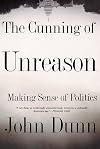
A while back I read a book that started by telling its readers what it wasn't. Dunn's book needs the same disclaimer. This is really a book about understanding politics- it discusses, analyzes and judges different ways of understanding, not different kinds of politics. He begins by describing what he takes politics to be - essentially, conflicts within and between states - but most of the book is about how we might try to understand and change this subject matter. So the book is structured show more more often than not around a binary or ternary: should we be fatalists or voluntarists when it comes to understanding politics? Should be we understand politics from a Platonic or a sociological perspective? Is politics best understood with the tools of disinterested epistemology, or from the perspective of a particular political interest? Is politics best understood as brutal power plays, or as the realm of human cooperation?
If you can accept that, it's bracing stuff, until he gets around to suggesting, as he almost always does, that you take a bit from each member of his binary or ternary or quarternary, if that's a word. Which sometimes feels like a let-down.
There are other problems, too. Someone suggested that Dunn writes like Mozart. And that is true. But it doesn't mean it's clear and easy. It means that, like Mozart, it's excruciatingly difficult to follow and awesomely abstract, but sounds pleasant. Dunn has written about the early modern English political theorists a lot, and it shows. This is political theory in the *literary* tradition of Hobbes, not of utilitarian prose. It's like late Henry James. If you can't cope with that, you probably want to avoid this book. I actually quite like it.
The most serious problem is his vacillation over the importance of the State for political understanding. Against anarchists or libertarians or neo-liberals he wants to insist on the importance of the state for our political understanding; but as a clear-eyed social scientist he essentially admits that the moving force of political change over the last fifty years hasn't been the state at all: the state has been an effective tool, not the major force, for the spread of capitalist policies. I'm not sure that this is an irresolvable contradiction, but it's very hard to read his conclusion - that the creation of the modern democratic republic is humanity's most advantageous deed, and that all political understanding must start from it - without flicking back through to check whether you missed something in the previous 200 pages which were about how, basically, it's the economy, stupid.
Also, he's got the usual 'I used to be a socialist but then the USSR collapsed and now I know that socialism was always a fairy tale' pessimism that you find in older political thinkers. Newsflash! Our options are not capitalism or Stalinism. It just isn't true to say that "there is a clear surplus of conflict over co-operation in human interactions and... there will always continue to be so," 361. This might be true at certain levels of abstraction and at certain times; but in general, everyone gets on pretty well: I drive on the correct side of the road, I stop at stop-signs, I use my indicator. The exceptions and conflicts are more noticeable, but only because the cooperation is so all-pervasive. And that cooperation is reason for optimism that we can, in fact, improve our lot. show less
If you can accept that, it's bracing stuff, until he gets around to suggesting, as he almost always does, that you take a bit from each member of his binary or ternary or quarternary, if that's a word. Which sometimes feels like a let-down.
There are other problems, too. Someone suggested that Dunn writes like Mozart. And that is true. But it doesn't mean it's clear and easy. It means that, like Mozart, it's excruciatingly difficult to follow and awesomely abstract, but sounds pleasant. Dunn has written about the early modern English political theorists a lot, and it shows. This is political theory in the *literary* tradition of Hobbes, not of utilitarian prose. It's like late Henry James. If you can't cope with that, you probably want to avoid this book. I actually quite like it.
The most serious problem is his vacillation over the importance of the State for political understanding. Against anarchists or libertarians or neo-liberals he wants to insist on the importance of the state for our political understanding; but as a clear-eyed social scientist he essentially admits that the moving force of political change over the last fifty years hasn't been the state at all: the state has been an effective tool, not the major force, for the spread of capitalist policies. I'm not sure that this is an irresolvable contradiction, but it's very hard to read his conclusion - that the creation of the modern democratic republic is humanity's most advantageous deed, and that all political understanding must start from it - without flicking back through to check whether you missed something in the previous 200 pages which were about how, basically, it's the economy, stupid.
Also, he's got the usual 'I used to be a socialist but then the USSR collapsed and now I know that socialism was always a fairy tale' pessimism that you find in older political thinkers. Newsflash! Our options are not capitalism or Stalinism. It just isn't true to say that "there is a clear surplus of conflict over co-operation in human interactions and... there will always continue to be so," 361. This might be true at certain levels of abstraction and at certain times; but in general, everyone gets on pretty well: I drive on the correct side of the road, I stop at stop-signs, I use my indicator. The exceptions and conflicts are more noticeable, but only because the cooperation is so all-pervasive. And that cooperation is reason for optimism that we can, in fact, improve our lot. show less
Politics is inevitably disappointing. Why is this so? Politics is important and obscure and difficult? Must it be so? How can anyone even begin to understand politics? In fact, why bother to try to understand it at all? This book about politics, endeavours to answer all these questions. Politics shirks nothing, no aspect of political thought or theory. It explains first in the abstract (what is politics? etc.) and then makes this concrete, tying the ideas into a fascinating re-interpretation show more of Thatcher's Britain. Dunn shows how this lasted and then fell apart, in all its complexity. The focus then becomes more general, spanning ideas of state, judgment, corruption, democracy and its failings, economics, markets etc. etc. The final part is one of consolidation: what is political science; what are the implications of our and the world's current political situation and how can we use this knowledge to choose better?
The initial overview builds on abstract visions of rule and political understanding, and the collision between human purposes, drawing on Aristotle, Locke, Marx, Adam Smith, Max Weber and, most appreciatively, Thomas Hobbes. The middle eight, is a consideration of the significant political and economic shifts during the Thatcher years. He proposes that the British populous was more repulsed by Labour than attracted by the Tories; a case of omission rather than commission. Thatcher, a political "dominatrix", personally interpreted her electorate, and sought to communicate what seems with hindsight more a response than a considered ideology. The subsequent Just War to systematically refashion the economy to be internationally competitive saw economism far outstrip political advances, a disparity through selective radicalism also addressed in Larry Siedentop's Democracy in Europe. The later chapters drift around more general issues, centred on the capitalist legacy of recent history, "a low dishonest quarter of a century" according to Dunn. If Harold Wilson's week was a long time in politics, this era of "globalisation" has been an eternity. But politics can still surprise. Demonstrations of public protest can wrest back power from those who may have lost sight of their elective mission. show less
The initial overview builds on abstract visions of rule and political understanding, and the collision between human purposes, drawing on Aristotle, Locke, Marx, Adam Smith, Max Weber and, most appreciatively, Thomas Hobbes. The middle eight, is a consideration of the significant political and economic shifts during the Thatcher years. He proposes that the British populous was more repulsed by Labour than attracted by the Tories; a case of omission rather than commission. Thatcher, a political "dominatrix", personally interpreted her electorate, and sought to communicate what seems with hindsight more a response than a considered ideology. The subsequent Just War to systematically refashion the economy to be internationally competitive saw economism far outstrip political advances, a disparity through selective radicalism also addressed in Larry Siedentop's Democracy in Europe. The later chapters drift around more general issues, centred on the capitalist legacy of recent history, "a low dishonest quarter of a century" according to Dunn. If Harold Wilson's week was a long time in politics, this era of "globalisation" has been an eternity. But politics can still surprise. Demonstrations of public protest can wrest back power from those who may have lost sight of their elective mission. show less
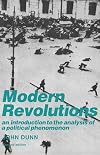
Jcvogan1, your short review of this book is right on target. Revolutions like divorces show that no two are the same.Writing now March 20111 we see each of these Mideastern revolutions is so very different even though all are Muslim countries. This is a difficult book to read, probably because the author made it difficult,but is very important to an important subject.
Awards

You May Also Like


Associated Authors
Statistics
- Works
- 27
- Also by
- 4
- Members
- 904
- Popularity
- #28,379
- Rating
- 3.8
- Reviews
- 10
- ISBNs
- 145
- Languages
- 10
- Favorited
- 1