
Bryan Caplan
Author of The Myth of the Rational Voter: Why Democracies Choose Bad Policies
About the Author
Bryan Caplan is professor of economics at George Mason University. His books include Selfish Reasons to Have More Kids: Why Being a Great Parent Is Less Work and More Fun Than You Think. Twitter @bryan_caplan
Image credit: George Mason University faculty webpage
Works by Bryan Caplan
The Case against Education: Why the Education System Is a Waste of Time and Money (2018) 265 copies, 7 reviews
Selfish Reasons to Have More Kids: Why Being a Great Parent is Less Work and More Fun Than You Think (2011) 146 copies, 11 reviews
Associated Works
Tagged
Common Knowledge
- Canonical name
- Caplan, Bryan
- Legal name
- Caplan, Bryan Douglas
- Birthdate
- 1971-04-08
- Gender
- male
- Education
- University of California, Berkeley (BS|Economics|1993)
Princeton University (PhD|Economics|1997) - Occupations
- economist
universtiy professor - Organizations
- George Mason University
Mercatus Center - Nationality
- USA
- Birthplace
- Los Angeles, California, USA
- Places of residence
- Oakton, Virginia, USA
Berkeley, California, USA
Princeton, New Jersey, USA - Associated Place (for map)
- USA
Members
Reviews

In graphic non-fiction form, libertarian economist and immigration policy expert Caplan discusses how completely unrestricted immigration into and out of the United States is the best option morally, culturally, legally, and ethically. He breaks down every possible argument against open borders, pointing out for almost all of them that they are based on fears of things that already can and do happen with very restricted borders, and calls immigration restrictions “a solution in search of a show more problem”.
This book came out in 2019, when I was reading much less, and it’s just a coincidence that I am finally reading it now, in a moment when the artificial divide between “legal” and “illegal” immigration is in the news again. This book is not really for me - I don’t care about the GDP or whatever “American culture” is. I don’t really agree with Caplan on most of his non-open-borders-related positions, but in a way that’s what makes this book so powerful and important. He shows me how to talk to people like him, and to break through any arguments they might have. I do think that he misses that most people who screech about immigration are doing it out of pure racism and xenophobia, but at least breaking through their other arguments will expose that.
Weinersmith’s illustrations are, as always, a fucking delight. show less
This book came out in 2019, when I was reading much less, and it’s just a coincidence that I am finally reading it now, in a moment when the artificial divide between “legal” and “illegal” immigration is in the news again. This book is not really for me - I don’t care about the GDP or whatever “American culture” is. I don’t really agree with Caplan on most of his non-open-borders-related positions, but in a way that’s what makes this book so powerful and important. He shows me how to talk to people like him, and to break through any arguments they might have. I do think that he misses that most people who screech about immigration are doing it out of pure racism and xenophobia, but at least breaking through their other arguments will expose that.
Weinersmith’s illustrations are, as always, a fucking delight. show less
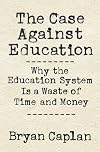
A book that lays out the case for the signalling model of education, where the point of education isn't so much the content as the paper saying you jumped the hurdles. Caplan lets the fact that everyone reading the book has been through the paper chase themselves weigh heavily in favour of his argument. The model persuasively explains the mystery of credential inflation and how despite losing more and more time to education we don't seem to have gained much benefit and instead just have show more raised a bar to the job market shielding jobs that used to be accessible straight out of highschool.
If there's a knock on the book it's that it really only considers its own niche libertarian take of dismantling the whole thing. If the content of schooling is so mismatched from life, why can't we change the curriculum? Caplan waves away the alternative of free education being available online because the signalling model shows the paper chase to be the important part, but having a path to gaining a diploma that's indistinguishable from a "real" one is something government could mandate - make universities have to hold open test taking and be forced to give diplomas to those who pass. This would also create a massive incentive to actually teach students, since they are now competing directly with cheaper or even free alternatives.
Despite the crude solutions department of the book sounding more like "burn it all down", the way he lays out and examines the signalling model compared to the alternatives is very thorough, and it's difficult to see ways to debunk the main case, and it's such an explosive view that it really requires a long and well thought through rebuttal from a side of politics that would rather ignore it and keep screaming for more money to throw down the pit. show less
If there's a knock on the book it's that it really only considers its own niche libertarian take of dismantling the whole thing. If the content of schooling is so mismatched from life, why can't we change the curriculum? Caplan waves away the alternative of free education being available online because the signalling model shows the paper chase to be the important part, but having a path to gaining a diploma that's indistinguishable from a "real" one is something government could mandate - make universities have to hold open test taking and be forced to give diplomas to those who pass. This would also create a massive incentive to actually teach students, since they are now competing directly with cheaper or even free alternatives.
Despite the crude solutions department of the book sounding more like "burn it all down", the way he lays out and examines the signalling model compared to the alternatives is very thorough, and it's difficult to see ways to debunk the main case, and it's such an explosive view that it really requires a long and well thought through rebuttal from a side of politics that would rather ignore it and keep screaming for more money to throw down the pit. show less
When I described this as a frank plea for resegregation, my spouse said I was being too kind. Only read this if you need to understand the details of the arguments that the right-wing Maoists in the US make to justify their destruction of education. He argues that government support for education—all education, though he’s willing to deal with fellow travelers who just want to destroy from college on—should be eliminated. Although it’s good to read and know basic arithmetic, he says, show more most classes in college are useless. Most people who take Spanish don’t become translators, most people who take calculus don’t become mathematicians or use calculus in their jobs, most people who take history classes don’t need history in their jobs, etc. Mendacity and bullshit drip from every proposition. He argues that graduating college is largely signalling and therefore wasteful: it mostly just blesses capacities that you entered college with. Specifically, graduating demonstrates that you have enough intelligence combined with rule-following/agreeability to be a docile employee, which is why students (all of them, apparently) seek easy courses even after working hard to be admitted into exclusive institutions. I’ll try not to go all “and another thing!” here but among the problems: Just like you don’t get Shakespeare without 1000 forgotten playwrights who weren’t much good, just like “half of all the money I spend on advertising is wasted; the trouble is, I can’t tell which half,” education does vary in its effects in unexpected ways! When some seeds come up but not all do, you may well want to investigate to see whether you can do better, but the fact that not all seeds blossomed doesn’t make the process a “waste.” But the book posits capabilities that are fixed by, at the latest, adolescence, making further education beyond reading and calculating a tip useless. It’s a plea for resegregation because that’s not how signalling works (even accepting that education has no value for itself, or for the citizenry). People who can fund their kids’ education will still do so; employers looking for signals in a world where most people can’t afford education will use wealth, race, and other worse signals instead; people who might be great doctors if they’d gotten more opportunities earlier will be denied the chance. (He does concede that education is useful if you’re going to be a doctor.) (Don’t get me started on the contempt for the actual skills required by “most jobs,” delivered with simpering condescension because he, a professor, is willing to joke that he himself has never had a “real job,” or the use of “hippie” (seriously!) as his model of a misfit.) show less
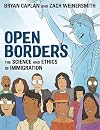
Economist Bryan Caplan and cartoonist Zachary Weinersmith. What a bizarro-world combo, yet oddly super compelling. This is a personal favorite for me because it combines two passions of mine: advocacy for robust immigration reform (specifically pro-open borders) and the wit and art of the Saturday Morning Breakfast Cereal webcomic. I couldn't wait to get my hands on this book when it was first announced, and was thrilled to attend their book launch event at the Cato Institute. What they show more accomplished in this book is exactly what I think has been needed in the immigration debate: an argument for the extreme that doesn't come across as condescending or irrational.
Caplan lays out the economic and philosophical/moral principals that back a case for open borders in a way that gets to the crux of it all, while being easy to digest. Caplan's referencing real world examples and hypotheticals to explain each point and break down the minutiae really made it easy to follow each concept. Caplan systematically dismantles each argument against open borders, whether it be economic arguments, national security/law and order, or just purely moral arguments. I thought one of the book's strongest sections is where Caplan takes on the main different ethical frameworks and shows how each one makes the case for open borders. It really demonstrated how arguing against immigration really relies on fear rather than logic, undermining many of the arguments against it.
This is the kind of book needed in a time when immigration has become such a prominent issue in global, national, and local politics. While personally I am pro-open borders myself, I understand that the political realities make this a near impossibility, at least in my lifetime. But as Caplan explains, while he too is pro-open borders, his goal is to shift the Overton Window to make immigration liberalization a more viable political position. By making open borders a mainstream position, but still the extreme position, it makes other immigration liberalization measures more reasonable to the general public. By removing the stigma of "only radicals believe in open borders," we can make the case for immigration liberalization more readily accepted.
I truly believe that everyone needs to read this book. Not just people who might be on the fence about open borders, but people fully opposed to it, and people fully in favor of it too. There's much to be gained by reading Bryan and Zach's work, whether its a changing of your opposition to immigration, or a better understanding of the arguments to be made in favor of it to make you a better advocate for it. show less
Caplan lays out the economic and philosophical/moral principals that back a case for open borders in a way that gets to the crux of it all, while being easy to digest. Caplan's referencing real world examples and hypotheticals to explain each point and break down the minutiae really made it easy to follow each concept. Caplan systematically dismantles each argument against open borders, whether it be economic arguments, national security/law and order, or just purely moral arguments. I thought one of the book's strongest sections is where Caplan takes on the main different ethical frameworks and shows how each one makes the case for open borders. It really demonstrated how arguing against immigration really relies on fear rather than logic, undermining many of the arguments against it.
This is the kind of book needed in a time when immigration has become such a prominent issue in global, national, and local politics. While personally I am pro-open borders myself, I understand that the political realities make this a near impossibility, at least in my lifetime. But as Caplan explains, while he too is pro-open borders, his goal is to shift the Overton Window to make immigration liberalization a more viable political position. By making open borders a mainstream position, but still the extreme position, it makes other immigration liberalization measures more reasonable to the general public. By removing the stigma of "only radicals believe in open borders," we can make the case for immigration liberalization more readily accepted.
I truly believe that everyone needs to read this book. Not just people who might be on the fence about open borders, but people fully opposed to it, and people fully in favor of it too. There's much to be gained by reading Bryan and Zach's work, whether its a changing of your opposition to immigration, or a better understanding of the arguments to be made in favor of it to make you a better advocate for it. show less
Lists
Awards


You May Also Like


Associated Authors
Statistics
- Works
- 13
- Also by
- 1
- Members
- 1,362
- Popularity
- #18,873
- Rating
- 3.8
- Reviews
- 54
- ISBNs
- 27
- Languages
- 4
- Favorited
- 2