
Don Carpenter (1931–1995)
Author of Hard Rain Falling
Series
Works by Don Carpenter
Tagged
Common Knowledge
- Birthdate
- 1931-03-16
- Date of death
- 1995-07-27
- Gender
- male
- Cause of death
- suicide (gunshot)
- Nationality
- USA
- Birthplace
- Berkeley, California, USA
- Place of death
- Mill Valley, California, USA
- Associated Place (for map)
- California, USA
Members
Reviews
Wanting is not the same as having; having is not the same as making.
You can love and love, never saying the word, never getting eye-to-eye with the core of your need and gift, and be no closer to the beloved than bodies can get. Only children can be utterly consuming love objects, though far too often they aren't. And lovers? Far too scary to love unguardedly, I think, but most don't even get near to the guardrails before swerving back to the middle of the road.
It's the carnage from their show more fear-driven lurches that takes out the innocent bystanders. That's what this story is: The record of Jack's fear-driven, rage-fueled lurchings back and forth as love ungiven, ungivable, rots him from within, taking an agonizingly slow time to finish its dreadful work.
A dark and terrible story about a life unlived, only sweated out. show less
You can love and love, never saying the word, never getting eye-to-eye with the core of your need and gift, and be no closer to the beloved than bodies can get. Only children can be utterly consuming love objects, though far too often they aren't. And lovers? Far too scary to love unguardedly, I think, but most don't even get near to the guardrails before swerving back to the middle of the road.
It's the carnage from their show more fear-driven lurches that takes out the innocent bystanders. That's what this story is: The record of Jack's fear-driven, rage-fueled lurchings back and forth as love ungiven, ungivable, rots him from within, taking an agonizingly slow time to finish its dreadful work.
A dark and terrible story about a life unlived, only sweated out. show less

Orphan, street urchin, poolhall haunt, prisoner, parking attendant, drunkard, a divorced father with anger issues. The story of Jack Levitt is the story of a life unlived. An insufferable man who blames his lack of ambition and talent on his surroundings and his circumstances. To some extent, he's right. Getting forgotten and left to rot in solitary as a teenager will do a number on your mental health for the rest of your life. There's a part of me that sympathizes with his struggles. And show more yet, his actions and outlook on the world do him no favors. Despite all of his self-reflections and philosophical musings, he is an ugly brute of a man; and he knows it.
Carpenter's writing is the highlight of this crime/noir novel. It's clear, precise, no-nonsense stuff; you'll find no flamboyancy here. Yet his prose makes Hard Rain Falling so readable and engaging, especially since Carpenter has a propensity for capturing emotions. I much appreciated the momentary glimpses of ironic humor that he slips in every now and then: a relief after so much dark material.
Hard Rain Falling left me feeling depressed, cold, and afflicted with a sort of malaise. Part of this was expected. Jack's life is grim, and even when events take a turn for the better he insists on getting in his own way. Part of that was also because of the unnecessary ending that I felt fought against most of the rest of Jack's story.
I'll admit that I'm still getting my feet underneath me with this genre of fiction, so I don't have the most say. Even so, this is high on my re-read list. It has an amazing opening hundred pages, and a tenderness in some of the relationships lurks under the violence and neglect. show less
Carpenter's writing is the highlight of this crime/noir novel. It's clear, precise, no-nonsense stuff; you'll find no flamboyancy here. Yet his prose makes Hard Rain Falling so readable and engaging, especially since Carpenter has a propensity for capturing emotions. I much appreciated the momentary glimpses of ironic humor that he slips in every now and then: a relief after so much dark material.
Hard Rain Falling left me feeling depressed, cold, and afflicted with a sort of malaise. Part of this was expected. Jack's life is grim, and even when events take a turn for the better he insists on getting in his own way. Part of that was also because of the unnecessary ending that I felt fought against most of the rest of Jack's story.
I'll admit that I'm still getting my feet underneath me with this genre of fiction, so I don't have the most say. Even so, this is high on my re-read list. It has an amazing opening hundred pages, and a tenderness in some of the relationships lurks under the violence and neglect. show less

Some novels hit home hard, they make their reading so uncomfortable we avert our eyes from the page, hoping the characters won't make the same foolish mistakes we once made. We cringe, like we might upon looking at a faded Polaroid from our awkward adolescence. Don Carpenter's Hard Rain Falling, back in print since September 2009, thanks to NYRB Classics (muchos gracias, NYRB!!) is one such novel for me.
Jack Leavitt, an inadvertent anti-hero extraordinaire as anti-heroic as Taxi Driver's show more Travis Bickle (sans psychosis) has recently run away from an orphanage. He's seventeen and just been locked out of his dirt bag motel room. It's already dusk when we meet him, and only going to get darker.
We know both his parents are deceased from the stark prologue to this, Don Carpenter's first published book, circa 1966. Jack's Dad got kicked in the head by a horse: dead at twenty-six. His Mom died more violently a short time later by her own hand: shotgun blast to the head. Their violent deaths are poetically apropos of the violence and emotional chaos awaiting Jack's impending adult life.
The novel is a merciless marvel of writing. As readers we are eyewitnesses to a lifetime of pain and loss in the character of Jack Leavitt: the boy whom fate abandoned, the adolescent who was understandably wounded and proceeded to make heart wrenchingly poor decisions for which he would pay the consequences the rest of his traumatized life. If Hard Rain Falling were not so gorgeously crafted, it would indeed be impossibly hard to read.
If you're like me, you've probably known some Jack Leavitts or were perhaps a Jack Leavitt yourself. A pool hall punk, drunk most days, broke in more ways than one. Unemployed, Jack is forced to crash in pads, cars, derelict tenements. In Jack's harsh Portland backstreets, there's no Payday Loans or parents to bail him out. No family or friends, except his Minnesota Fats-wannabe pool hustling buddy, Billy Lancing, and fellow-whorehouse-aficionado, Denny Mellon. Jack "was legally a fugitive from the orphanage, and in that sense 'wanted'. He did not feel 'wanted'—he felt very unwanted.".
What does an unwanted and undisciplined teen out on his own for the first time in life do without adult supervision? He ''just wanted some money...a piece of ass...a big dinner...a bottle of whiskey...a car...some new clothes and thirty-dollar shoes...a .45 automatic...a record player...so he could lie in bed with the whiskey and the piece of ass and listen to 'How High the Moon'...''.
What he does instead is wash dirty dishes at a cheap dive. Since he has no money after rent for the finer things in life, he fails to find that piece of ass or piece of mind. What he does is place bets in pool halls he can't pay. Becomes a Cadillac thief, break-and-enters a middle class house that seems "like a mansion" after the orphanage dump he escaped from. What he does lands him in jail, surprise surprise.
Unsurprisingly, Jack is duped by a seemingly sympathetic district attorney who gave him his word that he would take his rough upbringing into account and give him a good deal: Probation, time served. The lawyer never said a word about San Quentin! Screwed by the System yet again, how could Jack have trusted the System to finally do him right? Because he wanted to believe the System, the only pathetic parents he'd ever had, would finally take proper care of him. Nope.
In prison, Jack develops what most people learn naturally by growing up cared for—loved—when they're taught the wisdom of sacrifice, of self-discipline and self-control. Jack will eventually master his impulsiveness, so that he can experience genuine love toward a pool hustling buddy from his Portland past who becomes his cell mate, and who demonstrates to Jack the greatest love imaginable out in the prison yard one violent afternoon, but is it too late?
Don Carpenter pulverizes the then unspoken societal taboo of consensual inmate sex, as he sensitively and convincingly handles the reality, describing how the inmate's emotional and psychological survival are at stake; even among those who prior to prison were as promiscuously heterosexual as they come, nonetheless needed the sex in order to remain sane. It's like the inmates do it to keep from being reminded daily that their bodies are essentially graves. The guards look the other way because they know it makes the captives easier to control.
The love Jack learns about in prison unfortunately doesn't translate well upon his release. He marries an unscrupulous woman in a rush—a party-hearty girl, Sally—in Vegas, while he's on parole. She's the way Jack was prior to his prison sentence, undisciplined, narcissistic, out of control, the sad product of a different type of abuse than what Jack experienced altogether. In an ironic and twisted role reversal that spoke directly to the times, we see Jack think that having a baby with Sally will somehow miraculously cure their marriage's ills and her infidelity.
By the time this tragic novel ends, Carpenter's ruthless hard rain is still falling—Jack's deep and abiding loneliness is mired in the mud of all that rain. It is still his life's most faithful mate. show less
Jack Leavitt, an inadvertent anti-hero extraordinaire as anti-heroic as Taxi Driver's show more Travis Bickle (sans psychosis) has recently run away from an orphanage. He's seventeen and just been locked out of his dirt bag motel room. It's already dusk when we meet him, and only going to get darker.
We know both his parents are deceased from the stark prologue to this, Don Carpenter's first published book, circa 1966. Jack's Dad got kicked in the head by a horse: dead at twenty-six. His Mom died more violently a short time later by her own hand: shotgun blast to the head. Their violent deaths are poetically apropos of the violence and emotional chaos awaiting Jack's impending adult life.
The novel is a merciless marvel of writing. As readers we are eyewitnesses to a lifetime of pain and loss in the character of Jack Leavitt: the boy whom fate abandoned, the adolescent who was understandably wounded and proceeded to make heart wrenchingly poor decisions for which he would pay the consequences the rest of his traumatized life. If Hard Rain Falling were not so gorgeously crafted, it would indeed be impossibly hard to read.
If you're like me, you've probably known some Jack Leavitts or were perhaps a Jack Leavitt yourself. A pool hall punk, drunk most days, broke in more ways than one. Unemployed, Jack is forced to crash in pads, cars, derelict tenements. In Jack's harsh Portland backstreets, there's no Payday Loans or parents to bail him out. No family or friends, except his Minnesota Fats-wannabe pool hustling buddy, Billy Lancing, and fellow-whorehouse-aficionado, Denny Mellon. Jack "was legally a fugitive from the orphanage, and in that sense 'wanted'. He did not feel 'wanted'—he felt very unwanted.".
What does an unwanted and undisciplined teen out on his own for the first time in life do without adult supervision? He ''just wanted some money...a piece of ass...a big dinner...a bottle of whiskey...a car...some new clothes and thirty-dollar shoes...a .45 automatic...a record player...so he could lie in bed with the whiskey and the piece of ass and listen to 'How High the Moon'...''.
What he does instead is wash dirty dishes at a cheap dive. Since he has no money after rent for the finer things in life, he fails to find that piece of ass or piece of mind. What he does is place bets in pool halls he can't pay. Becomes a Cadillac thief, break-and-enters a middle class house that seems "like a mansion" after the orphanage dump he escaped from. What he does lands him in jail, surprise surprise.
Unsurprisingly, Jack is duped by a seemingly sympathetic district attorney who gave him his word that he would take his rough upbringing into account and give him a good deal: Probation, time served. The lawyer never said a word about San Quentin! Screwed by the System yet again, how could Jack have trusted the System to finally do him right? Because he wanted to believe the System, the only pathetic parents he'd ever had, would finally take proper care of him. Nope.
In prison, Jack develops what most people learn naturally by growing up cared for—loved—when they're taught the wisdom of sacrifice, of self-discipline and self-control. Jack will eventually master his impulsiveness, so that he can experience genuine love toward a pool hustling buddy from his Portland past who becomes his cell mate, and who demonstrates to Jack the greatest love imaginable out in the prison yard one violent afternoon, but is it too late?
Don Carpenter pulverizes the then unspoken societal taboo of consensual inmate sex, as he sensitively and convincingly handles the reality, describing how the inmate's emotional and psychological survival are at stake; even among those who prior to prison were as promiscuously heterosexual as they come, nonetheless needed the sex in order to remain sane. It's like the inmates do it to keep from being reminded daily that their bodies are essentially graves. The guards look the other way because they know it makes the captives easier to control.
The love Jack learns about in prison unfortunately doesn't translate well upon his release. He marries an unscrupulous woman in a rush—a party-hearty girl, Sally—in Vegas, while he's on parole. She's the way Jack was prior to his prison sentence, undisciplined, narcissistic, out of control, the sad product of a different type of abuse than what Jack experienced altogether. In an ironic and twisted role reversal that spoke directly to the times, we see Jack think that having a baby with Sally will somehow miraculously cure their marriage's ills and her infidelity.
By the time this tragic novel ends, Carpenter's ruthless hard rain is still falling—Jack's deep and abiding loneliness is mired in the mud of all that rain. It is still his life's most faithful mate. show less
As for the true crime of his life, the crime of being born without parents, the crime of being physically strong and quick, the crime of not having a puritan conscience, the crime of existing in a society in which he and everybody else permitted crime without rising up un outrage: well, he was purely and perfectly guilty here, too, as was everybody else
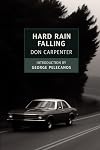
Apart from being highly praised by Chris Offutt and George Pelecanos, being reprinted as a classic by the NYBR and having a stunning cover, show more what did I like about Hard Rain Falling? In short, pretty much everything. Easy to love but difficult to define, it’s been labelled as hard-boiled /crime, but that is misleading. It’s a book about the dispossessed.
Set in the West coast in the 50’s, Jack Levitt is raised in an orphanage and drifts and hustles his way through a life of petty crime, pool halls and dosshouses.
Jack nodded and drank some of his beer. He did not add that he had also bucked logs, worked in a cannery and a furniture factory, robbed gas stations, rolled drunks, and lived in half a hundred arid rooms, pretended the vacuum was freedom, wakened almost daily to the fear that time was a dry wind brushing away his youth and his strength, and slept through as many nightmares as there were nights to dream.
Intelligent and philosophical, it takes on some pithy tropes – race relations, crime, homosexuality, the penal system.
The idea of prison is punishment, any reforming done is strictly incidental. Society don’t give a fuck what happens to you, and you know it. Society is an animal, just like the rest of us
Jack’s attempts to be accepted invariably fail on every level. Written in cinematic prose, its unpretentious and unpredictable. I was in bits at the end, not because it’s a sentimental story, far from it, but because Jack’s destiny is truly devastating. show less
Apart from being highly praised by Chris Offutt and George Pelecanos, being reprinted as a classic by the NYBR and having a stunning cover, show more what did I like about Hard Rain Falling? In short, pretty much everything. Easy to love but difficult to define, it’s been labelled as hard-boiled /crime, but that is misleading. It’s a book about the dispossessed.
Set in the West coast in the 50’s, Jack Levitt is raised in an orphanage and drifts and hustles his way through a life of petty crime, pool halls and dosshouses.
Jack nodded and drank some of his beer. He did not add that he had also bucked logs, worked in a cannery and a furniture factory, robbed gas stations, rolled drunks, and lived in half a hundred arid rooms, pretended the vacuum was freedom, wakened almost daily to the fear that time was a dry wind brushing away his youth and his strength, and slept through as many nightmares as there were nights to dream.
Intelligent and philosophical, it takes on some pithy tropes – race relations, crime, homosexuality, the penal system.
The idea of prison is punishment, any reforming done is strictly incidental. Society don’t give a fuck what happens to you, and you know it. Society is an animal, just like the rest of us
Jack’s attempts to be accepted invariably fail on every level. Written in cinematic prose, its unpretentious and unpredictable. I was in bits at the end, not because it’s a sentimental story, far from it, but because Jack’s destiny is truly devastating. show less
Lists
You May Also Like


Associated Authors
Statistics
- Works
- 15
- Members
- 1,211
- Popularity
- #21,206
- Rating
- 4.1
- Reviews
- 32
- ISBNs
- 52
- Languages
- 7
- Favorited
- 1