
Peter Manseau
Author of Songs for the Butcher's Daughter
About the Author
Peter Manseau is the author of eight books. He is the Lilly Endowment Curator of American Religious History at the Smithsonian Institution's National Museum of American History.
Image credit: hinterer Buchumschlag
Works by Peter Manseau
The Apparitionists: A Tale of Phantoms, Fraud, Photography, and the Man Who Captured Lincoln's Ghost (2017) 201 copies, 8 reviews
Believer, Beware: First-Person Dispatches from the Margins of Faith (2009) — Editor — 44 copies, 1 review
The Apparitionists 1 copy
Tagged
Common Knowledge
- Canonical name
- Manseau, Peter
- Birthdate
- 1974-11-15
- Gender
- male
- Education
- Georgetown University (MA|Ph.D)
University of Massachusetts (BA) - Occupations
- religion scholar
curator
historian
novelist - Organizations
- National Museum of American History
Search (magazine)
Killing The Buddha - Awards and honors
- National Jewish Book Award (2008)
Sophie Brody Award (2009)
Ribalow Prize for Fiction (2009) - Nationality
- USA
- Birthplace
- Boston, Massachusetts, USA
- Places of residence
- Washington, D.C., USA
Annapolis, Maryland, USA - Associated Place (for map)
- USA
Members
Reviews
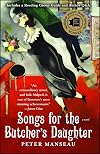
This book is a superlative tale of two intersecting lives that takes place amid a swirl of words and languages and the alphabets that produce them. The result is such a melodious harmony of coincidences that you will feel as if you are at a transcendent orchestral performance of literature. I was thrilled to discover an author with such an ability to capture the essence of characters and culture and memories in motion.
Songs for the Butcher’s Daughter has two interwoven stories: one is a show more fictitious autobiography of nonagenarian Itsik Malpesh, the self-described “last and greatest Yiddish poet in America,” who was originally from Kishinev in the Russian Empire. The second consists of “translators notes” by a young man – a recent college graduate never named – who purportedly has translated Malpesh’s life story into English. [In real life, troubadour Itzik Manger is often referred to as the “last and greatest” of Yiddish poets. One wonders if the similarity between the two names was intentional.]
In alternating voices, we learn the story of Malpesh and the story of the translator, with amazing correspondences between the two. This perhaps reflects the theme of bashert in the story, or fate, which all the characters seem to repudiate, even as it binds them all tightly together.
Malpesh was born in 1903 literally in the midst of a pogrom. [These were sometimes spontaneous and sometimes officially organized massacres directed toward Jews. Even spontaneous riots were ignored by government officials.] Hiding in a bedroom upstairs during the pogrom were Itsik’s mother, grandmother and sisters as well as the butcher’s small daughter, Sasha. The butcher had left Sasha there to go help guard the synagogue and his butchering shed. Itzik’s mother unexpectedly went into labor, and her screams alerted the Russian marauders to their location. According to family legend, everyone froze except for little Sasha, who raised her tiny fist against the intruders. From the time he could write verse, Malpesh composed poems dedicated to Sasha, who, he felt, gave him life and was his bashert. He called the collection “Songs for the Butcher’s Daughter.”
As a young boy, while supposedly studying Jewish law in a Yeshiva, Itzik surreptitiously discovers the world of Russian language as well, and becomes fascinated with words. He works as an apprentice printer for many years, all the while hoping one day to have his poems published. On the cusp of manhood, his employer and benefactor sends him to America hidden in a trunk of printers blocks, each of which features a Hebrew letter. Inside, Itzik traced the shapes, “naming the letters with which God had made the world.” After being released from the trunk by a crewman, he still could not escape its hold on him:
“Yet in my mind I remained locked among the printing blocks. As I wandered the decks and breathed the salted air, my fellow passengers – speaking languages I had never heard, wearing costumes I had never imagined – seemed to me so many jumbled letters, all waiting to be assembled into stories, poems, songs; moving together across the wordless ocean, empty as a waiting page.”
He lands in New York, and gets a job with a printer recommended back in Kishinev. He still dreams of Sasha, and finally one day, reading his poems aloud in a bar, she is there.
When Itzik finally meets Sasha, he is amazed that the reality of her is different than his verse, and also, that she was something else to him than she was to anyone else:
“How is it that we are to others what we are not to ourselves? Does a word know its own meaning? Does a letter know the sound that it signifies? How then can we pretend to know what our lives are for?”
Their involvement with one another is echoed far in the future, with the translator and a girl, Clara Feld, who works with him at the Jewish Cultural Organization, which is devoted to rescuing Yiddish books. In a rather humorously ironic twist, the translator is a Catholic passing for Jewish. He falls for Clara, and she for him, partly because he is “so Jewish!” But their relationship, like that of Itsik and Sasha, is built on a shaky scaffold of idealization, omissions, and half-truths. And yet, maybe it too is bashert.
Discussion:
There are at least three important debates taking place in this book.
One is the place of Yiddish in Jewish life. The Yiddish language is about a thousand years old. Elements of Yiddish even predated Hebrew, which became the language used strictly for religious purposes. But it was Yiddish that was always associated with Jewish culture. When the time came to settle Israel, passionate debates arose; this was the language identified with illiterates, with women, and with the abysmal status of Jews in society: shouldn’t it be abandoned? But wouldn’t that be equivalent to rejecting Jewish cultural history? These debates are waged intermittently throughout the book.
A second debate is the distinction between the semiotic (symbol, or word) and the semantic (meaning). An alphabetically-written word, of course, does not indicate “the real thing” – it is simply a linguistic symbol that corresponds to a real thing. It is therefore natural that it is represented differently in different languages. But in the process of changing the word from one language to another, the meaning invariably shifts through shades of difference also. Thus, in order to try to stay true to the "real thing" represented by the symbols, a translator must be an active participant in the process. In this book, one way that the translator becomes an active participant is by virtue of living a very parallel life to that of Malpesh.
The translator's active participation is also inherent on a meta level because of the very nature of his charge. The author evinces awareness that the whole idea of translation is central to the Jewish faith. The lack of “pure” or objective meaning in text was recognized by early Jewish sages, and viewed as positive: one must come to faith by active engagement. In fact, the Hebrew Scriptures contain only consonants, not vowels, so that the possibility of plural understandings above and beyond the contingency of text forces the worshipper into a creative process. Furthermore, the Talmud, which is the Jewish commentary on the law, reflects this dialogic understanding. The main text is centered on the page, surrounded by annotations from scholars in different ages. This encourages the students of the Talmud to participate in the making of meaning as well, and to see in media as well as message that "truth" depends on interpretation.
Somewhat amusingly, the Talmud holds that even God has no authority in the interpretation of the Scriptures, because in Exodus (supposedly the word of God) it is said “One must incline after the majority.” Moreover, the fact that He created a myriad of people with a myriad of opinions meant that all of these opinions were ipso facto words of God! And thus “truth” can reside in any person.
This leads us to the third debate, which interrogates the nature of truth about history: because memories are mediated by time, language, and interpretation, do we ever really know what happened? And how much does what we think happened influence who we become?
As the translator goes through Malpesh’s notebooks chronicling his life (each labeled consecutively with a letter of the Hebrew alphabet), he finds that memories are constantly renegotiated; the shadowboxes of old events are filled in over time, until finally we get something fairly close to a fully furnished memory about which all agree. Words are magic, Itsik tells Sasha, and she scoffs. But in the end it is words that finally brings out something approximating the truth, and leads them all to their true bashert.
Evaluation: The autobiography of Malpesh is rich with unforgettable characters; a more or less accurate portrayal of what it was like for Jews at the beginning of the 20th Century in Russia and during one of the peaks of immigration in New York; and a portrait of a man you come to understand as well as you can understand any man. The translator, too, is a wonderfully sympathetic character that you want to know, and feel that you do know. With excellent writing, an imaginative plot, a bit of Isaac Bashevis Singer and a bit of Richard Powers, this is a beautifully-crafted piece of literature. It has romance, it has history, but above-all, it has intelligence and introspection. Highly recommended. show less
Songs for the Butcher’s Daughter has two interwoven stories: one is a show more fictitious autobiography of nonagenarian Itsik Malpesh, the self-described “last and greatest Yiddish poet in America,” who was originally from Kishinev in the Russian Empire. The second consists of “translators notes” by a young man – a recent college graduate never named – who purportedly has translated Malpesh’s life story into English. [In real life, troubadour Itzik Manger is often referred to as the “last and greatest” of Yiddish poets. One wonders if the similarity between the two names was intentional.]
In alternating voices, we learn the story of Malpesh and the story of the translator, with amazing correspondences between the two. This perhaps reflects the theme of bashert in the story, or fate, which all the characters seem to repudiate, even as it binds them all tightly together.
Malpesh was born in 1903 literally in the midst of a pogrom. [These were sometimes spontaneous and sometimes officially organized massacres directed toward Jews. Even spontaneous riots were ignored by government officials.] Hiding in a bedroom upstairs during the pogrom were Itsik’s mother, grandmother and sisters as well as the butcher’s small daughter, Sasha. The butcher had left Sasha there to go help guard the synagogue and his butchering shed. Itzik’s mother unexpectedly went into labor, and her screams alerted the Russian marauders to their location. According to family legend, everyone froze except for little Sasha, who raised her tiny fist against the intruders. From the time he could write verse, Malpesh composed poems dedicated to Sasha, who, he felt, gave him life and was his bashert. He called the collection “Songs for the Butcher’s Daughter.”
As a young boy, while supposedly studying Jewish law in a Yeshiva, Itzik surreptitiously discovers the world of Russian language as well, and becomes fascinated with words. He works as an apprentice printer for many years, all the while hoping one day to have his poems published. On the cusp of manhood, his employer and benefactor sends him to America hidden in a trunk of printers blocks, each of which features a Hebrew letter. Inside, Itzik traced the shapes, “naming the letters with which God had made the world.” After being released from the trunk by a crewman, he still could not escape its hold on him:
“Yet in my mind I remained locked among the printing blocks. As I wandered the decks and breathed the salted air, my fellow passengers – speaking languages I had never heard, wearing costumes I had never imagined – seemed to me so many jumbled letters, all waiting to be assembled into stories, poems, songs; moving together across the wordless ocean, empty as a waiting page.”
He lands in New York, and gets a job with a printer recommended back in Kishinev. He still dreams of Sasha, and finally one day, reading his poems aloud in a bar, she is there.
When Itzik finally meets Sasha, he is amazed that the reality of her is different than his verse, and also, that she was something else to him than she was to anyone else:
“How is it that we are to others what we are not to ourselves? Does a word know its own meaning? Does a letter know the sound that it signifies? How then can we pretend to know what our lives are for?”
Their involvement with one another is echoed far in the future, with the translator and a girl, Clara Feld, who works with him at the Jewish Cultural Organization, which is devoted to rescuing Yiddish books. In a rather humorously ironic twist, the translator is a Catholic passing for Jewish. He falls for Clara, and she for him, partly because he is “so Jewish!” But their relationship, like that of Itsik and Sasha, is built on a shaky scaffold of idealization, omissions, and half-truths. And yet, maybe it too is bashert.
Discussion:
There are at least three important debates taking place in this book.
One is the place of Yiddish in Jewish life. The Yiddish language is about a thousand years old. Elements of Yiddish even predated Hebrew, which became the language used strictly for religious purposes. But it was Yiddish that was always associated with Jewish culture. When the time came to settle Israel, passionate debates arose; this was the language identified with illiterates, with women, and with the abysmal status of Jews in society: shouldn’t it be abandoned? But wouldn’t that be equivalent to rejecting Jewish cultural history? These debates are waged intermittently throughout the book.
A second debate is the distinction between the semiotic (symbol, or word) and the semantic (meaning). An alphabetically-written word, of course, does not indicate “the real thing” – it is simply a linguistic symbol that corresponds to a real thing. It is therefore natural that it is represented differently in different languages. But in the process of changing the word from one language to another, the meaning invariably shifts through shades of difference also. Thus, in order to try to stay true to the "real thing" represented by the symbols, a translator must be an active participant in the process. In this book, one way that the translator becomes an active participant is by virtue of living a very parallel life to that of Malpesh.
The translator's active participation is also inherent on a meta level because of the very nature of his charge. The author evinces awareness that the whole idea of translation is central to the Jewish faith. The lack of “pure” or objective meaning in text was recognized by early Jewish sages, and viewed as positive: one must come to faith by active engagement. In fact, the Hebrew Scriptures contain only consonants, not vowels, so that the possibility of plural understandings above and beyond the contingency of text forces the worshipper into a creative process. Furthermore, the Talmud, which is the Jewish commentary on the law, reflects this dialogic understanding. The main text is centered on the page, surrounded by annotations from scholars in different ages. This encourages the students of the Talmud to participate in the making of meaning as well, and to see in media as well as message that "truth" depends on interpretation.
Somewhat amusingly, the Talmud holds that even God has no authority in the interpretation of the Scriptures, because in Exodus (supposedly the word of God) it is said “One must incline after the majority.” Moreover, the fact that He created a myriad of people with a myriad of opinions meant that all of these opinions were ipso facto words of God! And thus “truth” can reside in any person.
This leads us to the third debate, which interrogates the nature of truth about history: because memories are mediated by time, language, and interpretation, do we ever really know what happened? And how much does what we think happened influence who we become?
As the translator goes through Malpesh’s notebooks chronicling his life (each labeled consecutively with a letter of the Hebrew alphabet), he finds that memories are constantly renegotiated; the shadowboxes of old events are filled in over time, until finally we get something fairly close to a fully furnished memory about which all agree. Words are magic, Itsik tells Sasha, and she scoffs. But in the end it is words that finally brings out something approximating the truth, and leads them all to their true bashert.
Evaluation: The autobiography of Malpesh is rich with unforgettable characters; a more or less accurate portrayal of what it was like for Jews at the beginning of the 20th Century in Russia and during one of the peaks of immigration in New York; and a portrait of a man you come to understand as well as you can understand any man. The translator, too, is a wonderfully sympathetic character that you want to know, and feel that you do know. With excellent writing, an imaginative plot, a bit of Isaac Bashevis Singer and a bit of Richard Powers, this is a beautifully-crafted piece of literature. It has romance, it has history, but above-all, it has intelligence and introspection. Highly recommended. show less
The Apparitionists: A Tale of Phantoms, Fraud, Photography, and the Man Who Captured Lincoln's Ghost by Peter Manseau
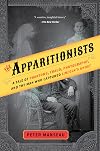
A readable history that nonetheless illustrates the peril in trying to hook a set of broad historical narrative around a single moment or individual. In this case, Peter Manseau tries to use the mid-nineteenth-century trial of William Mumler, the "spirit photographer" who claimed to have captured the ghosts of Abraham Lincoln and others on photographic plates, to tell the story of the invention of photography and photographic fraud, the rise of Spiritualism, public grief and memorialisation show more in response to the U.S. Civil War, bigger questions of hope and belief, and more. This is a lot, and neither the rather thin historical source base we've got about Mumler nor Manseau's organisational choices enable The Apparitionists to be a wholly satisfying read. Still, it's a brisk read with some good "people bought that?" moments—and you know they've got to be good to get me to do a doubletake in 2021, the year when credulous gullibility and wilful ignorance seems almost to be in fashion. show less
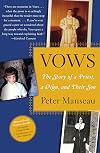
When folks get wounded by the church the response is usually bitter resentment or chucking it all; however, for the deeply spiritually connected there's a third choice that one must go on. This is the choice of pilgrimage. On the one hand there's the wound itself, but then there's the passionate tug into the this gracefully wicked beast called the Body of Christ. This is the journey Peter Manseau takes in Vows. His father is a priest (still ordained) and his mother was a former nun both of show more whom still love the church in all its complexities. Peter is an excellent writer and reminds me of a less wordy Pat Conroy. The book explores the faith journey of his mother, father, and his own role as questioner to this mystical journey. This is a book that treats the church with the respect it deserves while also slinging just enough sacred cow poop to remind the church and those that preside in leadership to be very cautious with the charge they've been given. show less
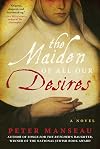
This novel caught my attention because it was recommended to fans of Maggie O’Farrell and Emma Donoghue, two writers I really like.
The setting is an isolated convent in 14th century England about 20 years after the Black Death. The duration is 24 hours during which a blizzard rages. A bishop is launching an investigation because of rumours of heresy. Mother John, the abbess, does indeed supplement canonical readings with passages from the Book of Ursula, the teachings of the charismatic show more founder of the order which are not in line with patriarchal dogma. Father Francis, the resident priest, was exiled to the remote convent as a punishment, and his relationship with the nuns is acrimonious so he cannot be relied on to defend them.
Both the founder and the current abbess have feminist leanings. Mother Ursula founded the convent to create a place where women would not be “’at the mercy of cruel men.’” When seeking permission from the bishop to establish a convent, she commented that she did not want to join one of the existing convents because they “’reek of excess and sin’” and she’d “’sooner sprout flesh and seek Holy Orders than join such a house.’” Her teachings, which are read daily by Mother John, are “meditations on the value of the nuns’ labor, inquiries into the role of women in the salvation of mankind, and an idiosyncratic accounting of their lives.” Mother John herself joined the convent because she wanted to make a choice about her life; when her father arranged a marriage for her, she understood that she would be nothing more than a “’breeding sow’” and so said, "’I would don church clothes every morning for the remainder of my days before I would wear the skin of a man of your choosing.’”
If there is a villain in the narrative, that is Father Francis. Though a priest, he soon earns a reputation as “’the choice confessor of widows’”: “His clerical robes had provided fine cover for . . . liaisons. The older women of the city spoke openly of his skill and generosity in the granting of absolution.” Once exiled to the convent, he shows little respect for the nuns. He tires of their “nunnish quibbling” and focuses on woodcarving rather than the spiritual lives of the nuns. When giving one sister her penance, he puckers his lips and then drops “a yellow-green glob into the center of the purple wine. ‘Your penance, Sister, . . . Drink. Then go and sin no more.’” He bears responsibility for what happens to Maureen but treats her with anything but Christian charity. He is wracked by guilt for “innocence destroyed because of his failure; goodness defiled because of his sin” but I wondered whether he’d ever cease being selfish and seek forgiveness directly from those he wronged.
The perspective of various characters is given, most often that of Mother Ursula, Mother John, Father Francis, and Sister Magdalene who was born in the convent and has lived her entire life there. Flashbacks reveal their backgrounds and explain the reasons for their choices and actions. The backstories of Magdalene and the bishop’s clerk clearly suggest who they are long before their identities are confirmed at the end.
There are wonderful touches of humour. Mother John goes to the necessarium before proceeding to the church “lest the necessarium become necessary in the midst of their prayers.” During his ordination exam, while reciting the Song of Solomon, Francis thought about a woman, so his instructors “could see his passion for the text even through his voluminous cassock.” Though he has chosen the priesthood, and abandoned his family’s woodcarving tools, Francis says, “’My vocation has not permanently sheathed my blade,’” an apt description from a man who quickly forgets his vows to minister to the physical needs of widows.
Though set in the distant past, the book has echoes of the present. The references to a deadly disease, the building of a wall to keep out undesirables, patriarchal authority, and the perceived inferiority of women all had me thinking about modern parallels. Perhaps the ending also has a message for us: “Search now for a blessing even in the wreckage . . . you are given an empty expanse in every direction. What will you write on this new blank page of creation?”
This is a thought-provoking book which explores how lives are shaped both by history and by personal choice.
Note: Please check out my reader's blog (https://schatjesshelves.blogspot.com/) and follow me on Twitter (@DCYakabuski). show less
The setting is an isolated convent in 14th century England about 20 years after the Black Death. The duration is 24 hours during which a blizzard rages. A bishop is launching an investigation because of rumours of heresy. Mother John, the abbess, does indeed supplement canonical readings with passages from the Book of Ursula, the teachings of the charismatic show more founder of the order which are not in line with patriarchal dogma. Father Francis, the resident priest, was exiled to the remote convent as a punishment, and his relationship with the nuns is acrimonious so he cannot be relied on to defend them.
Both the founder and the current abbess have feminist leanings. Mother Ursula founded the convent to create a place where women would not be “’at the mercy of cruel men.’” When seeking permission from the bishop to establish a convent, she commented that she did not want to join one of the existing convents because they “’reek of excess and sin’” and she’d “’sooner sprout flesh and seek Holy Orders than join such a house.’” Her teachings, which are read daily by Mother John, are “meditations on the value of the nuns’ labor, inquiries into the role of women in the salvation of mankind, and an idiosyncratic accounting of their lives.” Mother John herself joined the convent because she wanted to make a choice about her life; when her father arranged a marriage for her, she understood that she would be nothing more than a “’breeding sow’” and so said, "’I would don church clothes every morning for the remainder of my days before I would wear the skin of a man of your choosing.’”
If there is a villain in the narrative, that is Father Francis. Though a priest, he soon earns a reputation as “’the choice confessor of widows’”: “His clerical robes had provided fine cover for . . . liaisons. The older women of the city spoke openly of his skill and generosity in the granting of absolution.” Once exiled to the convent, he shows little respect for the nuns. He tires of their “nunnish quibbling” and focuses on woodcarving rather than the spiritual lives of the nuns. When giving one sister her penance, he puckers his lips and then drops “a yellow-green glob into the center of the purple wine. ‘Your penance, Sister, . . . Drink. Then go and sin no more.’” He bears responsibility for what happens to Maureen but treats her with anything but Christian charity. He is wracked by guilt for “innocence destroyed because of his failure; goodness defiled because of his sin” but I wondered whether he’d ever cease being selfish and seek forgiveness directly from those he wronged.
The perspective of various characters is given, most often that of Mother Ursula, Mother John, Father Francis, and Sister Magdalene who was born in the convent and has lived her entire life there. Flashbacks reveal their backgrounds and explain the reasons for their choices and actions. The backstories of Magdalene and the bishop’s clerk clearly suggest who they are long before their identities are confirmed at the end.
There are wonderful touches of humour. Mother John goes to the necessarium before proceeding to the church “lest the necessarium become necessary in the midst of their prayers.” During his ordination exam, while reciting the Song of Solomon, Francis thought about a woman, so his instructors “could see his passion for the text even through his voluminous cassock.” Though he has chosen the priesthood, and abandoned his family’s woodcarving tools, Francis says, “’My vocation has not permanently sheathed my blade,’” an apt description from a man who quickly forgets his vows to minister to the physical needs of widows.
Though set in the distant past, the book has echoes of the present. The references to a deadly disease, the building of a wall to keep out undesirables, patriarchal authority, and the perceived inferiority of women all had me thinking about modern parallels. Perhaps the ending also has a message for us: “Search now for a blessing even in the wreckage . . . you are given an empty expanse in every direction. What will you write on this new blank page of creation?”
This is a thought-provoking book which explores how lives are shaped both by history and by personal choice.
Note: Please check out my reader's blog (https://schatjesshelves.blogspot.com/) and follow me on Twitter (@DCYakabuski). show less
Lists
Awards


You May Also Like


Associated Authors
Statistics
- Works
- 13
- Members
- 1,467
- Popularity
- #17,513
- Rating
- 3.7
- Reviews
- 52
- ISBNs
- 59
- Languages
- 5
- Favorited
- 2