
Maria Àngels Anglada (1930–1999)
Author of The Auschwitz Violin
About the Author
Image credit: escriptors.cat
Works by Maria Àngels Anglada
El mite d'Europa 2 copies
Àlbum Maria Àngels Anglada 2 copies
Les closes. 2 copies
L'angel 2000 1 copy
Defensa de la terra 2013 1 copy
Poesía Completa 1 copy
D'infants a infants 1 copy
Traç 23 Maria Àngels Anglada 1 copy
Anglada Maria Angels 1 copy
Associated Works
Generacions : avis, mares, fills, oncles ... : una antologia temàtica de poesia (2001) — Contributor, some editions — 2 copies, 1 review
Memòria de Maria Antònia Salvà — Contributor — 1 copy
Annals de l'Institut d'Estudis Empodanesos 1981-1982 — Contributor — 1 copy
Annals Institut d'Estudis Empordanesos 1996 — Contributor — 1 copy
Tagged
Common Knowledge
- Canonical name
- Anglada, Maria Àngels
- Legal name
- Anglada i d'Abadal, Maria Àngels
- Birthdate
- 1930-03-30
- Date of death
- 1999-04-23
- Gender
- female
- Education
- University of Barcelona (Classical Philology)
- Occupations
- poet
novelist
literary critic
essayist - Organizations
- Institute of Catalan Studies (Philological Section)
- Awards and honors
- Creu de Sant Jordi (1994)
Josep Pla Award (1978)
Lletra d'Or Prize (1985)
Girona Literary Prize (1994)
Octavi Pellissa Prize (1998) - Agent
- Pontas Agency
- Short biography
- Maria Àngels Anglada was born in Vic, near Barcelona, Spain, to a Catalan family passionate about music. She graduated from the University of Barcelona and began working as a professor of Classics. She translated texts from Latin and Greek to the Catalan language, and in 1972 started publishing her own novels, poetry, essays, and literary criticism in Catalan. She achieved fame with her first novel Les Closes (1978), which was awarded the Josep Pla Prize. She made several trips to Italy and Greece, including to the island of Mytilene, which were a source of inspiration for her writings, which roamed through the places and themes of the ancient world.
- Nationality
- Catalonia
Spain - Birthplace
- Vic, Catalonia, Spain
- Places of residence
- Figueres, Alt Empordà, Catalonia, Spain
- Place of death
- Figueres, Catalonia, Spain
- Burial location
- Vilamacolum, Catalonia, Spain
- Map Location
- Spain
Members
Reviews
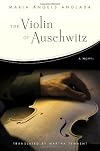
~ STRONG IN ITS QUIET SIMPLICITY, BUT I FELT SOMEWHAT DISCONNECTED FROM THE CHARACTERS (3.5 stars) ~
Maria Àngels Anglada is described as "one of the most important figures of Catalan twentieth-century literature," and her talent is evident in this novel. Both the story and the writing were simple and I don't intend that as a criticism, because in my opinion this simplicity is the book's greatest strength.
The Auschwitz Violin has two frames to its central tale, so it's a story within a story show more within a story. The central one tells of Daniel, a young man in a concentration camp. He was a violin maker by trade and now "works" as a carpenter in the camp. Through a turn of events, he is assigned the task of creating a violin for Sauckel, the camp commander, who collects musical instruments. Bronislaw, a young violinist, will be the one to play the violin once it's completed.
As with everything during that horrific time, nothing is clearly defined, yet everything carries an aspect of danger, with the threat of death ever present. Daniel and Bronislaw know that their lives depend on this one instrument and this one performance, though even should they survive this test, who knows what the next one will be.
The book is a very short one (109 pages), which contributed to the feeling of simplicity, yet also to the lack of depth. I did not feel especially connected to the characters, nor implicated in and bound to what their fate would be. There were a few magical moments filled with poignancy, reflecting the utter desperation and helplessness of the prisoners' situation, and showing their amazing strength of spirit. But certain other parts did not really draw me in - most notably Daniel's process of and progress in creating the violin.
The inhumane treatment that is mentioned almost in passing and the real documents that begin each chapter add to the starkness of the story and the characters' reality. Anglada's language is also at times poetic and it often contrasts with what it is she is describing. Writing of the SS officers: "From their serene (or fanatical) eyes and delicate, heinous hands hung a thin thread: life or the illusion of it" (p18). And describing the morning after several prisoners have been murdered: "The sun began shamelessly to unravel the fog, banishing it from the sky, and the names of the murdered were swept away by the wind, removed to nothingness" (p66).
Anglada is talented with words, but for the most part the book didn't affect me as much as I thought it would. The exception to this was the ending, in which the story comes full circle. These last few pages were poignant, delicate, and beautiful, and make what came before them worthwhile. I would recommend this as a library check-out though, and not a purchase.
[This review is of an advanced copy format of the book] show less
Maria Àngels Anglada is described as "one of the most important figures of Catalan twentieth-century literature," and her talent is evident in this novel. Both the story and the writing were simple and I don't intend that as a criticism, because in my opinion this simplicity is the book's greatest strength.
The Auschwitz Violin has two frames to its central tale, so it's a story within a story show more within a story. The central one tells of Daniel, a young man in a concentration camp. He was a violin maker by trade and now "works" as a carpenter in the camp. Through a turn of events, he is assigned the task of creating a violin for Sauckel, the camp commander, who collects musical instruments. Bronislaw, a young violinist, will be the one to play the violin once it's completed.
As with everything during that horrific time, nothing is clearly defined, yet everything carries an aspect of danger, with the threat of death ever present. Daniel and Bronislaw know that their lives depend on this one instrument and this one performance, though even should they survive this test, who knows what the next one will be.
The book is a very short one (109 pages), which contributed to the feeling of simplicity, yet also to the lack of depth. I did not feel especially connected to the characters, nor implicated in and bound to what their fate would be. There were a few magical moments filled with poignancy, reflecting the utter desperation and helplessness of the prisoners' situation, and showing their amazing strength of spirit. But certain other parts did not really draw me in - most notably Daniel's process of and progress in creating the violin.
The inhumane treatment that is mentioned almost in passing and the real documents that begin each chapter add to the starkness of the story and the characters' reality. Anglada's language is also at times poetic and it often contrasts with what it is she is describing. Writing of the SS officers: "From their serene (or fanatical) eyes and delicate, heinous hands hung a thin thread: life or the illusion of it" (p18). And describing the morning after several prisoners have been murdered: "The sun began shamelessly to unravel the fog, banishing it from the sky, and the names of the murdered were swept away by the wind, removed to nothingness" (p66).
Anglada is talented with words, but for the most part the book didn't affect me as much as I thought it would. The exception to this was the ending, in which the story comes full circle. These last few pages were poignant, delicate, and beautiful, and make what came before them worthwhile. I would recommend this as a library check-out though, and not a purchase.
[This review is of an advanced copy format of the book] show less
 This review was written for LibraryThing Early Reviewers.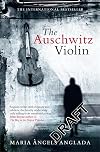
A gem of a life-affirming novella about a Jewish man who manages to survive in Auschwitz by building a violin for a musical instrument-appreciating camp commandant. The care and passion he devotes to his task illustrates the maxim that having a purpose in life can be the key to surviving in the most extreme of difficult circumstances. It also demonstrates the power of beauty and art to triumph silently over a warped and extreme ideology. Wonderful stuff.
This little novel tells a deeply moving story of survival and hope in the face of hatred and ugliness. Daniel is a young man who has been ripped from his life as a violin-maker, and the arms of his fiancee, and placed at Auschwitz. Those who are imprisoned nickname the camp "Hell." Daniel does woodworking until he fixes a violin for one of the prisoners, who plays for the commander. This catches the commander's attention and he orders Daniel to craft a violin.
The process of returning to his show more beloved art also takes Daniel, for short periods, back to his old life. It gives him a reason to live in a world where death may have seemed a kinder option. Daniel's moments of beauty and joy with his violin are juxtaposed against the horrors of the camp: beatings, torture, starvation, degradation. It is an intense book that I had to set down at times. The effect of the Holocaust on the survivors, both at the time it occurred and fifty years later, was explored with heartbreaking insightfulness.
How would you survive in a place where they had taken your family, freedom, home, your trade? Would you give up and, if you didn't, how would you find the will to get through? These are some of the many questions that came to me as I read this thought-provoking book. This is a story of survival, of the bonds of friendship which last a lifetime, of the triumph of creativity and beauty in a dark and depraved world. This little book takes you to the depths of hell, but also shows you the height of human potential. show less
The process of returning to his show more beloved art also takes Daniel, for short periods, back to his old life. It gives him a reason to live in a world where death may have seemed a kinder option. Daniel's moments of beauty and joy with his violin are juxtaposed against the horrors of the camp: beatings, torture, starvation, degradation. It is an intense book that I had to set down at times. The effect of the Holocaust on the survivors, both at the time it occurred and fifty years later, was explored with heartbreaking insightfulness.
How would you survive in a place where they had taken your family, freedom, home, your trade? Would you give up and, if you didn't, how would you find the will to get through? These are some of the many questions that came to me as I read this thought-provoking book. This is a story of survival, of the bonds of friendship which last a lifetime, of the triumph of creativity and beauty in a dark and depraved world. This little book takes you to the depths of hell, but also shows you the height of human potential. show less
The Auschwitz Violin by Maria Angels Anglada
I was very moved by this novella about a Jewish concentration camp prisoner, Daniel, who was a luthier (violin maker) by profession. Imprisoned at the Dreiflusselager (Three Rivers Camp, a sub-camp of Auschwitz) he spends his days working in the cabinetmaking shop and trying desperately to hang on to hope, meaning and his life. Never knowing when the whim of a guard or commandant will merit him a blow, a whipping, a time spent in solitary he moves show more anxiously through each day trying to maintain a sense of who he is as a man. Weakened by starvation, it is his memories that keep him going…memories of the beauty of the world, of the woman he loves, of the blue eyes of his treasured niece. But over time he finds even these memories fading and he struggles to hold on. When circumstances result in his revealing of his violin-making craft he is ordered to make a violin for the Camp Commander or risk being at the mercy of the camp doctor.
Interspersed with Daniel’s thoughts are the actions of horrendous characters, the guards the notorious camp doctor as well as actions of the humanity of his fellow prisoners and some sympathetic guards. Introducing each chapter is authentic documentation from Nazi camp records that validate the horror of the experience.
Told beautifully and humanely by the author I was moved by the emotion portrayed. Slow, languid descriptions of the memories, the actual task of crafting the instrument reminded me that this was more than a genocide account but a glimpse into the human soul. It is more than a story about a man, a violin, the concentration camps. It is a tribute to the human spirit, the power of beauty and art to sustain the human soul and the dignity that can be evidenced in the most horrid circumstances. show less
I was very moved by this novella about a Jewish concentration camp prisoner, Daniel, who was a luthier (violin maker) by profession. Imprisoned at the Dreiflusselager (Three Rivers Camp, a sub-camp of Auschwitz) he spends his days working in the cabinetmaking shop and trying desperately to hang on to hope, meaning and his life. Never knowing when the whim of a guard or commandant will merit him a blow, a whipping, a time spent in solitary he moves show more anxiously through each day trying to maintain a sense of who he is as a man. Weakened by starvation, it is his memories that keep him going…memories of the beauty of the world, of the woman he loves, of the blue eyes of his treasured niece. But over time he finds even these memories fading and he struggles to hold on. When circumstances result in his revealing of his violin-making craft he is ordered to make a violin for the Camp Commander or risk being at the mercy of the camp doctor.
Interspersed with Daniel’s thoughts are the actions of horrendous characters, the guards the notorious camp doctor as well as actions of the humanity of his fellow prisoners and some sympathetic guards. Introducing each chapter is authentic documentation from Nazi camp records that validate the horror of the experience.
Told beautifully and humanely by the author I was moved by the emotion portrayed. Slow, languid descriptions of the memories, the actual task of crafting the instrument reminded me that this was more than a genocide account but a glimpse into the human soul. It is more than a story about a man, a violin, the concentration camps. It is a tribute to the human spirit, the power of beauty and art to sustain the human soul and the dignity that can be evidenced in the most horrid circumstances. show less
This review was written for LibraryThing Early Reviewers.Lists
Awards


You May Also Like


Associated Authors
Statistics
- Works
- 62
- Also by
- 16
- Members
- 1,120
- Popularity
- #22,934
- Rating
- 3.7
- Reviews
- 57
- ISBNs
- 126
- Languages
- 14
- Favorited
- 2

