
Jeanette Winterson
Author of Oranges Are Not the Only Fruit
About the Author
Jeanette Winterson was born in Manchester, England in 1959 and graduated from St. Catherine's College, Oxford. Her book, Oranges Are Not the Only Fruit, is a semi-autobiographical account of her life as a child preacher (she wrote and gave sermons by the time she was eight years old). The book was show more the winner of the Whitbread Prize for best first fiction and was made into an award-winning TV movie. The Passion won the John Llewelyn Rhys Memorial Prize for best writer under thirty-five, and Sexing the Cherry won the American Academy of Arts and Letters' E. M. Forster Award. (Bowker Author Biography) Jeanette Winterson lives in London & the Cotswolds. (Publisher Provided) show less
Image credit: Jeanette Winterson. (Source Lesbian of the Day)
Series
Works by Jeanette Winterson
Fit for the Future: The Guide for Women Who Want to Live Well (Pandora Press handbook) (1986) 11 copies
The Dreaming House 6 copies
The Semiotics of Sex 1 copy
Un Aladino y dos lámparas 1 copy
Midsummer Nights 1 copy
Ted Hughes 1 copy
A Green Square [short story] 1 copy
Winterson, Jeanette Archive 1 copy
The Psychometry of Books 1 copy
Associated Works
The Art of the Story: An International Anthology of Contemporary Short Stories (1999) — Contributor — 395 copies, 5 reviews
The New Gothic: A Collection of Contemporary Gothic Fiction (1991) — Contributor — 274 copies, 2 reviews
Erotica: Women's Writing from Sappho to Margaret Atwood (1990) — Foreword, some editions; Contributor — 184 copies
Eight Ghosts: The English Heritage Book of New Ghost Stories (2017) — Contributor — 132 copies, 5 reviews
The Pleasure of Reading: 43 Writers on the Discovery of Reading and the Books That Inspired Them (2015) — Contributor — 104 copies, 2 reviews
Queer: A Collection of LGBTQ Writing from Ancient Times to Yesterday (2021) — Contributor, some editions — 66 copies
1914: Goodbye to All That: Writers on the Conflict Between Life and Art (2014) — Contributor — 35 copies
Granta. 4 : [Seksi] / [päätoimittaja: Aleksi Pöyry]; [toimituskunta: Antti Arnkil ... et al.] : uuden kirjallisuuden areena (2015) 3 copies
Charleston Press No. 1 — Contributor — 2 copies
Hogarth Shakespeare 6 book set — Contributor — 1 copy
Tagged
Common Knowledge
- Canonical name
- Winterson, Jeanette
- Birthdate
- 1959-08-27
- Gender
- female
- Education
- Accrington and Rossendale College
St Catherine's College, Oxford - Occupations
- fiction writer
teacher - Organizations
- University of Manchester
- Awards and honors
- E. M. Forster Award (1990)
Granta's Best of Young British Novelists
Order of the British Empire (Officer)
Order of the British Empire (Commander) - Agent
- Caroline Michel
- Relationships
- Orbach, Susie (former spouse)
- Nationality
- UK
- Birthplace
- Manchester, England, UK
- Places of residence
- Manchester, England, UK
Accrington, Lancashire, England, UK
London, England, UK - Map Location
- England, UK
Members
Discussions
Oranges are not the only Fruit in Le Salon Littéraire du Peuple pour le Peuple (March 2012)
Reviews

Given Jeanette Winterson is one of my top five literary novelists, I don't read her near enough-- there are still so many of her books I've yet to read! But this one reaffirmed my belief in how good she is. You don't have to know the Shakespeare play it's based on but it helps (I either read or saw it in an undergraduate class, so over ten years ago, and the included synopsis was enough to jog my memory). Like the play, it's a novel of two halves: the events that lead up to Perdita being show more abandoned by her parents, and then the reunion. The first part is horrifying and engrossing, as you see one man's self-destruction play out, ensnaring everyone around him too. The fact that you read the synopsis doesn't spoil things; it only makes you even more tense, because you know what's coming and fear for it. (Poor Milo...) It's a great portrait of a certain kind of self-destructive masculinity. As always, Winterson's way with character and with language is superb. So many great people populating this book; I had a soft spot for the gardener, Tony.
The second half is more gentle. I guess, as she points out, the whole thing is an Othello that keeps going so it's not a tragedy but a comedy. It's funny and charming, but it does feel a bit of a letdown after the suspense of the first half. I still loved it, though. It's a story of redemption and forgiveness and opening yourself up when you'd been closed off.
The updating works well: Sicilia becomes a financial firm; New Bohemia is a rainy Louisiana city. If a BabyPod isn't real, I was convinced of its reality, and it makes some of the weird plotting of the original seem more natural (which is often, I think, the sign of a good adaptation). I was surprised that one of the referential touchstones was Superman: The Movie; it doesn't seem highbrow enough for Winterson, but I loved it, of course.
The book ends with a nice self-referential bit about Winterson's own love for Winter's Tale. I like how she draws out the themes of the original play. Like I said, it's been a long time since I read it, but it's a great interpretation.
I don't think this will be anyone's favorite Winterson novel (mine's still Oranges Are Not the Only Fruit, but like I said, I haven't read enough of them), but it reminds me why she's my favorite. show less
The second half is more gentle. I guess, as she points out, the whole thing is an Othello that keeps going so it's not a tragedy but a comedy. It's funny and charming, but it does feel a bit of a letdown after the suspense of the first half. I still loved it, though. It's a story of redemption and forgiveness and opening yourself up when you'd been closed off.
The updating works well: Sicilia becomes a financial firm; New Bohemia is a rainy Louisiana city. If a BabyPod isn't real, I was convinced of its reality, and it makes some of the weird plotting of the original seem more natural (which is often, I think, the sign of a good adaptation). I was surprised that one of the referential touchstones was Superman: The Movie; it doesn't seem highbrow enough for Winterson, but I loved it, of course.
The book ends with a nice self-referential bit about Winterson's own love for Winter's Tale. I like how she draws out the themes of the original play. Like I said, it's been a long time since I read it, but it's a great interpretation.
I don't think this will be anyone's favorite Winterson novel (mine's still Oranges Are Not the Only Fruit, but like I said, I haven't read enough of them), but it reminds me why she's my favorite. show less
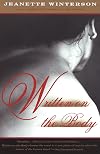
On the surface, this is a sensual, reflective, and sometimes humorous recollection of the narrator’s loves won and lost, compared with the current one. Unwelcome news triggers a difficult choice, with huge ramifications. It was made with love, but was it the right decision, and did the narrator even have the right to make it? It’s a curious amalgam of styles, yet unmistakably Winterson, including a set of short, more abstract sections, and the fact the bisexual narrator’s gender is show more unspecified.
But peel back the gilt and what’s beneath is not so straightforward. All the best literature has a unique message for every reader, on each encounter. Gilt reflects: what spoke to me is not what you will hear and respond to.
Image: Antique mirror (Source.)
I found this shockingly, painfully good. I knew it was about relationships and was ambiguous about gender, but I was unprepared for the raw dissection of loss. It punched hard, but was shot through with love. Definitely the right book at the right time for me.
“Why is the measure of love loss?”
The opening line, repeated later, brought tears. It’s the converse of my recent experience of grief as the price of love - love with nowhere to go. But nevertheless, and without question, “Love is worth it”.
"You don't get over it because 'it' is the person you loved."
Image: My father’s keys, his writing instantly recognisable from just four letters.
“No-one tells you in grief-counselling or books on loss what it will be like when you find part of the beloved unexpectedly.”
Love is…
“I went to church… I wanted the comfort of other people’s faith.”
The Bible of her childhood infuses atheist Winterson’s writing, and this is no exception: phrases, ideas, and liturgical repetition and rhythm. Here, it’s most obvious in how the “emotional nomad” writes about love:
“Love demands expression. It will not stay still, stay silent, be good, be modest, be seen and not heard, no.”
and
“No-one can legislate love; it cannot be given orders or cajoled into service. Love belongs to itself, deaf to pleading and unmoved by violence. Love is not something you can negotiate. Love is the one thing stronger than desire and the only proper reason to resist temptation.”
From 1 Corinthians 13, v4-8 (NIV):
“Love is patient, love is kind. It does not envy, it does not boast, it is not proud. It does not dishonor others, it is not self-seeking, it is not easily angered, it keeps no record of wrongs. Love does not delight in evil but rejoices with the truth. It always protects, always trusts, always hopes, always perseveres. Love never fails.”
But I don’t think the Bible is right: love can fail:
“What then kills love? Only this: neglect.”
The other message, from way back in 1992, is that gender doesn’t matter; there is no question or hand-wringing; it’s not relevant to the story.
Image: “Love is love” in current parlance. (Source.)
Marriage
“Is happiness always a compromise?”
“Contentment… are you sure it’s not an absence of feeling?”
In my teens, I remember my father quoting (allegedly) Prince Philip: “Marriage is the highest form of prostitution”. There is truth in that, touched on repeatedly here. We all exchange things for sex and love: our motives are mixed and rarely pure. And the promises of marriage can be hard to keep.
“Marriage is the flimsiest weapon against desire.”
“Cheating is easy… To borrow against the trust someone has placed in you costs nothing at first.”
The Translator, Translated
“Articulacy of the fingers… signing on the body body longing.”
“Your flesh is my flesh. You deciphered me and now I am plain to read.”
The narrator is a translator (there are many references to great literature, as usual for Winterson), but better in abstract than with those they love, let alone themself.
“Written on the body is a secret code only visible in certain lights… In places the palimpsest is so heavily worked that the letters feel like Braille… I didn’t know that Louse would have reading hands. She has translated me into her own book.”
Bio-anatomical Prose Poetry
“I know the stigmata of presumption.”
There are no chapters, but two-thirds through, there are four short sections that defy easy description: semi-abstract musings on cells, skin, skeleton, and “special senses”, as the narrator agonises over anticipatory loss in a profound and sensual way.
“To remember you it’s my own body I touch.”
Ending
“Is this the proper ending? If not the proper then the inevitable?”
As I approached the end, I was nervous: I wasn’t sure what a happy ending would be, but knew I didn't want one. I need not have feared. It is everything and nothing - interpret as you like. I could quote the whole closing paragraph, without fear of spoilers.
In her brilliant autobiography, Why be Happy when you Could be Normal? (see my review HERE), Winterson categorises three types of ending: revenge, tragedy and forgiveness. Both books contain all three.
Other Quotes
Memory of Love
• “How easy is it to destroy the past and how difficult to forget it?”
• “Wisdom says forget. The body howls.”
• “I’ve tried to get you out of my head but I can’t seem to get you out of my flesh.”
• “I don’t want to be reminded of you, I want you.”
• “The power of memory is such that it can lift reality for a time.”
Relationships and Fallout
• “I used to think of marriage as a plate-glass window just begging for a brick.”
• “Odd that marriage, a public display and free to all, gives way to that most secret of liaisons, an adulterous affair.”
• “I had to keep my heart to myself in case I infected somebody” with “emotional clap”.
• “You never give away your heart; you lend it from time to time.”
• “I had no dreams to possess you - but I wanted you to possess me.”
• “With old friends… you know one another as well as lovers do and you have less to pretend about” - so you’re more likely to be honest.
Dry Humour
• “The ultimate act of selfishness; a woman who put herself first.”
• “Her husband lies over her like a tarpaulin.”
• “The women wore their jewellery like medals… a palimpsest of love-affairs” on show at the opera.
• “I’d run my hands over her padded flesh with all the enthusiasm of a second-hand sofa dealer.”
• “They considered themselves to be Australian aristocracy, that is, they were descended from convicts.”
• “She had a steady hand but she like to spill. It made work for her daughter.”
Other
• “What you risk reveals what you value.”
• “People usually know exactly why they are happy. They very rarely know why they are miserable.”
Winterson is queen of the extended metaphor. This is one of many (others include maps, animals, jigsaws):
“When she lifted the soup spoon to her lips how I longed to be that innocent piece of stainless steel… Let me be diced carrot, vermicelli, just so that you will take me in your mouth. I envied the French stick. I watched her break and butter each piece, soak it slowly in her bowl, let it float, grow heavy and fat, sink under the deep red weight and then be resurrected to the glorious pleasure of her teeth… I will taste you if only through your cooking.” show less
But peel back the gilt and what’s beneath is not so straightforward. All the best literature has a unique message for every reader, on each encounter. Gilt reflects: what spoke to me is not what you will hear and respond to.
Image: Antique mirror (Source.)
I found this shockingly, painfully good. I knew it was about relationships and was ambiguous about gender, but I was unprepared for the raw dissection of loss. It punched hard, but was shot through with love. Definitely the right book at the right time for me.
“Why is the measure of love loss?”
The opening line, repeated later, brought tears. It’s the converse of my recent experience of grief as the price of love - love with nowhere to go. But nevertheless, and without question, “Love is worth it”.
"You don't get over it because 'it' is the person you loved."
Image: My father’s keys, his writing instantly recognisable from just four letters.
“No-one tells you in grief-counselling or books on loss what it will be like when you find part of the beloved unexpectedly.”
Love is…
“I went to church… I wanted the comfort of other people’s faith.”
The Bible of her childhood infuses atheist Winterson’s writing, and this is no exception: phrases, ideas, and liturgical repetition and rhythm. Here, it’s most obvious in how the “emotional nomad” writes about love:
“Love demands expression. It will not stay still, stay silent, be good, be modest, be seen and not heard, no.”
and
“No-one can legislate love; it cannot be given orders or cajoled into service. Love belongs to itself, deaf to pleading and unmoved by violence. Love is not something you can negotiate. Love is the one thing stronger than desire and the only proper reason to resist temptation.”
From 1 Corinthians 13, v4-8 (NIV):
“Love is patient, love is kind. It does not envy, it does not boast, it is not proud. It does not dishonor others, it is not self-seeking, it is not easily angered, it keeps no record of wrongs. Love does not delight in evil but rejoices with the truth. It always protects, always trusts, always hopes, always perseveres. Love never fails.”
But I don’t think the Bible is right: love can fail:
“What then kills love? Only this: neglect.”
The other message, from way back in 1992, is that gender doesn’t matter; there is no question or hand-wringing; it’s not relevant to the story.
Image: “Love is love” in current parlance. (Source.)
Marriage
“Is happiness always a compromise?”
“Contentment… are you sure it’s not an absence of feeling?”
In my teens, I remember my father quoting (allegedly) Prince Philip: “Marriage is the highest form of prostitution”. There is truth in that, touched on repeatedly here. We all exchange things for sex and love: our motives are mixed and rarely pure. And the promises of marriage can be hard to keep.
“Marriage is the flimsiest weapon against desire.”
“Cheating is easy… To borrow against the trust someone has placed in you costs nothing at first.”
The Translator, Translated
“Articulacy of the fingers… signing on the body body longing.”
“Your flesh is my flesh. You deciphered me and now I am plain to read.”
The narrator is a translator (there are many references to great literature, as usual for Winterson), but better in abstract than with those they love, let alone themself.
“Written on the body is a secret code only visible in certain lights… In places the palimpsest is so heavily worked that the letters feel like Braille… I didn’t know that Louse would have reading hands. She has translated me into her own book.”
Bio-anatomical Prose Poetry
“I know the stigmata of presumption.”
There are no chapters, but two-thirds through, there are four short sections that defy easy description: semi-abstract musings on cells, skin, skeleton, and “special senses”, as the narrator agonises over anticipatory loss in a profound and sensual way.
“To remember you it’s my own body I touch.”
Ending
“Is this the proper ending? If not the proper then the inevitable?”
As I approached the end, I was nervous: I wasn’t sure what a happy ending would be, but knew I didn't want one. I need not have feared. It is everything and nothing - interpret as you like. I could quote the whole closing paragraph, without fear of spoilers.
In her brilliant autobiography, Why be Happy when you Could be Normal? (see my review HERE), Winterson categorises three types of ending: revenge, tragedy and forgiveness. Both books contain all three.
Other Quotes
Memory of Love
• “How easy is it to destroy the past and how difficult to forget it?”
• “Wisdom says forget. The body howls.”
• “I’ve tried to get you out of my head but I can’t seem to get you out of my flesh.”
• “I don’t want to be reminded of you, I want you.”
• “The power of memory is such that it can lift reality for a time.”
Relationships and Fallout
• “I used to think of marriage as a plate-glass window just begging for a brick.”
• “Odd that marriage, a public display and free to all, gives way to that most secret of liaisons, an adulterous affair.”
• “I had to keep my heart to myself in case I infected somebody” with “emotional clap”.
• “You never give away your heart; you lend it from time to time.”
• “I had no dreams to possess you - but I wanted you to possess me.”
• “With old friends… you know one another as well as lovers do and you have less to pretend about” - so you’re more likely to be honest.
Dry Humour
• “The ultimate act of selfishness; a woman who put herself first.”
• “Her husband lies over her like a tarpaulin.”
• “The women wore their jewellery like medals… a palimpsest of love-affairs” on show at the opera.
• “I’d run my hands over her padded flesh with all the enthusiasm of a second-hand sofa dealer.”
• “They considered themselves to be Australian aristocracy, that is, they were descended from convicts.”
• “She had a steady hand but she like to spill. It made work for her daughter.”
Other
• “What you risk reveals what you value.”
• “People usually know exactly why they are happy. They very rarely know why they are miserable.”
Winterson is queen of the extended metaphor. This is one of many (others include maps, animals, jigsaws):
“When she lifted the soup spoon to her lips how I longed to be that innocent piece of stainless steel… Let me be diced carrot, vermicelli, just so that you will take me in your mouth. I envied the French stick. I watched her break and butter each piece, soak it slowly in her bowl, let it float, grow heavy and fat, sink under the deep red weight and then be resurrected to the glorious pleasure of her teeth… I will taste you if only through your cooking.” show less
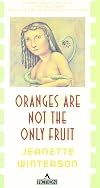
Highly recommended. Wonderful. Beautifully written and incisive about fundamentalist parenting. This novel is heartbreaking given its autobiographical basis. I actually liked it much more than I liked the first thing I read by her, Why Be Happy When You Could Be Normal, which is a memoir. (Although it was the latter that inspired me to read the former, in the first place.)
Like most books about growing up in fundamentalist religious environments, Oranges provides a fascinating glimpse into show more this life. I read lots of books, fiction and non, about insular communities like these; they're my catharsis the way some people read/watch horror. I thought this one was especially well done in the way that it juxtaposed pretty abnormal beliefs and actions with a child's desire for parental love. show less
Like most books about growing up in fundamentalist religious environments, Oranges provides a fascinating glimpse into show more this life. I read lots of books, fiction and non, about insular communities like these; they're my catharsis the way some people read/watch horror. I thought this one was especially well done in the way that it juxtaposed pretty abnormal beliefs and actions with a child's desire for parental love. show less
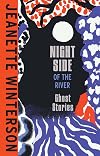
I'm a huge fan of Winterson's writing, but she has such a stylistic range that I never know what I'm getting until I begin reading. I'm almost always pleased with what I find. Winterson's Night Side of the River is a collection of "horror" stories. I put the quotation marks there because rather than having a goal of creating terror, Winterson uses the genre to explore ideas: for example, the way AI is changing the meaning of death or the different ways the living and the dead may perceive show more the end of a life. There were some good chills along the way, but I most appreciated this collection because it made me think about my own ephemerality in a way that went beyond the usual concerns about one's own mortality.
If you like horror and/or you like Winterson, you'll find this book provides unexpected delights. I received a free electronic review copy of this title from the publisher via NetGalley; the opinions are my own. show less
If you like horror and/or you like Winterson, you'll find this book provides unexpected delights. I received a free electronic review copy of this title from the publisher via NetGalley; the opinions are my own. show less
Lists
Trans/Queer Lit (1)
Travel Reads (1)
1990s (1)
Winter Books (1)
Take Four Books (1)
Read This Next (1)
Best Dystopias (1)
Booker Prize (1)
100 Hemskaste (1)
LGBTQIA Horror (1)
First Novels (1)
Female Author (4)
Short and Sweet (1)
1980s (2)
A Novel Cure (3)
Magic Realism (3)
Five star books (4)
Epistolary Books (1)
Women's Stories (1)
Women in War (1)
Favorite Memoirs (1)
Awards


You May Also Like


Associated Authors
Statistics
- Works
- 57
- Also by
- 40
- Members
- 37,241
- Popularity
- #491
- Rating
- 3.9
- Reviews
- 907
- ISBNs
- 732
- Languages
- 26
- Favorited
- 224


