
Leon Rooke
Author of Shakespeare's Dog
About the Author
Leon Rooke was born in Roanoke Rapids, North Carolina in 1934. He attended Mars Hill College and the University of North Carolina. In addition to writing novels and short stories, he is also an anthologist and a playwright. He is the recipient of many awards and honours including the Governor show more General's Fiction Award for "Shakespeare's Dog", the Canada-Australia Prize, the Paperback Novel of the Year Award for "Fat Woman", The Pushcart Prize and the North Carolina Award for Literature. He is the founder and artistic director of Eden Mills Writers' Festival. Rooke currently resides in Winnipeg. (Bowker Author Biography) show less
Works by Leon Rooke
Associated Works
The Art of the Tale: An International Anthology of Short Stories (1986) — Contributor — 381 copies, 3 reviews
Lost Classics: Writers on Books Loved and Lost, Overlooked, Under-read, Unavailable, Stolen, Extinct, or Otherwise Out of Commission (2000) — Contributor — 319 copies, 6 reviews
Imaginarium 3: The Best Canadian Speculative Writing (The Imaginarium Series) (2015) — Contributor — 22 copies
The Malahat Review: number sixty-one / February 1982 — Contributor — 1 copy
Tagged
Common Knowledge
- Birthdate
- 1934
- Gender
- male
- Awards and honors
- Order of Canada
- Relationships
- Rooke, Constance (wife)
- Nationality
- Canada
- Places of residence
- Toronto, Ontario, Canada
- Associated Place (for map)
- Ontario, Canada
Members
Reviews

If you want to learn some Shakespearean-style cussing, this book narrated by Shakespeare's dog, Hooker, offers more than you will ever need. Some of the profanities are delivered with a familiar meter that will have you searching your mind for the original lines that might have been issued originally by the dog's master. Written in Elizabethan English this is ribald, rude and funny: but not for the faint-hearted.
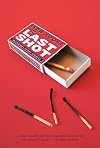
Eleven tirelessly inventive stories and a novella; each has a certain flourish, a sense that the author is saying, "watch what I bust loose on ya this time," and it never grows old or seems contrived.
Magic realism in the short story, unless executed at a high level, often seems to be nothing but a gimmick adopted to relieve a writer of the chore of creating interest in a straightforward, realist narrative. It declares the story's originality with a blast of trumpets, shouts, "look at me, I show more am new." This is, no doubt, why it has become a staple of our little magazines. But there is no such cheap trickery here.
Rooke's stories are above all vocal performances; they're about voice. This is most obvious in the dialect-soaked novella, "Gator Wrestling"; at first, getting past the dialect is challenging, but then you adapt. And it offers up gems like this:
In Prissy's estimation Ganger was a boy of weirdly morbid and demented disposition. He was gravely barbecued in the belfry.
Not only barbecued, but gravely so, and in the belfry no less. Rooke, in this novella, invents his own idiom.
Standout stories in this volume include the hilarious "How to Write a Successful Short Story," in which a novice writer sits down to do just that, "Lamplighter Bridegroom 360," which proceeds not from character-with-problem but from the reader's curiosity as to what the heck is going on, and "The Last Shot," which won the CBC Literary Award.
Highly recommended. show less
Magic realism in the short story, unless executed at a high level, often seems to be nothing but a gimmick adopted to relieve a writer of the chore of creating interest in a straightforward, realist narrative. It declares the story's originality with a blast of trumpets, shouts, "look at me, I show more am new." This is, no doubt, why it has become a staple of our little magazines. But there is no such cheap trickery here.
Rooke's stories are above all vocal performances; they're about voice. This is most obvious in the dialect-soaked novella, "Gator Wrestling"; at first, getting past the dialect is challenging, but then you adapt. And it offers up gems like this:
In Prissy's estimation Ganger was a boy of weirdly morbid and demented disposition. He was gravely barbecued in the belfry.
Not only barbecued, but gravely so, and in the belfry no less. Rooke, in this novella, invents his own idiom.
Standout stories in this volume include the hilarious "How to Write a Successful Short Story," in which a novice writer sits down to do just that, "Lamplighter Bridegroom 360," which proceeds not from character-with-problem but from the reader's curiosity as to what the heck is going on, and "The Last Shot," which won the CBC Literary Award.
Highly recommended. show less
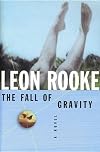
This book sort of reminded me of Thomas King's Green Grass, Running Water in that there is a lot of symbolism and mysticism as well as some native iconography. I'm still processing it so I don't think I've completely grasped the meaning of the book, especially the ending.
At its most basic, this book tells the story of the Daggle family. Joyel Daggle left her home, her husband and daughter a year ago. The husband, Raoul, and the daughter, Juliette, are driving west to try to intercept Joyel show more who was spotted in Cut Bank, Wyoming. Joyel, meanwhile, is driving east from Cut Bank. Each party meets interesting characters along the way. Raoul is particularly fascinated by priests who have fallen from heaven. Joyel meets Tom who tours with a giant wooden statue of Crazy Horse. These characters pop up frequently along the way and eventually everyone lands in the same small town during a blizzard.
I guess I am too linear in my thinking to be completely satisfied by the ending. To my mind there are too many loose ends. Like who is the man in the brown suit who has been following Joyel ever since she left California and why did the dog who hitched a ride with Joyel suddenly decide to be let out?
It is an entertaining read and Rooke certainly has a creative mind. It might appeal to someone more than to me. show less
At its most basic, this book tells the story of the Daggle family. Joyel Daggle left her home, her husband and daughter a year ago. The husband, Raoul, and the daughter, Juliette, are driving west to try to intercept Joyel show more who was spotted in Cut Bank, Wyoming. Joyel, meanwhile, is driving east from Cut Bank. Each party meets interesting characters along the way. Raoul is particularly fascinated by priests who have fallen from heaven. Joyel meets Tom who tours with a giant wooden statue of Crazy Horse. These characters pop up frequently along the way and eventually everyone lands in the same small town during a blizzard.
I guess I am too linear in my thinking to be completely satisfied by the ending. To my mind there are too many loose ends. Like who is the man in the brown suit who has been following Joyel ever since she left California and why did the dog who hitched a ride with Joyel suddenly decide to be let out?
It is an entertaining read and Rooke certainly has a creative mind. It might appeal to someone more than to me. show less

This story is set in a backwoods community. Toker finds an abandoned baby in the woods near his home, and she quickly becomes the centre of his life. His interactions with his neighbours change as he tries to care for this foundling. As Toker finds out about the baby's violent origins, we also learn about the backstories of all the central characters and see a life of violence, but also of independence and watching over family and friends.
Mr. Rooke has written this book in a backwoods show more dialect, which took a little getting used to, and also added greatly to the atmosphere of the story. Very creative and imaginative....I'm glad I discovered this author. show less
Mr. Rooke has written this book in a backwoods show more dialect, which took a little getting used to, and also added greatly to the atmosphere of the story. Very creative and imaginative....I'm glad I discovered this author. show less
Lists
Awards


You May Also Like


Associated Authors
Statistics
- Works
- 34
- Also by
- 12
- Members
- 318
- Popularity
- #74,347
- Rating
- 3.8
- Reviews
- 7
- ISBNs
- 68
- Languages
- 4