
Steven Amsterdam
Author of Things We Didn't See Coming
About the Author
Steven Amsterdam was born on January 31, 1966 in Manhattan, New York. He has edited travel guides and designed book jackets. He is the author of What the Family Needed. His book, Things We Didn't See Coming, won The Age Book of the Year Award, among other honors. He is also a nurse, specializing in show more psychiatric and palliative care. show less
Works by Steven Amsterdam
Associated Works
Crucible of War: The Seven Years' War and the Fate of Empire in British North America, 1754-1766 (2000) — Cover designer, some editions — 1,307 copies, 12 reviews
The Northern Lights: The True Story of the Man Who Unlocked the Secrets of the Aurora Borealis (2001) — Cover designer, some editions — 369 copies, 8 reviews
Better Than Fiction 2: True Adventures from 30 Great Fiction Writers (2015) — Contributor — 34 copies
Tagged
Common Knowledge
- Canonical name
- Amsterdam, Steven
- Legal name
- Amsterdam, Steven K.
- Gender
- male
- Education
- Bronx High School of Science, New York, New York, USA
University of Chicago
University of Melbourne - Occupations
- psychiatric nurse
editor - Short biography
- Steven Amsterdam is a writer and a palliative care nurse. Originally from New York City, he now lives in Melbourne. His first book, Things We Didn't See Coming was longlisted for the Guardian First Book Award. His second book, What The Family Needed was longlisted for the IMPAC Dublin Literary Award.
- Nationality
- USA (birth)
Australia - Birthplace
- Manhattan, New York, USA
- Places of residence
- Melbourne, Victoria, Australia
New York, New York, USA
Los Angeles, California, USA - Associated Place (for map)
- USA
Members
Reviews
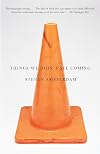
Things We Didn’t See Coming is the story of one young boy, 9 years old on the eve of the millennium, and his subsequent journey through a world irrevocably changed by Y2K. As the world falls slowly apart and suffers through drought, flood, fire and disease, he teeters on the fence of petty crime and respectable government employment and experiences all facets of the evolution of human civilization.
The writing is beautifully stark, poetic and chilling, and the story twists and turns along show more with his fortunes and falls. This is not a book for the faint-hearted; there are few redeeming moments and little happiness in his journey through his teenage years and adulthood. The characters are flawed, but fit completely in the story – alliances are easily broken and every person is focused on their own and their families survival.
I enjoyed Things We Didn’t See Coming immensely – Mr. Amsterdam’s writing reminded me of Tim Winton or Ian McEwan and I was more than surprised to learn Things We Didn’t See Coming is his debut novel. I look forward to reading more of his work in the very near future. show less
The writing is beautifully stark, poetic and chilling, and the story twists and turns along show more with his fortunes and falls. This is not a book for the faint-hearted; there are few redeeming moments and little happiness in his journey through his teenage years and adulthood. The characters are flawed, but fit completely in the story – alliances are easily broken and every person is focused on their own and their families survival.
I enjoyed Things We Didn’t See Coming immensely – Mr. Amsterdam’s writing reminded me of Tim Winton or Ian McEwan and I was more than surprised to learn Things We Didn’t See Coming is his debut novel. I look forward to reading more of his work in the very near future. show less

There are, as I write, renewed efforts to introduce legislation in Victoria that would allow assisted suicide, but I don’t suppose that Steven Amsterdam or his publishers knew when they signed their contracts just how topical this book was going to be. The Easy Way Out is a confronting exploration of what assisted suicide might mean for anyone involved. The title is ironic: in the world created by Amsterdam, even though assisted suicide is legal, there is no easy way out…
Narrated with a show more kind of sardonic intimacy as if Amsterdam is not going to indulge any sentimental views about death, the novel traces a trajectory as Evan, a nurse who has chosen work as a suicide assistant, tests the boundaries of the law. Working in the confines of the Mercy hospital where every ‘assist’ is monitored and documented and scrutinised afterwards, Evan finds it hard to stay as detached as he is supposed to. Families don’t always follow the script, and the ‘simple’ act of drinking a cup of Nembutal isn’t always so simple for someone with muscles that don’t obey any more. And it’s not just that procedures don’t allow for human frailty, there’s also the psychological impact on Evan to consider. He doesn’t tell people what he does because not everyone shares his view that he is helping people to die a good death. Crucially, he doesn’t tell his lovers Lon and Simon.
To read the rest of my review please visit https://anzlitlovers.com/2016/09/28/the-easy-way-out-by-steven-amsterdam/ show less
Narrated with a show more kind of sardonic intimacy as if Amsterdam is not going to indulge any sentimental views about death, the novel traces a trajectory as Evan, a nurse who has chosen work as a suicide assistant, tests the boundaries of the law. Working in the confines of the Mercy hospital where every ‘assist’ is monitored and documented and scrutinised afterwards, Evan finds it hard to stay as detached as he is supposed to. Families don’t always follow the script, and the ‘simple’ act of drinking a cup of Nembutal isn’t always so simple for someone with muscles that don’t obey any more. And it’s not just that procedures don’t allow for human frailty, there’s also the psychological impact on Evan to consider. He doesn’t tell people what he does because not everyone shares his view that he is helping people to die a good death. Crucially, he doesn’t tell his lovers Lon and Simon.
To read the rest of my review please visit https://anzlitlovers.com/2016/09/28/the-easy-way-out-by-steven-amsterdam/ show less

It takes a little while to see where this book is going. The best way to describe it is people with superhero abilities that aren't sure what to do with them. They are not superheroes by any means. They are everyday people with everyday struggles and fears and worries and pain and successes and victories, but they have to manage their superhuman abilities as well. Some do so well, and some not so well. It seems to all be controlled by one of the characters in the book, and we get a great show more glimpse into that character's life in the final chapter, with an excellent cliffhanger ending mirroring the spinning top at the end of Inception. Great book, great insight into human pain and suffering and guilt and wonderment. The fact that it includes fantasy elements but still feels real and gritty is a tribute to its greatness. show less
 This review was written for LibraryThing Early Reviewers.
I don't have a particularly good relationship with post-apocalyptic fiction, tending to find it either too far-fetched or, if not far-fetched, too depressing to want to immerse myself in for very long. I was spoiled early by having to read Robert Swindells's relentlessly bleak postnuclear misery-fest Brother in the Land for a school English class, after which I spent much of the next few years lying awake at night worrying that the noise of jumbo jets coming over Gatwick's flight path might show more in fact be the noise of a nuclear wind rushing towards our house. Thanks Miss Cutler.
Of course it's useful (necessary, even) to be scared by these ideas once or twice – but once you've got to grips with the basic principles, I'm not always sure the lessons learned are worth the emotional trauma involved. Which is what these books try and put you through, because despite the tone of some of my reviews I'm actually not a very critical reader – I tend to be pretty wide-eyed and immersive when it comes to fiction.
More generally, though, I think the genre suffers disproportionately from the prevailing fallacy that tragedy is somehow ‘truer’ than comedy. (Which some critics genuinely believe, not without reason, but which I don't.) This is why for example I am in no great hurry to read The Road, because although I often love Cormac McCarthy's writing style, I think his general philosophy depends on wilfully ignoring huge vistas of human experience and interaction – which is creatively interesting, but when it comes right down to it, no less selective a vision than that of someone like Terry Pratchett.
All of this is my way of saying that I liked Things We Didn't See Coming a lot more than I expected to when a cute sales assistant in a Melbourne branch of Readers flirted me into buying it ‘because the author's a local’. Actually Steven Amsterdam is originally from New York, but Melbourne has been his home for years now: the landscape of this book feels vaguely American, but the language includes some telltale non-US elements (like ‘Mum’). It begins on the eve of the millennium, and disappears off into an alternative present / near-future where society and the environment have broken down.
The book is constructed as a novel-in-short-stories, a format I like anyway and one which works especially well here. In nine standalone chapters, we see our unnamed narrator at different stages in his life, from a ten-year-old boy to a semi-invalid, prematurely-aged wasteland survivor. There is a lot of enjoyable speculation to be had over what must have happened in the long years between chapters, as secondary characters come and go, and as the world around us changes: we see at various times endless rain, urban looting, rural survivalism, drought, plague, even momentary periods of political stability with a decadent ruling class. The prose is sparse, uncomplicated and effective, and a lot of the key developments are unexplained and off-stage.
I like that the geopolitical/environmental speculation is not the main point here. What Amsterdam is really interested in is how interpersonal relationships work, how trust breaks down and whether it can ever be properly built up under extreme circumstances, and how to work out what really matters and strip down your life to just that. There is a nice strain of dark humour running through the book, and although it takes a steady look at the worst aspects of human nature, it doesn't forget the other aspects.
Only one of the stories felt underdeveloped to me; all of them completely held my attention and left me with lots to think about. Recommended for late-night reading under Gatwick flight path. show less
Of course it's useful (necessary, even) to be scared by these ideas once or twice – but once you've got to grips with the basic principles, I'm not always sure the lessons learned are worth the emotional trauma involved. Which is what these books try and put you through, because despite the tone of some of my reviews I'm actually not a very critical reader – I tend to be pretty wide-eyed and immersive when it comes to fiction.
More generally, though, I think the genre suffers disproportionately from the prevailing fallacy that tragedy is somehow ‘truer’ than comedy. (Which some critics genuinely believe, not without reason, but which I don't.) This is why for example I am in no great hurry to read The Road, because although I often love Cormac McCarthy's writing style, I think his general philosophy depends on wilfully ignoring huge vistas of human experience and interaction – which is creatively interesting, but when it comes right down to it, no less selective a vision than that of someone like Terry Pratchett.
All of this is my way of saying that I liked Things We Didn't See Coming a lot more than I expected to when a cute sales assistant in a Melbourne branch of Readers flirted me into buying it ‘because the author's a local’. Actually Steven Amsterdam is originally from New York, but Melbourne has been his home for years now: the landscape of this book feels vaguely American, but the language includes some telltale non-US elements (like ‘Mum’). It begins on the eve of the millennium, and disappears off into an alternative present / near-future where society and the environment have broken down.
The book is constructed as a novel-in-short-stories, a format I like anyway and one which works especially well here. In nine standalone chapters, we see our unnamed narrator at different stages in his life, from a ten-year-old boy to a semi-invalid, prematurely-aged wasteland survivor. There is a lot of enjoyable speculation to be had over what must have happened in the long years between chapters, as secondary characters come and go, and as the world around us changes: we see at various times endless rain, urban looting, rural survivalism, drought, plague, even momentary periods of political stability with a decadent ruling class. The prose is sparse, uncomplicated and effective, and a lot of the key developments are unexplained and off-stage.
I like that the geopolitical/environmental speculation is not the main point here. What Amsterdam is really interested in is how interpersonal relationships work, how trust breaks down and whether it can ever be properly built up under extreme circumstances, and how to work out what really matters and strip down your life to just that. There is a nice strain of dark humour running through the book, and although it takes a steady look at the worst aspects of human nature, it doesn't forget the other aspects.
Only one of the stories felt underdeveloped to me; all of them completely held my attention and left me with lots to think about. Recommended for late-night reading under Gatwick flight path. show less
Lists
Awards


You May Also Like


Associated Authors
Statistics
- Works
- 3
- Also by
- 4
- Members
- 444
- Popularity
- #55,178
- Rating
- 3.9
- Reviews
- 47
- ISBNs
- 41
- Languages
- 4
