
Malcolm Lowry (1909–1957)
Author of Under the Volcano
About the Author
Clarence Malcolm Lowry was born on July 28, 1909 in Cheshire, England. He attended Braeside School, Caldicote School and the Leys School, Cambridge before sailing to the Far East as a deckhand in the summer of 1927. Upon his return in 1929, Lowry settled down to his education, first studying with show more poet and novelist Conrad Aiken for several months and then entering St. Catherine's College, Cambridge University, England. He graduated in 1932 with a B.A. in English and published his first novel, "Ultramarine," in 1933. In 1934, he married Jan Gabrail in Paris, but was tormented by emotional problems. After spending some time in the psychiatric wing of Bellevue Hospital in New York, he began work on his next book, "Lunar Caustic" in 1935. The next year, he and his wife moved to Mexico where he began writing "Under the Volcano." Over the next 10 years, work on the book continued, despite personal crises that included a divorce and remarriage, moves from Mexico to Los Angeles to Vancouver, and the destruction of his home by fire. "Under the Volcano" was finally published in New York on February 19, 1947 and in London on September 1, 1947. The book has since become a classic, but unfortunately its themes of alcoholism and failure were all too genuine a part of Lowry's life. While he continued to write and to travel, the remainder of his life was plagued by the severe emotional problems brought about by his excessive drinking. Malcolm Lowry died on June 27, 1957 in the English village of Ripe, Sussex. (Bowker Author Biography) show less
Image credit: Malcolm Lowry foto: Modernista
Series
Works by Malcolm Lowry
Hear Us O Lord from Thy Dwelling Place: AND Lunar Caustic (Penguin modern classics) (1979) 33 copies
The Collected Works Volume One: Ultramarine, Hear Us O Lord from Heaven Thy Dwelling Place, Under the Volcano, and October Ferry to Gabriola (2018) 3 copies
ELVOLCAN EL MEZCAL LOS COMISARIOS 3 copies
Ultramarine ; Sombre comme la tombe où repose mon ami ; En route vers l'île de Gabriola (2005) 3 copies
ATRAVÉS DO CANAL DO PANAMA 2 copies
Au-dessous du volcan. under the volcano. traduit de l'anglais par stephen spriel avec la collaboration de clarisse francillon. (1970) 1 copy
CHOIX DE LETTRES 1 copy
POR EL CANAL DE PANAMA 1 copy
Lowry Malcom 1 copy
Cambridge Poetry, 1930 1 copy
Pod ognjenikom 1 copy
Το Μονοπάτι της Βρύσης 1 copy
The bravest boat 1 copy
Associated Works
Choice Cuts: A Savory Selection of Food Writing from Around the World and Throughout History (2002) — Contributor — 367 copies, 2 reviews
New World Writing: Third Mentor Selection - Poetry, Fiction, Drama, Criticism (1953) — Contributor — 8 copies
Rhetorics of Utopia: Early Modernism and the Canadian West Coast — Contributor — 7 copies
Tagged
Common Knowledge
- Canonical name
- Lowry, Malcolm
- Legal name
- Lowry, Clarence Malcolm
- Birthdate
- 1909-07-28
- Date of death
- 1957-06-26
- Gender
- male
- Education
- St. Catherine's, University of Cambridge (BA|1932)
Leys School, Cambridge - Occupations
- poet
novelist
short story writer - Relationships
- Aiken, Conrad (friend)
- Nationality
- UK
- Birthplace
- New Brighton, Merseyside, England, UK
- Places of residence
- Paris, France
New York, New York, USA
Cuernevaca, Mexico
Los Angeles, California, USA
Dollarton, North Vancouver, British Columbia, Canada
Italy (show all 7)
Birkenhead, Cheshire, England, UK - Place of death
- Ripe, East Sussex, England, UK
- Burial location
- St. John the Baptist Churchyard, Ripe, East Sussex, England
- Map Location
- England, UK
Members
Reviews

Astonishing. One of the most extraordinary novels I've read in years. Neither an easy read nor redemptive in any particular sense of the word, Under the Volcano is nevertheless a work of art that will haunt you long after finishing it. It's no wonder that it has had a reputation as a 'writer's book' – one that is most appreciated by those who best understand how hard it is to make something like this work.
Under the Volcano is a tightly-focused narrative that, after being framed as a show more flashback from a year later by a friend of the main character, covers less than 24 hours in the lives of its principals. Incredibly, it manages to imply and evoke their lives leading up to this day, and the state of the world during their lifetimes, leaving you feeling as if you've read their complete histories before their day is up. The central character, and the fulcrum for everything that happens, is Geoffrey Firmin, often referred to as 'The Consul.' He is in fact the former British Consul to a central-Mexican town near the volcanoes Popocatepetl and Ixtaccihuatl, but now an ex-pat who refuses to go home as World War II is busy getting underway. The novel follows the Consul's alcoholic sprint towards his doom, and watching him come to pieces, and the shrapnel damage it causes to those closest to him, is terrifying. The final hundred pages feel like an out-of-control downhill run through a lava field – and in spite of being able to see the brick wall waiting at the end of the run, there's nothing you can do to slow down and prepare. Because of the framing at the book's opening, you can see the brick wall all the way, but you are shocked nonetheless when you run into it.
It's hard to find redemption in addiction and alcoholism, and none at all is provided by Lowry – regardless, it now has a place on my 'all-time' list of novels. show less
Under the Volcano is a tightly-focused narrative that, after being framed as a show more flashback from a year later by a friend of the main character, covers less than 24 hours in the lives of its principals. Incredibly, it manages to imply and evoke their lives leading up to this day, and the state of the world during their lifetimes, leaving you feeling as if you've read their complete histories before their day is up. The central character, and the fulcrum for everything that happens, is Geoffrey Firmin, often referred to as 'The Consul.' He is in fact the former British Consul to a central-Mexican town near the volcanoes Popocatepetl and Ixtaccihuatl, but now an ex-pat who refuses to go home as World War II is busy getting underway. The novel follows the Consul's alcoholic sprint towards his doom, and watching him come to pieces, and the shrapnel damage it causes to those closest to him, is terrifying. The final hundred pages feel like an out-of-control downhill run through a lava field – and in spite of being able to see the brick wall waiting at the end of the run, there's nothing you can do to slow down and prepare. Because of the framing at the book's opening, you can see the brick wall all the way, but you are shocked nonetheless when you run into it.
It's hard to find redemption in addiction and alcoholism, and none at all is provided by Lowry – regardless, it now has a place on my 'all-time' list of novels. show less

The Consul decapitated a dusty coquelicot poppy growing by the side of the gutter with his stick.
One of Under the Volcano's smaller sentences, but isn't it perfectly-formed? The parade of plosives in the violent first half, petering out into plainness. At the other end of the spectrum is the head-spinning whirlpool of a sentence that opens Chapter 3, diverting the reader's attention, like the Consul's, from the world of objects to the eddying, allusive world of appearances. The writing is show more sometimes obscure because obscurity is its objective, the obscure, secretive self-deception of the alcoholic. But these misapprehensions, constructed of the endless, sometimes paranoid (but often not) recombination of a few simple motifs and symbols, add up to a reality more cogent, on its own terms, than the outside world, with its imminent apocalypse (see the last words of the antepenultimate sentence of the book). Can you blame the Consul for escaping to a mezcal Disneyland?
The symbols, as I say, aren't hard to fathom. Take gardens — the Consul's (literally undermined) garden, run to riot in the absence of Yvonne, an "indescribable confusion of briars from which the Consul averted his eyes...", complete with snakes literal and metaphorical. The little municipal garden next door whose admonitory sign the Consul ironically miscontrues. Yvonne's cowboy riding style which is "not as in gardens". The stone-faced "Chief of Gardens" who decides the Consul's fate at the Farolito. Or take the Farolito itself — "the lighthouse that invites the storm, and lights it!" — an emblem of salvation but also of isolation and the risk of foundering. Images of horses abound, like the "uncontrolled" horse with its blotto rider seen by Laruelle in Chapter 1, various equine descriptions of nature ("dark swift horses surging up the sky", "white horses westward marked where the real sea began"), Geoff's description of himself as "still strong as a horse", and of course (a horse, of course) the fateful, 7-branded horse encountered four times by different characters. We aren't told its colour, but white would make sense.
My point is the prose might be difficult (though I think it just takes getting used to) but the symbols and the ideas are not. This is a book about perdition vs. redemption, agency vs. fatalism, and booze. These themes snake in and out of each other, chase each other's tails. The Consul has abandoned himself to fate (absolutamente necesario), his hands beyond his control whether shaking for lack of a drink or reaching ineluctably for the next one (just like Orlac the pianist's hands in the film, grafted onto his arms by Peter Lorre's mad scientist and inclined to enact the murderous urges of their original owner). Hugh wants to shape his fate but is increasingly doubtful of his ability to do so (the preoccupying battle of the Ebro and his non-participation). He fears, suspects, that his brother is right when he spits, in their final rupture at the Salon Ofélia, "freedom—of course there is nothing of the sort, really". And yet Geoffrey is deluded, too, delusively insisting on his freedom to decline the next drink. Even the environment equivocates — at one point, while a steady breeze obtains in one direction, "the leeward side" of the house "swayed imperceptibly, as to another control..."
The novel's polyphony and use of intrusive text — snatches of overheard conversations, radio, print ads, the tourist brochures with which the Consul wipes his ass —makes it realistic and borracho at the same time. Many of its detractors complain about its use of stream of consciousness, but there's very little real SoC as one finds in Ulysses or The Waves. The dominant discourse is free, indirect, and really not difficult to follow. To take an example at random: "The Consul sat perfectly still staring at the floor while the enormity of the insult passed into his soul. As if, as if, as if, he were not sober now!" I mean, Austen writes that way and no one complains that she's hard to understand! There are very few unusual words (nutant, tabid, thalavethiparothiam — handy additions to anyone's vocab, I'm sure you'll agree) and several funny scenes, like the Consul's drunken conversation with his white-bread American neighbour, (not de) Quincey, or when, Withnailesque, he takes a swig of bay rum:
Before Hugh could stop him the Consul took a large drink. "Not bad. Not at all bad," he added triumphantly, smacking his lips. "If slightly underproof... [...] Wait a minute, I’m going to be—"
I laughed, too, at Hugh's ditty on silly prairie place names ("take me back to dear old Horsefly/ Aneroid or Gravelburg") and Dr. Vigil's endearing, Learlike "Guanajuato is sited in a beautiful circus of steepy hills". But it's Lowry's long, lyrical passages that I like best, e.g. Yvonne's imagining of their future shack in idyllic Dollarton:
And at half-tide they would look down from their pier and see, in the shallow lucid water, turquoise and vermilion and purple starfish, and small brown velvet crabs sidling among barnacled stones brocaded like heart-shaped pincushions.
It's a satisfyingly constructed book, too, although that first, posthumous, scene-setting episode with Laruelle and Vigil still sits awkwardly in the purported 12-hour, 12-chapter schema. The scene where Hugh shaves the DT-stricken Consul, right at the center of the book ("Hugh shaved adroitly along the edge of his brother’s beard, past the jugular vein and the carotid artery") feels pivotal, the closest the two of them (really the author at two periods of his life) come to each other in their peregrinations, fraught with tenderness and the lethal potential of the blade. And no book captures the varieties of bibulous experience so well. The thrilling joy of it ("the Consul felt the fire of the tequila run down his spine like lightning striking a tree which thereupon, miraculously, blossoms"), the befuddledness of it, the dissolution of surfaces, the soul-trampling crapulous times. If ever a novel exemplified the "affluence of incohol", this is it:
...not even the gates of heaven, opening wide to receive me, could fill me with such celestial complicated and hopeless joy as the iron screen that rolls up with a crash, as the unpadlocked jalousies which admit those whose souls tremble with the drinks they carry unsteadily to their lips. All mystery, all hope, all disappointment, yes, all disaster, is here, beyond those swinging doors.
Dolente... dolore...
The first time I read Under the Volcano I knew I loved it, but not exactly why. The second time, 10+ years ago, the book's baroque weft of symbols started to come into focus, and I knew why I loved it, but also how little I understood. And with this third reading, I felt at home in its dense jungle of language and signs, although still quite far from grasping every interconnection. It's something of a cliché that "great books teach you how to read them", although true of most of my favourites. But UtV (or any other book) isn't good because it's hard — its quality and its difficulty both arise from its density, from the intensity of experience, inner and outer, that's packed into its pages. Here's to the next read — y tiempo para disfrutarlo. show less
One of Under the Volcano's smaller sentences, but isn't it perfectly-formed? The parade of plosives in the violent first half, petering out into plainness. At the other end of the spectrum is the head-spinning whirlpool of a sentence that opens Chapter 3, diverting the reader's attention, like the Consul's, from the world of objects to the eddying, allusive world of appearances. The writing is show more sometimes obscure because obscurity is its objective, the obscure, secretive self-deception of the alcoholic. But these misapprehensions, constructed of the endless, sometimes paranoid (but often not) recombination of a few simple motifs and symbols, add up to a reality more cogent, on its own terms, than the outside world, with its imminent apocalypse (see the last words of the antepenultimate sentence of the book). Can you blame the Consul for escaping to a mezcal Disneyland?
The symbols, as I say, aren't hard to fathom. Take gardens — the Consul's (literally undermined) garden, run to riot in the absence of Yvonne, an "indescribable confusion of briars from which the Consul averted his eyes...", complete with snakes literal and metaphorical. The little municipal garden next door whose admonitory sign the Consul ironically miscontrues. Yvonne's cowboy riding style which is "not as in gardens". The stone-faced "Chief of Gardens" who decides the Consul's fate at the Farolito. Or take the Farolito itself — "the lighthouse that invites the storm, and lights it!" — an emblem of salvation but also of isolation and the risk of foundering. Images of horses abound, like the "uncontrolled" horse with its blotto rider seen by Laruelle in Chapter 1, various equine descriptions of nature ("dark swift horses surging up the sky", "white horses westward marked where the real sea began"), Geoff's description of himself as "still strong as a horse", and of course (a horse, of course) the fateful, 7-branded horse encountered four times by different characters. We aren't told its colour, but white would make sense.
My point is the prose might be difficult (though I think it just takes getting used to) but the symbols and the ideas are not. This is a book about perdition vs. redemption, agency vs. fatalism, and booze. These themes snake in and out of each other, chase each other's tails. The Consul has abandoned himself to fate (absolutamente necesario), his hands beyond his control whether shaking for lack of a drink or reaching ineluctably for the next one (just like Orlac the pianist's hands in the film, grafted onto his arms by Peter Lorre's mad scientist and inclined to enact the murderous urges of their original owner). Hugh wants to shape his fate but is increasingly doubtful of his ability to do so (the preoccupying battle of the Ebro and his non-participation). He fears, suspects, that his brother is right when he spits, in their final rupture at the Salon Ofélia, "freedom—of course there is nothing of the sort, really". And yet Geoffrey is deluded, too, delusively insisting on his freedom to decline the next drink. Even the environment equivocates — at one point, while a steady breeze obtains in one direction, "the leeward side" of the house "swayed imperceptibly, as to another control..."
The novel's polyphony and use of intrusive text — snatches of overheard conversations, radio, print ads, the tourist brochures with which the Consul wipes his ass —makes it realistic and borracho at the same time. Many of its detractors complain about its use of stream of consciousness, but there's very little real SoC as one finds in Ulysses or The Waves. The dominant discourse is free, indirect, and really not difficult to follow. To take an example at random: "The Consul sat perfectly still staring at the floor while the enormity of the insult passed into his soul. As if, as if, as if, he were not sober now!" I mean, Austen writes that way and no one complains that she's hard to understand! There are very few unusual words (nutant, tabid, thalavethiparothiam — handy additions to anyone's vocab, I'm sure you'll agree) and several funny scenes, like the Consul's drunken conversation with his white-bread American neighbour, (not de) Quincey, or when, Withnailesque, he takes a swig of bay rum:
Before Hugh could stop him the Consul took a large drink. "Not bad. Not at all bad," he added triumphantly, smacking his lips. "If slightly underproof... [...] Wait a minute, I’m going to be—"
I laughed, too, at Hugh's ditty on silly prairie place names ("take me back to dear old Horsefly/ Aneroid or Gravelburg") and Dr. Vigil's endearing, Learlike "Guanajuato is sited in a beautiful circus of steepy hills". But it's Lowry's long, lyrical passages that I like best, e.g. Yvonne's imagining of their future shack in idyllic Dollarton:
And at half-tide they would look down from their pier and see, in the shallow lucid water, turquoise and vermilion and purple starfish, and small brown velvet crabs sidling among barnacled stones brocaded like heart-shaped pincushions.
It's a satisfyingly constructed book, too, although that first, posthumous, scene-setting episode with Laruelle and Vigil still sits awkwardly in the purported 12-hour, 12-chapter schema. The scene where Hugh shaves the DT-stricken Consul, right at the center of the book ("Hugh shaved adroitly along the edge of his brother’s beard, past the jugular vein and the carotid artery") feels pivotal, the closest the two of them (really the author at two periods of his life) come to each other in their peregrinations, fraught with tenderness and the lethal potential of the blade. And no book captures the varieties of bibulous experience so well. The thrilling joy of it ("the Consul felt the fire of the tequila run down his spine like lightning striking a tree which thereupon, miraculously, blossoms"), the befuddledness of it, the dissolution of surfaces, the soul-trampling crapulous times. If ever a novel exemplified the "affluence of incohol", this is it:
...not even the gates of heaven, opening wide to receive me, could fill me with such celestial complicated and hopeless joy as the iron screen that rolls up with a crash, as the unpadlocked jalousies which admit those whose souls tremble with the drinks they carry unsteadily to their lips. All mystery, all hope, all disappointment, yes, all disaster, is here, beyond those swinging doors.
Dolente... dolore...
The first time I read Under the Volcano I knew I loved it, but not exactly why. The second time, 10+ years ago, the book's baroque weft of symbols started to come into focus, and I knew why I loved it, but also how little I understood. And with this third reading, I felt at home in its dense jungle of language and signs, although still quite far from grasping every interconnection. It's something of a cliché that "great books teach you how to read them", although true of most of my favourites. But UtV (or any other book) isn't good because it's hard — its quality and its difficulty both arise from its density, from the intensity of experience, inner and outer, that's packed into its pages. Here's to the next read — y tiempo para disfrutarlo. show less
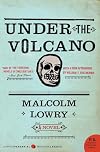
Well, I think members of my book group all agreed, more or less, on the difficulty of this text. Lowry writes partly from experience about an alcoholic ex-diplomat in 1937 Mexico, his ex-wife and half-brother, among others. The stream of consciousness style, especially in the first few chapters, is made more difficult by being the internal incoherence of a confirmed and despairing alcoholic. Lowry makes frequent references to classical literature, especially Dante, tropes on death, and the show more convulsive state of the world at the time.
When Bukowski reviewed it, he said it caused him to yawn, and I'm afraid I kept falling asleep and dreaming before the end of Lowry's complex sentences. In spite of its reputation as great mid-century fiction, I'm not sure it's worth the effort. show less
When Bukowski reviewed it, he said it caused him to yawn, and I'm afraid I kept falling asleep and dreaming before the end of Lowry's complex sentences. In spite of its reputation as great mid-century fiction, I'm not sure it's worth the effort. show less
It’s funny that [b:Infinite Jest|6759|Infinite Jest|David Foster Wallace|https://images.gr-assets.com/books/1446876799s/6759.jpg|3271542] should have cited ‘Under the Volcano’ as a depressing book, because that is precisely the novel it most reminded me of. Both are essentially plotless, rife with digressions and flashbacks, cover a small amount of time in uncomfortable detail, and centre on difficult-to-like characters with serious substance abuse problems. On the other hand, both are show more also curiously compelling and fascinating due to excellent writing. ‘Under the Volcano’ offers actual catharsis, albeit of an extremely downbeat sort, and a clear allegory with the approach of the Second World War. It is incredibly atmospheric – every page is pervaded by a claustrophobic air of hopelessness. Obviously this doesn’t make it especially easy to read. The introduction (as ever, to be read afterwards) acknowledges the difficulty of getting into it and then suggests that to really understand Lowry’s genius you should read it three or four times. I respectfully decline to do this. Once was enough to appreciate his craft as a writer and sense the horrible depths of his alcoholic despair.
The digressions and descriptive asides were my favourite parts of the book, as they sometimes briefly allowed light to pierce the narrative gloom. Lowry’s vignette on Cambridge University is brilliantly insightful and will stay with me. It captures something about the university that still persists and I haven’t found an adequate description of before:
Like much of the rest of the novel, that paragraph is essentially a poem and would read more easily formatted as one:
On a more prosaic note, one reason I struggled to feel sympathy for the former Consul at the centre of the narrative was that he strongly reminded me of Boris Johnson. A rude, garrulous colonialist throwback with thick blonde hair who insults and bullies everyone around him, while appearing pathetically incompetent, you say? One wonders if Boris will find himself in Mexico, drowning his sorrows in mescal, when he finally gets fired as Foreign Secretary. Geoffrey Firmin is unequivocally a broken man, although he retains a delusional self-importance. A very well-realised character, but not a pleasant one. The secondary characters are flimsier, although their weaknesses and self-delusions are also laid bare. Mexico itself is a main character, so vividly and exhaustively described that a bus journey can take up at least a chapter without palling. With writing like this (Lowry; Foster Wallace; [a:Louis-Ferdinand Céline|7869|Louis-Ferdinand Céline|https://images.gr-assets.com/authors/1474566527p2/7869.jpg]), I can’t help wondering what they might have written had they not been hideously depressed. show less
The digressions and descriptive asides were my favourite parts of the book, as they sometimes briefly allowed light to pierce the narrative gloom. Lowry’s vignette on Cambridge University is brilliantly insightful and will stay with me. It captures something about the university that still persists and I haven’t found an adequate description of before:
Ah, the harbour bells of Cambridge! Whose fountains in moonlight and closed courts and cloisters, whose enduring beauty in its virtuous remote self-assurance, seemed part, less of the loud mosaic of one’s stupid life there, though maintained perhaps by the countless deceitful memories of such lives, than the strange dream of some old monk, eight hundred years dead, whose forbidding house, reared upon piles and stakes driven into the marshy ground, had once shone like a beacon out of the mysterious silence, and solitude of the fens. A dream jealously guarded: Keep off the Grass.
Like much of the rest of the novel, that paragraph is essentially a poem and would read more easily formatted as one:
Ah, the harbour bells of Cambridge!
Whose fountains in moonlight and closed courts and cloisters,
Whose enduring beauty in its virtuous remote self-assurance,
Seemed part, less of the loud mosaic of one’s stupid life there,
Though maintained perhaps by the countless deceitful memories of such lives,
Than the strange dream of some old monk, eight hundred years dead,
Whose forbidding house, reared upon piles and stakes driven into the marshy ground,
Had once shone like a beacon out of the mysterious silence, and solitude of the fens.
A dream jealously guarded: Keep off the Grass.
On a more prosaic note, one reason I struggled to feel sympathy for the former Consul at the centre of the narrative was that he strongly reminded me of Boris Johnson. A rude, garrulous colonialist throwback with thick blonde hair who insults and bullies everyone around him, while appearing pathetically incompetent, you say? One wonders if Boris will find himself in Mexico, drowning his sorrows in mescal, when he finally gets fired as Foreign Secretary. Geoffrey Firmin is unequivocally a broken man, although he retains a delusional self-importance. A very well-realised character, but not a pleasant one. The secondary characters are flimsier, although their weaknesses and self-delusions are also laid bare. Mexico itself is a main character, so vividly and exhaustively described that a bus journey can take up at least a chapter without palling. With writing like this (Lowry; Foster Wallace; [a:Louis-Ferdinand Céline|7869|Louis-Ferdinand Céline|https://images.gr-assets.com/authors/1474566527p2/7869.jpg]), I can’t help wondering what they might have written had they not been hideously depressed. show less
Lists
Franklit (1)
Backlisted (1)
Awards


You May Also Like


Associated Authors
Statistics
- Works
- 70
- Also by
- 13
- Members
- 6,543
- Popularity
- #3,752
- Rating
- 3.8
- Reviews
- 115
- ISBNs
- 266
- Languages
- 19
- Favorited
- 31
