
David W. Orr
Author of Earth in Mind: On Education, Environment, and the Human Prospect
About the Author
David W. Orr is the Paul Sears Distinguished Professor of Environmental Studies and Politics at Oberlin College.
Image credit: Orr in 2010
Works by David W. Orr
Tagged
Common Knowledge
- Gender
- male
- Occupations
- Paul Sears Distinguished Professor of Environmental Studies and Politics, Oberlin College
James Marsh Professor, University of Vermont - Organizations
- Rocky Mountain Institute
Aldo Leopold Foundation
Oberlin College
University of Vermont - Awards and honors
- Global Green Millennium Leadership Award
Bioneers Award
National Wildlife Federation Leadership Award
Lyndhurst Prize - Nationality
- USA
- Associated Place (for map)
- USA
Members
Reviews
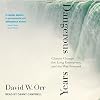
Rather than rehash the science of climate change and the likely results, Orr instead largely focuses on the economic, political, and philosophical underpinnings of the climate crisis and how we need to change our thinking on both a personal and societal level in order to forestall disaster.
Although he primarily focuses on American culture and its political system, most of the philosophical aspects and societal realignment are generally applicable to most of the developed world.
He comes out show more swinging, with scathing and withering attacks against the institutions and ideologies that created and continue to irresponsibly enable the dumping of too much carbon into the atmosphere, long after we knew better, culminating in as brutal and venomous diatribe against the inherent evils of capitalism as I've ever read, in any context.
As a technologist, I generally take a dim view to those that only see the downsides to technology, while dismissing the possibility that any societal good can result from technological advances. But despite disagreeing in principle with much of Orr's outlook, it's hard to argue with the results to date. He is 100% correct that the climate catastrophe isn't just a technological problem, and that more than a quick technology fix will be sufficient to get us out of this mess.
He also glowingly praises the Amish and the US Green Building Council as examples of organizations that are doing good, blithely ignoring the many significant problems of each. But his message that we should "Do good and necessary work," reform our educational institutions to create well-rounded and civic-minded citizens, reforge relationships with nature, and take a systems approach to governance and decision making are all spot on.
Bottom Line: Add to the Required Reading List show less
Although he primarily focuses on American culture and its political system, most of the philosophical aspects and societal realignment are generally applicable to most of the developed world.
He comes out show more swinging, with scathing and withering attacks against the institutions and ideologies that created and continue to irresponsibly enable the dumping of too much carbon into the atmosphere, long after we knew better, culminating in as brutal and venomous diatribe against the inherent evils of capitalism as I've ever read, in any context.
As a technologist, I generally take a dim view to those that only see the downsides to technology, while dismissing the possibility that any societal good can result from technological advances. But despite disagreeing in principle with much of Orr's outlook, it's hard to argue with the results to date. He is 100% correct that the climate catastrophe isn't just a technological problem, and that more than a quick technology fix will be sufficient to get us out of this mess.
He also glowingly praises the Amish and the US Green Building Council as examples of organizations that are doing good, blithely ignoring the many significant problems of each. But his message that we should "Do good and necessary work," reform our educational institutions to create well-rounded and civic-minded citizens, reforge relationships with nature, and take a systems approach to governance and decision making are all spot on.
Bottom Line: Add to the Required Reading List show less
Ecological Literacy: Education and the Transition to a Postmodern World (Suny Series in Constructive Postmodern Thought) by David W. Orr
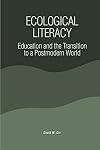
Densely worded, but highly informational. Focus on post-modern effects of and in environmental education.

It's now available as an ebook on the MIT press portal http://mitpress-ebooks.mit.edu/product/design-on-edge
Awards

You May Also Like


Associated Authors
Statistics
- Works
- 16
- Members
- 887
- Popularity
- #28,886
- Rating
- 3.8
- Reviews
- 3
- ISBNs
- 46
- Favorited
- 1