
Christopher Hibbert (1924–2008)
Author of The House of Medici: Its Rise and Fall
About the Author
Christopher Hibbert: March 5, 1924 -- December 21, 2008 Historian Christopher Hibbert was born as Arthur Raymond Hibbert in Enderby, England in 1924. He dropped out of Oriel College to join the Army. He served with the London Irish Rifles and won the Military Cross. He earned a degree in history in show more 1948. Before becoming a full-time nonfiction writer, he worked as a real estate agent and a television critic for Truth magazine. He wrote more than 60 books throughout his lifetime including The Road to Tyburn (1957), Il Duce: The Life of Benito Mussolini(1962), George IV: Prince of Wales, 1762-1811 (1972), and George IV: Regent and King, 1812-1830 (1973). Hibbert was awarded the Heinemann Award for Literature in 1962 for The Destruction of Lord Raglan. He was a Fellow of the Royal Society of Literature and the Royal Geographical Society, and was awarded an Honorary Doctorate in Literature by the University of Leicester. He died from bronchial pneumonia on December 21, 2008 at the age of 84. (Bowker Author Biography) show less
Image credit: Christopher Hibbert circa 1974
Series
Works by Christopher Hibbert
Garibaldi and His Enemies: The Clash of Arms and Personalities in the Making of Italy (1966) 98 copies
A Soldier of the Seventy-First: The Journal of a Soldier of the Highland Light Infantry, 1806-1815 (1975) 42 copies, 1 review
The Classical Tradition 1 copy
Familia Borgia 1 copy
Associated Works
The Wreck of the Wager: The Narratives of John Bulkeley and the Hon. John Byron (2005) — Editor, some editions — 23 copies
The Wheatley Diary: A Journal and Sketch-Book Kept During the Peninsular War and the Waterloo Campaign (1964) — Editor — 20 copies
Captain Gronow: His Reminiscences of Regency and Victorian Life, 1810-60 (1991) — Editor, some editions — 19 copies
MHQ: The Quarterly Journal of Military History — Summer 1993 (1993) — Author "Marston Moor" and "Marston Moor Today" — 17 copies
Tagged
Common Knowledge
- Canonical name
- Hibbert, Christopher
- Legal name
- Hibbert, Arthur Raymond (birth name)
- Birthdate
- 1924-03-05
- Date of death
- 2008-12-21
- Gender
- male
- Education
- Radley College
University of Oxford (Oriel College|BA|1948|MA) - Occupations
- military officer
historian
professor - Organizations
- British Army (London Irish Rifles)
Johnson Society
Army and Navy Club
Garrick Club - Awards and honors
- Military Cross (1945)
Royal Society of Literature (fellow)
Heinemann Award for Literature (1962)
Royal Geographical Society (fellow)
McColvin Medal (1989) - Cause of death
- bronchopneumonia
- Nationality
- UK
- Birthplace
- Enderby, Leicestershire, England, UK
- Places of residence
- Henley-on-Thames, Oxfordshire, England, UK
- Place of death
- Henley-on-Thames, Oxfordshire, England, UK
- Map Location
- England, UK
Members
Reviews
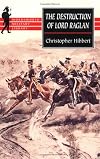
Cecil Woodham-Smith’s The Reason Why compared with Christopher Hibbert’s The Destruction of Lord Raglan.
For such a short conflict, the Crimean War added a lot to sartorial vocabulary: Lord Cardigan’s sweater, Lord Raglan’s sleeve, and the Balaclava “helmet”. If anybody knows anything else about it, it’s probably The Charge of the Light Brigade, one of the British army’s most disastrous military maneuvers.
Both these books focus on personalities embedded in the larger context show more of the war. Cecil Woodham-Smith’s The Reason Why covers the careers of Lord Cardigan and Lord Lucan, the main protagonists in the Charge; Christopher Hibbert’s The Destruction of Lord Raglan follows the life of Raglan up to his death in Crimea.
When the Crimean War started, Britain hadn’t fought a European war in 40 years. The British Army was dominated by the shadow of Wellington, who, while certainly one of history’s great generals, had some counterproductive ideas about military administration. Wellington strongly believed in the purchase system for military commissions; Smith argues that this was because he felt that then the upper class of the country would have a personal stake in the Army. During WWI, a German officer commented that the BEF was an “army of lions led by donkeys”; after years of the purchase system, the Crimean army ended up as an army of lions led by something considerably lower on the evolutionary scale than donkeys – perhaps flatworms. Lord Cardigan, who had never actually heard a gun fired in anger, bought his commission and obtained command of a cavalry regiment and eventually the Light Brigade over many more qualified but poorer officers; Lord Lucan, who was overall cavalry commander, had some minor experience, having briefly served with the Russian army in the Balkans in the 1820s, and although Lord Raglan had fought at Waterloo he’d never commanded in the field, having served mostly as an aide-de-camp to Wellington. Cardigan, in particular, was noted for being a raving martinet who was much more concerned with the appearance of his troops than their military skill; he designed an elaborate and spectacular uniform (tight cherry-red pants, a short blue jacket, a weird-looking helmet and a hussar’s pelisse on one shoulder) and, when he rode through London, would station enlisted troopers along his route so they could ostentatiously salute him as he passed.
The whole Crimean expedition was a disaster from the start. For one thing, nobody quite understood why the English and French were fighting on the side of the Ottoman Empire to keep the Czar for acting as a protector of Christians. The British Army wasn’t really an army at all; Prince Albert, who had some experience with German military systems, commented that it was just “an aggregation of battalions”. The Commander-in-Chief of the Horse Guards commanded all troops in Britain – and was therefore responsible for organizing them to go abroad – but had no authority over troops that actually were overseas. The Master-General of Ordnance was in charge of buying equipment, other than clothing, which was handled by a Board of General Officers. The Commissariat was a civilian agency under the Treasury and was nominally in charge of supplies, but had no transport capability. The Medical Department was independent except for finances, which came from the Secretary-at-War, who had jurisdiction over all pay and finances except those of the Artillery and Engineers, which were under the Master General of Ordnance. The overall size of the Army was under the Secretary of State for the Colonies, and transporting the army overseas was naturally the job of the Royal Navy. The East India Company had its own highly professional and experienced army, which was uniformly hated by the Regulars; the only Indian officers that saw service in the Crimean essentially had to sneak in. A few of the commanders, (notably Sir James Scarlett) realized that it might be handy to have the advice of military officers that had actually fought and attached “Company” officers to their staff, but it was made clear that this was highly irregular. Most commanders picked their staff from young relatives.
The army got off more or less alright, except that the Navy had supplied sailing ships rather than steamers to carry horses and many of them died on the long passage to Constantinople. Once there, the British and French wandered around the Balkans long enough to get cholera, then headed off to the Crimea, without doing any advance reconnaissance. They landed on a convenient beach north of Sevastopol but discovered that the ships had not been “combat loaded”; all the tents were deep in the holds and the soldiers had to sleep in the open. They eventually made their way into the interior, deciding that they would be better off south of Sevastopol. Raglan was short on cavalry and kept them close to the column so they wouldn’t be attacked; it was probably just as well because the cavalry officers didn’t really like doing reconnaissance anyway.
Thus Raglan more or less blundered into the Russian at the Alma (although they were well aware he was coming). Once again the inherent courage of British infantry carried the day over a superior Russian force in a well-prepared defensive position (the French did contribute by using Algerian troops to outflank the Russians, who thought that a cliff on their left was unassailable and therefore didn’t defend it). Once again, Raglan kept his cavalry close, forbidding them to pursue routed Russians and leading them call Lord Lucan (who was only following Raglan’s orders) “Lord Look-on”. The British finally settled at the port of Balaclava, south of Sevastopol, while the French used two ports that were on more favorable terrain and closer to the city; then both forces began a siege.
Both authors do an excellent job of describing the Battle of Balaclava and the Charge. Balaclava was, of course, at sea level, but the road to the Sevastopol and the siege works ascended a 600-foot high plateau. A double valley – two valleys separated by a centerline ridge – pointed at Balaclava, and the road ran along that centerline. The ridge was defended by Turkish troops in a series of redoubts, each equipped with 12-pounder cannon borrowed from the Navy. Some British infantry and both the Heavy and Light Brigades of cavalry camped out at the foot of the ridge. Raglan’s aversion to cavalry reconnaissance came to a head when a massive Russian army appeared without warning, pushed the Turks off the centerline ridge (called The Causeway), occupied the heights on the other side of the valley, and began advancing on Balaclava.
It would not have been an utter disaster if the Russians had taken Balaclava – the British could have still drawn supplies from the French ports. However, it would have been most embarrassing. Raglan therefore ordered the Heavy Brigade to charge; against a Russian force estimated at eight times their size and uphill. They were, amazingly, successful; a huge Russian column broke and the Heavy Brigade reoccupied some of the Causeway.
Raglan was up on the plateau, the day was crystal clear, and the whole battlefield was laid out before him like a map. Individual officers could be identified in telescopes. Raglan notices that the Russians were retreating and dragging off some of the guns from The Causeway and decided to do something about it; the Heavy Brigade was still disorganized from its successful charge, so the Light Brigade was ordered to charge. The idea was that the Light Brigade would also attack the Causeway, ahead of the point now occupied by the reforming Heavy Brigade, and recapture the whole thing. Unfortunately, Raglan’s excellent view of the battlefield was not shared by the troops on the ground, and Raglan didn’t realize it. The Light Brigade was at the foot of the valley, with height on their left, The Causeway on the right, and a large Russian battery at the far end. Neither Cardigan nor Lucan could see the action on top of the Causeway from their position. Therefore Raglan’s order that “…the cavalry to advance rapidly to the front – follow the enemy and try to prevent the enemy from carrying away the guns…” was ambiguous. It didn’t help that Raglan called out to his messenger, Captain Nolan, “Tell Lord Lucan the cavalry is to attack immediately”, and Nolan was known as a hothead. When Lucan read the order, he couldn’t figure out what Raglan was talking about and asked Nolan “What guns, sir?” Nolan gestured in the general direction of the invisible batteries on the Causeway and said “There, sir, there are your guns!” Unfortunately this was also in the general direction of the highly visible Russian battery at the far end of the Valley of Death and that’s where Cardigan and the Light Brigade were sent. Nolan may have realized what had happened, because he tore after them, got to the front, and was trying to say something to Cardigan when a Russian shell fragment eviscerated him. Cardigan later contemptuously commented that “Nolan screamed like a woman”. The Light Brigade actually made it to the end of the valley and took every Russian gun. Unfortunately they couldn’t hold them, because just beyond the battery was a large Russian infantry and cavalry force. Cardigan didn’t take any part in the fighting at the guns; he later said it was beneath the dignity of an officer to fight private soldiers. Instead, he abandoned the survivors and rode back alone to complain about Nolan to Lord Lucan. The Light Brigade has 195 survivors out of 700 (I know Tennyson says 600, but 700 doesn’t scan). Cardigan went off in a snit to his private yacht; the Light Brigade remnant was left on alert, unable to light fires and with no rations.
Woodham-Smith’s book essentially ends here, but Hibbert continues with the rest of Raglan’s career. After the Battle of Inkerman, fought in opaque fog such that it ended up as a game of military hide-and-seek, the Russian field army made no more attacks and the British and French settled in for a siege in a Russian winter. Hibbert’s professed goal is to rehabilitate Raglan but he ends up damning him with faint praise. Raglan was almost pathologically shy and couldn’t stand controversy; this might have made him a decent clergyman (in fact many commented that he looked like one) but was no use at all to a military commander. Because the Russians still held the far end of the Causeway after Balaclava, the regular road to Sevastapol was lost and the British had to carry supplies to the field works cross country. When winter set in, there was no forage for the horses and they almost all died, requiring everything to be man-packed. Although the Crimea was supposed to have a mild winter, that turned out to mean “mild for Russia”. There were no tents, no stoves, no food, no clothing, and no shoes (many of these things existed but they were buried in the lowermost hold of ships or requisition forms were filled out improperly or they had already been landed but nobody knew where they were). Then cholera (which had never really gone away) reappeared. The British Army in the Crimea lost more than 1000 men a month during the winter, and by the spring they were only a token force. The French finally stormed Sevastapol.
So what did Raglan do through all this? He wrote letters and memos. Hibbert notes that he often worked well after midnight dispatching paper to London complaining about the state of his army and the lack of supply. Unfortunately, that hard work did no good at all. Raglan’s maxim was always “What would the Duke (Wellington) do?” While that can’t be answered for sure, it’s fairly safe to assume that Wellington would have gotten something done, even if it involved firing squads. Raglan eventually solved all his problems by dying of cholera himself.
Each of these is an excellent book, and together they are outstanding. Hibbert has some of the clearest and most understandable maps I’ve ever seen in a military history (although admittedly even he is stumped by fog-bound Inkerman and is reduced to portraying a number of units as “skirmishers and broken troops). Woodham-Smith has Balaclava down pat and both her verbal descriptions and maps are excellent; her accounts of the British military system of the time and the pre-war and post-war careers of Lucan and Cardigan are fascinating in a creepy sort of way. I’d read about the Crimea before and even played a couple of war games about it but never really understood anything until now. High recommended. show less
For such a short conflict, the Crimean War added a lot to sartorial vocabulary: Lord Cardigan’s sweater, Lord Raglan’s sleeve, and the Balaclava “helmet”. If anybody knows anything else about it, it’s probably The Charge of the Light Brigade, one of the British army’s most disastrous military maneuvers.
Both these books focus on personalities embedded in the larger context show more of the war. Cecil Woodham-Smith’s The Reason Why covers the careers of Lord Cardigan and Lord Lucan, the main protagonists in the Charge; Christopher Hibbert’s The Destruction of Lord Raglan follows the life of Raglan up to his death in Crimea.
When the Crimean War started, Britain hadn’t fought a European war in 40 years. The British Army was dominated by the shadow of Wellington, who, while certainly one of history’s great generals, had some counterproductive ideas about military administration. Wellington strongly believed in the purchase system for military commissions; Smith argues that this was because he felt that then the upper class of the country would have a personal stake in the Army. During WWI, a German officer commented that the BEF was an “army of lions led by donkeys”; after years of the purchase system, the Crimean army ended up as an army of lions led by something considerably lower on the evolutionary scale than donkeys – perhaps flatworms. Lord Cardigan, who had never actually heard a gun fired in anger, bought his commission and obtained command of a cavalry regiment and eventually the Light Brigade over many more qualified but poorer officers; Lord Lucan, who was overall cavalry commander, had some minor experience, having briefly served with the Russian army in the Balkans in the 1820s, and although Lord Raglan had fought at Waterloo he’d never commanded in the field, having served mostly as an aide-de-camp to Wellington. Cardigan, in particular, was noted for being a raving martinet who was much more concerned with the appearance of his troops than their military skill; he designed an elaborate and spectacular uniform (tight cherry-red pants, a short blue jacket, a weird-looking helmet and a hussar’s pelisse on one shoulder) and, when he rode through London, would station enlisted troopers along his route so they could ostentatiously salute him as he passed.
The whole Crimean expedition was a disaster from the start. For one thing, nobody quite understood why the English and French were fighting on the side of the Ottoman Empire to keep the Czar for acting as a protector of Christians. The British Army wasn’t really an army at all; Prince Albert, who had some experience with German military systems, commented that it was just “an aggregation of battalions”. The Commander-in-Chief of the Horse Guards commanded all troops in Britain – and was therefore responsible for organizing them to go abroad – but had no authority over troops that actually were overseas. The Master-General of Ordnance was in charge of buying equipment, other than clothing, which was handled by a Board of General Officers. The Commissariat was a civilian agency under the Treasury and was nominally in charge of supplies, but had no transport capability. The Medical Department was independent except for finances, which came from the Secretary-at-War, who had jurisdiction over all pay and finances except those of the Artillery and Engineers, which were under the Master General of Ordnance. The overall size of the Army was under the Secretary of State for the Colonies, and transporting the army overseas was naturally the job of the Royal Navy. The East India Company had its own highly professional and experienced army, which was uniformly hated by the Regulars; the only Indian officers that saw service in the Crimean essentially had to sneak in. A few of the commanders, (notably Sir James Scarlett) realized that it might be handy to have the advice of military officers that had actually fought and attached “Company” officers to their staff, but it was made clear that this was highly irregular. Most commanders picked their staff from young relatives.
The army got off more or less alright, except that the Navy had supplied sailing ships rather than steamers to carry horses and many of them died on the long passage to Constantinople. Once there, the British and French wandered around the Balkans long enough to get cholera, then headed off to the Crimea, without doing any advance reconnaissance. They landed on a convenient beach north of Sevastopol but discovered that the ships had not been “combat loaded”; all the tents were deep in the holds and the soldiers had to sleep in the open. They eventually made their way into the interior, deciding that they would be better off south of Sevastopol. Raglan was short on cavalry and kept them close to the column so they wouldn’t be attacked; it was probably just as well because the cavalry officers didn’t really like doing reconnaissance anyway.
Thus Raglan more or less blundered into the Russian at the Alma (although they were well aware he was coming). Once again the inherent courage of British infantry carried the day over a superior Russian force in a well-prepared defensive position (the French did contribute by using Algerian troops to outflank the Russians, who thought that a cliff on their left was unassailable and therefore didn’t defend it). Once again, Raglan kept his cavalry close, forbidding them to pursue routed Russians and leading them call Lord Lucan (who was only following Raglan’s orders) “Lord Look-on”. The British finally settled at the port of Balaclava, south of Sevastopol, while the French used two ports that were on more favorable terrain and closer to the city; then both forces began a siege.
Both authors do an excellent job of describing the Battle of Balaclava and the Charge. Balaclava was, of course, at sea level, but the road to the Sevastopol and the siege works ascended a 600-foot high plateau. A double valley – two valleys separated by a centerline ridge – pointed at Balaclava, and the road ran along that centerline. The ridge was defended by Turkish troops in a series of redoubts, each equipped with 12-pounder cannon borrowed from the Navy. Some British infantry and both the Heavy and Light Brigades of cavalry camped out at the foot of the ridge. Raglan’s aversion to cavalry reconnaissance came to a head when a massive Russian army appeared without warning, pushed the Turks off the centerline ridge (called The Causeway), occupied the heights on the other side of the valley, and began advancing on Balaclava.
It would not have been an utter disaster if the Russians had taken Balaclava – the British could have still drawn supplies from the French ports. However, it would have been most embarrassing. Raglan therefore ordered the Heavy Brigade to charge; against a Russian force estimated at eight times their size and uphill. They were, amazingly, successful; a huge Russian column broke and the Heavy Brigade reoccupied some of the Causeway.
Raglan was up on the plateau, the day was crystal clear, and the whole battlefield was laid out before him like a map. Individual officers could be identified in telescopes. Raglan notices that the Russians were retreating and dragging off some of the guns from The Causeway and decided to do something about it; the Heavy Brigade was still disorganized from its successful charge, so the Light Brigade was ordered to charge. The idea was that the Light Brigade would also attack the Causeway, ahead of the point now occupied by the reforming Heavy Brigade, and recapture the whole thing. Unfortunately, Raglan’s excellent view of the battlefield was not shared by the troops on the ground, and Raglan didn’t realize it. The Light Brigade was at the foot of the valley, with height on their left, The Causeway on the right, and a large Russian battery at the far end. Neither Cardigan nor Lucan could see the action on top of the Causeway from their position. Therefore Raglan’s order that “…the cavalry to advance rapidly to the front – follow the enemy and try to prevent the enemy from carrying away the guns…” was ambiguous. It didn’t help that Raglan called out to his messenger, Captain Nolan, “Tell Lord Lucan the cavalry is to attack immediately”, and Nolan was known as a hothead. When Lucan read the order, he couldn’t figure out what Raglan was talking about and asked Nolan “What guns, sir?” Nolan gestured in the general direction of the invisible batteries on the Causeway and said “There, sir, there are your guns!” Unfortunately this was also in the general direction of the highly visible Russian battery at the far end of the Valley of Death and that’s where Cardigan and the Light Brigade were sent. Nolan may have realized what had happened, because he tore after them, got to the front, and was trying to say something to Cardigan when a Russian shell fragment eviscerated him. Cardigan later contemptuously commented that “Nolan screamed like a woman”. The Light Brigade actually made it to the end of the valley and took every Russian gun. Unfortunately they couldn’t hold them, because just beyond the battery was a large Russian infantry and cavalry force. Cardigan didn’t take any part in the fighting at the guns; he later said it was beneath the dignity of an officer to fight private soldiers. Instead, he abandoned the survivors and rode back alone to complain about Nolan to Lord Lucan. The Light Brigade has 195 survivors out of 700 (I know Tennyson says 600, but 700 doesn’t scan). Cardigan went off in a snit to his private yacht; the Light Brigade remnant was left on alert, unable to light fires and with no rations.
Woodham-Smith’s book essentially ends here, but Hibbert continues with the rest of Raglan’s career. After the Battle of Inkerman, fought in opaque fog such that it ended up as a game of military hide-and-seek, the Russian field army made no more attacks and the British and French settled in for a siege in a Russian winter. Hibbert’s professed goal is to rehabilitate Raglan but he ends up damning him with faint praise. Raglan was almost pathologically shy and couldn’t stand controversy; this might have made him a decent clergyman (in fact many commented that he looked like one) but was no use at all to a military commander. Because the Russians still held the far end of the Causeway after Balaclava, the regular road to Sevastapol was lost and the British had to carry supplies to the field works cross country. When winter set in, there was no forage for the horses and they almost all died, requiring everything to be man-packed. Although the Crimea was supposed to have a mild winter, that turned out to mean “mild for Russia”. There were no tents, no stoves, no food, no clothing, and no shoes (many of these things existed but they were buried in the lowermost hold of ships or requisition forms were filled out improperly or they had already been landed but nobody knew where they were). Then cholera (which had never really gone away) reappeared. The British Army in the Crimea lost more than 1000 men a month during the winter, and by the spring they were only a token force. The French finally stormed Sevastapol.
So what did Raglan do through all this? He wrote letters and memos. Hibbert notes that he often worked well after midnight dispatching paper to London complaining about the state of his army and the lack of supply. Unfortunately, that hard work did no good at all. Raglan’s maxim was always “What would the Duke (Wellington) do?” While that can’t be answered for sure, it’s fairly safe to assume that Wellington would have gotten something done, even if it involved firing squads. Raglan eventually solved all his problems by dying of cholera himself.
Each of these is an excellent book, and together they are outstanding. Hibbert has some of the clearest and most understandable maps I’ve ever seen in a military history (although admittedly even he is stumped by fog-bound Inkerman and is reduced to portraying a number of units as “skirmishers and broken troops). Woodham-Smith has Balaclava down pat and both her verbal descriptions and maps are excellent; her accounts of the British military system of the time and the pre-war and post-war careers of Lucan and Cardigan are fascinating in a creepy sort of way. I’d read about the Crimea before and even played a couple of war games about it but never really understood anything until now. High recommended. show less
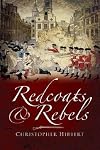
Themes: war, American Revolution, liberty, politics, biography, geography
Setting: the new United States of America, 1770s-1780s, Canada, and England
So we've all heard the story about how the patriots wanted freedom from the oppression of that evil King George and how they rose up, demanded their rights, and made the world safe for democracy, right? Not surprisingly, the story is not quite that simple, and this book presents the whole war from the British point of view. We get a good look at show more what was going on back in Britain, the political maneuvering behind the scenes, the personalities of the British officers involved, and how Britain finally lost the colonies.
Washington is still a central figure here, but we also get to learn about Burgoyne, Lord Cornwallis, the Howe brothers, admiral and general, and most of all, Clinton, who was so prickly and hard to get along with that he alienated every single man assigned to work with him. It wouldn't be a huge exaggeration to say that the feuding that went on among the English generals, the politicians back home, and the lack of communication is what really allowed America to win the war. There were other factors, to be sure, but I had no idea what a mess the British were really in.
There are very few saints in this book. Loyalist and rebels alike committed horrible crimes against civilians and the enemy captives. But it was great to read a new perspective on the war for American Independence.
I have to say that I found some interesting parallels as I read this book. As the English troops talked about the difficult terrain, how impossible it was to fight an enemy that they couldn't see through the forests and that fought an unconventional style of warfare they hadn't seen before, it reminded me of the descriptions of the Vietnam War. Like that one, the American war became more and more unpopular back in England, especially among the wealthier aristocratic class. It was the poor and desperate, the foreign mercenaries who were the ones sent to fight this war a continent away.
The other interesting thing that struck me was the repeated refrain that the British politicians back home gave, that American loyalists would be happy to rise up and support the British troops fight to overthrow the rebels. It's a little different, but it did sound like what our government said during the second Gulf War, that the Iraqis would all be happy to get rid of Saddam Hussein, that all we had to do was show up and they would rush to join America get rid of the dictator. Didn't quite work that way the US, and didn't work that way for the British. Let's face it, most people will be happy to join a successful cause after it's obvious who is going to win. But to risk your own life when the issue is still very uncertain - most people will sit it out and let the soldiers do the fighting.
I started this one on tape, but I don't have as much time to listen in the car as I used to, so I switched over to physical book format to finish. Both versions were very enjoyable, although I admit I liked seeing the pictures. I will warn thought that the audio version started out with a 15-20 minute acknowledgment before the story ever got started, so if you listen, you can definitely skip all that and not miss a thing. But the narration was very good. Highly recommended for Americans and British alike. show less
Setting: the new United States of America, 1770s-1780s, Canada, and England
So we've all heard the story about how the patriots wanted freedom from the oppression of that evil King George and how they rose up, demanded their rights, and made the world safe for democracy, right? Not surprisingly, the story is not quite that simple, and this book presents the whole war from the British point of view. We get a good look at show more what was going on back in Britain, the political maneuvering behind the scenes, the personalities of the British officers involved, and how Britain finally lost the colonies.
Washington is still a central figure here, but we also get to learn about Burgoyne, Lord Cornwallis, the Howe brothers, admiral and general, and most of all, Clinton, who was so prickly and hard to get along with that he alienated every single man assigned to work with him. It wouldn't be a huge exaggeration to say that the feuding that went on among the English generals, the politicians back home, and the lack of communication is what really allowed America to win the war. There were other factors, to be sure, but I had no idea what a mess the British were really in.
There are very few saints in this book. Loyalist and rebels alike committed horrible crimes against civilians and the enemy captives. But it was great to read a new perspective on the war for American Independence.
I have to say that I found some interesting parallels as I read this book. As the English troops talked about the difficult terrain, how impossible it was to fight an enemy that they couldn't see through the forests and that fought an unconventional style of warfare they hadn't seen before, it reminded me of the descriptions of the Vietnam War. Like that one, the American war became more and more unpopular back in England, especially among the wealthier aristocratic class. It was the poor and desperate, the foreign mercenaries who were the ones sent to fight this war a continent away.
The other interesting thing that struck me was the repeated refrain that the British politicians back home gave, that American loyalists would be happy to rise up and support the British troops fight to overthrow the rebels. It's a little different, but it did sound like what our government said during the second Gulf War, that the Iraqis would all be happy to get rid of Saddam Hussein, that all we had to do was show up and they would rush to join America get rid of the dictator. Didn't quite work that way the US, and didn't work that way for the British. Let's face it, most people will be happy to join a successful cause after it's obvious who is going to win. But to risk your own life when the issue is still very uncertain - most people will sit it out and let the soldiers do the fighting.
I started this one on tape, but I don't have as much time to listen in the car as I used to, so I switched over to physical book format to finish. Both versions were very enjoyable, although I admit I liked seeing the pictures. I will warn thought that the audio version started out with a 15-20 minute acknowledgment before the story ever got started, so if you listen, you can definitely skip all that and not miss a thing. But the narration was very good. Highly recommended for Americans and British alike. show less
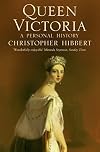
When I started reading this I really had very little interest in Queen Victoria or the era but I got swept up! Hibbert's a shameless gossip and it's as if you're reading about things that happened just the other week. I dare you not to enjoy it. QV's interesting. At times you really like her and at others she appears to have some sort of personality disorder. I now want to read biographies of everyone else mentioned.

This is a well researched analysis of the first 30 or so years of Dickens's life, tracing the links between the early events in his life and his developing literary approach. Much of this is material I have seen covered in other books, but Hibbert shows how repeated patterns come up, such as strong brother-sister relationships being seen as more ideal than husband-wife ones, reflecting in particular his close and, to modern eyes, bizarre, relationship with his sister in law Mary Hogarth who show more died so suddenly and so tragically young; and the repeated ripples of assertions of self confidence in later life reflecting the knock back Dickens suffered after his initial schooling in Chatham when he had to work in the infamous blacking warehouse on the site of what is now Charing Cross station. Much of Dickens's life and attitudes towards his own progress and relations with others seems to demonstrate an absolute imperative to avoid the feckless attitudes and precarious economic situation of his father John Dickens whom he had continually to bale out for the reminder of the latter's life. This is fascinating stuff though I did think Hibbert perhaps went slightly too far into Dickens's middle life to suit the title. show less
Lists
Awards


You May Also Like


Associated Authors
Statistics
- Works
- 80
- Also by
- 11
- Members
- 13,952
- Popularity
- #1,648
- Rating
- 4.0
- Reviews
- 163
- ISBNs
- 388
- Languages
- 15
- Favorited
- 18
