
Rudy Wurlitzer
Author of Nog
About the Author
Works by Rudy Wurlitzer
Associated Works
Tagged
Common Knowledge
- Canonical name
- Wurlitzer, Rudy
- Legal name
- Wurlitzer, Rudolph
- Birthdate
- 1937-01-03
- Gender
- male
- Occupations
- writer
- Nationality
- USA
- Birthplace
- Cincinnati, Ohio, USA
- Associated Place (for map)
- Ohio, USA
Members
Reviews

Nog unfurls as though Wurlitzer deliberately narrates everyday experience in a stridently alien tone. It seems the effect is achieved by selecting an ambivalent perspective from which to describe that experience, as though to force the reader to examine the mundane with greater attention, less preconception. (Naked lunch.) Example: the narrator makes no effort to employ a constant verb tense, not even within the same paragraph. It's unclear whether the changing tense is random, or follows show more some unidentified rule. Similarly, memory isn't demarcated from wish / vision / hallucination; events are tentatively sequenced; even the narrator's decisions and emotions shift (more than once, from sentence to sentence).
It's interesting that the very same prose serves at times as an absurdist novel, at other times as an existentialist prose poem. The repetitive phrasing and preoccupations of the narrator are in places reminiscent of Nausea.
One result is that the novel shows consciousness building (being built from) connected impressions, whether recollected or invented. So why select those specific impressions, discard others, and then consider the ensuing experience "awareness"? And who / what, precisely, is responsible for "selecting" at all?
Nog suggests the human need for narrative is such that we will invent one as readily as discern or uncover one.
How "fictional" is a novel, in light of this? How relevant authorial intent? show less
It's interesting that the very same prose serves at times as an absurdist novel, at other times as an existentialist prose poem. The repetitive phrasing and preoccupations of the narrator are in places reminiscent of Nausea.
One result is that the novel shows consciousness building (being built from) connected impressions, whether recollected or invented. So why select those specific impressions, discard others, and then consider the ensuing experience "awareness"? And who / what, precisely, is responsible for "selecting" at all?
Nog suggests the human need for narrative is such that we will invent one as readily as discern or uncover one.
How "fictional" is a novel, in light of this? How relevant authorial intent? show less
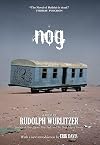
Wurlitzer’s writing elides your grasp for meaning or connection. Words appear, words you know and that have previously provided information, but in Wurlitzer’s sentences this information always slides away. It is a poetic style this writing. A style that parallels the thinking of his main character who works to avoid all connections and meaning built on memory and thought. It is as if his main character - who is not Nog and yet sometimes has Nog living within him - resides on the very show more edge of awareness. An awareness without memory to hold him down or planning to limit his experience. An awareness steadfastly (although that implies a desire much more intent than the character himself would ever own up to) living in the shifting now of experience. People and scenes and situations come and go around him without any sticking power or greater context. A room, an ankle, an octopus. But that is OK for a person with light coming out of a small hole in his chest. Or maybe that was someone else? A person trying to be Nog but not Nog. Some writing seems easy, if you only put the work in and had enough ideas. Wurlitzer’s writing seems something else. A style so stripped down and distilled, colorful yet intensely minimal, perfectly faceted in each instant and yet flowing softly as a breeze you aren’t quite sure you just felt…
I could try to coax meaning out of Nog's plot but that seems a disservice to its nature.
Much better to let its mood continue to wash over me as it slowly recedes from memory... show less
I could try to coax meaning out of Nog's plot but that seems a disservice to its nature.
Much better to let its mood continue to wash over me as it slowly recedes from memory... show less
You're alive. In some way you're connected to everything around you. Everything that you choose to do. There's a connection between you and your life. Then something happens...
That damn ditch...
Now your life is filled with events and people but there's an overwhelming Déjà vu. Except you don't feel it as Déjà vu. There's just something uncanny about everything that happens. Every person you meet. Shuffled. Everything that made you you comes back but out of order. Out of context. show more Repetition of something almost just like something before. The decisions you previously felt embodied in now just seem to happen. As if in a dream. It's almost like you're watching yourself do everything you've done, but again and slightly different. That person is now this person. Wasn't that painting different? Much like a dream you sense what's coming but can't focus on it.
Who really did shoot you?
Why did you sit back down at that table?
At least your billiard skills seem to follow you here.
A blurb on the front from the LA Times states that it's an American Book of the Dead.
I usually cringe at that description.
This time it might be accurate.
This is a book that takes the tropes of the western genre and tells what it feels like to live, and then live again being subtly forced to make sense of your previous experiences.
Maybe it's more like a western Groundhog's Day, except every day all the main pieces and events are shifted so slightly. Not enough to bring awareness of the new situation you are in (you basically travel in a dream state) but just enough to make you randomly focus on very small details that swing into focus on each go round.
I started this review by giving this book 4 stars, but right now I think I'm changing it to 5.
There's something special here.
Hard to pin down but sticks with you like that dream that keeps coming back during the day in furtive snatches. show less
That damn ditch...
Now your life is filled with events and people but there's an overwhelming Déjà vu. Except you don't feel it as Déjà vu. There's just something uncanny about everything that happens. Every person you meet. Shuffled. Everything that made you you comes back but out of order. Out of context. show more Repetition of something almost just like something before. The decisions you previously felt embodied in now just seem to happen. As if in a dream. It's almost like you're watching yourself do everything you've done, but again and slightly different. That person is now this person. Wasn't that painting different? Much like a dream you sense what's coming but can't focus on it.
Who really did shoot you?
Why did you sit back down at that table?
At least your billiard skills seem to follow you here.
A blurb on the front from the LA Times states that it's an American Book of the Dead.
I usually cringe at that description.
This time it might be accurate.
This is a book that takes the tropes of the western genre and tells what it feels like to live, and then live again being subtly forced to make sense of your previous experiences.
Maybe it's more like a western Groundhog's Day, except every day all the main pieces and events are shifted so slightly. Not enough to bring awareness of the new situation you are in (you basically travel in a dream state) but just enough to make you randomly focus on very small details that swing into focus on each go round.
I started this review by giving this book 4 stars, but right now I think I'm changing it to 5.
There's something special here.
Hard to pin down but sticks with you like that dream that keeps coming back during the day in furtive snatches. show less

Bernardo Bertolucci's "Little Buddha" tells the story of a young Seattle boy who may, or may not, be the reincarnation of a venerated Buddhist teacher.
While his American parents try to deal with this possibility, which is explained to them by visiting monks from Tibet, the movie intercuts its modern story with a retelling of the life of Prince Siddhartha, who grew up to become the Buddha. The modern sequences lack realism or credibility. The ancient sequences play like the equivalent of a show more devout Bible story. The result is a slow-moving and pointless exercise by Bertolucci, whose "The Last Emperor" was a much superior telling of a similar story about a child who is chosen for great things.
Let's begin with a not exactly hypothetical question: If you were approached by a Tibetan monk, in robe and sandals, who explained that your 10-year-old child is a reincarnated Buddhist teacher, and if the monk invited your child to Tibet, how would you react? No plausible answer to that question is contained in this movie.
Instead, Bertolucci creates a Seattle family which, in its own way, is more unreal than any of the more spiritual families in his story. Chris Isaak and Bridget Fonda play Dean and Lisa Conrad. He is an architect whose ambitious skyscraper project has just gone into bankruptcy. She is a schoolteacher. Their son, Jesse (Alex Wiesendanger), is a bright, pleasant young boy. One day Lama Norbu (Ying Ruocheng), a Tibetan monk now living in Seattle, dreams of a hill with their house upon it, and is drawn to the family. He explains that some nine years earlier, his wise and holy teacher passed away, and that ever since he and his fellow monks have been alert to signs of the great man's reincarnation. It now appears that Jesse may indeed be that person.
Lisa Conrad is home alone when the monk first comes to visit.
She invites him into their home, and is intrigued, although unsettled, by his news. Later Dean also hears the story from the monk. At first he is hostile to the news. But then, after his business partner commits suicide, he has some sort of spiritual experience that causes him to question such matters as life and death, and eventually he agrees to accompany Jesse and Lama Norbu to Tibet.
The spiritual experience takes place offscreen, which is perhaps just as well, because nothing in Chris Isaak's underwritten character is even passingly convincing. The writing, the role, the casting, or all three, never work. The American father comes across as cold, closed-off and not very bright, and he has so little dialogue that occasionally we hope for him to say two sentences in a row, so that we can find out something more subtle from him than how, in a word or two, he "feels" about something.
The mother, played by Bridget Fonda, is a more interesting character, and it is a shame she doesn't accompany the father and child to Tibet - a shame because Lisa Conrad is more articulate, and also because the movie cries out for answers to the kinds of questions any mother would ask (such as, "You mean you really want to take my child away from me and take him to live in Tibet?"). Since the Conrads are not Buddhists, it is a bit much to expect them to understand the theology behind Lama Norbu's plans, although the monosyllabic architect does allow, at one point, that he has been "doing some thinking." Early in the film the monk gives the little boy a picture book about Prince Siddhartha (Keanu Reeves). This book, which greatly resembles free airport literature, is then read by the boy and his mother, triggering Bertolucci's flashbacks to the origins of Buddhism. (The movie's color strategy, by cinematographer Vittorio Storaro, schematizes these flashbacks by drenching them in warm reds, oranges, yellows and browns - as opposed to the chilly blues, grays and greens of all of the American scenes.) What I kept waiting for in "Little Buddha," unsuccessfully, was some clue about Bertolucci's attitude toward his material. Here we have a fundamental clash between two cultures, presented with the simplicity of a religious comic book. I cannot imagine a Buddhist filmmaker, subsidized with church money, making a film with less complexity or irony - rather the reverse, in fact. Has Bertolucci become a Buddhist? Does he believe the little boy is a reincarnated monk? Is this movie a holy story, for our edification? The scenes in Tibet are astonishingly simple-minded, especially after it appears that two Asian children may also be candidates for the reincarnation of the holy man. These three children (who eventually are said to embody three "sides" of the dead monk) are given scenes in which they play and talk together - all speaking English, of course. The movie is not even interested enough in the complexities of its story to suggest that there might be cultural differences among the children, or their parents. We're in Buddhist Sunday School here.
-Robert Ebert show less
While his American parents try to deal with this possibility, which is explained to them by visiting monks from Tibet, the movie intercuts its modern story with a retelling of the life of Prince Siddhartha, who grew up to become the Buddha. The modern sequences lack realism or credibility. The ancient sequences play like the equivalent of a show more devout Bible story. The result is a slow-moving and pointless exercise by Bertolucci, whose "The Last Emperor" was a much superior telling of a similar story about a child who is chosen for great things.
Let's begin with a not exactly hypothetical question: If you were approached by a Tibetan monk, in robe and sandals, who explained that your 10-year-old child is a reincarnated Buddhist teacher, and if the monk invited your child to Tibet, how would you react? No plausible answer to that question is contained in this movie.
Instead, Bertolucci creates a Seattle family which, in its own way, is more unreal than any of the more spiritual families in his story. Chris Isaak and Bridget Fonda play Dean and Lisa Conrad. He is an architect whose ambitious skyscraper project has just gone into bankruptcy. She is a schoolteacher. Their son, Jesse (Alex Wiesendanger), is a bright, pleasant young boy. One day Lama Norbu (Ying Ruocheng), a Tibetan monk now living in Seattle, dreams of a hill with their house upon it, and is drawn to the family. He explains that some nine years earlier, his wise and holy teacher passed away, and that ever since he and his fellow monks have been alert to signs of the great man's reincarnation. It now appears that Jesse may indeed be that person.
Lisa Conrad is home alone when the monk first comes to visit.
She invites him into their home, and is intrigued, although unsettled, by his news. Later Dean also hears the story from the monk. At first he is hostile to the news. But then, after his business partner commits suicide, he has some sort of spiritual experience that causes him to question such matters as life and death, and eventually he agrees to accompany Jesse and Lama Norbu to Tibet.
The spiritual experience takes place offscreen, which is perhaps just as well, because nothing in Chris Isaak's underwritten character is even passingly convincing. The writing, the role, the casting, or all three, never work. The American father comes across as cold, closed-off and not very bright, and he has so little dialogue that occasionally we hope for him to say two sentences in a row, so that we can find out something more subtle from him than how, in a word or two, he "feels" about something.
The mother, played by Bridget Fonda, is a more interesting character, and it is a shame she doesn't accompany the father and child to Tibet - a shame because Lisa Conrad is more articulate, and also because the movie cries out for answers to the kinds of questions any mother would ask (such as, "You mean you really want to take my child away from me and take him to live in Tibet?"). Since the Conrads are not Buddhists, it is a bit much to expect them to understand the theology behind Lama Norbu's plans, although the monosyllabic architect does allow, at one point, that he has been "doing some thinking." Early in the film the monk gives the little boy a picture book about Prince Siddhartha (Keanu Reeves). This book, which greatly resembles free airport literature, is then read by the boy and his mother, triggering Bertolucci's flashbacks to the origins of Buddhism. (The movie's color strategy, by cinematographer Vittorio Storaro, schematizes these flashbacks by drenching them in warm reds, oranges, yellows and browns - as opposed to the chilly blues, grays and greens of all of the American scenes.) What I kept waiting for in "Little Buddha," unsuccessfully, was some clue about Bertolucci's attitude toward his material. Here we have a fundamental clash between two cultures, presented with the simplicity of a religious comic book. I cannot imagine a Buddhist filmmaker, subsidized with church money, making a film with less complexity or irony - rather the reverse, in fact. Has Bertolucci become a Buddhist? Does he believe the little boy is a reincarnated monk? Is this movie a holy story, for our edification? The scenes in Tibet are astonishingly simple-minded, especially after it appears that two Asian children may also be candidates for the reincarnation of the holy man. These three children (who eventually are said to embody three "sides" of the dead monk) are given scenes in which they play and talk together - all speaking English, of course. The movie is not even interested enough in the complexities of its story to suggest that there might be cultural differences among the children, or their parents. We're in Buddhist Sunday School here.
-Robert Ebert show less
Lists
You May Also Like


Associated Authors
Statistics
- Works
- 16
- Also by
- 6
- Members
- 883
- Popularity
- #29,018
- Rating
- 3.8
- Reviews
- 12
- ISBNs
- 52
- Languages
- 3
- Favorited
- 5