
Cathy Day
Author of The Circus in Winter
About the Author
Cathy Day grew up in Peru, Indiana, once the winter home of the Hagenbeck-Wallace Circus. One of her great uncles was an elephant trainer; another claimed to be the world's fastest ticket taker. A former Bush Artist Fellow, she teaches at The College of New Jersey
Image credit: Sandy Carney
Works by Cathy Day
Associated Works
Tagged
Common Knowledge
- Birthdate
- 1968
- Gender
- female
- Education
- DePauw University (BA)
University of Alabama (MFA | Creative Writing) - Occupations
- professor (college)
- Nationality
- USA
- Places of residence
- Peru, Indiana, USA (birth)
Pittsburgh, Pennsylvania, USA - Associated Place (for map)
- USA
Members
Reviews

I love reading books set in my home state, Indiana, but they are few and far between. So I was excited to discover this book, the story of a circus whose home base was in Indiana. The whole book is about the circus, but each chapter features a different star, a different player in the overall company of characters. It begins with the tale of the circus’ owner in 1884 and then winds through the decades.
I’ve seen it compared to Sherwood Anderson's Winesburg, Ohio, and that description is show more spot on. Both books breakdown small-town life and the dark secrets that lie in everyone's past. There are sweet moments, but overall it's about the heartbreak inherent in the human condition.
Day draws each character beautifully and you're invested in their story from the first pages. Each person is fragile despite their sometimes tough exteriors. Wallace Porter is a resident of Lima, Ind. and buys the circus from a man named Hollenbach. Porter’s own story is so tragic that it sets the tone for the rest of the book.
There’s Jennie Dixianna, who was raised in the Alabama bayou and now performs the “spin of death,” wearing her perpetually bloody wrist as a proud talisman of her both talent and stubbornness. Then we meet the Boela tribe, which includes generations of members. It starts with Bascomb and Pearly, but continues with their son Gordon, his daughter Verna, and her son Chicky who is a dwarf. Even characters that aren’t human, like Caesar the elephant, find a way to pull you in.
There are stories set within the circus and others that feature the lives affected by it. There’s the lonely wife of its manager who fills her home with murals of the circus. One family moves to Peru years after the circus has closed, but vestiges of its glamour still seep into their lives. The circus also barely survived a huge flood in 1913, which wiped out many of its performers and animals.
I loved how all the stories are tied together. The son of the elephant keeper lived in the Colonel’s house, later his daughter Laura is featured in her own story. Because the time period in which many of the stories take place, there is an inevitable tone of racism. The way African-Americans are treated throughout the book breaks your heart. They could be a featured act in the circus just by being black. That made them a wild curiosity that might have come from the “jungle.”
The author grew up in Peru, Ind. which was the home of the Hagenbeck-Wallace Circus. It wintered there and many of her family members were involved in it. I was curious how much of the book was inspired or based on true story she might have heard growing up.
BOTTOM LINE: Hauntingly beautiful stories about loneliness in so many different forms. The circus may be the stage for these particular stories, but their resonance and relatability reaches across the years.
"The world is made up of hometowns. It's just as hard to leave a block in Brooklyn or a suburb of Chicago as it is to leave a small town in Indiana."
“This is why they call it the heartland. In the summer, the fields on either side of Mrs. Colonel’s house glowed a brilliant green, rippling in the wind. The air stretched above like miles of blue canvas, and Mrs. Colonel pictured a center pole rising up from Indianapolis’s Monument Circle to hold up the endless sky.” show less
I’ve seen it compared to Sherwood Anderson's Winesburg, Ohio, and that description is show more spot on. Both books breakdown small-town life and the dark secrets that lie in everyone's past. There are sweet moments, but overall it's about the heartbreak inherent in the human condition.
Day draws each character beautifully and you're invested in their story from the first pages. Each person is fragile despite their sometimes tough exteriors. Wallace Porter is a resident of Lima, Ind. and buys the circus from a man named Hollenbach. Porter’s own story is so tragic that it sets the tone for the rest of the book.
There’s Jennie Dixianna, who was raised in the Alabama bayou and now performs the “spin of death,” wearing her perpetually bloody wrist as a proud talisman of her both talent and stubbornness. Then we meet the Boela tribe, which includes generations of members. It starts with Bascomb and Pearly, but continues with their son Gordon, his daughter Verna, and her son Chicky who is a dwarf. Even characters that aren’t human, like Caesar the elephant, find a way to pull you in.
There are stories set within the circus and others that feature the lives affected by it. There’s the lonely wife of its manager who fills her home with murals of the circus. One family moves to Peru years after the circus has closed, but vestiges of its glamour still seep into their lives. The circus also barely survived a huge flood in 1913, which wiped out many of its performers and animals.
I loved how all the stories are tied together. The son of the elephant keeper lived in the Colonel’s house, later his daughter Laura is featured in her own story. Because the time period in which many of the stories take place, there is an inevitable tone of racism. The way African-Americans are treated throughout the book breaks your heart. They could be a featured act in the circus just by being black. That made them a wild curiosity that might have come from the “jungle.”
The author grew up in Peru, Ind. which was the home of the Hagenbeck-Wallace Circus. It wintered there and many of her family members were involved in it. I was curious how much of the book was inspired or based on true story she might have heard growing up.
BOTTOM LINE: Hauntingly beautiful stories about loneliness in so many different forms. The circus may be the stage for these particular stories, but their resonance and relatability reaches across the years.
"The world is made up of hometowns. It's just as hard to leave a block in Brooklyn or a suburb of Chicago as it is to leave a small town in Indiana."
“This is why they call it the heartland. In the summer, the fields on either side of Mrs. Colonel’s house glowed a brilliant green, rippling in the wind. The air stretched above like miles of blue canvas, and Mrs. Colonel pictured a center pole rising up from Indianapolis’s Monument Circle to hold up the endless sky.” show less
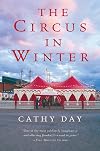
The Circus in Winter is an excellent book made up of interconnected short stories about all variety of people tied to a circus that wintered in a small town in Indiana. Usually novels made up of short stories leave me cold, but these were so well woven together with such pervasive common themes that it was really enjoyable. Day brings the circus people and their descendants vividly to life in both their joys and their tragedies. I especially liked how the last story brought out the theme of show more town people being those that stay but circus people always moving, even when they are no longer technically "circus people." Day definitely captures the enduring impression the circus left on the town even well after it had disbanded. show less
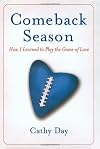
Any time a woman writes a book about dating and relationships the market assumes it will be a trendy “how to” manual, a fluffy Chick Lit novel, or, worse yet, an insincere combination of the two genres. Most serious scholars wouldn’t look twice at books in this category. For many serious critics and readers, the thought of a book about football and the agony of traversing the dating world couldn’t possibly hold any literary value. For this reason, Cathy Day’s memoir Comeback show more Season: How I Learned to Play the Game of Love, is not only unable to be easily categorized, it shakes up notions of where and how about social theory and commentary can take place.
Comeback Season chronicles Cathy Day’s experience jumping back into the dating game over the course of the 2006 Indianapolis Colts season. A lover of both football and “locker room speeches,” Day uses the tenacity of Peyton Manning and the Colts as an inspiration to make a genuine effort to overcome dating obstacles in her career, a new city renowned for dating difficulty for professional women, and her own patterns of unsuccessful partner choices. She bravely reveals her foray into the online dating world, and single-handedly fights a predatory scam dating service. At times Day’s emotional admissions are all too painfully familiar to many professional women, but she manages to keep things in perspective with a sharp wit and outright laugh-out-loud humor. Day employs an imaginary female sports reporter to inject both self deprecating humor and social commentary, and it quickly becomes clear that the reporter embodies the traditional expectations that Day has to fight against throughout her dating season.
More importantly, Comeback Season is a commentary about the unexpected results of the feminist movement. It is now far more common for women to put off getting married out of high school or an undergrad program in order to pursue a career and education. This is, unquestionably, a success for the feminist movement, but it doesn’t take into consideration the disparity between developing personal relationships and professional success that so many of those independent women, such as Day, face. When young girls were told that they can be whatever they wanted, all too often their attentions turned to career aspirations woefully devoid of female role models. Logically, then, those same young girls looked to male heroes to pattern their career paths after. Decades later it is no wonder that daughters of the early feminist movement are the ones left with the task of figuring out how to navigate between domestic desires and professional aspirations without crumbling under pressure to abandon one or the other. Couple this with the high personal and professional expectations of university English departments, and Day captures the complex lives of many female academics today.
To dismiss Comeback Season as merely a dating memoir is a mistake. Too often “serious” social commentaries are expected to be dry, boring, emotionless, and full of jargon. Because Day writes with an accessible, often humorous, style and does so without masking the core issues of her journey behind opaque symbolism, the questions her experience raises will reach more women, and generate more constructive discussion about road blocks women face, but are ashamed to discuss for fear of being perceived as weak. After all, the problems that intelligent, professional women face aren’t trapped inside the ivory tower. Cathy Day brings those issues to the streets in a way anyone can understand.
Review by Dawn Papuga show less
Comeback Season chronicles Cathy Day’s experience jumping back into the dating game over the course of the 2006 Indianapolis Colts season. A lover of both football and “locker room speeches,” Day uses the tenacity of Peyton Manning and the Colts as an inspiration to make a genuine effort to overcome dating obstacles in her career, a new city renowned for dating difficulty for professional women, and her own patterns of unsuccessful partner choices. She bravely reveals her foray into the online dating world, and single-handedly fights a predatory scam dating service. At times Day’s emotional admissions are all too painfully familiar to many professional women, but she manages to keep things in perspective with a sharp wit and outright laugh-out-loud humor. Day employs an imaginary female sports reporter to inject both self deprecating humor and social commentary, and it quickly becomes clear that the reporter embodies the traditional expectations that Day has to fight against throughout her dating season.
More importantly, Comeback Season is a commentary about the unexpected results of the feminist movement. It is now far more common for women to put off getting married out of high school or an undergrad program in order to pursue a career and education. This is, unquestionably, a success for the feminist movement, but it doesn’t take into consideration the disparity between developing personal relationships and professional success that so many of those independent women, such as Day, face. When young girls were told that they can be whatever they wanted, all too often their attentions turned to career aspirations woefully devoid of female role models. Logically, then, those same young girls looked to male heroes to pattern their career paths after. Decades later it is no wonder that daughters of the early feminist movement are the ones left with the task of figuring out how to navigate between domestic desires and professional aspirations without crumbling under pressure to abandon one or the other. Couple this with the high personal and professional expectations of university English departments, and Day captures the complex lives of many female academics today.
To dismiss Comeback Season as merely a dating memoir is a mistake. Too often “serious” social commentaries are expected to be dry, boring, emotionless, and full of jargon. Because Day writes with an accessible, often humorous, style and does so without masking the core issues of her journey behind opaque symbolism, the questions her experience raises will reach more women, and generate more constructive discussion about road blocks women face, but are ashamed to discuss for fear of being perceived as weak. After all, the problems that intelligent, professional women face aren’t trapped inside the ivory tower. Cathy Day brings those issues to the streets in a way anyone can understand.
Review by Dawn Papuga show less
3 1/2 stars. This was a book I'm glad I read, but I was surprised that I actually finished it since I put it down more than once. A series of haunting interconnected short stories about a fictional version of the author's small town in Indiana, the overall mood is one of dreariness and depression. The book is written as if it is a true documentation of the lives of people who are either related or connected by the circus that winters in the town of Lima, Indiana, beginning in 1884 and ending show more in the present day.
Having undertaken an enormous amount of research on the history of the circus, the author incorporates fictional characters seemingly stuck in this town, in the circus, and/or in their sad lives. I just happened to have read Truevine by Beth Macy last year, which is mostly a history of the origins of the circus from freak show to animals and acrobatic acts. Much of the circus background was familiar to me from Macy's book, which interestingly also has a pervasive feeling of sadness, mostly because of how the circus abused people by marketing them as freaks. The difference between the two books is vast. While Circus author Cathy Day has obviously researched the topic as well as Truevine author Macy, I found myself caring about Day's characters, even the elephants. They seemed so real while Macy's characters, who really did exist, were lost in the forest of facts and never seemed three-dimensional.
Despite the depressing mood and unhappy characters, The Circus in Winter is uniquely and admirably written. Heartbreaking and dark. Not for everyone. show less
Having undertaken an enormous amount of research on the history of the circus, the author incorporates fictional characters seemingly stuck in this town, in the circus, and/or in their sad lives. I just happened to have read Truevine by Beth Macy last year, which is mostly a history of the origins of the circus from freak show to animals and acrobatic acts. Much of the circus background was familiar to me from Macy's book, which interestingly also has a pervasive feeling of sadness, mostly because of how the circus abused people by marketing them as freaks. The difference between the two books is vast. While Circus author Cathy Day has obviously researched the topic as well as Truevine author Macy, I found myself caring about Day's characters, even the elephants. They seemed so real while Macy's characters, who really did exist, were lost in the forest of facts and never seemed three-dimensional.
Despite the depressing mood and unhappy characters, The Circus in Winter is uniquely and admirably written. Heartbreaking and dark. Not for everyone. show less
Lists
Awards


You May Also Like


Associated Authors
Statistics
- Works
- 3
- Also by
- 1
- Members
- 383
- Popularity
- #63,100
- Rating
- 3.7
- Reviews
- 14
- ISBNs
- 11
- Languages
- 2
