
Ellen Bryson (1) (1949–)
Author of The Transformation of Bartholomew Fortuno
For other authors named Ellen Bryson, see the disambiguation page.
Works by Ellen Bryson
Tagged
Common Knowledge
- Birthdate
- 1949-12-05
- Gender
- female
- Birthplace
- Meadville, Pennsylvania, USA
- Associated Place (for map)
- Pennsylvania, USA
Members
Reviews
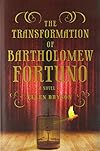
This book provided an interesting experience for me. I’ve encountered, and thoroughly enjoyed, many books with unreliable narrators…but “The Transformation of Bartholomew Fortuno” was presented instead by a rather oblivious narrator. The reader seems to know more about this sheltered and unique world that “The World’s Thinnest Man” lives in. Maybe not from the start, but pretty early on…once we have a chance to walk around in his shoes a bit.
Part of this lack of vision on show more Bartholomew’s part comes from the self-denial he’s practiced most of his life. Denial of food, certainly, but denial of certain unappealing facts about himself and his life, and denial about how his actions affect his life. He is so caught up in himself, in his “gift”, in his convincing himself that he is destined for greatness…that he pays very little attention to events happening around him at P.T. Barnum’s American Museum.
In reading about this terrifyingly thin man, I vacillated between the world of New York right after the Civil War, and modern day. The setting of the book was well described, giving enough detail for the reader to envision a city trying to return to normalcy after a bloody war and the assassination of the president. But in Fortuno’s musings about his body and his “gift”, I kept flashing to modern day, into what seemed like thoughts taken straight from the minds of those suffering with anorexia. He finds great satisfaction in displaying himself to crowds of gawkers, in their wide eyes at his skeletal frame.
“I propped one foot up on the stool to show to show myself at a different angle, lovingly running my fingers down my rib cage.”… “Do you see how my heart beats? And how my stomach waits for me to fill it? When you look at me, can’t you understand yourself a bit better?” I made fleeting eye contact with the silent faces in front of me. “The only difference between us is that I do not hide my inner self.”
… “But a few stayed silent. One or two sat with their heads hanging down, the smoke-filled air encircling them as their feet shuffled against the floor. Those were the ones that mattered to me. The ones I taught.”
The end of the book came as no great surprise, except to Bartholomew. Eventually, a great deal is revealed to him about his world, his past, and what he really wants for his future. I wouldn’t go so far as to say that he was a very sympathetic character, but I was glad when he finally looked around with clear eyes.
This was a lush story, combining history and fiction in rich tapestry of sepia toned events populated by larger than life characters. show less
Part of this lack of vision on show more Bartholomew’s part comes from the self-denial he’s practiced most of his life. Denial of food, certainly, but denial of certain unappealing facts about himself and his life, and denial about how his actions affect his life. He is so caught up in himself, in his “gift”, in his convincing himself that he is destined for greatness…that he pays very little attention to events happening around him at P.T. Barnum’s American Museum.
In reading about this terrifyingly thin man, I vacillated between the world of New York right after the Civil War, and modern day. The setting of the book was well described, giving enough detail for the reader to envision a city trying to return to normalcy after a bloody war and the assassination of the president. But in Fortuno’s musings about his body and his “gift”, I kept flashing to modern day, into what seemed like thoughts taken straight from the minds of those suffering with anorexia. He finds great satisfaction in displaying himself to crowds of gawkers, in their wide eyes at his skeletal frame.
“I propped one foot up on the stool to show to show myself at a different angle, lovingly running my fingers down my rib cage.”… “Do you see how my heart beats? And how my stomach waits for me to fill it? When you look at me, can’t you understand yourself a bit better?” I made fleeting eye contact with the silent faces in front of me. “The only difference between us is that I do not hide my inner self.”
… “But a few stayed silent. One or two sat with their heads hanging down, the smoke-filled air encircling them as their feet shuffled against the floor. Those were the ones that mattered to me. The ones I taught.”
The end of the book came as no great surprise, except to Bartholomew. Eventually, a great deal is revealed to him about his world, his past, and what he really wants for his future. I wouldn’t go so far as to say that he was a very sympathetic character, but I was glad when he finally looked around with clear eyes.
This was a lush story, combining history and fiction in rich tapestry of sepia toned events populated by larger than life characters. show less
 This review was written for LibraryThing Early Reviewers.
I was excited to read this book because it was compared to Water for Elephants. Truth be told, I can’t really understand the comparison other than an unusual cast of characters.
This story takes place in New York City, circa 1865 at the American Museum. (I love the reference to farmland where Central Park now stands. Pretty groovy. Wish I could have been there.) The main character is Bartholomew Fortuno, the Thin Man at Barnum’s museum. He believes his thinness is a gift and he lives to show more share this gift with others. He lives in the relative comfort of the museum, away from the watchful stares of “average” folks who judge him for his uniqueness. He appears to be perfectly content and happy with his life. I think the opening scene tells a different story. He’s sitting at his window looking out at the world as if the world around him was a fishbowl and he was looking in. He distanced himself from, and well frankly thought he was too good for it. He has friends, especially Matina the Fat Lady. I adored Matina, she’s fabulous, classy. They got along so well because “Barthy” felt as entitled as she did. The mystery revolves around the arrival of the newest act, Iell. Almost everyone is intrigued by her, but none as much as Bartholomew and I have to admit me too.
I thoroughly enjoyed this book because it spoke of outsiders, people who barely fit in among themselves, let alone outside of the comfort and protection of the museum. These are people who either knew no other life or were too afraid to try something different. Whose fear paralyzed them into living a life that was awe inspiring to some and disgusted by others. People who were laughed at and made fun of for just being. Not all Curiosities thought it was curse, Bartholomew sure didn’t. He saw it as a blessing, a uniqueness that no one else had. On a whole I think the Curiosities did the best with what was handed to them. They may have played the cards they were dealt, but make no mistake, some thought it just wasn’t enough.
I thought the author did a great job of giving the characters of Bartholomew, Matina, Alley and Iell depth and believability. It was a real page turned for me. From the beginning, I was rooting for Bartholomew and Matina for very different reasons. I hoped Bartholomew would push himself out of this seemingly perfect world he created for himself and Matina well, because she’s the big girl. What can I say? I have a soft spot for big girls. It was especially interesting for me to see Bartholomew and Alley evolve and mature. Alley wasn’t who I thought he was at all. And Iell the intriguing one? Well once the mystery was out I saw her for exactly who she was, and my opinion of her changed dramatically. Still, I would love to sit down for a cup of tea with her so I can ask her why.
My favorite part of the book was a quote by Matina. She says, “I simply want to remind him that we succeed by being brave, not by letting our problems overwhelm us.” I think she sums it up nicely. This book was about bravery, about taking a chance on the unknown. It was about letting go of that fear and going for what you want in earnest no matter what.
I loved the time I spent with these Curiosities and I look forward to whom Ms. Bryson introduces us to next. show less
This story takes place in New York City, circa 1865 at the American Museum. (I love the reference to farmland where Central Park now stands. Pretty groovy. Wish I could have been there.) The main character is Bartholomew Fortuno, the Thin Man at Barnum’s museum. He believes his thinness is a gift and he lives to show more share this gift with others. He lives in the relative comfort of the museum, away from the watchful stares of “average” folks who judge him for his uniqueness. He appears to be perfectly content and happy with his life. I think the opening scene tells a different story. He’s sitting at his window looking out at the world as if the world around him was a fishbowl and he was looking in. He distanced himself from, and well frankly thought he was too good for it. He has friends, especially Matina the Fat Lady. I adored Matina, she’s fabulous, classy. They got along so well because “Barthy” felt as entitled as she did. The mystery revolves around the arrival of the newest act, Iell. Almost everyone is intrigued by her, but none as much as Bartholomew and I have to admit me too.
I thoroughly enjoyed this book because it spoke of outsiders, people who barely fit in among themselves, let alone outside of the comfort and protection of the museum. These are people who either knew no other life or were too afraid to try something different. Whose fear paralyzed them into living a life that was awe inspiring to some and disgusted by others. People who were laughed at and made fun of for just being. Not all Curiosities thought it was curse, Bartholomew sure didn’t. He saw it as a blessing, a uniqueness that no one else had. On a whole I think the Curiosities did the best with what was handed to them. They may have played the cards they were dealt, but make no mistake, some thought it just wasn’t enough.
I thought the author did a great job of giving the characters of Bartholomew, Matina, Alley and Iell depth and believability. It was a real page turned for me. From the beginning, I was rooting for Bartholomew and Matina for very different reasons. I hoped Bartholomew would push himself out of this seemingly perfect world he created for himself and Matina well, because she’s the big girl. What can I say? I have a soft spot for big girls. It was especially interesting for me to see Bartholomew and Alley evolve and mature. Alley wasn’t who I thought he was at all. And Iell the intriguing one? Well once the mystery was out I saw her for exactly who she was, and my opinion of her changed dramatically. Still, I would love to sit down for a cup of tea with her so I can ask her why.
My favorite part of the book was a quote by Matina. She says, “I simply want to remind him that we succeed by being brave, not by letting our problems overwhelm us.” I think she sums it up nicely. This book was about bravery, about taking a chance on the unknown. It was about letting go of that fear and going for what you want in earnest no matter what.
I loved the time I spent with these Curiosities and I look forward to whom Ms. Bryson introduces us to next. show less

Where I got the book: from my local library.
This is one of the most unusual and compelling historical novels I've read in a long time. I don't want to say much about the story, because this is definitely one of those novels where you want to start off knowing as little as possible, and then discover each little detail with a sense of delight.
The setting is P.T. Barnum's American Museum in New York, in the mid-1860s. The protagonist is Bartholomew Fortuno, billed as the World's Thinnest Man, show more and the action centers around the Museum with its cast of Fat Lady, Contortionist, Strong Man and Missing Link. Only these characters have names and personalities, and we are quickly pulled away from an external view of their differences into the feelings that lie behind the odd appearance.
Finding out how Barthy's life changes when a new act is introduced, and why he is as he is, was a fascinating experience. The pace of the writing was a little stately, and I wasn't entirely thrilled with the way Bryson handles the dénouement, but overall I just loved reading this novel.
Recommended for lovers of superior historical fiction. show less
This is one of the most unusual and compelling historical novels I've read in a long time. I don't want to say much about the story, because this is definitely one of those novels where you want to start off knowing as little as possible, and then discover each little detail with a sense of delight.
The setting is P.T. Barnum's American Museum in New York, in the mid-1860s. The protagonist is Bartholomew Fortuno, billed as the World's Thinnest Man, show more and the action centers around the Museum with its cast of Fat Lady, Contortionist, Strong Man and Missing Link. Only these characters have names and personalities, and we are quickly pulled away from an external view of their differences into the feelings that lie behind the odd appearance.
Finding out how Barthy's life changes when a new act is introduced, and why he is as he is, was a fascinating experience. The pace of the writing was a little stately, and I wasn't entirely thrilled with the way Bryson handles the dénouement, but overall I just loved reading this novel.
Recommended for lovers of superior historical fiction. show less

An intriguing story with a lot of layers and subtlety. Bartholomew Fortuno is a romantic screw-up with delusions of grandeur. The world he inhabits is full of unusual bodies and talents and he falls somewhere near the top in hierarchy, declaring that he is not a gaff (a self-made freak, not a true Prodigy at all). He believes his extreme thinness is a gift to humanity designed to show us our real selves; to enlighten humanity (little does he know that his gift will end up enlightening show more himself most of all). This makes him proud and arrogant, but he keeps it hidden much of the time as he dislikes confrontation. Still, he considers himself a cut above the rest of the freaks he works with.
Despite this belief he has very little control of his life and completely surrenders to the mighty personality of P.T. Barnum. Under threat of being fired from the museum where he and the other freaks lead pretty decent lives as compared to other venues many freaks are reduced to, he does a few errands on the side for Barnum. These errands are for the new act, one Iell; a bearded lady of extreme mystique and elegance. Soon he’s put between the wills of Mr. and Mrs. Barnum and has to figure out where his loyalties lie; with his employer, with his friend Martina or with his new love, Iell.
All the while he muses over how and when his gift came upon him; from his mother. She looms large in his psyche and he thinks of her often. I was a bit disappointed at this cliché, I mean, does it always have to be mom’s fault? It is she who counseled him to be diligent and control his urges for a man who has no self-control is not a man at all. From this wisdom he divines that food is an excess not to be indulged. But from controlling woman to controlling masters doesn’t a free thinker make. Deluded with his own importance he has no idea how his actions affect other people and he continually does and says the wrong things. Like a child he later tries to make up for these mistakes in simplistic ways. Again and again he is forgiven.
I won’t give the ending away but I saw it coming. Iell isn’t that mysterious to a person with a jaded eye who has lived through the latter half of the 20th and beginning of the 21st centuries. Both in her form and in the secret little packages Bartholomew delivers to her from a dingy shop in Chinatown. That it takes Bartholomew so long to actually find out is part of what kept me going. The plot isn’t a mover or a shaker, but the characters were interesting and the setting as well. Bryson has an excellent turn of phrase and I didn’t get distracted by awkward language or botched sentences.
A lot of people’s reviews seem to want Bartholomew to be more human, but I’m not sure that’s realistic given his distance from humanity. As a freak and a performer he has separated himself from normal human discourse and so doesn’t know how to behave. He has molded his personality on the belief he’s something greater than a mere normal human and so acts accordingly and is very naive as a result. It was pretty clear from the outset that his transformation would be something major and it was, both spiritually and physically. It took place slowly and in a realistic fashion; Bartholomew fought it part of the way, then little by little gave in and allowed the changes. I like to think that with his new-found insight that he felt at home in the world outside the museum.
There are a lot of supporting characters and I loved how Bryson treated them; not lightly. Each one was distinct and not a caricature, especially Matina, Barnum and Iell. Their inner humanity came through and contrasted well with Bartholomew’s awkwardness. The city and museum were almost characters themselves so vivid, but not overdone, were the descriptions. I especially liked the aviary. I look forward to Bryson’s next book. show less
Despite this belief he has very little control of his life and completely surrenders to the mighty personality of P.T. Barnum. Under threat of being fired from the museum where he and the other freaks lead pretty decent lives as compared to other venues many freaks are reduced to, he does a few errands on the side for Barnum. These errands are for the new act, one Iell; a bearded lady of extreme mystique and elegance. Soon he’s put between the wills of Mr. and Mrs. Barnum and has to figure out where his loyalties lie; with his employer, with his friend Martina or with his new love, Iell.
All the while he muses over how and when his gift came upon him; from his mother. She looms large in his psyche and he thinks of her often. I was a bit disappointed at this cliché, I mean, does it always have to be mom’s fault? It is she who counseled him to be diligent and control his urges for a man who has no self-control is not a man at all. From this wisdom he divines that food is an excess not to be indulged. But from controlling woman to controlling masters doesn’t a free thinker make. Deluded with his own importance he has no idea how his actions affect other people and he continually does and says the wrong things. Like a child he later tries to make up for these mistakes in simplistic ways. Again and again he is forgiven.
I won’t give the ending away but I saw it coming. Iell isn’t that mysterious to a person with a jaded eye who has lived through the latter half of the 20th and beginning of the 21st centuries. Both in her form and in the secret little packages Bartholomew delivers to her from a dingy shop in Chinatown. That it takes Bartholomew so long to actually find out is part of what kept me going. The plot isn’t a mover or a shaker, but the characters were interesting and the setting as well. Bryson has an excellent turn of phrase and I didn’t get distracted by awkward language or botched sentences.
A lot of people’s reviews seem to want Bartholomew to be more human, but I’m not sure that’s realistic given his distance from humanity. As a freak and a performer he has separated himself from normal human discourse and so doesn’t know how to behave. He has molded his personality on the belief he’s something greater than a mere normal human and so acts accordingly and is very naive as a result. It was pretty clear from the outset that his transformation would be something major and it was, both spiritually and physically. It took place slowly and in a realistic fashion; Bartholomew fought it part of the way, then little by little gave in and allowed the changes. I like to think that with his new-found insight that he felt at home in the world outside the museum.
There are a lot of supporting characters and I loved how Bryson treated them; not lightly. Each one was distinct and not a caricature, especially Matina, Barnum and Iell. Their inner humanity came through and contrasted well with Bartholomew’s awkwardness. The city and museum were almost characters themselves so vivid, but not overdone, were the descriptions. I especially liked the aviary. I look forward to Bryson’s next book. show less
This review was written for LibraryThing Early Reviewers.You May Also Like


Statistics
- Works
- 1
- Members
- 305
- Popularity
- #77,180
- Rating
- 3.4
- Reviews
- 53
- ISBNs
- 11
