
Katherine Dunn (1) (1945–2016)
Author of Geek Love
For other authors named Katherine Dunn, see the disambiguation page.
About the Author
Katherine Dunn was born in Garden City, Kansas on October 24, 1945. She was educated at Portland State University and Reed College. Her first novel, Attic, was published in 1970. Her other novels included Truck and Geek Love, which was a finalist for the National Book Award in 1989. She also worked show more as a boxing reporter, a columnist, and a poet. Her non-fiction book, School of Hard Knocks: The Struggle for Survival in America's Toughest Boxing Gyms, received the Dorothea Lange-Paul Taylor Award in 2004. She died from complications of lung cancer on May 11, 2016 at the age of 70. (Bowker Author Biography) show less
Works by Katherine Dunn
Associated Works
Tagged
Common Knowledge
- Legal name
- Dunn, Katherine Karen
- Birthdate
- 1945-10-24
- Date of death
- 2016-05-11
- Gender
- female
- Education
- Reed College
- Occupations
- bartender
house painter
restaurant server
writing teacher
voice actor
editor (show all 9)
radio show host
journalist
book reviewer - Organizations
- Lewis & Clark College
cyberboxingzone.com - Awards and honors
- Dorothea Lange-Paul Taylor Award (2004)
- Cause of death
- lung cancer
- Nationality
- USA
- Birthplace
- Garden City, Kansas, USA
- Places of residence
- Tigard, Oregon, USA
Portland, Oregon, USA - Place of death
- Portland, Oregon, USA
- Associated Place (for map)
- Oregon, USA
Members
Reviews
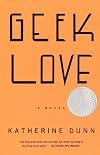
You ever read a book that feels less like a story and more like being dragged through a carnival after midnight—lights flickering, something rotting behind the cotton candy, everyone smiling just a little too wide?
That’s Geek Love by Katherine Dunn.
And I don’t mean that as a warning. I mean it as a dare.
This isn’t one of those polite novels you stack on your nightstand to signal you’re “well-read.” This thing breathes. It mutates. It stares back at you and asks questions you show more don’t want to answer—about family, about love, about what we’re willing to deform in ourselves just to belong to something.
The premise alone should be enough to send most people running: parents who intentionally engineer their children to be “freaks” for a traveling circus. But that’s just the surface-level grotesque—the hook. The real horror is quieter. It’s devotion twisted into something unrecognizable. It’s loyalty that crosses a line so gradually you don’t notice until you’re already on the other side, nodding along.
And that’s the uncomfortable truth of it: you do nod along.
I caught myself doing it—justifying things I shouldn’t, understanding people I didn’t want to understand. That’s Dunn’s trick. She doesn’t ask for your sympathy. She takes it.
There’s something in here about the lie we tell ourselves—that love is inherently good. That family is sacred. That belonging is worth whatever it costs.
This book doesn’t argue against those ideas. It just quietly shows you what they look like when taken to their logical extreme… and lets you sit there with it.
No moral. No clean ending. No relief.
Just the lingering sense that the line between “them” and “us” is thinner than we’d like to admit—and maybe always has been.
Read it if you want something safe, and you’ll hate it.
Read it if you want something true, and it’ll stay with you longer than you’d like. show less
That’s Geek Love by Katherine Dunn.
And I don’t mean that as a warning. I mean it as a dare.
This isn’t one of those polite novels you stack on your nightstand to signal you’re “well-read.” This thing breathes. It mutates. It stares back at you and asks questions you show more don’t want to answer—about family, about love, about what we’re willing to deform in ourselves just to belong to something.
The premise alone should be enough to send most people running: parents who intentionally engineer their children to be “freaks” for a traveling circus. But that’s just the surface-level grotesque—the hook. The real horror is quieter. It’s devotion twisted into something unrecognizable. It’s loyalty that crosses a line so gradually you don’t notice until you’re already on the other side, nodding along.
And that’s the uncomfortable truth of it: you do nod along.
I caught myself doing it—justifying things I shouldn’t, understanding people I didn’t want to understand. That’s Dunn’s trick. She doesn’t ask for your sympathy. She takes it.
There’s something in here about the lie we tell ourselves—that love is inherently good. That family is sacred. That belonging is worth whatever it costs.
This book doesn’t argue against those ideas. It just quietly shows you what they look like when taken to their logical extreme… and lets you sit there with it.
No moral. No clean ending. No relief.
Just the lingering sense that the line between “them” and “us” is thinner than we’d like to admit—and maybe always has been.
Read it if you want something safe, and you’ll hate it.
Read it if you want something true, and it’ll stay with you longer than you’d like. show less
This book is beautiful and horrible. Mostly, I think, due to Dunn's writing style, which is gorgeous and lush and always stays just on the good side of precious.
I'm not really sure what I want to say about this book, because I sort of fell into it like a black hole and couldn't really think about it until I got out of it. I didn't hate all the characters like some other reviewers. I'm pretty fond of almost all of them, actually. Even Al and Lil, who deliberately mutated their children for show more profit. Their travelling circus was an alternate world where diversity in body layout was celebrated and not shamed, and in that it was surprisingly nice. Of course, there was a lot of other emotional manipulation going on which was dark and terrible but some of the ways that Olympia described having to live in the world after leaving the circus really made it clear that she lived without prejudice because of how she looked. Lil's obvious love for all her children kind of broke my heart. The inside of her head must be so beautiful. She has an idyllic version of her life in which she and her husband didn't create their children in order to sell their bodies for profit, in which her son isn't a megalomaniac, in which the real world is as tolerant as the travelling circus community, in which her family is happy forever. I wish these things were true, for her.
So I obviously loved this book because I'm into grotesque imagery and mad science. Doc P and Miss Lick were some of the more interesting characters to me. Miss Lick has such an interestingly skewed worldview; while I disagree with what she's doing, I'm not sure I necessarily do within the book world. I'd love to read her notes and journals.
As great and terrible as I found this book though, I'm reading it as a person who doesn't have a disability. While I liked how their microcosm of the circus allowed Olympia to be so matter-of-fact about her appearance and the everyday life of living without limbs or joined to your sister or with a hump, there's definitely a sense of "freak show" voyeurism in reading this book. show less
I'm not really sure what I want to say about this book, because I sort of fell into it like a black hole and couldn't really think about it until I got out of it. I didn't hate all the characters like some other reviewers. I'm pretty fond of almost all of them, actually. Even Al and Lil, who deliberately mutated their children for show more profit. Their travelling circus was an alternate world where diversity in body layout was celebrated and not shamed, and in that it was surprisingly nice. Of course, there was a lot of other emotional manipulation going on which was dark and terrible but some of the ways that Olympia described having to live in the world after leaving the circus really made it clear that she lived without prejudice because of how she looked. Lil's obvious love for all her children kind of broke my heart. The inside of her head must be so beautiful. She has an idyllic version of her life in which she and her husband didn't create their children in order to sell their bodies for profit, in which her son isn't a megalomaniac, in which the real world is as tolerant as the travelling circus community, in which her family is happy forever. I wish these things were true, for her.
So I obviously loved this book because I'm into grotesque imagery and mad science. Doc P and Miss Lick were some of the more interesting characters to me. Miss Lick has such an interestingly skewed worldview; while I disagree with what she's doing, I'm not sure I necessarily do within the book world. I'd love to read her notes and journals.
As great and terrible as I found this book though, I'm reading it as a person who doesn't have a disability. While I liked how their microcosm of the circus allowed Olympia to be so matter-of-fact about her appearance and the everyday life of living without limbs or joined to your sister or with a hump, there's definitely a sense of "freak show" voyeurism in reading this book. show less
Original review: im heartbroken
Additional review: I'm writing this, I think weeks, if not a month after finishing this book. This is one I had to process. For a full week after finishing it, I felt completely lost in thought. I felt like my friends were gone, that a world so deep and meaningful was all a farce. It's sort of like waking up from a dream that felt like real life, and missing the people you formed deep bonds with.
I can't speak more highly of this book. The writing is show more INCREDIBLE, a bit challenging at times which I appreciated, very poetic and haunting. The characters you don't realize you're in love with until they are gone. There is so much I could say about this book, so many thoughts I had... the way Dunn writes about family dynamics and trauma is so real and painful and sweet. I can recall the most devastating scenes so clearly like they were a part of my own life, like I saw them with my eyes. Oh, Chick.......... show less
Additional review: I'm writing this, I think weeks, if not a month after finishing this book. This is one I had to process. For a full week after finishing it, I felt completely lost in thought. I felt like my friends were gone, that a world so deep and meaningful was all a farce. It's sort of like waking up from a dream that felt like real life, and missing the people you formed deep bonds with.
I can't speak more highly of this book. The writing is show more INCREDIBLE, a bit challenging at times which I appreciated, very poetic and haunting. The characters you don't realize you're in love with until they are gone. There is so much I could say about this book, so many thoughts I had... the way Dunn writes about family dynamics and trauma is so real and painful and sweet. I can recall the most devastating scenes so clearly like they were a part of my own life, like I saw them with my eyes. Oh, Chick.......... show less
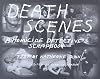
This is mostly pictures, so it took very little time to 'read'. The text explaining the context and meaning behind the photos is well put together, even if it is a little dated.
Crime scene photos have always fascinated me. I need the story behind them. I want to know how the person lived and understand how they died.
One of the most heartbreaking photos in the book is of a 74-year-old man who lost his wife to a random rape/homicide. The detective explains the basic story and the follow up show more with a bit of obvious anger. I did some quick math and realized that the two were born right after the civil war ended; when California was barely settled. The things they'd seen and done through their lives must have been amazing. Then, at the end, their lives are shattered with criminal violence and horror.
And here I am, so many years later, wishing that it hadn't happened to them. It's powerful.
There are a lot of pictures of suicide. Not a good way to die.
Those black and white photos have a profound effect. The victims in them demand justice. They don't always get it.
This is not a book for anyone who is squeamish, obviously. It is also not for anyone who is unable to compartmentalize language and era: You will not understand the detective's writing and you will hate him undeservedly. show less
Crime scene photos have always fascinated me. I need the story behind them. I want to know how the person lived and understand how they died.
One of the most heartbreaking photos in the book is of a 74-year-old man who lost his wife to a random rape/homicide. The detective explains the basic story and the follow up show more with a bit of obvious anger. I did some quick math and realized that the two were born right after the civil war ended; when California was barely settled. The things they'd seen and done through their lives must have been amazing. Then, at the end, their lives are shattered with criminal violence and horror.
And here I am, so many years later, wishing that it hadn't happened to them. It's powerful.
There are a lot of pictures of suicide. Not a good way to die.
Those black and white photos have a profound effect. The victims in them demand justice. They don't always get it.
This is not a book for anyone who is squeamish, obviously. It is also not for anyone who is unable to compartmentalize language and era: You will not understand the detective's writing and you will hate him undeservedly. show less
Lists
el (1)
To Read (1)
Unread books (1)
Female Author (1)
Cult Classics (1)
2017 Goal (1)
Gen X Library (1)
Books with Twins (1)
Best First Lines (1)
Read This Next (1)
Awards


You May Also Like


Associated Authors
Statistics
- Works
- 16
- Also by
- 9
- Members
- 7,483
- Popularity
- #3,271
- Rating
- 3.9
- Reviews
- 182
- ISBNs
- 73
- Languages
- 8
- Favorited
- 26
