
Wesley Stace
Author of Misfortune
About the Author
Disambiguation Notice:
Wesley Stace also uses the stage name of John Wesley Harding as a musician
Image credit: John Burlinson, Nov. 3, 2007
Works by Wesley Stace
Confessions of St Ace 3 copies
New Deal 3 copies
God Made Me Do It 2 copies
7/10/96 1 copy
Self-Titled 1 copy
Dynablob 1 copy
Associated Works
Know the Past, Find the Future: The New York Public Library at 100 (2011) — Contributor — 132 copies, 4 reviews
Tagged
Common Knowledge
- Other names
- Stace, Wesley
- Birthdate
- 1965-10-22
- Gender
- male
- Education
- University of Cambridge (Jesus College)
- Occupations
- singer
novelist
songwriter - Nationality
- England
- Birthplace
- Hastings, Sussex, England, UK
- Places of residence
- Brooklyn, New York, USA
Philadelphia, Pennsylvania, USA - Map Location
- UK
- Disambiguation notice
- Wesley Stace also uses the stage name of John Wesley Harding as a musician
Members
Reviews
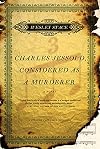
I'll say it flat out: I absolutely loved this book. Charles Jessold, Considered as a Murderer (Picador, 2010) by Wesley Stace (also known as composer John Wesley Harding) is fascinating from start to finish, and it will amost certainly keep you guessing until the very end.
Charles Jessold, a promising young composer, kills himself, his wife, and his wife's lover on the night before the premiere of his first opera ... the plot of which is practically identical to the scenario just described. show more Music critic Leslie Shepherd, Jessold's librettist and longtime friend, provides first the next morning's newspaper column about the murders, then his own statement to police about his relationship with Jessold and his thoughts on the crime.
But that's not all, of course. Shepherd has more to share, and in the second half of the book, narrated many years after the fact in the guise of a full-scale biography of Jessold, he shares.
Drawing on the true story of Italian composer Carlo Gesualdo, and on the history of English music during the early decades of the 20th century, with the folk-music revival and the rivalry with the German composers of the time, Stace's book makes for a truly musical, and most enjoyable experience.
NB: I first heard of the novel on the great radio show "To the Best of our Knowledge," here. The interview is also well worth a listen, and it includes some music "in the style of Jessold."
http://philobiblos.blogspot.com/2012/02/book-review-charles-jessold-considered.h... show less
Charles Jessold, a promising young composer, kills himself, his wife, and his wife's lover on the night before the premiere of his first opera ... the plot of which is practically identical to the scenario just described. show more Music critic Leslie Shepherd, Jessold's librettist and longtime friend, provides first the next morning's newspaper column about the murders, then his own statement to police about his relationship with Jessold and his thoughts on the crime.
But that's not all, of course. Shepherd has more to share, and in the second half of the book, narrated many years after the fact in the guise of a full-scale biography of Jessold, he shares.
Drawing on the true story of Italian composer Carlo Gesualdo, and on the history of English music during the early decades of the 20th century, with the folk-music revival and the rivalry with the German composers of the time, Stace's book makes for a truly musical, and most enjoyable experience.
NB: I first heard of the novel on the great radio show "To the Best of our Knowledge," here. The interview is also well worth a listen, and it includes some music "in the style of Jessold."
http://philobiblos.blogspot.com/2012/02/book-review-charles-jessold-considered.h... show less
It's rare that a book surprises me these days, but this one did. It's not just the story of a musician--it's told through the eyes of a critic who champions him, who sees his flaws as much as his potential and is not afraid to gloss over the sordid details.
The first delightful surprise was the inclusion of the folk music revival, an anthropological movement when people went out to record old, dying folk songs for posterity. Leslie Shepherd, the critic, first meets Jessold on a trip show more dedicated to this attempt and their friendship and mutual interest in creating a good English opera--the first since Gilbert and Sullivan--blooms.
It's a clever move on the part of the author to show us a musician's life through a critic's eye--the critic is used to writing for an audience without an advanced education in music, so I was never completely lost in the vocabulary of music.
After the interesting and wholly engaging first half, in which Shepherd recounts the bare facts of his acquaintance with Jessold, tracing the evolution of the composer and eventual murderer, a beautiful second half unfolds. We know from the beginning that we don't get the whole story in the first half, but the second half is, well, unexpectedly romantic (this from someone who considers herself "a cold-hearted crocodile"). Shepherd's devoted, if out-of-the-ordinary relationship with his wife unfolds almost as an afterthought, but their mutual relationship with Jessold adds gorgeous depth to an already nuanced story. As with all love, though, the Shepherds' becomes complicated.
This is, of course, the story of a murderer who has been shown at his most human and vulnerable--it can only be a tragedy. Whose tragedy it is receives direct discussion in the book, but whether the reader will agree with the narrator's conclusion is, I suspect, as much a reflection of the individual reader as the plot.
The only reason I won't put this on my "recommended" shelf is that I think it could take a very particular reader to appreciate it all. An interest in music is a given, no less than in historical nonfiction, but there is also a danger, I think, of misreading...or at least, reading in a very different light from the one I read it in.Usually I would find this delightful, but I suspect that some people would consider the Shepherds' relationship the opposite of romantic, and I'd rather not have that reading act as a bait-and-switch.
Readers with an interest in classical music in general and opera in particular, in England on the eve of World War I, and in the lives of those one would not normally suspect capable of murder will enjoy this book...but it's also a great one to get people who usually like only one of those to come out of their literary shells.
Quote Roundup
Jessold was an atheist, but here he spoke through the unlettered voice of the rural travelling people. He had no faith of his own, but in theirs he was a true believer. (75)
Mustard gas and shells shattered the calm of imperial verse. No one had read war poetry like it. Heroism, valour, the sweet wine of youth': gone. (119)
I hadn't liked the work in 1912. I liked it even less now, so perfectly did it suit the forced smile, the self-conscious frivolity of the post-war hour. (133)
I felt myself Dickensian: not one of his characters but the author himself, creator of plots, puppet-master. (136)
"As a critic, it is your job simply to tell people whether they will be entertained. The public must not be short-changed with mediocrity because a company is counting its pennies." (202)
If [Walmsley] knew anything, he knew how to sell a newspaper. He could hold a mirror to the world better than anybody alive, reinforce public prejudice, the nmake the man on the street pay for the privilege of reading an opinion he already held. He could also make that many pay for having his opinions formed on his behalf. (205)
It is one of the singular joys of our century that our great contemporary composers, having reached Schoenberg's precipice [of atonalism], did not leap. Merely because he had thrown himself into the abyss did not mean that it was good or right or necessary, or that others had to follow suit. Nor did they. The greatest of their works harnessed the power of that unbounded force released by Arnold Shoenberg: Berg's Wozzeck and Jessold's Little Musgrave spring to mind. Both prove that atonalism, used with restraint, can give us the most passionate and expressive of music. At the time, I was too intimidated, to occupied, too circumspect to allow such a possibility. It became clear as time passed, and I came to understand each of those operas as pure emotion, an exposed nerve. Great art requires perspective. (251)
I had resigned myself, in marriage, to love and honour, but Miriam's reticence with regard to the certain aspects of the first half of my vow merely made the other half more attractive. I had always hoped that a good marriage should rather require warmth and friendship than romantic passion to sustain it, and I had been long been suspicious of the intensity of the latter. (301)
Surely there are very few husbands who do not experience a frisson of pleasure when their wife is admired by another man. I had many times delighted in the position, reading the minute clues that emanated from her, the privileged information unknowable to anyone else. (304)
I had not, during our marriage, been anxiously awaiting such an alignment, but I had assumed it inevitable. Miriam and I did not share the same lack of vitality. She required an unconditional love from me that I was happy, so happy, to give. I had taken it for granted that, with another individual, with my acquiescence and approval, she might feel free to explore shared interests quite distinct from my own. I had not dreamed that, in this eventuality, our intentions should be so perfectly in harmony. (306)
I had thought it so tedious for Jessold to be at the mercy of a muse; but how much worse to be a muse at the mercy of an erratic imagination; and how much worse still to have been a muse wrung entirely dry of inspiration. (352)
It is not by the kindness of the creator that we judge the greatness of art. (383) show less
The first delightful surprise was the inclusion of the folk music revival, an anthropological movement when people went out to record old, dying folk songs for posterity. Leslie Shepherd, the critic, first meets Jessold on a trip show more dedicated to this attempt and their friendship and mutual interest in creating a good English opera--the first since Gilbert and Sullivan--blooms.
It's a clever move on the part of the author to show us a musician's life through a critic's eye--the critic is used to writing for an audience without an advanced education in music, so I was never completely lost in the vocabulary of music.
After the interesting and wholly engaging first half, in which Shepherd recounts the bare facts of his acquaintance with Jessold, tracing the evolution of the composer and eventual murderer, a beautiful second half unfolds. We know from the beginning that we don't get the whole story in the first half, but the second half is, well, unexpectedly romantic (this from someone who considers herself "a cold-hearted crocodile"). Shepherd's devoted, if out-of-the-ordinary relationship with his wife unfolds almost as an afterthought, but their mutual relationship with Jessold adds gorgeous depth to an already nuanced story. As with all love, though, the Shepherds' becomes complicated.
This is, of course, the story of a murderer who has been shown at his most human and vulnerable--it can only be a tragedy. Whose tragedy it is receives direct discussion in the book, but whether the reader will agree with the narrator's conclusion is, I suspect, as much a reflection of the individual reader as the plot.
The only reason I won't put this on my "recommended" shelf is that I think it could take a very particular reader to appreciate it all. An interest in music is a given, no less than in historical nonfiction, but there is also a danger, I think, of misreading...or at least, reading in a very different light from the one I read it in.
Readers with an interest in classical music in general and opera in particular, in England on the eve of World War I, and in the lives of those one would not normally suspect capable of murder will enjoy this book...but it's also a great one to get people who usually like only one of those to come out of their literary shells.
Quote Roundup
Jessold was an atheist, but here he spoke through the unlettered voice of the rural travelling people. He had no faith of his own, but in theirs he was a true believer. (75)
Mustard gas and shells shattered the calm of imperial verse. No one had read war poetry like it. Heroism, valour, the sweet wine of youth': gone. (119)
I hadn't liked the work in 1912. I liked it even less now, so perfectly did it suit the forced smile, the self-conscious frivolity of the post-war hour. (133)
I felt myself Dickensian: not one of his characters but the author himself, creator of plots, puppet-master. (136)
"As a critic, it is your job simply to tell people whether they will be entertained. The public must not be short-changed with mediocrity because a company is counting its pennies." (202)
If [Walmsley] knew anything, he knew how to sell a newspaper. He could hold a mirror to the world better than anybody alive, reinforce public prejudice, the nmake the man on the street pay for the privilege of reading an opinion he already held. He could also make that many pay for having his opinions formed on his behalf. (205)
It is one of the singular joys of our century that our great contemporary composers, having reached Schoenberg's precipice [of atonalism], did not leap. Merely because he had thrown himself into the abyss did not mean that it was good or right or necessary, or that others had to follow suit. Nor did they. The greatest of their works harnessed the power of that unbounded force released by Arnold Shoenberg: Berg's Wozzeck and Jessold's Little Musgrave spring to mind. Both prove that atonalism, used with restraint, can give us the most passionate and expressive of music. At the time, I was too intimidated, to occupied, too circumspect to allow such a possibility. It became clear as time passed, and I came to understand each of those operas as pure emotion, an exposed nerve. Great art requires perspective. (251)
Surely there are very few husbands who do not experience a frisson of pleasure when their wife is admired by another man. I had many times delighted in the position, reading the minute clues that emanated from her, the privileged information unknowable to anyone else. (304)
I had not, during our marriage, been anxiously awaiting such an alignment, but I had assumed it inevitable. Miriam and I did not share the same lack of vitality. She required an unconditional love from me that I was happy, so happy, to give. I had taken it for granted that, with another individual, with my acquiescence and approval, she might feel free to explore shared interests quite distinct from my own. I had not dreamed that, in this eventuality, our intentions should be so perfectly in harmony. (306)
I had thought it so tedious for Jessold to be at the mercy of a muse; but how much worse to be a muse at the mercy of an erratic imagination; and how much worse still to have been a muse wrung entirely dry of inspiration. (352)
It is not by the kindness of the creator that we judge the greatness of art. (383) show less
It is utterly unreasonable that Wesley Stace should have been granted such talent. What can't the man do?
This book has everything: music, WWI history, romance and antiromance, heroes and antiheroes, moments of piercing beauty and moments of neck-whipping chaos, and structural complexity worth social as well as academic discussion. The ending has a whopper of a twist beating even the multiple twists that precede it (no mean feat), the critics and self-critics snark across a spectrum from show more little gems of snideness to brutally accurate digs, the scenery - physical and social - is evoked sparely but certainly. In other words, the people who liked Cloud Atlas before it was being filmed (back when its structural complexity was for the nerds), people who like WWI-era stories about the home front in Britain, anyone with even the vaguest hint of appreciation for the efforts of early ethnomusicology, and people who like city English humor won't fail to love this.
Especially if you get a copy of John Wesley Harding's Trad Arr Jones and listen to the recording of "Little Musgrave," then also listen to something harshly atonal and contemporary (Middle period Schoenberg is among the suggestions the narrator of the novel offers). A knowledge of operatic structure won't hurt. But you don't have to. I'm just saying that Harding, a/k/a Wesley Stace, did a knockdown version of the ballad, and thinking about how the narration reflects early 20th century antiheroic opera, with its slow dissolution of both direction and mind of each character, makes the reading even more entertaining. show less
This book has everything: music, WWI history, romance and antiromance, heroes and antiheroes, moments of piercing beauty and moments of neck-whipping chaos, and structural complexity worth social as well as academic discussion. The ending has a whopper of a twist beating even the multiple twists that precede it (no mean feat), the critics and self-critics snark across a spectrum from show more little gems of snideness to brutally accurate digs, the scenery - physical and social - is evoked sparely but certainly. In other words, the people who liked Cloud Atlas before it was being filmed (back when its structural complexity was for the nerds), people who like WWI-era stories about the home front in Britain, anyone with even the vaguest hint of appreciation for the efforts of early ethnomusicology, and people who like city English humor won't fail to love this.
Especially if you get a copy of John Wesley Harding's Trad Arr Jones and listen to the recording of "Little Musgrave," then also listen to something harshly atonal and contemporary (Middle period Schoenberg is among the suggestions the narrator of the novel offers). A knowledge of operatic structure won't hurt. But you don't have to. I'm just saying that Harding, a/k/a Wesley Stace, did a knockdown version of the ballad, and thinking about how the narration reflects early 20th century antiheroic opera, with its slow dissolution of both direction and mind of each character, makes the reading even more entertaining. show less
A fun, twisty, musical bit of metafiction. The narrator is Leslie Shepherd, a gentlemanly critic and folk-music collector in search of the Next Great British Composer, the last one having lived a couple hundred years earlier (more if you’re not going to count imports like Handel). Shepherd is no Serenus Zeitblom, who narrated the story of demonic atonal composer Adrian Leverkuhn and didn’t intrude too much on the story himself (though, like Shepherd, he prided himself on being the only show more one who ‘really understood’ the composer). Shepherd actively, well, shepherds the career of budding composer Charles Jessold. The narrative is told as a flashback – we learn at the beginning that Jessold has killed his wife and her lover on the eve of the premiere of his first opera. Shepherd purports to be Jessold’s biographer and describes their first meeting, excursions to collect English country songs, which generate the germ for the opera, Jessold’s early successes, travels to Germany followed by his imprisonment during the war and subsequent decline into alcoholism and assholism. However, Shepherd makes various revisions to his story, leaving readers to decide whether to trust this unreliable narrator. In whatever version you look at though, Shepherd’s behavior is slightly or very creepy. His mentor role, and other roles, are very controlling even though is seems that he is matched by the selfish Jessold.
The book is quite entertaining. There’s a good dose of humor and the quality of the writing is very high. Shepherd certainly has a lot of faults and might be a bit of a stereotypical British stuffed-shirt who naturally opposes Schoenberg and his ilk, but you feel bad for him for taking all the nasty treatment that Jessold metes out. The Jessold-Shepherd relationship is well-developed, but there was whole mess of male characters surrounding Jessold who sort of blended in together (though one, avant-garde critic Standing inspires this gem – “I was beginning to dislike him in the same way that the bibliophile, unsuccessfully combing musty bookshops for the works of an obscure writer, takes against the innocent author whose name the alphabet happens to place next and whose books are in plentiful supply. Standing was that latter author: always available, always at hand, not at all what I wanted.”) Shepherd’s wife Miriam also seems a bit hazy as a character. Some of the plot points are predictable, but others not so much. Stace is at home with the musical elements – a lot of composer names and works are casually dropped into the story (always relevant though – and everything can be quickly wiki-ed), and Stace gives a quick cameo to Leverkuhn. The only infodumping comes with the story of Gesualdo, but that makes sense in the development of the plot. A very good read. show less
The book is quite entertaining. There’s a good dose of humor and the quality of the writing is very high. Shepherd certainly has a lot of faults and might be a bit of a stereotypical British stuffed-shirt who naturally opposes Schoenberg and his ilk, but you feel bad for him for taking all the nasty treatment that Jessold metes out. The Jessold-Shepherd relationship is well-developed, but there was whole mess of male characters surrounding Jessold who sort of blended in together (though one, avant-garde critic Standing inspires this gem – “I was beginning to dislike him in the same way that the bibliophile, unsuccessfully combing musty bookshops for the works of an obscure writer, takes against the innocent author whose name the alphabet happens to place next and whose books are in plentiful supply. Standing was that latter author: always available, always at hand, not at all what I wanted.”) Shepherd’s wife Miriam also seems a bit hazy as a character. Some of the plot points are predictable, but others not so much. Stace is at home with the musical elements – a lot of composer names and works are casually dropped into the story (always relevant though – and everything can be quickly wiki-ed), and Stace gives a quick cameo to Leverkuhn. The only infodumping comes with the story of Gesualdo, but that makes sense in the development of the plot. A very good read. show less
Lists
Awards


You May Also Like


Associated Authors
Statistics
- Works
- 22
- Also by
- 4
- Members
- 1,479
- Popularity
- #17,373
- Rating
- 3.8
- Reviews
- 60
- ISBNs
- 47
- Languages
- 4
- Favorited
- 4
