
Arthur Phillips (1) (1969–)
Author of The Egyptologist
For other authors named Arthur Phillips, see the disambiguation page.
About the Author
Arthur Phillips was born in Minneapolis and educated at Harvard. He has been a child actor, a jazz musician, a speechwriter, a failed entrepreneur and a five-time Jeopardy champion. He lived in Budapest from 1990 to 1992 and now lives in Paris with his wife and son. (Publisher Fact Sheets)
Image credit: (C) Thomas LeGreve
Works by Arthur Phillips
Associated Works
Ballad of the Whiskey Robber: A True Story of Bank Heists, Ice Hockey, Transylvanian Pelt Smuggling, Moonlighting Detectives and Broken Hearts (2004) — Narrator, some editions — 797 copies, 31 reviews
Tagged
Common Knowledge
- Canonical name
- Phillips, Arthur
- Legal name
- Phillips, Arthur Peter Monroe
- Birthdate
- 1969-04-23
- Gender
- male
- Education
- Harvard University (BA|1990)
Berklee School of Music
The Blake School, Minneapolis - Occupations
- author
- Awards and honors
- Jeopardy Champion (five-time)
LA Times Book Prize for First Fiction (Prague)
Art Seidenbaum Award for First Fiction (2003) - Agent
- Marly Rusoff (The Rusoff Agency)
- Relationships
- Phillips, Michael (brother)
Muschietti, Barbara (spouse) - Short biography
- Arthur Phillips was born in Minneapolis and educated at Harvard. He has been a child actor, a jazz musician, a speechwriter, a dismally failed entrepreneur, and a five-time Jeopardy! champion.
His first novel, Prague, was named a New York Times Notable Book, and receivedThe Los Angeles Times/Art Seidenbaum Award for best first novel. His second novel, The Egyptologist, was an international bestseller, and was on more than a dozen “Best of 2004” lists. Angelica, his third novel, made The Washington Post best fiction of 2007 and led that paper to call him "One of the best writers in America." The Song Is You was a New York Times Notable Book, on the Post's best of 2009 list, and inspired Kirkus to write, "Phillips still looks like the best American novelist to have emerged in the present decade."
His work has been published in twenty-seven languages, and is the source of three films currently in development.
His fifth book, The Tragedy of Arthur, will be published April 19, 2011.
He lives in New York with his wife and two sons. - Nationality
- USA
- Birthplace
- Minneapolis, Minnesota, USA
- Places of residence
- New York, New York, USA
Paris, Île-de-France, France
Budapest, Hungary - Associated Place (for map)
- USA
Members
Reviews
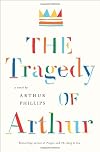
Summary: This novel is not a novel, it is a newly discovered play of Shakespeare's called "The Tragedy of Arthur". Arthur Phillips never much liked Shakespeare; it's one of the few things he didn't share with his twin sister Dana, who obsessively read Shakespeare with their equally obsessed father… or at least she did when he was out of prison. He was mostly a small-time con artist and forger, and judging by how frequently he got caught, not a very good one. Arthur grows up in this world show more where the power of the written word to create magic is revered, yet trust in another person typically leads to heartbreak, eventually becoming a novelist himself. But not until he's an adult does his father disclose a family secret: he's got a copy of a previously unknown play by Shakespeare, and he wants Arthur to publish it. Arthur, still secretly hungry for his father's approval, agrees, but the further and more inextricably he gets involved in the process, the more he begins to wonder: is the play legit? Or is it the last, greatest con his father will ever pull?
Review: This book was brilliant. So brilliant. My summary is much more of the plot than I would normally give away, but at the same time, it's not really giving anything away, because that's all essentially given away in the first few pages, even if Arthur doesn't get around to the details until late in the book, and really, the details are where the story actually is.
Okay, let me back up. The structure of the book is an annotated edition of the play. The first few pages are a Preface introducing the new edition, by the editors at Random House. Next is the introduction to the play, written by Arthur Phillips, that takes up the bulk of the pages. And then comes the play itself, the full five-act Shakespeare: The Tragedy of Arthur, in all its iambic pentametric glory (with footnotes both by Phillips and by a Shakespearean scholar).
So let's talk about the play first. The play reads like Shakespeare. As the Introduction points out, maybe not like the best Shakespeare, but like one of the earlier history plays. I am not a particular fan of the history plays, but in general, it's good, some of the scenes are very good, it's believably Shakespearean, it doesn't break iambic pentameter during the important speeches (and if you think I wasn't constantly drumming out the rhythm with the hand that wasn't holding the book, just to check, think again. I do things like count neck vertebrae on biological illustrations of mythical creatures; of course I'm going to be checking for meter in Shakespeare.) It is good enough that it makes the rest of the book that much better, because it *is* believable, that while you know that Arthur Phillips (the novelist, not the protagonist) wrote it, that it's a modern invention, there's always that niggling question: do you *know* you know that it's modern? Are you sure it's not authentic? And that's one of the themes of the book, of how and why we say that something is and isn't Shakespeare, and if we want it to be, then we'll find ways to prove that it is, and vice-versa, and why it's important one way or another, if it brings a little more joy and magic into the world, but would that joy and magic be there if we knew that it *wasn't* Shakespeare? And why do we like Shakespeare anyways? Is it just because that's what we've preserved? Or have we preserved him because he really was the best? And did he really create all the basic plots, or are we just drawing parallels because we think we should? (And boy howdy, there are plenty of parallels to be drawn between Arthur's story and various Shakespeare plays… but are you going to get that every time you've got a set of twins?)
The whole thing is so layered, and so meta, that it could have easily spun out of control. (It certainly made talking about this book at book club a little confusing, trying to differentiate Arthur Phillips the novelist from Arthur Phillips his protagonist.) Normally overly meta books that are trying to be clever just wind up annoying me (see: How to Live Safely in a Science Fictional Universe), but Phillips layers it all so intricately, and makes it all hang together so well, that every bit you think might be a loose end just opens up a whole different web of connections that you hadn't seen before. I can see how this book would bug if you don't like unresolved endings that are open to interpretation, but since that is so much of Phillips's point, it actually made the book stronger that you come out of it not really knowing one way or the other.
So, yes, I loved this book, despite the introduction (which is most of the book) having a definite whiff of "look at my terrible childhood" memoir (or fake memoir) (or is it?) that is the genre that put me off of memoirs in the first place. I love Shakespeare, and I love clever books that make me feel clever too, and books that make me think while still telling a good story, and this book has got all of that and then some. (Where "some" equals a full five-act Shakespearean play. I mean, damn.) 5 out of 5 stars.
Recommendation: A lot of the thematic ideas were reminiscent of The Forgery of Venus - the question of forgery, and if you like something when it's got an old master's name, why does it become any less good if you find out it was painted last week? But the reading experience was actually much more reminiscent of Ella Minnow Pea: a book that is clever, that is a brainteasing puzzle, but one that is so intricately and elegantly crafted that it's completely seamless and totally enjoyable. Normally I'd recommend it to Shakespeare fans, but honestly, anti-Shakespeareans would probably find just as much interest in this book as well. Recommended for people who like puzzles, unresolvable philosophical debates, and feeling clever?
(And for the record, I think I'm leaning towards the side of "Shakespeare did it".) show less
Review: This book was brilliant. So brilliant. My summary is much more of the plot than I would normally give away, but at the same time, it's not really giving anything away, because that's all essentially given away in the first few pages, even if Arthur doesn't get around to the details until late in the book, and really, the details are where the story actually is.
Okay, let me back up. The structure of the book is an annotated edition of the play. The first few pages are a Preface introducing the new edition, by the editors at Random House. Next is the introduction to the play, written by Arthur Phillips, that takes up the bulk of the pages. And then comes the play itself, the full five-act Shakespeare: The Tragedy of Arthur, in all its iambic pentametric glory (with footnotes both by Phillips and by a Shakespearean scholar).
So let's talk about the play first. The play reads like Shakespeare. As the Introduction points out, maybe not like the best Shakespeare, but like one of the earlier history plays. I am not a particular fan of the history plays, but in general, it's good, some of the scenes are very good, it's believably Shakespearean, it doesn't break iambic pentameter during the important speeches (and if you think I wasn't constantly drumming out the rhythm with the hand that wasn't holding the book, just to check, think again. I do things like count neck vertebrae on biological illustrations of mythical creatures; of course I'm going to be checking for meter in Shakespeare.) It is good enough that it makes the rest of the book that much better, because it *is* believable, that while you know that Arthur Phillips (the novelist, not the protagonist) wrote it, that it's a modern invention, there's always that niggling question: do you *know* you know that it's modern? Are you sure it's not authentic? And that's one of the themes of the book, of how and why we say that something is and isn't Shakespeare, and if we want it to be, then we'll find ways to prove that it is, and vice-versa, and why it's important one way or another, if it brings a little more joy and magic into the world, but would that joy and magic be there if we knew that it *wasn't* Shakespeare? And why do we like Shakespeare anyways? Is it just because that's what we've preserved? Or have we preserved him because he really was the best? And did he really create all the basic plots, or are we just drawing parallels because we think we should? (And boy howdy, there are plenty of parallels to be drawn between Arthur's story and various Shakespeare plays… but are you going to get that every time you've got a set of twins?)
The whole thing is so layered, and so meta, that it could have easily spun out of control. (It certainly made talking about this book at book club a little confusing, trying to differentiate Arthur Phillips the novelist from Arthur Phillips his protagonist.) Normally overly meta books that are trying to be clever just wind up annoying me (see: How to Live Safely in a Science Fictional Universe), but Phillips layers it all so intricately, and makes it all hang together so well, that every bit you think might be a loose end just opens up a whole different web of connections that you hadn't seen before. I can see how this book would bug if you don't like unresolved endings that are open to interpretation, but since that is so much of Phillips's point, it actually made the book stronger that you come out of it not really knowing one way or the other.
So, yes, I loved this book, despite the introduction (which is most of the book) having a definite whiff of "look at my terrible childhood" memoir (or fake memoir) (or is it?) that is the genre that put me off of memoirs in the first place. I love Shakespeare, and I love clever books that make me feel clever too, and books that make me think while still telling a good story, and this book has got all of that and then some. (Where "some" equals a full five-act Shakespearean play. I mean, damn.) 5 out of 5 stars.
Recommendation: A lot of the thematic ideas were reminiscent of The Forgery of Venus - the question of forgery, and if you like something when it's got an old master's name, why does it become any less good if you find out it was painted last week? But the reading experience was actually much more reminiscent of Ella Minnow Pea: a book that is clever, that is a brainteasing puzzle, but one that is so intricately and elegantly crafted that it's completely seamless and totally enjoyable. Normally I'd recommend it to Shakespeare fans, but honestly, anti-Shakespeareans would probably find just as much interest in this book as well. Recommended for people who like puzzles, unresolvable philosophical debates, and feeling clever?
(And for the record, I think I'm leaning towards the side of "Shakespeare did it".) show less

The central concept of a person experiencing personal grief in middle age and turning to art, in this case music, in some ways functions as a set piece, there to provide Phillips a forum for commenting on love, loss, and expectation. His prose and the way he captures interpersonal dynamics, emotion and sensation, lend the novel heft, not the action or past histories revealed as the plot unfolds.
At the same time, The Song Is You is not a character piece, in that the point does not seem to be show more understanding any character's personality or motives, or even to focus on the character's interpersonal relationships, so much as it is to examine the pragmatic influence of ideals on the protagonist's everyday life. The novel explores this theme by relating the challenge of relating directly to music, rather than to the musician or various other people involved in making that music. Not that one can't relate to the musicians, too, if the musicians are interesting to you, but the challenge is whether it's possible to relate to the music in itself, to interact with it, and if so, what that would be like. It seems to me that Phillips observes that it's strangely difficult to bring music as an abstraction into one's life without somehow damaging the music or your experience of it. This theme is for me the heart of the novel.
Phillips's protagonist, Julian Donahue, shares my general musical appreciation, both specific artists and the influences shaping his overall taste (1970s and 1980s popular music, 1940s jazz standards, and all that flows from those twin tributaries). I also recognise the connection Julian has to music, how specific songs connect and even narrate experiences, without this link being constrained to just one event or experience, necessarily. In this way, the leitmotif of music is more effective here than it is in Hornsby's High Fidelity, though I enjoyed that, too.
Phillips also has an understated way of weaving musical allusion and lyrical quotations into descriptions, and it is this talent that resonated with me. He does not resort to lists or name-dropping but integrates the story or character at hand to the music, to the extent there were several occasions I could not identify the reference but felt confident there was one. In one instance, Julian's father weaves a quote from a jazz standard into his dialogue [205], and Phillips doesn't call attention to it at all, just as it's likely Julian (at the time no older than 12) doesn't recognise it as a lyric. But we know his Dad would know it, and would use it in conversation in just that way.
I had hopes that Julian and the musician Cait would never meet, even as I enjoyed their distant communications: the novel unfolded in part as a modified epistolary narrative. My wish that the two would never meet was fed largely in recognition of Julian's thrill at discovering a musician, and then fantasizing about successfully influencing that musician in their work. Here is that romantic notion again, not boy-girl romanticism but the notion of ideals and how a person might concretely uphold and become involved in, even contribute to those ideals. The thrill of being recognised / acknowledged by the artist, and in not being a groupie but authentically contributing to those aspects of the artistry which were so impressive to the fan in the first place. The invasive stalker relationship between Julian and Cait is creepy, but it also came across as perhaps inevitable given a premise of (a) exploring the idea of a fan appreciating and also influencing an artist, while (b) delaying as long as possible if not outright preventing the artist and fan from ever actually meeting. For me, this was the core of the story as well as the musical leitmotif, and it led to some disturbing places between the characters in order for that theme to be explored.
The resolution is a bit overwrought and almost anticlimactic from the standpoint of plot, then. From the standpoint of Julian trying to connect to music beyond merely sitting in his head and hearing or thinking of it, though, the resolution seems reasonable. Julian and Cait interact on several levels: as musician-fan, artist-patron, celebrity-groupie, producer-consumer, artist-mentor, artist-colleague. It was apparent to me that Phillips was aware of the dual nature of Julian and Cait as a fairly standard romantic couple, on the one hand, and as an example of an artist (Cait) linked to someone appreciating her art (Julian), and then set out to address how the two perspectives would fit together. On one level, the results are disturbing: the obsession on the part of both characters for each other, and how they reach out to one another. On another level, the developments follow necessarily from one character's intent to to pursue the romantic notion of ideals being taken seriously, rather than merely as wishes or distractions.
After reading the novel, Phillips seems to comment that romanticism is always a bit twisted, perhaps perverted when brought out from the realm of internal experience. The price of admission.
Phillips references the better part of an entire album, (Cait's fictional album Servicing All The Blue Suits) plus her demo and various performances portrayed in the book, including song titles and track sequencing. He quotes liberally the lyrics of several songs, and if anything, the lyrics read better than many lyrics do when divorced from their musical accompaniment. I'm left wondering if the songs wholly exist. Not necessarily recorded, but as more than just the scraps needed to quote in the novel. Did Phillips write or co-write a full album of material? Did he commission someone else to do it? Did he borrow existing lyrics or poetry to create the album? If there literally is nothing more than what is quoted in the book, it's impressive that he leaves the impression there's an actual album he's describing, that he's not merely using stray bits of verse and adjectives in place of actual songs. show less
At the same time, The Song Is You is not a character piece, in that the point does not seem to be show more understanding any character's personality or motives, or even to focus on the character's interpersonal relationships, so much as it is to examine the pragmatic influence of ideals on the protagonist's everyday life. The novel explores this theme by relating the challenge of relating directly to music, rather than to the musician or various other people involved in making that music. Not that one can't relate to the musicians, too, if the musicians are interesting to you, but the challenge is whether it's possible to relate to the music in itself, to interact with it, and if so, what that would be like. It seems to me that Phillips observes that it's strangely difficult to bring music as an abstraction into one's life without somehow damaging the music or your experience of it. This theme is for me the heart of the novel.
Phillips's protagonist, Julian Donahue, shares my general musical appreciation, both specific artists and the influences shaping his overall taste (1970s and 1980s popular music, 1940s jazz standards, and all that flows from those twin tributaries). I also recognise the connection Julian has to music, how specific songs connect and even narrate experiences, without this link being constrained to just one event or experience, necessarily. In this way, the leitmotif of music is more effective here than it is in Hornsby's High Fidelity, though I enjoyed that, too.
Phillips also has an understated way of weaving musical allusion and lyrical quotations into descriptions, and it is this talent that resonated with me. He does not resort to lists or name-dropping but integrates the story or character at hand to the music, to the extent there were several occasions I could not identify the reference but felt confident there was one. In one instance, Julian's father weaves a quote from a jazz standard into his dialogue [205], and Phillips doesn't call attention to it at all, just as it's likely Julian (at the time no older than 12) doesn't recognise it as a lyric. But we know his Dad would know it, and would use it in conversation in just that way.
I had hopes that Julian and the musician Cait would never meet, even as I enjoyed their distant communications: the novel unfolded in part as a modified epistolary narrative. My wish that the two would never meet was fed largely in recognition of Julian's thrill at discovering a musician, and then fantasizing about successfully influencing that musician in their work. Here is that romantic notion again, not boy-girl romanticism but the notion of ideals and how a person might concretely uphold and become involved in, even contribute to those ideals. The thrill of being recognised / acknowledged by the artist, and in not being a groupie but authentically contributing to those aspects of the artistry which were so impressive to the fan in the first place. The invasive stalker relationship between Julian and Cait is creepy, but it also came across as perhaps inevitable given a premise of (a) exploring the idea of a fan appreciating and also influencing an artist, while (b) delaying as long as possible if not outright preventing the artist and fan from ever actually meeting. For me, this was the core of the story as well as the musical leitmotif, and it led to some disturbing places between the characters in order for that theme to be explored.
The resolution is a bit overwrought and almost anticlimactic from the standpoint of plot, then. From the standpoint of Julian trying to connect to music beyond merely sitting in his head and hearing or thinking of it, though, the resolution seems reasonable. Julian and Cait interact on several levels: as musician-fan, artist-patron, celebrity-groupie, producer-consumer, artist-mentor, artist-colleague. It was apparent to me that Phillips was aware of the dual nature of Julian and Cait as a fairly standard romantic couple, on the one hand, and as an example of an artist (Cait) linked to someone appreciating her art (Julian), and then set out to address how the two perspectives would fit together. On one level, the results are disturbing: the obsession on the part of both characters for each other, and how they reach out to one another. On another level, the developments follow necessarily from one character's intent to to pursue the romantic notion of ideals being taken seriously, rather than merely as wishes or distractions.
After reading the novel, Phillips seems to comment that romanticism is always a bit twisted, perhaps perverted when brought out from the realm of internal experience. The price of admission.
Phillips references the better part of an entire album, (Cait's fictional album Servicing All The Blue Suits) plus her demo and various performances portrayed in the book, including song titles and track sequencing. He quotes liberally the lyrics of several songs, and if anything, the lyrics read better than many lyrics do when divorced from their musical accompaniment. I'm left wondering if the songs wholly exist. Not necessarily recorded, but as more than just the scraps needed to quote in the novel. Did Phillips write or co-write a full album of material? Did he commission someone else to do it? Did he borrow existing lyrics or poetry to create the album? If there literally is nothing more than what is quoted in the book, it's impressive that he leaves the impression there's an actual album he's describing, that he's not merely using stray bits of verse and adjectives in place of actual songs. show less
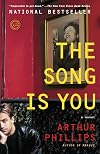
Music, like poetry, captures and magnifies emotions in a way that descriptive, neutral prose cannot. Nor can “real life” provide the background lyrics and sound that turn a mundane existence into a tale worthy of the silver screen. Enter the IPod. In this intelligent and poignant novel by multi-talented Arthur Phillips, the protagonist - 44-year-old Julian Donahue, turns a mid-life crisis into a rock concert movie not only by giving his life a constant soundtrack, but by pursuing one of show more the most affecting artists on his playlist of singers, a local Irish beauty (age 22) who fronts a rock band that often plays at a club near his home in Brooklyn.
Julian has had a painful existence of late. He and his wife have separated after a year of struggling, unsuccessfully, to survive the death of their two year old son Carlton. His libido is gone, his passion for life is waning, and he can’t imagine how he can get his life back on a positive track. And so he turns to the old familiar tracks he knows: he sets his IPod to shuffle, and taps into the longing expressed by the songs. Julian aches for a return to emotion in his own life, but doesn’t know where to find it, until he hears Cait O’Dwyer sing. He is convinced her songs speak only to him; that the lines she writes have gained “access to the criss-crossed wiring of [his] interior life.” The more he hears her and becomes affected by her music, the more he becomes obsessed by her:
"The dense terrine of feeling in Julian – regret, hope, sorrow, faltering ambition, longing – startles him. It could not be produced in such concentration and quantity without the voice, and so… he comes to crave the voice because it reveals the feelings he could not find in silence."
Cait’s guitarist Ian was also smitten with Cait from the moment he began to play music with her, but is afraid to tell her so. But he remembers that moment vividly: "That very first song ended, and they both knew: the sound had been a multiple of them both. And they knew. They sat in a long silence as the sound they had made traveled down the street, out to sea, up to distant stars. Only the low hum of his amp persisted, and he was afraid (as she looked at him and he considered leaping at her) that the pickup from his guitar would pick up his heartbeat and play it for her.”
Later, Ian comes to see Julian as a rival, even though Julian and Cait have never actually met. But that doesn’t mean they don’t communicate, and it is this communication and its poignant outcome that makes up the bulk of the story.
Discussion: There’s a lot to think about at the end: what makes attraction viable? How can you separate need from love, or should you even try? To what extent should we resign ourselves to our perceived fates, or should we “rage, rage, against the dying of the light”? And then there was my own personal reaction to the ending: was the reason I was so profoundly affected (sorry, can’t tell you in what way or it might spoil it for you!) because of my own personal history? I.e., was the reader in the text or would the text have that impact regardless of the reader?
Evaluation: I rarely get the reading experience I had here of a love story being a page-turning edge-of-my-seat kind of experience. And part of the love story was mine, as I fell for the author’s beautifully engineered phrases (e.g., in addition to the quotes given above, referring to face-to-face encounters as “archaic forms of human interaction” and testing the waters of a relationship as taking an “escargotically slow approach”). This is a wonderful book for reading and discussing in the company of a book club, or for reading alone in a room full of flickering candles, with a soundtrack from the moments of your life you most want to relive, when your life was full of passion, and hunger, and loving and loss. show less
Julian has had a painful existence of late. He and his wife have separated after a year of struggling, unsuccessfully, to survive the death of their two year old son Carlton. His libido is gone, his passion for life is waning, and he can’t imagine how he can get his life back on a positive track. And so he turns to the old familiar tracks he knows: he sets his IPod to shuffle, and taps into the longing expressed by the songs. Julian aches for a return to emotion in his own life, but doesn’t know where to find it, until he hears Cait O’Dwyer sing. He is convinced her songs speak only to him; that the lines she writes have gained “access to the criss-crossed wiring of [his] interior life.” The more he hears her and becomes affected by her music, the more he becomes obsessed by her:
"The dense terrine of feeling in Julian – regret, hope, sorrow, faltering ambition, longing – startles him. It could not be produced in such concentration and quantity without the voice, and so… he comes to crave the voice because it reveals the feelings he could not find in silence."
Cait’s guitarist Ian was also smitten with Cait from the moment he began to play music with her, but is afraid to tell her so. But he remembers that moment vividly: "That very first song ended, and they both knew: the sound had been a multiple of them both. And they knew. They sat in a long silence as the sound they had made traveled down the street, out to sea, up to distant stars. Only the low hum of his amp persisted, and he was afraid (as she looked at him and he considered leaping at her) that the pickup from his guitar would pick up his heartbeat and play it for her.”
Later, Ian comes to see Julian as a rival, even though Julian and Cait have never actually met. But that doesn’t mean they don’t communicate, and it is this communication and its poignant outcome that makes up the bulk of the story.
Discussion: There’s a lot to think about at the end: what makes attraction viable? How can you separate need from love, or should you even try? To what extent should we resign ourselves to our perceived fates, or should we “rage, rage, against the dying of the light”? And then there was my own personal reaction to the ending: was the reason I was so profoundly affected (sorry, can’t tell you in what way or it might spoil it for you!) because of my own personal history? I.e., was the reader in the text or would the text have that impact regardless of the reader?
Evaluation: I rarely get the reading experience I had here of a love story being a page-turning edge-of-my-seat kind of experience. And part of the love story was mine, as I fell for the author’s beautifully engineered phrases (e.g., in addition to the quotes given above, referring to face-to-face encounters as “archaic forms of human interaction” and testing the waters of a relationship as taking an “escargotically slow approach”). This is a wonderful book for reading and discussing in the company of a book club, or for reading alone in a room full of flickering candles, with a soundtrack from the moments of your life you most want to relive, when your life was full of passion, and hunger, and loving and loss. show less
Another tour-de-force from Phillips, who here gives his main character his own name, history, and accomplishments to explore the family history of a respected writer whose master-forger father owns what appears to be a genuine, 1597 quarto edition of an unknown Shakespearean play, “The Tragedy of Arthur”. The fictional Arthur detests Shakespeare and has fought a lifelong battle to pry his father’s approval from twin sister Dana, who shares the father’s passion for the Bard. Now the show more father is dying and he’s asked Arthur (not Dana) to use his reputation and literary skill to help him get the play authenticated and published. Reeling from the attention, Arthur approaches his own publisher, Random House, but as positive feedback from experts piles up, Arthur begins to doubt the play’s authenticity himself. The entire story is told as a lengthy introduction to the Random House edition of the play, which is included at the end, along with dueling footnotes by Arthur and one of the Shakespearean scholars.
Although Arthur does whine quite a bit (and freely admits it), the story works only because of who he is, and the end of the introduction makes plain why the whole story has to be told as is. It’s funny in Arthur’s own confessions and mind-blowing in the reader’s confusion over Arthur (the actual author) and Arthur (the character), not to mention Arthur (the father) and King Arthur, the subject of the play. The double meanings pile on in so many directions the reader ends up feeling empathy for poor Arthur (the character), who ends up just as unsettled at the end as at the beginning. Highly recommended. show less
Although Arthur does whine quite a bit (and freely admits it), the story works only because of who he is, and the end of the introduction makes plain why the whole story has to be told as is. It’s funny in Arthur’s own confessions and mind-blowing in the reader’s confusion over Arthur (the actual author) and Arthur (the character), not to mention Arthur (the father) and King Arthur, the subject of the play. The double meanings pile on in so many directions the reader ends up feeling empathy for poor Arthur (the character), who ends up just as unsettled at the end as at the beginning. Highly recommended. show less
 This review was written for LibraryThing Early Reviewers.
Lists
Awards


You May Also Like


Associated Authors
Statistics
- Works
- 6
- Also by
- 3
- Members
- 5,261
- Popularity
- #4,741
- Rating
- 3.4
- Reviews
- 263
- ISBNs
- 128
- Languages
- 16
- Favorited
- 8


