

Robert Hough
Author of The Final Confession of Mabel Stark
About the Author
Robert Hough has made his name writing narrative-driven nonfiction about characters "who live beyond our culture's conception of normalcy" for such magazines as Saturday Night and Toronto Life. His fiction has appeared in many journals, including Canadian Fiction, Quarry, The Fiddlehead, and The show more Antigonish Review. He lives in Toronto with his wife and two daughters show less
Image credit: wordfest.com
Works by Robert Hough
Associated Works
Tagged
Common Knowledge
Members
Reviews
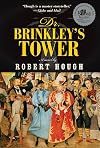
Just over the border, in the sleepy post-revolutionary Mexican town of Corazón de la Fuente, the erection of a mammoth radio tower will soon transform the lives of everyone living under its green-hazed penumbra. Dr Brinkley, the tower’s progenitor, is a million watt charlatan and his heavy brand of hucksterism and patent medicine, pitched to address men’s greatest fear, is wildly successful. But with so much potency on the loose, is it any wonder the citizenry of Corazón de la Fuente show more end up being shown the business end of his tower?
Robert Hough’s gentle, descriptive prose traces the hopes and fears of a wide selection of Corazón de la Fuente’s favourite sons and daughters in near-sepia tones. From the lame mayor, Miguel Orozco, to the Spanish hacendero, Antonio Garcia, to Madam Félix and the Marias of the House of Gentlemanly Pleasures, Hough treats his subjects with compassion and just enough self-awareness to keep them interesting. But perhaps my favourite of the many citizens of Corazón de la Fuente is the aged molinero, Roberto Pántelas, and his young love, Laura Valesquez. Their sad story, tragic but humane, captivates the reader. How could their end signal anything other than the downfall of Corazón de la Fuente?
Of course Corazón de la Fuente does not go down without a fight. The elder statesmen of the town, together with the young Francisco Ramirez, and the ancient curandera who foretold the malignant effect the tower would have, take it in hand to set things right. But perhaps too much has happened and too much has changed by then.
This is fine writing by an author clearly in command of his craft. A pleasure to read and to recommend. show less
Robert Hough’s gentle, descriptive prose traces the hopes and fears of a wide selection of Corazón de la Fuente’s favourite sons and daughters in near-sepia tones. From the lame mayor, Miguel Orozco, to the Spanish hacendero, Antonio Garcia, to Madam Félix and the Marias of the House of Gentlemanly Pleasures, Hough treats his subjects with compassion and just enough self-awareness to keep them interesting. But perhaps my favourite of the many citizens of Corazón de la Fuente is the aged molinero, Roberto Pántelas, and his young love, Laura Valesquez. Their sad story, tragic but humane, captivates the reader. How could their end signal anything other than the downfall of Corazón de la Fuente?
Of course Corazón de la Fuente does not go down without a fight. The elder statesmen of the town, together with the young Francisco Ramirez, and the ancient curandera who foretold the malignant effect the tower would have, take it in hand to set things right. But perhaps too much has happened and too much has changed by then.
This is fine writing by an author clearly in command of his craft. A pleasure to read and to recommend. show less
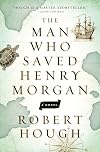
Maybe I’ve led a sheltered life, but I didn’t know that such things as chess hustlers existed, nor that they prowled seventeenth-century London’s coffee shops and taverns, looking for fools and their money. But in this well-told, riveting novel, which begins in 1664, young Benny Wand has a difficult choice: Spend twelve years in Newgate for having fleeced the wrong gentleman or be deported to Jamaica. Though Benny has never been to sea and has no apparent skills other than his chess show more mastery, he instantly chooses the New World, for he rightly expects a dozen years behind bars will be a death sentence by slow torture.
But on arrival in Port Royal, called “the wickedest city on earth,” he quickly realizes that his prospects are dim indeed. An acre of transported criminals like himself crowds a beach, living on rum and roast turtle, with no hope except the rumored reappearance of Henry Morgan, a privateer licensed by the British Crown.
Morgan’s reputation for daring, and his ability to liberate Spanish gold from its former owners have the societal castoffs excited, and no wonder. Not only is it possible for men who wouldn’t know sky from ocean to become rich virtually overnight, but, as Benny learns when the fabled captain shows up, his leader has no use for the social barriers that have kept his new crewmen down all their lives. In return for obedience, Morgan offers something extraordinary–advancement based on merit.
Benny soon profits thereby, for Morgan fancies himself a chess player and, hearing of Benny’s prowess, invites him to his quarters for a game. What a heady experience for a young man who’s never come closer to power than being on the wrong side of a judge’s bench. Benny revels in their contests and in Morgan’s free admission that his deck swab’s skill easily surpasses his own, the first praise he’s ever received. What’s more, he asks Benny his secret, only to be told there is none. Victory, he explains, depends on seeing what’s in front of you, what might be lurking just out of sight, and in planning for both.
Naturally, Morgan recognizes the inherent military wisdom in Benny’s approach, and you won’t be surprised to hear that, little by little, the captain relies on him for advice in the field. However, though Morgan listens, what always eludes him is Benny’s gift at anticipating what the enemy will do next. The adventures make for tense reading, but there’s much more here. The relationship between the two men explores the nature of power (and how it corrupts); the fury unleashed in men whom society has humiliated; and how money influences both.
The problem with power, however, is that it can possess you, and Benny’s no exception. Having noticed Morgan’s growing corruption, he worries about his own, and whether he’s become his captain’s creature, caught up in another man’s game. Is Benny a pawn, or is he the man who can save Morgan from himself?
Hough’s narrative moves swiftly but seldom compresses an emotional turning point. I like the vivid prose, which, in Benny’s salty, worldly voice, makes his character come alive. Morgan comes through too, though less clearly, perhaps the drawback of this particular first-person approach. None of the other characters seems fully fledged, but the key relationship is so complex and delivers so much that this matters less than it might otherwise. At times, I wondered whether Benny’s language or thought process sounded too modern, but that too shouldn’t stop anyone from reading this entertaining, thought-provoking novel. show less
But on arrival in Port Royal, called “the wickedest city on earth,” he quickly realizes that his prospects are dim indeed. An acre of transported criminals like himself crowds a beach, living on rum and roast turtle, with no hope except the rumored reappearance of Henry Morgan, a privateer licensed by the British Crown.
Morgan’s reputation for daring, and his ability to liberate Spanish gold from its former owners have the societal castoffs excited, and no wonder. Not only is it possible for men who wouldn’t know sky from ocean to become rich virtually overnight, but, as Benny learns when the fabled captain shows up, his leader has no use for the social barriers that have kept his new crewmen down all their lives. In return for obedience, Morgan offers something extraordinary–advancement based on merit.
Benny soon profits thereby, for Morgan fancies himself a chess player and, hearing of Benny’s prowess, invites him to his quarters for a game. What a heady experience for a young man who’s never come closer to power than being on the wrong side of a judge’s bench. Benny revels in their contests and in Morgan’s free admission that his deck swab’s skill easily surpasses his own, the first praise he’s ever received. What’s more, he asks Benny his secret, only to be told there is none. Victory, he explains, depends on seeing what’s in front of you, what might be lurking just out of sight, and in planning for both.
Naturally, Morgan recognizes the inherent military wisdom in Benny’s approach, and you won’t be surprised to hear that, little by little, the captain relies on him for advice in the field. However, though Morgan listens, what always eludes him is Benny’s gift at anticipating what the enemy will do next. The adventures make for tense reading, but there’s much more here. The relationship between the two men explores the nature of power (and how it corrupts); the fury unleashed in men whom society has humiliated; and how money influences both.
The problem with power, however, is that it can possess you, and Benny’s no exception. Having noticed Morgan’s growing corruption, he worries about his own, and whether he’s become his captain’s creature, caught up in another man’s game. Is Benny a pawn, or is he the man who can save Morgan from himself?
Hough’s narrative moves swiftly but seldom compresses an emotional turning point. I like the vivid prose, which, in Benny’s salty, worldly voice, makes his character come alive. Morgan comes through too, though less clearly, perhaps the drawback of this particular first-person approach. None of the other characters seems fully fledged, but the key relationship is so complex and delivers so much that this matters less than it might otherwise. At times, I wondered whether Benny’s language or thought process sounded too modern, but that too shouldn’t stop anyone from reading this entertaining, thought-provoking novel. show less
First, a quick note; this may be the greatest description of the Canadian peoples ever put to paper. “The people work too hard, and are boring because of it. They live in nice homes, and watch hockey on television…The people do not like opera or ballet, and they have no famous writers. They are polite to one another, without ever being friendly. They keep their problems to themselves, and don’t know how to laugh properly.” Perfect.
I think Robert Hough must delight in confounding show more expectations.
His first novel, The Final Confession of Mabel Stark, with its quaint cover evoking a bygone era of big-game danger and circus escapades, looked to be a rousing send-up of adventure novels. Quite a surprise, then, to discover Hough leavening the ribaldry with deft psychological depth and witty meta-fiction asides.
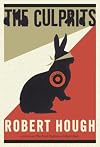
Six years later, he does it again. First, the title: The Culprits. It puts one in mind of a crime thriller, along the lines of The Usual Suspects or Reservoir Dogs. Then there’s a cover image, a silhouette of a rabbit, blindfolded, with a target painted on it. I am immediately reminded of the bizarre Canadian movie Phil the Alien, wherein a secret operative with a shadowy U.S. agency is trained to ignore all emotions by killing puppies with a cheese grater. It’s funnier than it sounds.
What a non-surprise to discover that the culprits of the title are not villains bent on monetary gains, but something far more intangible. “How about fantasy? How about desire? How about the need to keep the mind nimble and the soul a little more lifelike, despite all the drudgery that is thrown by life at us?” The culprits, in Hough’s universe, are the emotions that fight to take chances, to seek joy, to be happy; these culprits keep us interested in living.
The next surprise comes through the plot, which sets itself up in a few broad strokes to be a comical satire of lovelorn individuals trapped in marriages of convenience. Again, however, Hough refuses to deliver the expected. Damn him. Damn him, I say, and damn his inestimable talent.
Hank Wallins is a lonely man. A night-time computer operator with an insurance company, he has no friends, no prospects, and a maddening case of tinnitus. As he notices one night, “[he] had fourteen cigarettes left, and enough change for five cups of coffee from the Quality Assurance vending machines. Other than that, there was nothing, not a thing, in the joke that was his life.”
A fortuitous push into the oncoming path of a subway train puts him into hospital, and into contact with a man who has recently benefited from the offerings of the website From Russia with Love. It is an online love market for lonely North American men and desperate Russian women, and Hank is a prime candidate for its services. As is Anna, a Russian woman badly treated by her lover, and in desperate need of a change. Hoping for anything, she begins a correspondence with Hank, who sees in her the image of his long-lost love.
This is the stuff of classic comedy, of Neil Simon witticisms and Hollywood fluff a la Green Card. And there is fine humour in Hough’s smooth delivery of Hank’s transparently bad idea, of his desperation in finding companionship through Internet scams. Anna’s obvious dislike of Hank, her disappointment in his ordinariness, is matched by her feelings toward Toronto; “There was something about the city’s orderliness that exacerbated her turmoil. There was something about its cool functionality that made her lose her composure. Even the air felt thin, the soul squeezed out of it.”
Yet after this initial set-up, Hough brings in a third character; Ruslan, a Dagestani living in Russia, the former lover of Anna who finds himself kidnapped in Putin’s Russia. Suddenly, all expectations go out the window, and Hough expertly manoeuvres through a plot that combines the mundane goings-on of Canada with terrorists, disgruntled Russian citizenry, and horrific brutality. All of this from the omnipresent POV of a narrator whose identity shall remain secret, but whose outlook on life is arguably amongst the most touching and unique in 21st century Canadian literature.
There is much more to Hough’s story, as he effectively contrasts the disparate personalities who propel the plot forward. But for all its modern pyrotechnics, there is something undeniably sweet and old-fashioned at the core of The Culprits, a yearning for more than life gives. As Hank pines, Anna whines, and Ruslan slowly erodes, Hough reveals a compassion for the simple needs of his characters, whether they be in straits commonplace or dire. “Humans, they cope,” the narrator advises, and it is this theme that brings about the major events of The Culprits. Whether it might be ill-advised acts of love or acts of terrorism, the humans, they do indeed cope. It’s all we can expect to do, Hough appears to say, and it is a testament to his storytelling verve that such a sentiment does not bog the story down in depression. Rather, like Hank falling to the tracks below, it hovers. It stays aloft, and floats, and astonishes. The Culprits is one of the best novels of 2007. show less
I think Robert Hough must delight in confounding show more expectations.
His first novel, The Final Confession of Mabel Stark, with its quaint cover evoking a bygone era of big-game danger and circus escapades, looked to be a rousing send-up of adventure novels. Quite a surprise, then, to discover Hough leavening the ribaldry with deft psychological depth and witty meta-fiction asides.
Six years later, he does it again. First, the title: The Culprits. It puts one in mind of a crime thriller, along the lines of The Usual Suspects or Reservoir Dogs. Then there’s a cover image, a silhouette of a rabbit, blindfolded, with a target painted on it. I am immediately reminded of the bizarre Canadian movie Phil the Alien, wherein a secret operative with a shadowy U.S. agency is trained to ignore all emotions by killing puppies with a cheese grater. It’s funnier than it sounds.
What a non-surprise to discover that the culprits of the title are not villains bent on monetary gains, but something far more intangible. “How about fantasy? How about desire? How about the need to keep the mind nimble and the soul a little more lifelike, despite all the drudgery that is thrown by life at us?” The culprits, in Hough’s universe, are the emotions that fight to take chances, to seek joy, to be happy; these culprits keep us interested in living.
The next surprise comes through the plot, which sets itself up in a few broad strokes to be a comical satire of lovelorn individuals trapped in marriages of convenience. Again, however, Hough refuses to deliver the expected. Damn him. Damn him, I say, and damn his inestimable talent.
Hank Wallins is a lonely man. A night-time computer operator with an insurance company, he has no friends, no prospects, and a maddening case of tinnitus. As he notices one night, “[he] had fourteen cigarettes left, and enough change for five cups of coffee from the Quality Assurance vending machines. Other than that, there was nothing, not a thing, in the joke that was his life.”
A fortuitous push into the oncoming path of a subway train puts him into hospital, and into contact with a man who has recently benefited from the offerings of the website From Russia with Love. It is an online love market for lonely North American men and desperate Russian women, and Hank is a prime candidate for its services. As is Anna, a Russian woman badly treated by her lover, and in desperate need of a change. Hoping for anything, she begins a correspondence with Hank, who sees in her the image of his long-lost love.
This is the stuff of classic comedy, of Neil Simon witticisms and Hollywood fluff a la Green Card. And there is fine humour in Hough’s smooth delivery of Hank’s transparently bad idea, of his desperation in finding companionship through Internet scams. Anna’s obvious dislike of Hank, her disappointment in his ordinariness, is matched by her feelings toward Toronto; “There was something about the city’s orderliness that exacerbated her turmoil. There was something about its cool functionality that made her lose her composure. Even the air felt thin, the soul squeezed out of it.”
Yet after this initial set-up, Hough brings in a third character; Ruslan, a Dagestani living in Russia, the former lover of Anna who finds himself kidnapped in Putin’s Russia. Suddenly, all expectations go out the window, and Hough expertly manoeuvres through a plot that combines the mundane goings-on of Canada with terrorists, disgruntled Russian citizenry, and horrific brutality. All of this from the omnipresent POV of a narrator whose identity shall remain secret, but whose outlook on life is arguably amongst the most touching and unique in 21st century Canadian literature.
There is much more to Hough’s story, as he effectively contrasts the disparate personalities who propel the plot forward. But for all its modern pyrotechnics, there is something undeniably sweet and old-fashioned at the core of The Culprits, a yearning for more than life gives. As Hank pines, Anna whines, and Ruslan slowly erodes, Hough reveals a compassion for the simple needs of his characters, whether they be in straits commonplace or dire. “Humans, they cope,” the narrator advises, and it is this theme that brings about the major events of The Culprits. Whether it might be ill-advised acts of love or acts of terrorism, the humans, they do indeed cope. It’s all we can expect to do, Hough appears to say, and it is a testament to his storytelling verve that such a sentiment does not bog the story down in depression. Rather, like Hank falling to the tracks below, it hovers. It stays aloft, and floats, and astonishes. The Culprits is one of the best novels of 2007. show less
In which I chat about reading Dr. Brinkley's Tower in a single day. (You can't build a tower that quickly, but you can read about it.)
Admittedly, I shuffled this volume amongst my stack of current reads for weeks before I started reading. (There is always a book in there that is trying on the idea of being a current read, rather than actually being read currently.)
The front cover immediately appealed (that image is mesmerizing, isn't it?). And I've been wanting to find time for one of Robert show more Hough's novels for years. Since 2001, to be exact, when his novel about the greatest female tiger trainer, Mabel Stark, caught my reader's eye.
But the back cover suggested that it was equal parts Mark Twain and Gabriel García Márquez. And I've only read a couple of works by each author, and admiring them isn't the same as loving them.
Strangely enough, now I understand the comparison, and it having been made about this novel has made me think more fondly about both Twain's and Márquez's works.
I hopped from one reader's foot to the next for some time, the indecision strengthened by the fact that it's over 400 pages long.
Finally I plucked it off the stack. (I don't know why: I carry that stack of books everywhere in the house, depending where I'm spending time, and eventually I get tired of the scenery and I have to finish reading books to alter the view.)
Here is what I read: "Francisco Ramirez stood fretting before an antique full-length mirror framed in strips of shellacked mesquite."
(I wasn't hooked yet. I wish that I could say that I was, but it took a little longer.)
"It was a fine piece of craftsmanship, hand-built and intricate with detail; if you looked closely, you could see deer heads carved into the frame, each one gazing bemusedly in a different direction."
Looking back, I think it began here, with those carved deer heads, gazing bemusedly -- yes, bemusedly -- but I don't think I recognized it at the time.
(Periodically. there is a word in Robert Hough's prose which stands out for me, like bemusedly. To the point where I wonder if it's not pretentious to have chosen a 5$-word when a penny-word would have done the trick. But then I think about it, and it's the perfect word: perfect for the whole story, not just the sentence or the paragraph. They are quite ordinary words, but not the sort that you see in novels everyday, which makes them seem extraordinary. I imagine there is a Dr. Brinkley's Tower lexicon somewhere, and that idea thrills me, that someone could have spent that much time imagining a world and its inhabitants. Well, isn't that why we read? To find that kind of world?)
But I wasn't actually hooked yet (I settled into the story wholly on page 22: I'm a sucker for an old-fashioned romance), and it wasn't instantaneous, more like a steady cinching of interest, so each sentence must have been subtly reeling me in.
The sentences are carefully crafted, although they seem effortless. Take the first sentences from each paragraph on the first few pages:
"It was 1931, the long, bloody years of the revolution still a fresh wound."
"The mirror's real dissolution had occurred during the revolution, when government soldiers were continually requisitioning goods for the war effort, only to spend the proceeds in houses of ill repute."
"Given these shortcomings, the mirror had been relegated to the bedroom used by Francisco, who was now assessing himself in the turbulent, hypercritical way of all adolescents."
"The problem, as he saw it, was his nose."
"The accident had rendered the bridge of his nose somewhat lumpy in appearance, not unlike the backbone of a spiny armadillo."
They read almost like their own story, even though you're missing all the rest of the sentences that come between.
(You can, however, read a sample chapter on the publisher's site, if you're curious, and I hope you are. Though I've included these for flavour, illustrating the way in which the author deals with historical context, the inclusion of houses of ill repute -- lest you be sensitive to such realities, the variation in sentence length and tone, and the occasional figurative image.)
In between are the sentences that build the story, the ones that are -- even if you're unaware -- pulling you into the tale of Francisco and Roberto and Violeta and Madam Félix -- and the Reyes brothers and the Marias and Miguel and Antonio and Carlos and and and -- in this 1930s Mexican frontier town.
The connection to the narrative builds slowly; there is a wide cast of characters, and they are introduced steadily, building an understanding of Corazón de la Fuente across the chapters.
(And there is a lot of detail in the prose, a lot that you could imagine another writer putting into parentheses, or editing out entirely, so if you're bored with the style of this post, you might find your attention wandering in the novel as well. Dr. Brinkley's Tower really isn't a novel written for those who like to read the text boxes instead of the text, for those who read in one-minute chunks.)
Sometimes the characters feel familiar, as though perhaps you've caught a glimpse of them on-screen or on other pages. Sometimes you suspect what's going to happen, as though you've heard this story before.
Well, it has all been told before, right?
Love and grief, friendship and betrayal, progress and devastation.
(And, when I thought about it, it wasn't so much that I knew what was going to happen, but just that I hoped it so hard, because I really did want things to turn out well for these characters. Remember, I was hooked.)
Ultimately, however, there is a hook, a catch. And readers of Robert Hough's earlier works might well have suspected this, for his last novel, The Culprits opens with a warning:
"Life is a deception. Oh yes -- it's a ruse, it's a scam, it's a carnival shell game."
(I don't mean a twist, not like an O'Henry story, or a big reveal. More like when you thought something was true the whole time, but then you realize that you shouldn't have assumed, or like when you thought something wasn't true, because it seemed too fantastical, but then you discover it was real.)
It's a big question: what do we trust? While we're figuring it out, we can trust in good storytelling.
(Robert Hough's backlist was added to my TBR list before I reached page 22.)
[This was originally posted here, on Buried In Print.) show less
Admittedly, I shuffled this volume amongst my stack of current reads for weeks before I started reading. (There is always a book in there that is trying on the idea of being a current read, rather than actually being read currently.)
The front cover immediately appealed (that image is mesmerizing, isn't it?). And I've been wanting to find time for one of Robert show more Hough's novels for years. Since 2001, to be exact, when his novel about the greatest female tiger trainer, Mabel Stark, caught my reader's eye.
But the back cover suggested that it was equal parts Mark Twain and Gabriel García Márquez. And I've only read a couple of works by each author, and admiring them isn't the same as loving them.
Strangely enough, now I understand the comparison, and it having been made about this novel has made me think more fondly about both Twain's and Márquez's works.
I hopped from one reader's foot to the next for some time, the indecision strengthened by the fact that it's over 400 pages long.
Finally I plucked it off the stack. (I don't know why: I carry that stack of books everywhere in the house, depending where I'm spending time, and eventually I get tired of the scenery and I have to finish reading books to alter the view.)
Here is what I read: "Francisco Ramirez stood fretting before an antique full-length mirror framed in strips of shellacked mesquite."
(I wasn't hooked yet. I wish that I could say that I was, but it took a little longer.)
"It was a fine piece of craftsmanship, hand-built and intricate with detail; if you looked closely, you could see deer heads carved into the frame, each one gazing bemusedly in a different direction."
Looking back, I think it began here, with those carved deer heads, gazing bemusedly -- yes, bemusedly -- but I don't think I recognized it at the time.
(Periodically. there is a word in Robert Hough's prose which stands out for me, like bemusedly. To the point where I wonder if it's not pretentious to have chosen a 5$-word when a penny-word would have done the trick. But then I think about it, and it's the perfect word: perfect for the whole story, not just the sentence or the paragraph. They are quite ordinary words, but not the sort that you see in novels everyday, which makes them seem extraordinary. I imagine there is a Dr. Brinkley's Tower lexicon somewhere, and that idea thrills me, that someone could have spent that much time imagining a world and its inhabitants. Well, isn't that why we read? To find that kind of world?)
But I wasn't actually hooked yet (I settled into the story wholly on page 22: I'm a sucker for an old-fashioned romance), and it wasn't instantaneous, more like a steady cinching of interest, so each sentence must have been subtly reeling me in.
The sentences are carefully crafted, although they seem effortless. Take the first sentences from each paragraph on the first few pages:
"It was 1931, the long, bloody years of the revolution still a fresh wound."
"The mirror's real dissolution had occurred during the revolution, when government soldiers were continually requisitioning goods for the war effort, only to spend the proceeds in houses of ill repute."
"Given these shortcomings, the mirror had been relegated to the bedroom used by Francisco, who was now assessing himself in the turbulent, hypercritical way of all adolescents."
"The problem, as he saw it, was his nose."
"The accident had rendered the bridge of his nose somewhat lumpy in appearance, not unlike the backbone of a spiny armadillo."
They read almost like their own story, even though you're missing all the rest of the sentences that come between.
(You can, however, read a sample chapter on the publisher's site, if you're curious, and I hope you are. Though I've included these for flavour, illustrating the way in which the author deals with historical context, the inclusion of houses of ill repute -- lest you be sensitive to such realities, the variation in sentence length and tone, and the occasional figurative image.)
In between are the sentences that build the story, the ones that are -- even if you're unaware -- pulling you into the tale of Francisco and Roberto and Violeta and Madam Félix -- and the Reyes brothers and the Marias and Miguel and Antonio and Carlos and and and -- in this 1930s Mexican frontier town.
The connection to the narrative builds slowly; there is a wide cast of characters, and they are introduced steadily, building an understanding of Corazón de la Fuente across the chapters.
(And there is a lot of detail in the prose, a lot that you could imagine another writer putting into parentheses, or editing out entirely, so if you're bored with the style of this post, you might find your attention wandering in the novel as well. Dr. Brinkley's Tower really isn't a novel written for those who like to read the text boxes instead of the text, for those who read in one-minute chunks.)
Sometimes the characters feel familiar, as though perhaps you've caught a glimpse of them on-screen or on other pages. Sometimes you suspect what's going to happen, as though you've heard this story before.
Well, it has all been told before, right?
Love and grief, friendship and betrayal, progress and devastation.
(And, when I thought about it, it wasn't so much that I knew what was going to happen, but just that I hoped it so hard, because I really did want things to turn out well for these characters. Remember, I was hooked.)
Ultimately, however, there is a hook, a catch. And readers of Robert Hough's earlier works might well have suspected this, for his last novel, The Culprits opens with a warning:
"Life is a deception. Oh yes -- it's a ruse, it's a scam, it's a carnival shell game."
(I don't mean a twist, not like an O'Henry story, or a big reveal. More like when you thought something was true the whole time, but then you realize that you shouldn't have assumed, or like when you thought something wasn't true, because it seemed too fantastical, but then you discover it was real.)
It's a big question: what do we trust? While we're figuring it out, we can trust in good storytelling.
(Robert Hough's backlist was added to my TBR list before I reached page 22.)
[This was originally posted here, on Buried In Print.) show less
Lists
Awards


You May Also Like


Associated Authors
Statistics
- Works
- 9
- Also by
- 1
- Members
- 639
- Popularity
- #39,444
- Rating
- 3.8
- Reviews
- 25
- ISBNs
- 62
- Languages
- 6