

Carrie Snyder (1) (1974–)
Author of Girl Runner
For other authors named Carrie Snyder, see the disambiguation page.
Works by Carrie Snyder
Associated Works
Tagged
Common Knowledge
Members
Reviews

From the outset we know that Francie has a gun and that she is racing to dispose of it somewhere safe. She’s in grade seven and she’s got a solo in the school concert that evening, which is really scary, whereas this heavy gun is just a thing, a non-living thing. How Francie got into this predicament of racing through town carrying a gun is sort of complicated. It probably begins with her best friend, Alice, because lots of things do, but it inevitably involves many adults, the most show more dangerous and unpredictable of whom is undoubtedly her father, Luce.
Told in alternating chapters, in the nominal present when Francie has the gun, and the recent past in the few weeks leading up to the precipitous event initiating Francie’s armed journey, we move from each character’s point of view to the next. Sadly, all of the adult women are hard pressed either by poverty, poor life choices, or the threat of violence (principally from Luce). Only Francie and her friend, Alice, have the active imaginative lives that reveal that life still holds open possibilities for them. Though perhaps the current events are about to either close off some options or introduce a new burden that will have to be carried into adulthood.
Carrie Snyder’s writing is never less than professional. She has a fine ear, especially for the young girls, and she understands how to build pace and tension. Any weakness here is, I think, the standard weakness that this narrative structure imposes. Inevitably we only get a superficial engagement with the many characters whose points of view we momentarily share. But that is balanced by our close connection to Francie, whose vulnerable state is so well rendered.
Easy to recommend. show less
Told in alternating chapters, in the nominal present when Francie has the gun, and the recent past in the few weeks leading up to the precipitous event initiating Francie’s armed journey, we move from each character’s point of view to the next. Sadly, all of the adult women are hard pressed either by poverty, poor life choices, or the threat of violence (principally from Luce). Only Francie and her friend, Alice, have the active imaginative lives that reveal that life still holds open possibilities for them. Though perhaps the current events are about to either close off some options or introduce a new burden that will have to be carried into adulthood.
Carrie Snyder’s writing is never less than professional. She has a fine ear, especially for the young girls, and she understands how to build pace and tension. Any weakness here is, I think, the standard weakness that this narrative structure imposes. Inevitably we only get a superficial engagement with the many characters whose points of view we momentarily share. But that is balanced by our close connection to Francie, whose vulnerable state is so well rendered.
Easy to recommend. show less
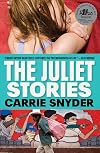
Thrust into the strange and potentially dangerous locale of Managua, Nicaragua, in 1984, Juliet is at the mercy of her activist parents’ desires and her own nascent hopes and fears. Along with her two younger brothers, Juliet experiences the chaos and confusion of radical upheaval, but also the singular acts of kindness and beauty that are present, perhaps, everywhere.
Beautifully told in an immediate, almost raw, style, the stories may stand alone, but together they form a linear show more structure as Juliet moves into adolescence and beyond into adulthood. Life remains unpredictable even after Juliet and her family move back to Canada. Love, desire, death, fealty and falsehood – Juliet experiences them all. Some things she comprehends, some she does not. And ever she appears to be groping toward some kind of future, some clarity about herself and what she will do with her life.
The first half, especially, is tremendously affecting. The second half is less direct, less lived, more told, less certain, and possibly more challenging. It would be hard to say which I prefer more. Or perhaps I’m simply confessing that I have been won over and would gladly follow Carrie Snyder wherever her narrative voice might lead. It would be hard not to expect, or at least hope for, great things to come from this author. Recommended. show less
Beautifully told in an immediate, almost raw, style, the stories may stand alone, but together they form a linear show more structure as Juliet moves into adolescence and beyond into adulthood. Life remains unpredictable even after Juliet and her family move back to Canada. Love, desire, death, fealty and falsehood – Juliet experiences them all. Some things she comprehends, some she does not. And ever she appears to be groping toward some kind of future, some clarity about herself and what she will do with her life.
The first half, especially, is tremendously affecting. The second half is less direct, less lived, more told, less certain, and possibly more challenging. It would be hard to say which I prefer more. Or perhaps I’m simply confessing that I have been won over and would gladly follow Carrie Snyder wherever her narrative voice might lead. It would be hard not to expect, or at least hope for, great things to come from this author. Recommended. show less
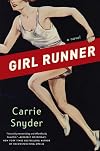
I took up running in 2007 despite the fact that I was never a runner growing up. I spent 15 years as a competitive swimmer so my couple of years of high school track were really more a function of the fact that the team needed distance runners and I had the endurance than from any speed or aptitude on my part. I sure didn't have any sprint ability, that's for sure. Even now, in my middle age, when most people probably look at going shorter distances, I am trying to ramp myself back up to go show more longer. It's just what I do best, to Energizer Bunny along. Women were not always thought capable of running anything but short races though. Most people have probably seen the footage of Katherine Switzer, the first woman to run in the Boston Marathon, being pulled at and blocked by race officials who wanted to pull her off the course. Before Switzer, there was a long line of women runners who had to fight the same prejudice, that women were not capable of distance running, despite evidence to the contrary. In Carrie Snyder's novel, Girl Runner, main character Aganetha Smart runs the 800m for Canada in the 1928 Olympics, winning gold, the first woman to do so and at a distance that wouldn't be competed by women again until 1960. But her life over all was not as golden as her medal.
Aggie is 104 when the novel opens, living in a nursing home and all alone in the world, having been predeceased by her entire family. Two young strangers come to the home to take her on an outing, claiming that they are making a film about running and that they know her. They tell her that she is the inspiration for the young woman, a talented marathoner, and that they want to include Aganetha in their documentary. In doing this, they drive her back out to the farm on which she grew up. This, and all of the questions they ask her, trigger memories of her childhood, family, and her training. She had a rough life, this pioneer runner of races. Born on a rural Ontario farm, she was the youngest child of her father's second wife. Often cared for by her oldest half-sister, she learned about loss and the tragic lore of the Smart family at Fannie's side. Always a quick girl, she could outrun all the boys in town but she could not outrun the legacy of war, disease, and accident that continued to relentlessly decimate her family. Leaving home at only sixteen and moving to Toronto with one of her sisters, she was chosen to run track as a factory girl for P. T. Pallister's Rosebud Confectionary, a move that will culminate in her winning an Olympic gold medal and will change the shape her life forever.
Most chapters of the novel start in the present with Aggie in her wheelchair being taken out of the nursing home on an undisclosed outing with Kaley and Max. But there is a moment in each piece of the here and now where Aggie is pulled back into her past. And so the story moves ahead, narrated by an Aggie who is still completely compos mentis no matter how frail her body has become, from a brief time in the present to a longer sojourn in the past. She tells of her childhood, of her friendship with a fellow runner, her long forgotten romance, and the decisions that have led her to be all alone at the end of her life. She senses that the young people so determined to talk to her, to take her back into memory, are not being entirely aboveboard in their desire for her. Even in her narration, Aggie maintains an emotional reserve, a protection against the long ago hurts and betrayals. It is up to the reader to penetrate this shell and to see beneath it to the woman inside.
Aganetha's story is an engrossing one. The hurdles she overcame to win gold and the hurdles she stumbled over in life are interesting and well presented. The history of sports, feminism, and the world all swirl through her personal story, seamlessly integrated. Snyder clearly knows what drives runners, more than just the glory of winning and she has created a fascinating and complex character in Aggie, both clearly repressed and still somehow a modern thinker. The revelation of what Kaley and Max actually want and why is not entirely unexpected by the time the reader gets to it but that no longer really matters. Snyder's weaving of brief obituaries through the narrative helps to increase the continual sense of loss that pervades all of Aggie's life. This is a readable and compelling look at the avenues open to women in the early twentieth century, not just in sports but in terms of their bodies, their careers, and their rights. Runners will especially enjoy it but it has a broader appeal than just to those of us who wobble and trot (or speed and flash) our way around neighborhoods, tracks, and wooded paths. show less
Aggie is 104 when the novel opens, living in a nursing home and all alone in the world, having been predeceased by her entire family. Two young strangers come to the home to take her on an outing, claiming that they are making a film about running and that they know her. They tell her that she is the inspiration for the young woman, a talented marathoner, and that they want to include Aganetha in their documentary. In doing this, they drive her back out to the farm on which she grew up. This, and all of the questions they ask her, trigger memories of her childhood, family, and her training. She had a rough life, this pioneer runner of races. Born on a rural Ontario farm, she was the youngest child of her father's second wife. Often cared for by her oldest half-sister, she learned about loss and the tragic lore of the Smart family at Fannie's side. Always a quick girl, she could outrun all the boys in town but she could not outrun the legacy of war, disease, and accident that continued to relentlessly decimate her family. Leaving home at only sixteen and moving to Toronto with one of her sisters, she was chosen to run track as a factory girl for P. T. Pallister's Rosebud Confectionary, a move that will culminate in her winning an Olympic gold medal and will change the shape her life forever.
Most chapters of the novel start in the present with Aggie in her wheelchair being taken out of the nursing home on an undisclosed outing with Kaley and Max. But there is a moment in each piece of the here and now where Aggie is pulled back into her past. And so the story moves ahead, narrated by an Aggie who is still completely compos mentis no matter how frail her body has become, from a brief time in the present to a longer sojourn in the past. She tells of her childhood, of her friendship with a fellow runner, her long forgotten romance, and the decisions that have led her to be all alone at the end of her life. She senses that the young people so determined to talk to her, to take her back into memory, are not being entirely aboveboard in their desire for her. Even in her narration, Aggie maintains an emotional reserve, a protection against the long ago hurts and betrayals. It is up to the reader to penetrate this shell and to see beneath it to the woman inside.
Aganetha's story is an engrossing one. The hurdles she overcame to win gold and the hurdles she stumbled over in life are interesting and well presented. The history of sports, feminism, and the world all swirl through her personal story, seamlessly integrated. Snyder clearly knows what drives runners, more than just the glory of winning and she has created a fascinating and complex character in Aggie, both clearly repressed and still somehow a modern thinker. The revelation of what Kaley and Max actually want and why is not entirely unexpected by the time the reader gets to it but that no longer really matters. Snyder's weaving of brief obituaries through the narrative helps to increase the continual sense of loss that pervades all of Aggie's life. This is a readable and compelling look at the avenues open to women in the early twentieth century, not just in sports but in terms of their bodies, their careers, and their rights. Runners will especially enjoy it but it has a broader appeal than just to those of us who wobble and trot (or speed and flash) our way around neighborhoods, tracks, and wooded paths. show less
As a fan of Carrie Snyder's The Juliet Stories, I was wriggling in my seat over the mere idea of Girl Runner. But then the anxiety crept in: there would be no Juliet, and perhaps much of the magic was hers. Just as the same river can't be stepped in twice, an author cannot retell a favourite story.
And then Girl Runner was shortlisted for the 2014 Rogers Writers' Trust Award, a nod which increased my excitement and my anxiety.
The other volumes nominated for that particular award are certainly show more accomplished. Andre Alexis' Pastoral is incisive and exacting. K.D. Miller's All Saints exhibits a delicate balance throughout the linked collection of stories, which is difficult to sustain (this was true, too, of The Juliet Stories). The layered storytelling in Steven Galloway's The Confabulist is simply exquisite. And Miriam Toews' novels are characterized by strong and engaging women's voices with Yoli's exceptionally striking because it deliberates upon a woman's desire to take her own life in All My Puny Sorrows (this claimed the prize).
Girl Runner offers, however, a winning combination of story and character. Not only the grit and sweat of sport and the pursuit of perfection as in Angie Abdou's The Bone Cage or Elizabeth Ruth's Matadora. Nor the cool rhythmic slip between historical and contemporary times so often evident in Jane Urquhart's fiction. Not just the total immersion in a female voice which might not be entirely reliable, as with Catherine Bush's Accusation or Claire Messud's The Woman Upstairs. Nor the kaleidoscopic view of life from near-beginning to near-end like Christina Schwarz's The Edge of the Earth or Hilary Scharper's Perdita. But something of all of these.
Thematically, the idea of getting acquainted with Aganetha Smart via memories from her life, which spanned the better part of the twentieth century, immediately appealed.
Stylistically, the transitions between the past and present narratives chronicling Aganetha's experiences are handled brilliantly.
Sometimes they are seamless, the rush between times mirroring that moment when a runner truly hits her stride, that sense of simultaneous weightlessness and solidity, as each step propels. And sometimes they are abrupt, like the rush of stopping, the breathlessness of shifting into a different state.
So at the end of one segment, Aganetha recalls an earlier run, euphoric and empowered. "I know I can’t be spent."
And, then, the next segment begins: "We've come to the blue car: nondescript, wouldn’t stand out in police alerts. The young man, Max, is opening a rear door, and the girl wheels my chair nearer. I say, Are we going somewhere?"
This is tremendously satisfying, and the prose is carefully constructed to more generally echo Aganetha's state of being as well.
In her youth, she speaks directly, pointedly. She is emboldened.
In her later years, she moves as others wish her to move. And although she speaks with the same directness, she no longer possesses the same sense of agency, and this is reflected not only in the nuts-and-bolts breakdown of individual scenes, but in a slightly-meandery and more distanced tone. Aganetha is no longer on the track; she is sitting on the sidelines.
But if readers were expecting a quiet, reflective read, they have forgotten that Aganetha is still a runner at heart.
For all the calm that exists when a runner reaches her stride, her heart is pumping and her feet are pounding. Very near the beginning of Girl Runner, readers are informed that this is no dreamy slice-of-life story but one with a plot, a mystery.
Here it is: the signal that the race is underway.
"Lies. Let me count the ways.
There is the lie of omission, the lie of avoidance, the lie outright, the boast, the tiny indulgence or fudging, the sly miscalculation, the rounding up or down, there is flattery, and the little white lie, and there is the bold sweep, the lie of epic proportions with a million smaller lies to underpin it, there are the muddling lies that confuse or confound, the lie of distraction, the lie that knows it will be caught out, the cold-blooded lie and the quick-witted lie and the lie made in terror and haste, the lie that must lie and lie again to cover its tracks, and, of course, there is the lie that fools even the liar, who knows not what he or she propagates.
That last one is the most dangerous of all, for it can trick almost everyone. It can come to look like the truth.
And so I think of another lie. The lie of my own choosing, that lives with me yet, and without me. The lie that protects. That shelters. That builds its fragile hiding place of love."
Fragility and protection, strength and duplicity, true-self and under-self: Girl Runner does not detour around contradictions.
"There is absence, and there is vanishing, and these are not the same thing at all."
Maybe these are the sort of imaginings which float in the author's mind when she is running, when she is creating the space in which the ideas will emerge, caught between cascades of motion and moments of stillness. (She describes her writing process in this piece for CBC Canada Writes.)
"The appearance of perfection does not interest me. It is the illumination of near-disaster beside which we all teeter, at all times, that interests me. It is laughing in the face of what might have been, and what is not." (It might sound as though this is lifted from the article cited in the paragraph above, but all of these quotes are from the novel.)
This teetering is at the heart of Girl Runner and adds substantial heft to the narrative. Aganetha is a fully credible and expansive character because even when she is still, she is in motion. She is still reevalating, examining, considering, deliberating. She is active, even when she appears confined. She is still running her race.
"“I think I would run even if I knew I would never win another race again. It’s weird. I can’t explain it. It’s like something I can’t turn off.'"
Here's hoping that Carrie Snyder feels the same way -- about running, perhaps, but most definitely about storytelling. I don't want her to turn it off. I'm adding her to my list of MRE authors.
This piece first appeared on BuriedInPrint. show less
And then Girl Runner was shortlisted for the 2014 Rogers Writers' Trust Award, a nod which increased my excitement and my anxiety.
The other volumes nominated for that particular award are certainly show more accomplished. Andre Alexis' Pastoral is incisive and exacting. K.D. Miller's All Saints exhibits a delicate balance throughout the linked collection of stories, which is difficult to sustain (this was true, too, of The Juliet Stories). The layered storytelling in Steven Galloway's The Confabulist is simply exquisite. And Miriam Toews' novels are characterized by strong and engaging women's voices with Yoli's exceptionally striking because it deliberates upon a woman's desire to take her own life in All My Puny Sorrows (this claimed the prize).
Girl Runner offers, however, a winning combination of story and character. Not only the grit and sweat of sport and the pursuit of perfection as in Angie Abdou's The Bone Cage or Elizabeth Ruth's Matadora. Nor the cool rhythmic slip between historical and contemporary times so often evident in Jane Urquhart's fiction. Not just the total immersion in a female voice which might not be entirely reliable, as with Catherine Bush's Accusation or Claire Messud's The Woman Upstairs. Nor the kaleidoscopic view of life from near-beginning to near-end like Christina Schwarz's The Edge of the Earth or Hilary Scharper's Perdita. But something of all of these.
Thematically, the idea of getting acquainted with Aganetha Smart via memories from her life, which spanned the better part of the twentieth century, immediately appealed.
Stylistically, the transitions between the past and present narratives chronicling Aganetha's experiences are handled brilliantly.
Sometimes they are seamless, the rush between times mirroring that moment when a runner truly hits her stride, that sense of simultaneous weightlessness and solidity, as each step propels. And sometimes they are abrupt, like the rush of stopping, the breathlessness of shifting into a different state.
So at the end of one segment, Aganetha recalls an earlier run, euphoric and empowered. "I know I can’t be spent."
And, then, the next segment begins: "We've come to the blue car: nondescript, wouldn’t stand out in police alerts. The young man, Max, is opening a rear door, and the girl wheels my chair nearer. I say, Are we going somewhere?"
This is tremendously satisfying, and the prose is carefully constructed to more generally echo Aganetha's state of being as well.
In her youth, she speaks directly, pointedly. She is emboldened.
In her later years, she moves as others wish her to move. And although she speaks with the same directness, she no longer possesses the same sense of agency, and this is reflected not only in the nuts-and-bolts breakdown of individual scenes, but in a slightly-meandery and more distanced tone. Aganetha is no longer on the track; she is sitting on the sidelines.
But if readers were expecting a quiet, reflective read, they have forgotten that Aganetha is still a runner at heart.
For all the calm that exists when a runner reaches her stride, her heart is pumping and her feet are pounding. Very near the beginning of Girl Runner, readers are informed that this is no dreamy slice-of-life story but one with a plot, a mystery.
Here it is: the signal that the race is underway.
"Lies. Let me count the ways.
There is the lie of omission, the lie of avoidance, the lie outright, the boast, the tiny indulgence or fudging, the sly miscalculation, the rounding up or down, there is flattery, and the little white lie, and there is the bold sweep, the lie of epic proportions with a million smaller lies to underpin it, there are the muddling lies that confuse or confound, the lie of distraction, the lie that knows it will be caught out, the cold-blooded lie and the quick-witted lie and the lie made in terror and haste, the lie that must lie and lie again to cover its tracks, and, of course, there is the lie that fools even the liar, who knows not what he or she propagates.
That last one is the most dangerous of all, for it can trick almost everyone. It can come to look like the truth.
And so I think of another lie. The lie of my own choosing, that lives with me yet, and without me. The lie that protects. That shelters. That builds its fragile hiding place of love."
Fragility and protection, strength and duplicity, true-self and under-self: Girl Runner does not detour around contradictions.
"There is absence, and there is vanishing, and these are not the same thing at all."
Maybe these are the sort of imaginings which float in the author's mind when she is running, when she is creating the space in which the ideas will emerge, caught between cascades of motion and moments of stillness. (She describes her writing process in this piece for CBC Canada Writes.)
"The appearance of perfection does not interest me. It is the illumination of near-disaster beside which we all teeter, at all times, that interests me. It is laughing in the face of what might have been, and what is not." (It might sound as though this is lifted from the article cited in the paragraph above, but all of these quotes are from the novel.)
This teetering is at the heart of Girl Runner and adds substantial heft to the narrative. Aganetha is a fully credible and expansive character because even when she is still, she is in motion. She is still reevalating, examining, considering, deliberating. She is active, even when she appears confined. She is still running her race.
"“I think I would run even if I knew I would never win another race again. It’s weird. I can’t explain it. It’s like something I can’t turn off.'"
Here's hoping that Carrie Snyder feels the same way -- about running, perhaps, but most definitely about storytelling. I don't want her to turn it off. I'm adding her to my list of MRE authors.
This piece first appeared on BuriedInPrint. show less
Lists
Awards


You May Also Like


Associated Authors
Statistics
- Works
- 10
- Also by
- 1
- Members
- 233
- Popularity
- #96,931
- Rating
- 3.7
- Reviews
- 19
- ISBNs
- 54
- Languages
- 5