

Kenneth J. Harvey
Author of The Town That Forgot How to Breathe
About the Author
Image credit: kingstonwritersfest.ca
Works by Kenneth J. Harvey
Associated Works
Tagged
Common Knowledge
- Legal name
- Harvey, Kenneth Joseph
- Birthdate
- 1962-01-22
- Gender
- male
- Occupations
- writer
filmmaker - Organizations
- Memorial University of Newfoundland
University of New Brunswick
Ottawa International Writers Festival - Relationships
- Harvey, Katherine Alexandra (daughter)
- Nationality
- Canada
- Birthplace
- St. John's, Newfoundland, Canada
- Places of residence
- Newfoundland, Canada
Burnt Head, Cupids, Newfoundland, Canada - Associated Place (for map)
- Newfoundland, Canada
Members
Discussions
The Town That Forgot How To Breathe in Thing(amabrarian)s That Go Bump in the Night (August 2008)
Reviews
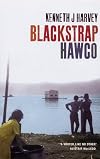
Well this was a mammoth read at 825 pages but deeply satisfying, as well. It is based on fact, indeed the author's own family. It spans from 1886 until contemporary times. It is divided into sections. The first and largest section moves between generations and gives accounts of specific incidents to different members of the family, (I actually wrote a family tree to guide me through this), but each account was riveting. The character of the title Blackstrap, (yes named for the molasses), is show more the subject of the second section and the story then progresses at a pace.
As an adult, Blackstrap's body is a mass of scars accumulated through many life threatening episodes leaving him a damaged and angry man but we feel deep compassion for him. The purpose of the first section becomes clear in that we now understand his roots and the writer no longer has to dwell on the setting of Newfoundland, which is a character in its own right.
Blackstrap, likes his homeland is rugged, battered by life. His character will remain with me for some time, as will the landscape. The author has conveyed his deep love for this place and those intrepid, mainly Irish settlers, who made their home there. show less
As an adult, Blackstrap's body is a mass of scars accumulated through many life threatening episodes leaving him a damaged and angry man but we feel deep compassion for him. The purpose of the first section becomes clear in that we now understand his roots and the writer no longer has to dwell on the setting of Newfoundland, which is a character in its own right.
Blackstrap, likes his homeland is rugged, battered by life. His character will remain with me for some time, as will the landscape. The author has conveyed his deep love for this place and those intrepid, mainly Irish settlers, who made their home there. show less
I recommend this book, to you, if even just the title seems remotely interesting.
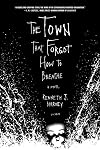
I found it by chance while browsing, and I don't feel I'm exagerating in saying that this book has a palpable atmosphere even before you begin reading. The title caught my eye, and I picked it up. The cover was at once so unique and so haunting that I had no choice but to buy the book--it's textured, and the computer can't do it justice. It took me some months to start it, though I wanted to.
This is a story show more which takes place in a Newfoundland seaside town, and follows an amazing array of characters over the span of a week (current day). I can honestly say that I've never seen an author create so many distinct characters to the extent that each is entirely different from the others and also feels absolutely real. They speak, feel, think, and act differently, and come across as individuals throughout though their stories are all wound together. Additionally, the detail of the town and scenery are drawn perfectly--never overwhelming, always clear and written with the perfect amount of description. The reality of the work and the characters here will lead you to every emotion you encounter with a good piece of work, from frustration to joy to sadness to fear to points when you'll laugh out loud.
I should say, this is a haunting and lyrical book. I would classify it as literary horror, though in my mind I'm still not quite happy with that phrase as fitting. I began this book in November, and read a hundred pages in one sitting. I put it down to sleep, and found I couldn't sleep peacefully--books don't normally get to me, but this one did, to the extent that while I'd been fully engaged and enamoured with the story, the characters, and the writing, the book so haunted me in the day after I read it that I was nearly afraid to pick it up again. I read another sixty pages three or four days later, and found I couldn't concentrate that night or the next day at all, so I simply put it down, though I considered it nearly daily in the interim after. I had something of a dread of what would happen, and a lasting feeling of being haunted that I wasn't ready to go back to just yet. I promised myself I would finish it over spring break when losing sleep wouldn't hurt me, and the book drew me back in within two pages. About three-fourths of the way through the book, the town was so real that it was absolutely separate from reality--I couldn't be frightened off anymore, because stepping into the book was honestly like stepping into a different world.
Does that sound sort of haunted? It does to me, but this is the most haunting book I've read, far more eerie than anything else I've picked up, and probably better written than any horror I've come across. The atmosphere and the story will suck you in if you give them a chance. I'd suggest reading them away from the ocean and with someone else around to knock you back into reality (at least for the first two hundred pages or so). If you do want a solid scare that'll have you running--sure, read them in a cottage by the sea. I'll be rereading this, but not there. If you end up picking it up, let me know what you think--for me, this is the best read of my year so far.
Five stars, absolutely show less
I found it by chance while browsing, and I don't feel I'm exagerating in saying that this book has a palpable atmosphere even before you begin reading. The title caught my eye, and I picked it up. The cover was at once so unique and so haunting that I had no choice but to buy the book--it's textured, and the computer can't do it justice. It took me some months to start it, though I wanted to.
This is a story show more which takes place in a Newfoundland seaside town, and follows an amazing array of characters over the span of a week (current day). I can honestly say that I've never seen an author create so many distinct characters to the extent that each is entirely different from the others and also feels absolutely real. They speak, feel, think, and act differently, and come across as individuals throughout though their stories are all wound together. Additionally, the detail of the town and scenery are drawn perfectly--never overwhelming, always clear and written with the perfect amount of description. The reality of the work and the characters here will lead you to every emotion you encounter with a good piece of work, from frustration to joy to sadness to fear to points when you'll laugh out loud.
I should say, this is a haunting and lyrical book. I would classify it as literary horror, though in my mind I'm still not quite happy with that phrase as fitting. I began this book in November, and read a hundred pages in one sitting. I put it down to sleep, and found I couldn't sleep peacefully--books don't normally get to me, but this one did, to the extent that while I'd been fully engaged and enamoured with the story, the characters, and the writing, the book so haunted me in the day after I read it that I was nearly afraid to pick it up again. I read another sixty pages three or four days later, and found I couldn't concentrate that night or the next day at all, so I simply put it down, though I considered it nearly daily in the interim after. I had something of a dread of what would happen, and a lasting feeling of being haunted that I wasn't ready to go back to just yet. I promised myself I would finish it over spring break when losing sleep wouldn't hurt me, and the book drew me back in within two pages. About three-fourths of the way through the book, the town was so real that it was absolutely separate from reality--I couldn't be frightened off anymore, because stepping into the book was honestly like stepping into a different world.
Does that sound sort of haunted? It does to me, but this is the most haunting book I've read, far more eerie than anything else I've picked up, and probably better written than any horror I've come across. The atmosphere and the story will suck you in if you give them a chance. I'd suggest reading them away from the ocean and with someone else around to knock you back into reality (at least for the first two hundred pages or so). If you do want a solid scare that'll have you running--sure, read them in a cottage by the sea. I'll be rereading this, but not there. If you end up picking it up, let me know what you think--for me, this is the best read of my year so far.
Five stars, absolutely show less
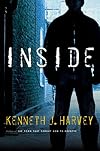
What is it like for a man who expected to die in prison to suddenly find himself back on the outside after fourteen years served for a murder that DNA testing now proves was not his doing? Will he be able to control his rage, the same rage that he learned to depend on in prison for his very survival, so that he does not commit a crime of violence that returns him to lockup? Can he tolerate the leeches, including his wife, who are so eager to help him spend the false-imprisonment settlement show more he will soon collect from the Canadian government?
In his novel, "Inside," Kenneth J. Harvey places himself in the mind of just such a character, Myrden (a man whose first name is never revealed), and does it so effectively that many of those questions are answered. Harvey, in fact, tells Myrden’s story largely through the man’s own thought processes, a technique that leaves the reader standing squarely in Myrden’s shoes, seeing life through his eyes, and feeling all of his emotions and frustrations. The book, in fact, is almost completely written in sentence fragments of less than five words and reading it is like listening to Myrden think out loud.
Myrden is the first to admit that he was not exactly an innocent man when he was sent to prison for murder. At times he is not completely sure, despite the new DNA evidence, that he did not commit the crime and wonders if the real mistake is that he is being released. But he is grateful for the large settlement he receives from the government and is eager to use it to better the lives of his daughter and his granddaughter, Caroline, the true love of his life.
Sadly, Myrden, a man who has learned the trick of depending only upon himself for survival, finds it near impossible to relate to a wife who seems only to care about the cash windfall headed their way, his old crowd, or the poverty that surrounds them all. Wanting nothing more than to be left alone, he is forced instead to deal with the newspaper reporters who hound him for a quote and old friends who see him as a local celebrity with cash to blow. His immersion into the hard world from which he had been snatched and imprisoned, a world in which he is surrounded by reckless people with little to lose, the only world he has ever known, is inevitable despite his best intentions.
Myrden is a man who wants nothing more than to make life a little easier for those he loves, his way of making up for past mistakes before it is too late. He has some small successes but, when others begin to interfere with his larger goals, he has to decide how far he is willing to go to put things right and whether or not he is prepared to suffer the consequences.
"Inside" explores a world that, thankfully, few of Harvey’s readers will have experienced firsthand. It is a brutal place filled with people who have lost all hope that things will ever be better for them and their families, a place dominated by addictions and those willing to do most anything to feed them, a world in which second chances do not often turn out well. This is not a pretty novel but it is well worth the effort.
Rated at: 4.0 show less
In his novel, "Inside," Kenneth J. Harvey places himself in the mind of just such a character, Myrden (a man whose first name is never revealed), and does it so effectively that many of those questions are answered. Harvey, in fact, tells Myrden’s story largely through the man’s own thought processes, a technique that leaves the reader standing squarely in Myrden’s shoes, seeing life through his eyes, and feeling all of his emotions and frustrations. The book, in fact, is almost completely written in sentence fragments of less than five words and reading it is like listening to Myrden think out loud.
Myrden is the first to admit that he was not exactly an innocent man when he was sent to prison for murder. At times he is not completely sure, despite the new DNA evidence, that he did not commit the crime and wonders if the real mistake is that he is being released. But he is grateful for the large settlement he receives from the government and is eager to use it to better the lives of his daughter and his granddaughter, Caroline, the true love of his life.
Sadly, Myrden, a man who has learned the trick of depending only upon himself for survival, finds it near impossible to relate to a wife who seems only to care about the cash windfall headed their way, his old crowd, or the poverty that surrounds them all. Wanting nothing more than to be left alone, he is forced instead to deal with the newspaper reporters who hound him for a quote and old friends who see him as a local celebrity with cash to blow. His immersion into the hard world from which he had been snatched and imprisoned, a world in which he is surrounded by reckless people with little to lose, the only world he has ever known, is inevitable despite his best intentions.
Myrden is a man who wants nothing more than to make life a little easier for those he loves, his way of making up for past mistakes before it is too late. He has some small successes but, when others begin to interfere with his larger goals, he has to decide how far he is willing to go to put things right and whether or not he is prepared to suffer the consequences.
"Inside" explores a world that, thankfully, few of Harvey’s readers will have experienced firsthand. It is a brutal place filled with people who have lost all hope that things will ever be better for them and their families, a place dominated by addictions and those willing to do most anything to feed them, a world in which second chances do not often turn out well. This is not a pretty novel but it is well worth the effort.
Rated at: 4.0 show less
A hauntingly beautiful novel of the supernatural, The Town That Forgot How to Breathe explores one of the most original ideas I've come across in my lifetime of reading. Mythical sea creatures, such as albino sharks, mermaids, flying fish which really fly (not just jump), are being spotted around the fishing village of Bareneed, Newfoundland in remote Atlantic Canada. Corpses of missing townspeople presumed drowned at sea, some over 200 years ago, are amassing in the waters and floating to show more shore. And a mysterious illness is causing people to literally forget how to breathe - patients who fall asleep without mechanical breathing assistance will die because their unconscious minds are no longer able to regulate respiratory activity.
Into this bizarre sea and landscape comes a recently separated father and his young daughter for a few weeks of vacation. Soon after arriving, we begin meeting some of the paranormally talented residents of the village, including an elderly woman who sees auras, a sculptress who is visited by her missing and presumed dead young daughter and a mildly mentally challenged painter whose works portend the future.
Harvey explores the nature of identity and love but reserves his primary thrust for the dichotomy between tradition and modernism. The use of the supernatural to explore this chasm is brilliant in its execution and is ably served by a lyrical prose. We are put in the minds of the characters: as they are unsure who is who and who is dead, neither are we.
Highly recommended for those looking for a different kind of horror story. show less
Into this bizarre sea and landscape comes a recently separated father and his young daughter for a few weeks of vacation. Soon after arriving, we begin meeting some of the paranormally talented residents of the village, including an elderly woman who sees auras, a sculptress who is visited by her missing and presumed dead young daughter and a mildly mentally challenged painter whose works portend the future.
Harvey explores the nature of identity and love but reserves his primary thrust for the dichotomy between tradition and modernism. The use of the supernatural to explore this chasm is brilliant in its execution and is ably served by a lyrical prose. We are put in the minds of the characters: as they are unsure who is who and who is dead, neither are we.
Highly recommended for those looking for a different kind of horror story. show less
Lists
Magic Realism (1)
Awards


You May Also Like


Associated Authors
Statistics
- Works
- 18
- Also by
- 1
- Members
- 789
- Popularity
- #32,271
- Rating
- 3.2
- Reviews
- 31
- ISBNs
- 51
- Languages
- 5