
Catrine Clay
Author of King, Kaiser, Tsar: Three Royal Cousins Who Led the World to War
About the Author
Catrine Clay has worked for the BBC for more than twenty years, directing and producing award-winning television documentaries. She won the International Documentary Award and the Golden Spire for Best History Documentary, and was nominated for a BAFTA. She is the author of King, Kaiser, Tsar and show more Trautmann's Journey, which won Biography of the Year for the William Hill Sports Book Award. show less
Works by Catrine Clay
King, Kaiser, Tsar: Three Royal Cousins Who Led the World to War (2006) — Author — 405 copies, 4 reviews
Labyrinths: Emma Jung, Her Marriage to Carl, and the Early Years of Psychoanalysis (2016) 68 copies, 1 review
Tagged
Common Knowledge
- Other names
- CLAY, Catrine
- Birthdate
- 1943
- Gender
- female
- Occupations
- writer
producer
director - Nationality
- UK
- Places of residence
- London, England, UK
- Associated Place (for map)
- England, UK
Members
Reviews
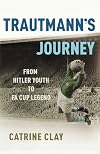
Probably best remembered as the goalkeeper who played on for 15 minutes of an FA Cup final after suffering a broken neck but obituaries and remembrances written after his recent passing sparked an interest for me to learn more of the remarkable life of Bert Trautmann. This is truly an amazing story of how a young German boy was indoctrinated into the Nazi way of life through his love and aptitude for sports. From life in the Hitler Youth to volunteering before being conscripted so he could show more pursue his unrequited dream of being a pilot. Fought on both the Eastern and Western Fronts in WWII first as a radio operator in the Luftwaffe and then as a paratrooper. How he was captured, first by Americans and then the British, became a POW and found a new way of life in England. Playing football, first in the camps and then for local club side St Helens before his performances attracted interest from scouts of all the big clubs of the time and then signing for Manchester City and all the furore that brought with it (Manchester had a large Jewish community who were quite vocal in their disapproval of City's latest acquisition). His first game in London where the bomb damage was still highly evident and despite initial hatred from local fans how he ended the match receiving a standing ovation from the other players and all the fans in the ground when he left the field. The book concludes with the aforementioned FA Cup final and touching lightly on his work fostering Anglo-German relations with the Bert Trautmann Foundation for which he was awarded an OBE. I doubt many people have been awarded an Iron Cross and then gone on to be given one of those.
The author has produced some documentaries for the BBC and that style is quite prevalent in this book. It doesn't delve too deeply on his life as a footballer, concentrating more on his formative years and what it was like for a fairly typical boy growing up in the times between the wars and during his life as a soldier. It doesn't gloss over the faults in his character and how his hot temper would often land him in serious trouble or how he left a woman carrying his child leaving only a letter saying that he couldn't marry her. They were later reconciled as he was with the daughter that she bore him. I've never been a keen student of history but I found this account fascinating and I learnt a lot about how life was in those days. It was also interesting to see things from a German's perspective. I wouldn't have minded a bit more detail on his actual playing career or his life after he finally hung up his gloves to be included but this is a book that I'm definitely glad I read. show less
The author has produced some documentaries for the BBC and that style is quite prevalent in this book. It doesn't delve too deeply on his life as a footballer, concentrating more on his formative years and what it was like for a fairly typical boy growing up in the times between the wars and during his life as a soldier. It doesn't gloss over the faults in his character and how his hot temper would often land him in serious trouble or how he left a woman carrying his child leaving only a letter saying that he couldn't marry her. They were later reconciled as he was with the daughter that she bore him. I've never been a keen student of history but I found this account fascinating and I learnt a lot about how life was in those days. It was also interesting to see things from a German's perspective. I wouldn't have minded a bit more detail on his actual playing career or his life after he finally hung up his gloves to be included but this is a book that I'm definitely glad I read. show less
Themes: family, duty, royalty, loyalty, education, politics, religion, patriotism, jealousy
Setting: Europe 1880s or so until 1919
This book is about three European rulers who were all caught up in World War I. But what makes it interesting is that the book focuses not on their politics, but on their relationships - the three men were cousins, all descended from England's Queen Victoria. George V of England, Tsar Nicholas of Russia, and Kaiser Wilhelm of Germany were roughly contemporaries and show more all knew each other very well. They didn't exactly grow up together, but there was a lot of visiting back and forth, a lot of correspondence, and a lot of family drama to go around.
As I read it, I couldn't help thinking how different everything could have been if Kaiser Wilhelm, or Willie as the family called him, had been raised differently. Caught between his Prussian grandfather and king and his English mother and grandmother, Queen Victoria, he was always in the middle of the tension. Prussia was an ambitious country, and there was plenty of room for drama, with the way everyone royal in Europe was related to everyone else. That made any war a family matter. And then Willie was deformed at birth, with a damaged arm and inner ear which made his mother reject him. He could have compensated for that, but there were a lot of other influences at work.
Then there was the tsar. Brought up in strict seclusion to protect him from the revolutionaries who eventually murdered his grandfather, the tsar and his family grew up out of touch with the mood of the country. He and his English cousins were close, but nothing could really have saved him from the violence which swept Russia.
I liked this book, but it was really more detailed than it needed to be. It would have been a much better read if she had cut about 150 pages. Too many names, too many details, and so much build up to get to the end. It must have been good, though, because I dreamed about saving the tsar last night. I was sure I could have prevented World War I if we had just assassinated the kaiser at the right time. Which may be true, but may have just been the sleep meds talking. Still, worth reading if you are interested in the subject and don't mind the many details. Good pictures helped. I think the kaiser was the clear winner in the looks department, but that may have been because the other two wore such heavy beards that you couldn't see their faces past the fuzz. 3.5 stars. show less
Setting: Europe 1880s or so until 1919
This book is about three European rulers who were all caught up in World War I. But what makes it interesting is that the book focuses not on their politics, but on their relationships - the three men were cousins, all descended from England's Queen Victoria. George V of England, Tsar Nicholas of Russia, and Kaiser Wilhelm of Germany were roughly contemporaries and show more all knew each other very well. They didn't exactly grow up together, but there was a lot of visiting back and forth, a lot of correspondence, and a lot of family drama to go around.
As I read it, I couldn't help thinking how different everything could have been if Kaiser Wilhelm, or Willie as the family called him, had been raised differently. Caught between his Prussian grandfather and king and his English mother and grandmother, Queen Victoria, he was always in the middle of the tension. Prussia was an ambitious country, and there was plenty of room for drama, with the way everyone royal in Europe was related to everyone else. That made any war a family matter. And then Willie was deformed at birth, with a damaged arm and inner ear which made his mother reject him. He could have compensated for that, but there were a lot of other influences at work.
Then there was the tsar. Brought up in strict seclusion to protect him from the revolutionaries who eventually murdered his grandfather, the tsar and his family grew up out of touch with the mood of the country. He and his English cousins were close, but nothing could really have saved him from the violence which swept Russia.
I liked this book, but it was really more detailed than it needed to be. It would have been a much better read if she had cut about 150 pages. Too many names, too many details, and so much build up to get to the end. It must have been good, though, because I dreamed about saving the tsar last night. I was sure I could have prevented World War I if we had just assassinated the kaiser at the right time. Which may be true, but may have just been the sleep meds talking. Still, worth reading if you are interested in the subject and don't mind the many details. Good pictures helped. I think the kaiser was the clear winner in the looks department, but that may have been because the other two wore such heavy beards that you couldn't see their faces past the fuzz. 3.5 stars. show less
This is a good book, but not a wonderful one. I've been interested in Nicholas II ever since reading Massie's Nicholas & Alexandra. One of my main reasons for reading King, Kaiser, Tsar was to learn more about how and why George V abandoned Nicholas (his counsin) and his family in Russia whereas he could have given them asylum. But whereas Clay talks a lot about Wilhelm and all the details of his reign, and of course about George, she talks much less about the Russian cousin. She hardly show more gives you a clue as to the severity and importance of the Tsarevich's hemophilia.
But what bothered me the most was her handling of the murder of the Russian royal family. She says that some pounds of jewelry was removed from the bodies after they were shot and being prepared for burial. But she doesn't say what that burial intailed. The Tsar, his wife, and their five children were cut up with axes, dosed with acid, burned so that not a trace would remain (although traces did) and buried, hidden in the woods so that no one could find them. How is it that after all the details of Wilhelm's scandals, and what the royals wore at this event or another, she neglected to tell about the barbaric murder of Nicholas and his family (including his son's spaniel!).
Overall it was an interesting book because it's an interesting history of three very powerful and important cousins. show less
But what bothered me the most was her handling of the murder of the Russian royal family. She says that some pounds of jewelry was removed from the bodies after they were shot and being prepared for burial. But she doesn't say what that burial intailed. The Tsar, his wife, and their five children were cut up with axes, dosed with acid, burned so that not a trace would remain (although traces did) and buried, hidden in the woods so that no one could find them. How is it that after all the details of Wilhelm's scandals, and what the royals wore at this event or another, she neglected to tell about the barbaric murder of Nicholas and his family (including his son's spaniel!).
Overall it was an interesting book because it's an interesting history of three very powerful and important cousins. show less
I always knew that George V of England, Wilhelm II of Prussia and Nicholas II of Russia were cousins, on an intellectual level, since they are all grandchildren of the great Queen Victoria. But I somehow never considered the idea that these royal cousins would have all known each other, and corresponded with each other, and even had fates that were destined to merge with World War I. As much the story of the Danish royal house into which two of the cousins married, this was a fascinating show more book, although the ending, with World War I, felt a little abrupt. Here's something I learned that will perhaps surprise few people - no one liked the Prussian. show less
Lists
Awards


You May Also Like


Associated Authors
Statistics
- Works
- 10
- Members
- 602
- Popularity
- #41,740
- Rating
- 3.7
- Reviews
- 10
- ISBNs
- 43
- Languages
- 8
- Favorited
- 1
